


- Posted on 29 May 2026
- 3-minute read
Principles of Partnership: A Working Framework for Best Practice Participatory Health Programs in Pacific Island Nations was formally launched.
A new framework for a collaborative approach to health in the Pacific
The WHO Collaborating Centre for Nursing and Midwifery and Health Development at the University of Technology Sydney (WHO CCNMH UTS) and the South Pacific Chief Nursing and Midwifery Officers Alliance (SPCNMOA) have formally launched the Principles of Partnership: A Working Framework for Best Practice Participatory Health Programs in Pacific Island Nations. The launch took place at a World Bank-funded strategic leadership meeting attended by 65 nursing and midwifery leaders from 15 Pacific countries alongside regional partners.
Drawing on Pacific cultural knowledge systems including Kakala, Talanoa, and Mo’oni, and Western Participatory Action Research, the framework synthesises a methodology built for Pacific contexts – the PARcific approach.


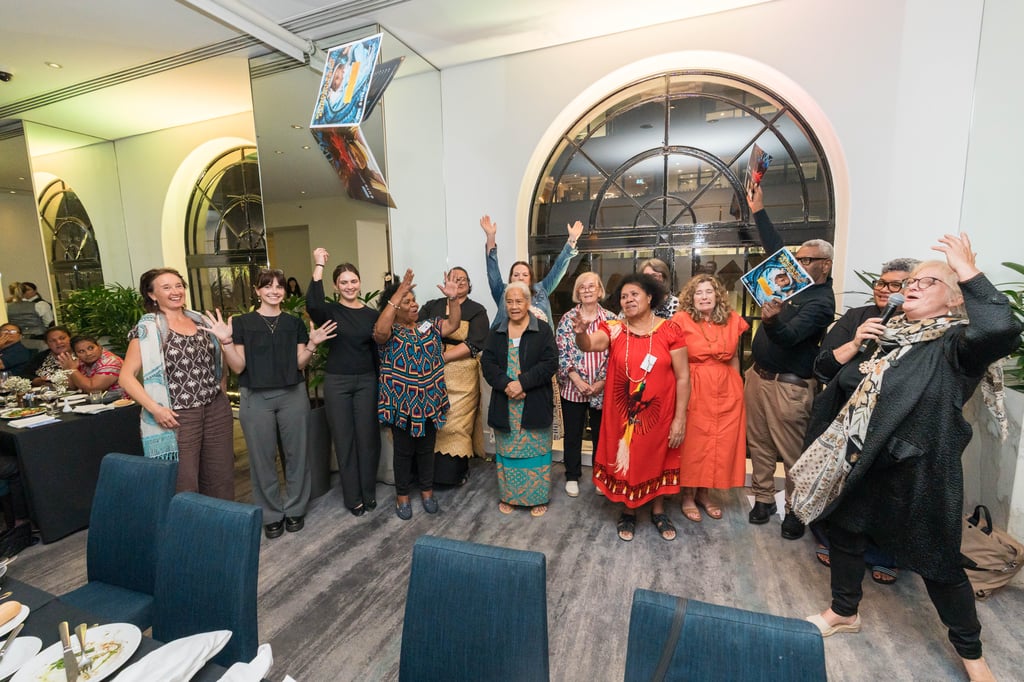
The document addresses the significant gaps in Western approaches that prioritise outcomes and efficiency and are rooted in Eurocentric, colonial paradigms. Instead, the guiding principle of the framework is that programs must be genuinely co-designed with and be responsive to Pacific peoples, values, and realities.
For the Pacific, success and sustainability in programs is rooted in justice, respect, safety, beneficence, collaboration, and relationships. The PARcific approach has four main pillars: democratisation of research, reciprocity, reflexivity, and shared power, drawing on decades of collaborative work between WHO CCNMH UTS, SPCNMOA, and a broad network of researchers, nursing leaders, educators, and practitioners across the region.
As population health demands evolve, there is growing need to strengthen equitable regulatory frameworks, develop nursing and midwifery leadership, and build more resilient health workforces. The framework provides nursing and midwifery leaders, program implementers, and regional and national institutions with a shared foundation. Importantly, it positions Pacific nurses and midwives as co-designers and knowledge holders, rather than as recipients of externally developed programs.
WHO CCNMH UTS remains committed to supporting its implementation alongside SPCNMOA and Pacific partners in the years ahead. The WHOCCNMH partnership approach to working in the Pacific was also recently recognised with a UTS Vice-Chancellor's Award for Excellence in Partnerships, acknowledging the depth and quality of the collaborative relationships that made it possible.

News
Historical First-Ever Global Forum for WHO Collaborating Centres in Lyon
More than 800 WHO CCs across 80 countries attended, with 85 participants representing the Western Pacific Region’s Centres. WHO CCNMH Director, Professor...
News
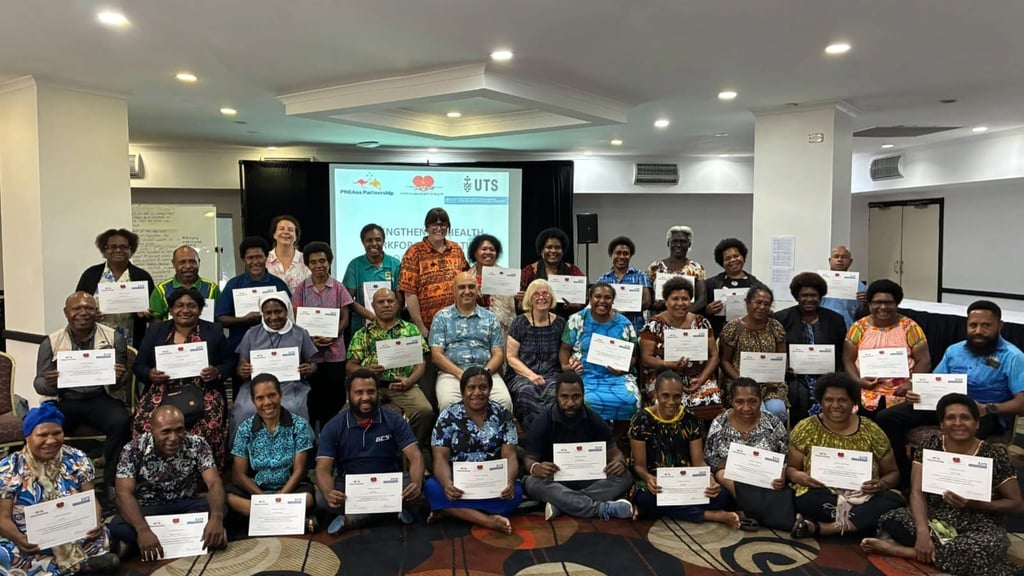
Strengthening Health Workforce Education at the University of Papua New Guinea
From 3–7 November 2025, the WHO Collaborating Centre for Nursing, Midwifery & Health Development (WHO CCNMH UTS) delivered an intensive Continuing Professional...
News
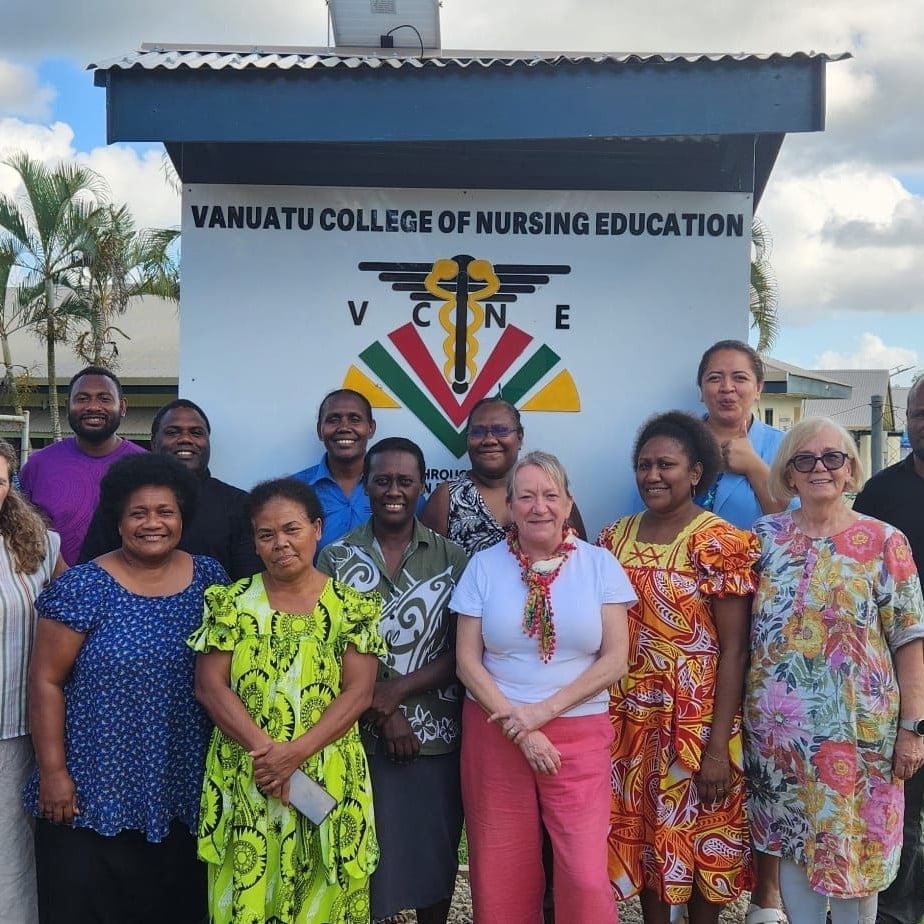
Vanuatu College of Nursing Education and UTS continue to support nurses through quality education
The Vanuatu College of Nursing Education (VCNE), under the Vanuatu Ministry of Health, has been continuously working towards strengthening nursing education...
News
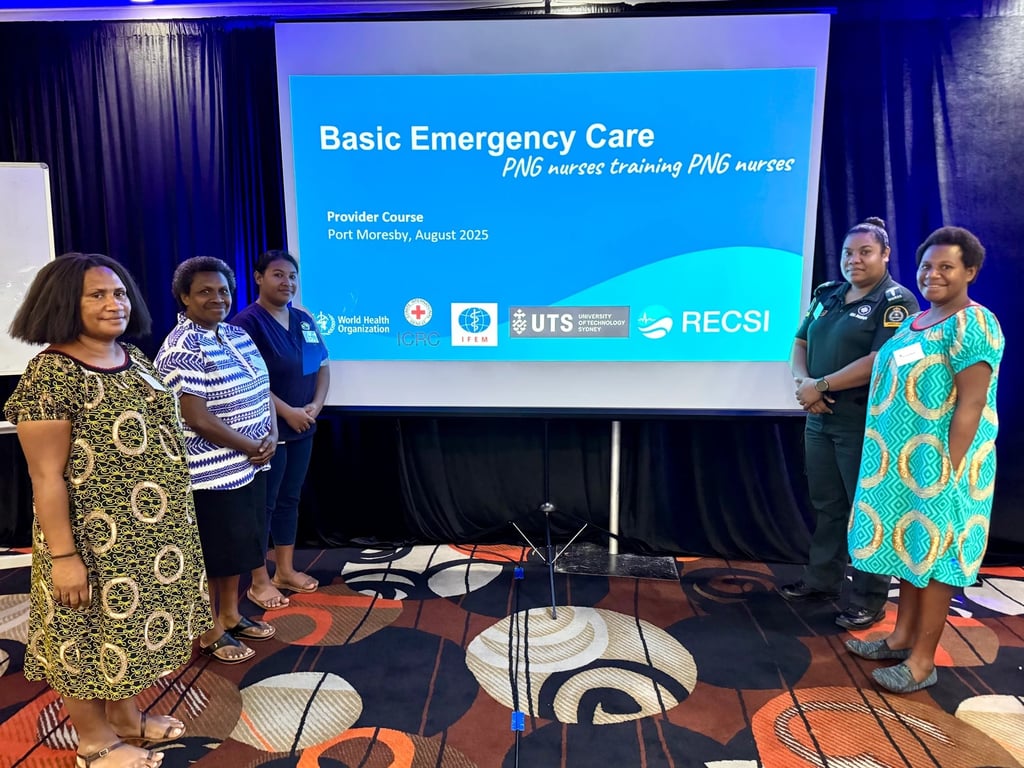
PNG Delivers Historic Emergency Care Training By Nurses, For Nurses
Held between August 18-22, 2025, the week-long course was a testament to local ownership of knowledge and practice, delivered by nurses, for nurses, with 18...
News
Historical First-Ever Global Forum for WHO Collaborating Centres in Lyon
More than 800 WHO CCs across 80 countries attended, with 85 participants representing the Western Pacific Region’s Centres. WHO CCNMH Director, Professor...
News
Strengthening Health Workforce Education at the University of Papua New Guinea
From 3–7 November 2025, the WHO Collaborating Centre for Nursing, Midwifery & Health Development (WHO CCNMH UTS) delivered an intensive Continuing Professional...
News
Vanuatu College of Nursing Education and UTS continue to support nurses through quality education
The Vanuatu College of Nursing Education (VCNE), under the Vanuatu Ministry of Health, has been continuously working towards strengthening nursing education...
News
PNG Delivers Historic Emergency Care Training By Nurses, For Nurses
Held between August 18-22, 2025, the week-long course was a testament to local ownership of knowledge and practice, delivered by nurses, for nurses, with 18...