


- Posted on 24 Dec 2025
- 3-minute read
From 3–7 November 2025, the WHO Collaborating Centre for Nursing, Midwifery & Health Development (WHO CCNMH UTS) delivered an intensive Continuing Professional Development (CPD) Fast Track Program (FTP) Workshop in Port Moresby.
Delivered in partnership with the Papua New Guinea (PNG) National Department of Health (NDoH), the workshop is the third FTP event held this year under the Strengthening Health Workforce Education (SHWE) Program Phase 2.
The SHWE Program is funded by the Australian Government Department of Foreign Affairs and Trade (DFAT) and is dedicated to sustainably building and strengthening capacity within PNG’s health sector, particularly of PNG’s nursing and community health worker (CHW) educators to deliver high standard and contemporary health workforce education.
Building core competencies and curriculum quality
Throughout the week, participants engaged in activities aimed at enhancing teaching, learning, reflection, and assessment skills to align with the newly revised nursing and CHW curriculums including:
- Assessment and feedback: Understanding issues in assessment across classrooms, skills labs, and community settings, including applying Miller’s Framework for assessing competence and improving feedback and feed-forward approaches.
- Teaching diverse populations: Developing student-based learning strategies for diverse populations, including teaching paediatric competencies, mental health assessment and care, and disaster preparedness and response. A simulated disaster scenario helped educators reflect on bias, cultural practices, and decision-making under pressure.
- Constructive alignment: Participants were tasked with linking course learning outcomes to subjects and assessment tasks, helping them identify gaps and areas for improvement in curriculum implementation.
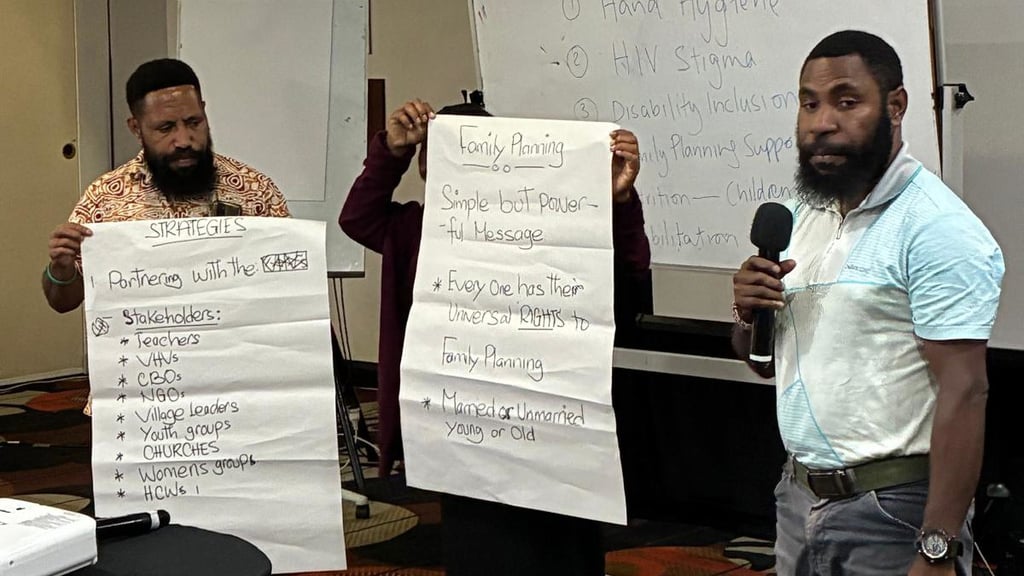
Innovative and evidence-based teaching strategies were used to model best practices to improve teaching in classroom-based subjects.
Innovative and evidence-based teaching strategies were used to model best practices to improve teaching in classroom-based subjects.
A focus on equity and inclusive teaching
A significant theme woven throughout the five-day program was Gender Equality, Disability and Social Inclusion (GEDSI), with a focus on teaching for diverse health needs and aligning with PNG’s National Health Plan commitment to “Leaving No One Behind”.
Professor Di Brown and team (WHO CCNM UTS) facilitated sessions on GEDSI’s importance in healthcare, and participants critically examined how marginalisation impacts health outcomes and access to care, and the responsibility educators hold in preparing students to deliver equitable and inclusive care.
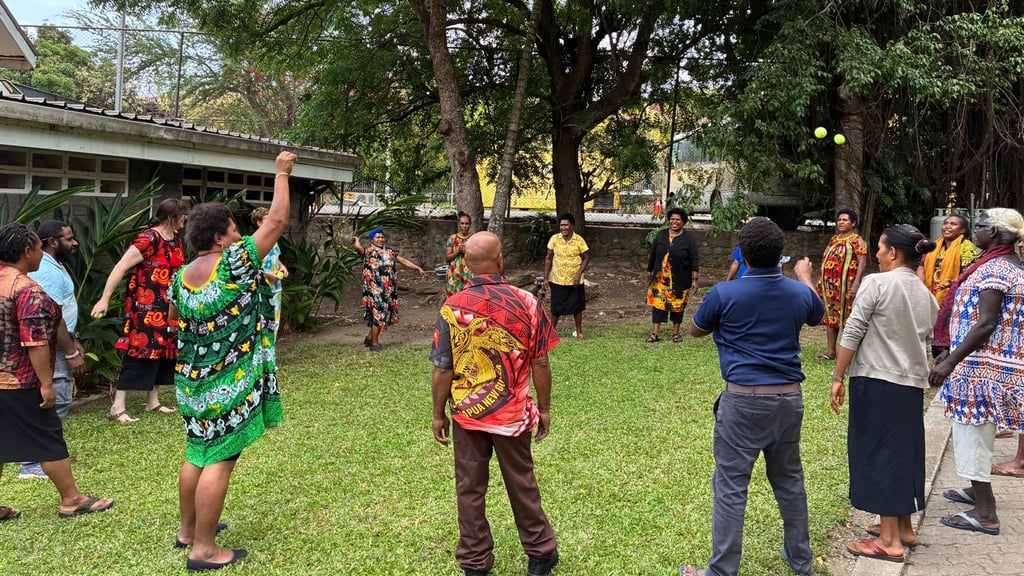
A powerful teaching moment was the role-play activity “the Race of Life”, where participants were randomised into ‘privileged’ and ‘underprivileged/disadvantaged’ groups. The exercise spurred reflection on how culture may affect access to care and education, and how educators can foster inclusivity in education and clinical practice that will improve experiences for both students and the communities they service.
Impact and recognition
The commitment of the educators was evident, with one CHW educator commenting that the FTP workshops helped her enhance her teaching, “I am grateful because by attending these workshops I can now see where we are at in terms of the level of teaching as academics and learning for students, and how I can assist my colleagues apply effective methods for smooth delivery in spite of setbacks”.
The workshop concluded with presentations of each semester’s program and the development of relevant student information, and a formal closing ceremony attended by NDoH, DFAT, and PNG–Australia Transition to Health (PATH) program representatives. Certificates of Attendance and Achievement were presented by Australian High Commission First Secretary for Health, Dr Ramez Alhaaz, acknowledging the significant contributions of the educators.
Continuing this professional health education program is crucial. The FTP workshops are scheduled to continue in 2026 for further training of UPNG nursing academics and PNG health educators to effectively deliver the new national nursing and CHW curriculums. Once the Graduate Diploma in Health Professional Education (GDHPE) is approved, its implementation is planned to commence in the Division of Nursing at the UPNG School of Medicine and Health Science (SMHS).

News
Historical First-Ever Global Forum for WHO Collaborating Centres in Lyon
More than 800 WHO CCs across 80 countries attended, with 85 participants representing the Western Pacific Region’s Centres. WHO CCNMH Director, Professor...
News
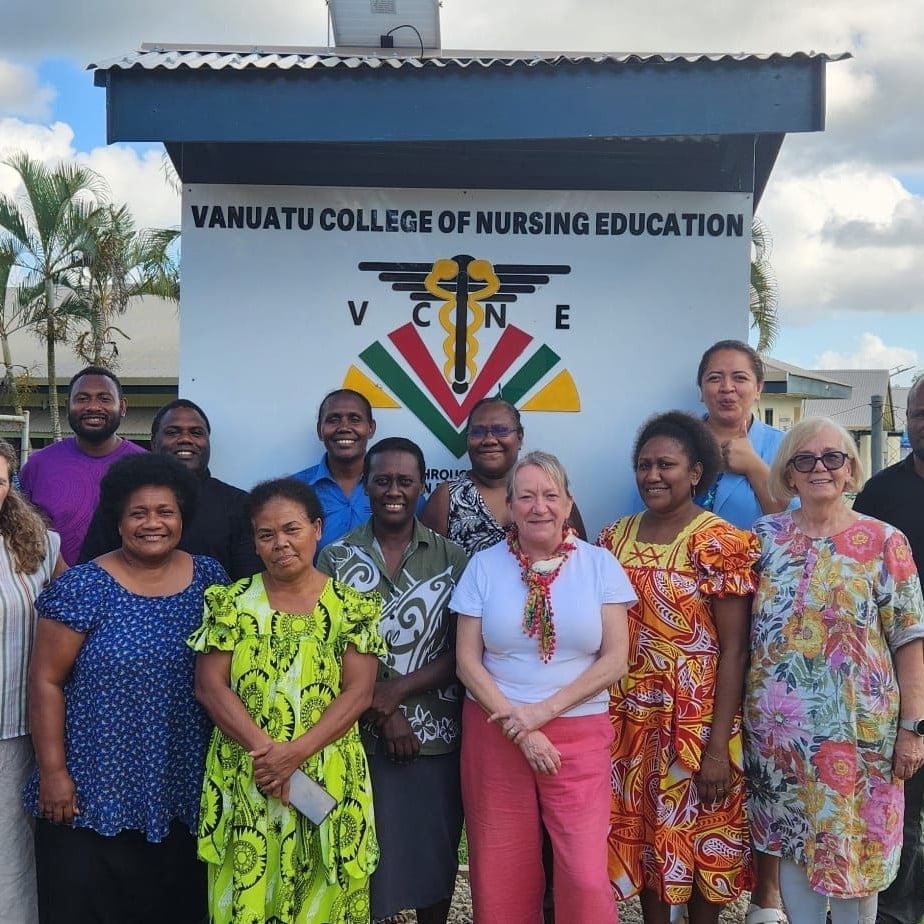
Vanuatu College of Nursing Education and UTS continue to support nurses through quality education
The Vanuatu College of Nursing Education (VCNE), under the Vanuatu Ministry of Health, has been continuously working towards strengthening nursing education...
News
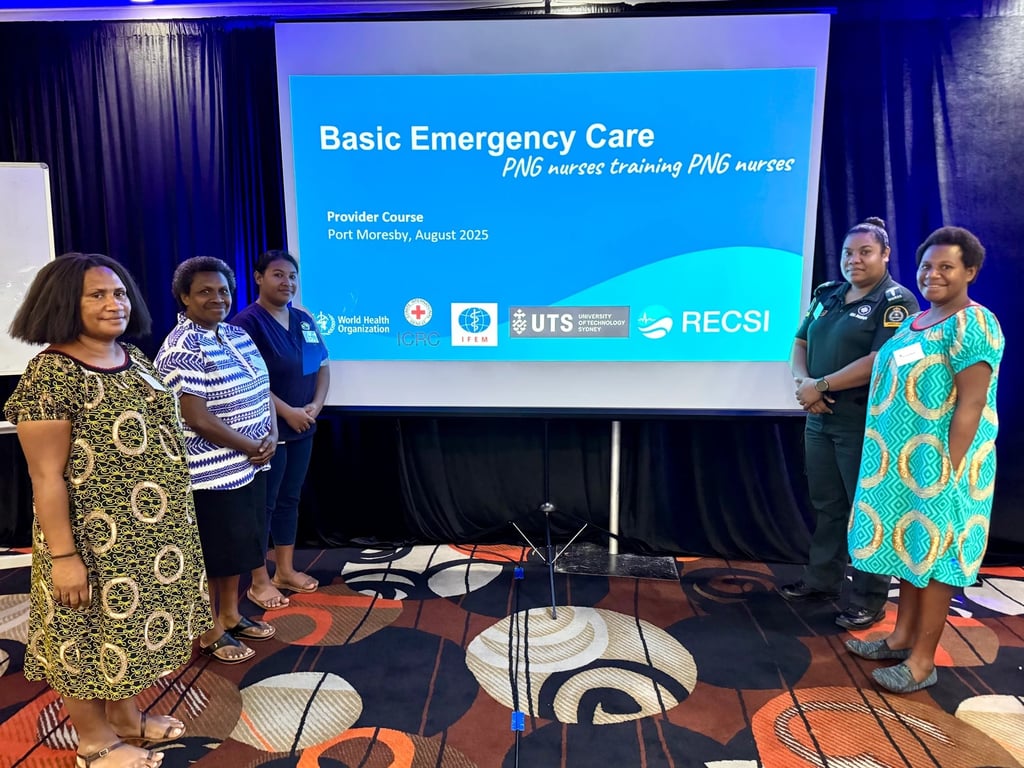
PNG Delivers Historic Emergency Care Training By Nurses, For Nurses
Held between August 18-22, 2025, the week-long course was a testament to local ownership of knowledge and practice, delivered by nurses, for nurses, with 18...
News
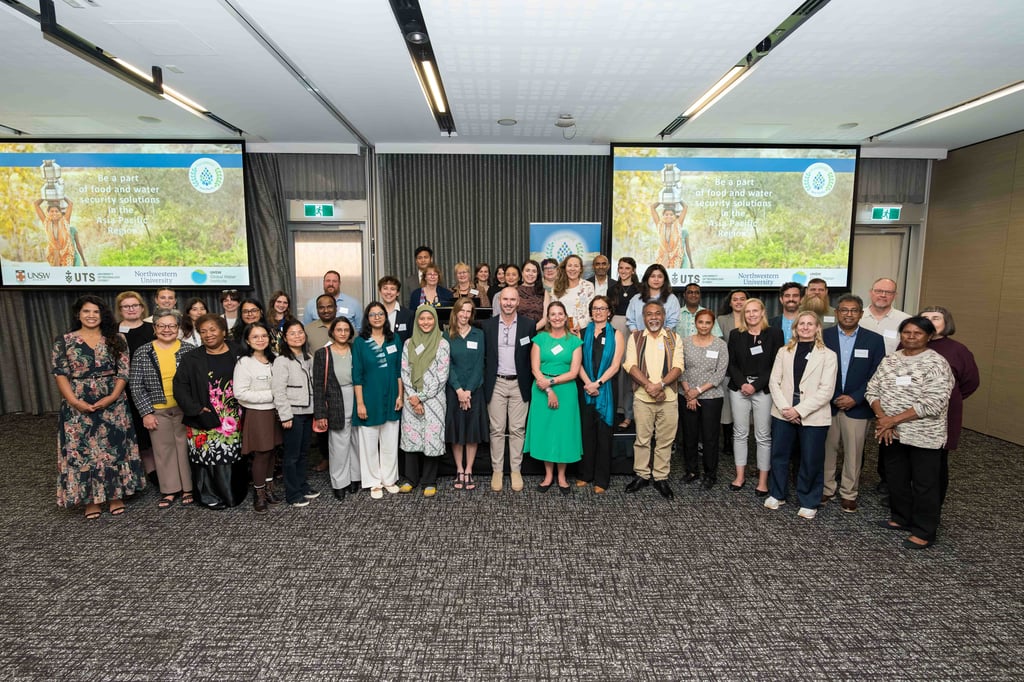
FoodWISE: Towards Food and Water Security in the Asia Pacific
Co-convened by Professor Jacqui Webster, (WHO Collaborating Centre of Nursing, Midwifery, and Health Development UTS), Professor Greg Lesie (UNSW Global Water...
News
Historical First-Ever Global Forum for WHO Collaborating Centres in Lyon
More than 800 WHO CCs across 80 countries attended, with 85 participants representing the Western Pacific Region’s Centres. WHO CCNMH Director, Professor...
News
Vanuatu College of Nursing Education and UTS continue to support nurses through quality education
The Vanuatu College of Nursing Education (VCNE), under the Vanuatu Ministry of Health, has been continuously working towards strengthening nursing education...
News
PNG Delivers Historic Emergency Care Training By Nurses, For Nurses
Held between August 18-22, 2025, the week-long course was a testament to local ownership of knowledge and practice, delivered by nurses, for nurses, with 18...
News
FoodWISE: Towards Food and Water Security in the Asia Pacific
Co-convened by Professor Jacqui Webster, (WHO Collaborating Centre of Nursing, Midwifery, and Health Development UTS), Professor Greg Lesie (UNSW Global Water...