


- Posted on 19 May 2026
- 4-minute read
Twelve UTS research projects with industry partners have secured approximately $6.9 million in Australian Government funding to tackle issues of national importance.
The Australian Research Council (ARC) has announced the latest grant recipients under its Linkage Projects scheme, which aims to strengthen national capability by supporting partnerships between researchers, industry and community organisations.
This year, UTS received over $6.86 million to support research across engineering, environmental sciences, human society and computer science that will enhance industrial productivity and develop sustainable technologies.
UTS Deputy Vice-Chancellor (Research), Professor Kate McGrath, emphasised the importance of investing in collaborative research with real-world applications.
“This latest round of grant announcements shows that we continue to excel at one of the things UTS is best known for: undertaking collaborative connected research with our industry partners that solves practical problems and generates real impact,” she said.
“Across AI, sustainability, energy and infrastructure, our researchers are focusing their efforts on addressing critical issues to help drive innovation, improve lives and contribute to a more resilient future.”
Each of the 12 awarded projects received a grant ranging from $394,000 to $727,000.
Find out more about each of the projects below.
UTS ARC Linkage Projects grant recipients
Adaptive foundation models for general robotic object manipulation
Team: Associate Professor Guodong Long; Professor Dikai Liu; Associate Professor Jing Jiang; Mr Aleksandar Krnjaic; Mr Morne Rathbone; Dr Andrew Wing Keung To.
Developing next-generation technologies for warehouse automation to help address ongoing labour shortages, high operational costs and low productivity in the Australian warehousing industry.
AI-driven decision support systems for dairy logistics intelligence
Team: Distinguished Professor Jie Lu; Professor Farookh Hussain; Dr Junyu Xuan; Associate Professor Yi Zhang; Mr Timothy Jason Jensen; Mr Richard (Rick) Waugh.
Revolutionising Australia’s dairy logistics industry by developing innovative AI-powered decision technologies that reduce costs, enhance productivity and drive sustainable business growth.
Intelligent and reliable monitoring and prediction of battery health state
Team: Professor JC Ji; Dr Huadong Mo; Professor Daoyi Dong; Dr Dong Gong; Mr Dickson Leow; Mr Fusen Guo; Ms Ke Xu.
Addressing the challenges of data quality and AI model interpretability in battery health monitoring by developing advanced techniques for estimating battery state of health and predicting remaining useful life.
Macrophyte biozones to control cyanobacterial blooms in water bodies
Team: Professor Simon Mitrovic; Associate Professor Stefan Felder; Associate Professor David Bishop; Professor Richard Stuetz; Dr Bojan Tamburic; Dr James Hitchcock; Dr Maddison Carbery.
Developing a water plant (macrophyte) biozone to control algal blooms, their toxins and reduce nutrient pollution in order to mitigate the effects of toxic cyanobacterial blooms on freshwater environments.
Scalable passive WiFi sensing for multi-occupant smart homes
Team: Professor Andrew Zhang; Professor Xiaojing Huang; Dr Anh Tuyen Le; Mr David Nguyen.
Enabling scalable and robust multi-occupant passive WiFi sensing by addressing key system and hardware limitations. It will advance WiFi sensing toward meeting the growing demand for privacy-preserving, device-free, and cost-effective human activity awareness across diverse real-world settings.
AI model security assessment and safeguards
Team: Associate Professor Bo Liu; Dr Zhen Fang; Mr Lesley Liao; Mr Hon Yu Tam.
Developing practical tools and methods to help organisations assess the security risks of artificial intelligence systems and protect them from cyber threats, thus supporting safer use of AI and strengthening Australia’s cybersecurity capability.
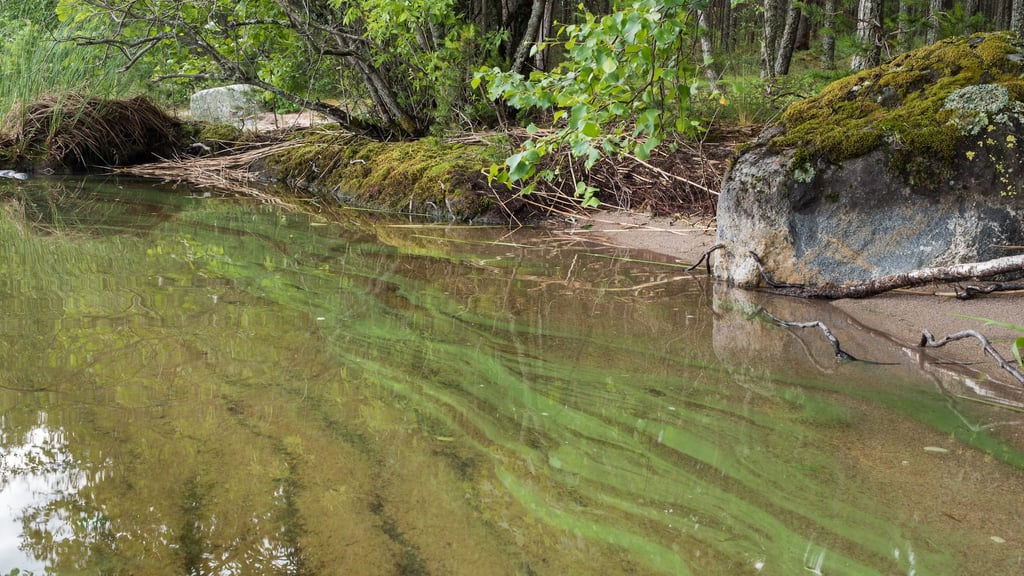
Nano-graphitic carbon from biomass for high-performance hybrid capacitors
Team: Dr Bing Sun; Dr Xiaodan Huang; Dr Jinqiang Zhang; Dr Jirayu Yuenyongsuwan; Dr Phansiri Suktha.
Revolutionising hybrid capacitor technology by engineering a functional material platform based on nano-graphitic carbons derived from Australia’s biomass. This project will enhance national manufacturing capabilities and support Australia’s transition to a sustainable, energy-resilient future.
Nanoscale interfacial ozone peroxide reaction to degrade forever chemicals
Team: Professor Long Nghiem; Dr Ashley Ansari; Professor Brett Turner; Dr Huan Liu; Dr Truong Minh Vu.
Developing and validating a novel treatment process using ozone nanobubbles and hydrogen peroxide to degrade per- and polyfluoroalkyl substances (PFAS), known as “forever chemicals” due to their persistence to degradation, in semiconductor wastewater and drinking water sources.
Circular silicon: from photovoltaic waste to rechargeable battery
Team: Professor Hao Liu; Dr Qinfen Gu; Mr Fusen Guo.
Recycling silicon from end-of-life solar panels to repurpose it as an anode material for rechargeable lithium batteries. This project is expected to reduce solar panel waste, lower battery production costs, and contribute to Australia’s leadership in sustainable energy technologies.
Social housing tenants navigating relocation
Team: Professor Alan Morris; Professor Wendy Stone; Dr Iris Levin; Dr Catherine Hastings; Professor Paul Watt.
Examining the impacts of relocation on social housing tenants over the medium and long-term using in-depth interviews and surveys with relocated tenants. The project aims to create actionable evidence to guide government policy that will be of value to government, community housing providers and tenants.
Novel light, durable and fire-resistant wood waste composite cladding panel
Team: Professor Yixia (Sarah) Zhang; Professor Richard (Chunhui) Yang; Associate Professor Xiaoshan Lin; Dr Khin Soe.
Enhancing construction sustainability and building safety by developing lightweight, durable, and fire-resistant cementitious composite materials and cladding panels via advanced manufacturing technology, where wood waste is integrated into an environment-friendly magnesium cement.
Powering the future with next-generation safe batteries
Team: Dr Nana Wang; Professor Andrew McDonagh; Dr Xiaobo Zheng; Mr Eric Li.
Developing high-energy-density and safe all-solid-state lithium-sulfur batteries and their scaled-up prototypes to facilitate the transition toward renewable energy. It will be driven by innovative solid-state electrolytes, efficient sulfur cathodes, and advanced lithium metal production techniques to achieve long lifespan, high energy density and enhanced safety.
News by topic
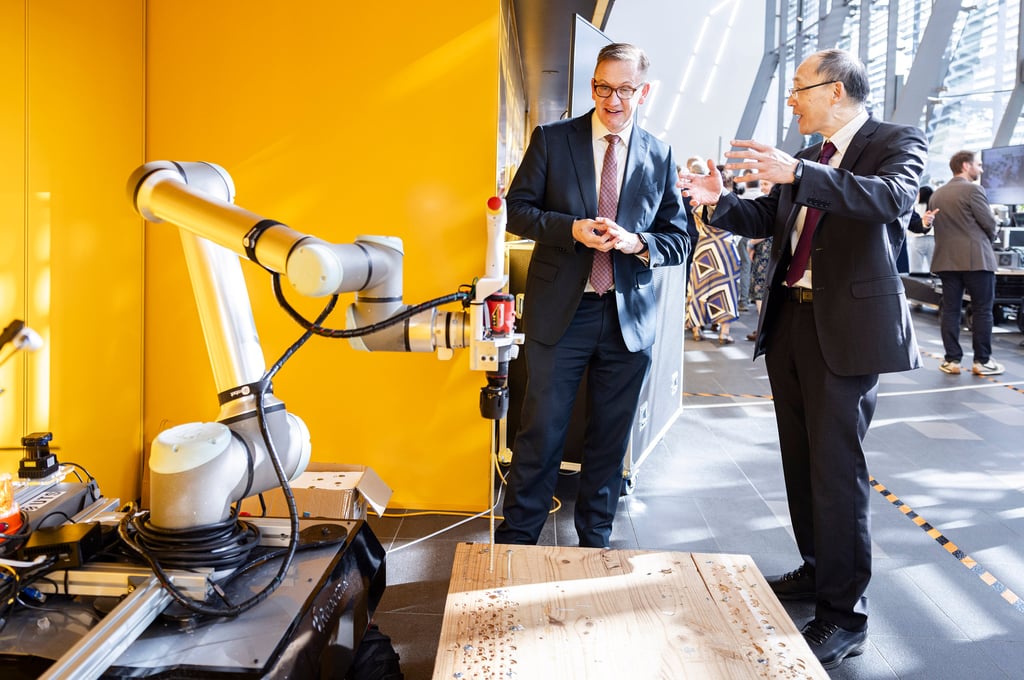
Building an industry of the future with robotics
Robots that can paint a wall, tile a floor, lift a pallet or handle small objects demonstrated at the launch of a new research hub to advance automation...
Professor Juliet Willetts appointed UN Special Rapporteur on human rights to water and sanitation
Professor Juliet Willetts will bring more than two decades of water and sanitation research and practice to her new role as a United Nations Special Rapporteur.
The AI leader building resilient cities
Distinguished Professor Fang Chen made a fellow of the Australian Academy of Technological Sciences and Engineering.
UTS 8th in Australia in global universities ranking
UTS placed 8th in Australia and 152nd in the world in 2027 Times Higher Education World University Rankings.
Building an industry of the future with robotics
Robots that can paint a wall, tile a floor, lift a pallet or handle small objects demonstrated at the launch of a new research hub to advance automation...
Professor Juliet Willetts appointed UN Special Rapporteur on human rights to water and sanitation
Professor Juliet Willetts will bring more than two decades of water and sanitation research and practice to her new role as a United Nations Special Rapporteur.
The AI leader building resilient cities
Distinguished Professor Fang Chen made a fellow of the Australian Academy of Technological Sciences and Engineering.
UTS 8th in Australia in global universities ranking
UTS placed 8th in Australia and 152nd in the world in 2027 Times Higher Education World University Rankings.