


- Posted on 24 Apr 2026
- 4-minute read
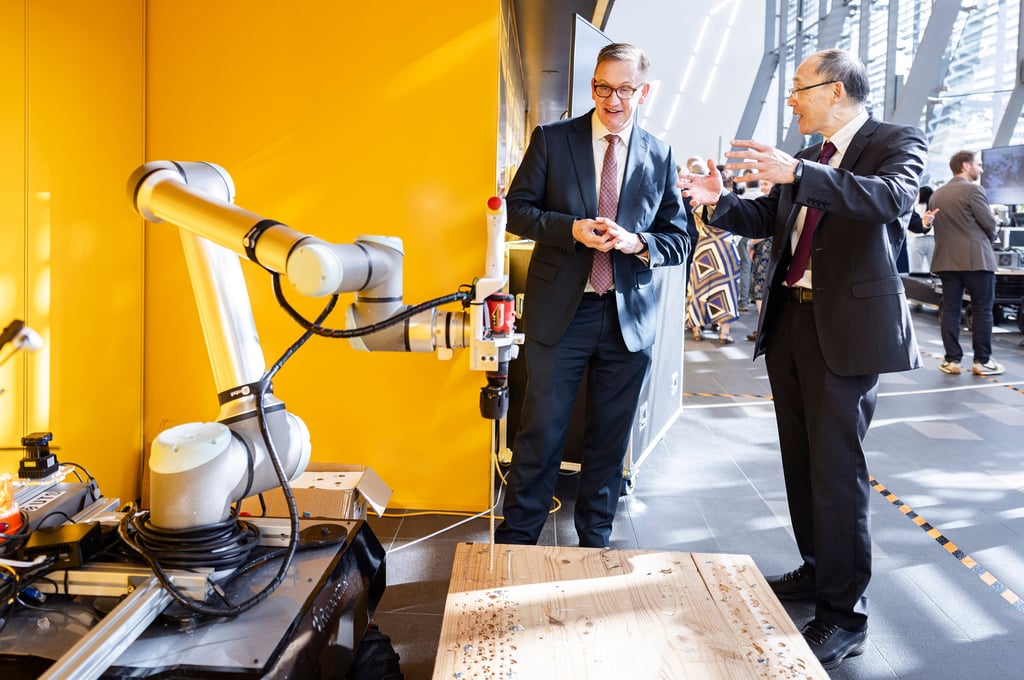
Robots that can paint walls, tile floors, lift pallets or handle small objects were demonstrated at the launch of a new research hub to advance automation technology in the construction industry.
The Australian Research Council Industrial Transformation Research Hub for Human-Robot Teaming for Sustainable and Resilient Construction (HartCon) is a $23 million research collaboration that brings together 7 universities with 15 construction companies, industry bodies and government agencies to explore the use of human-centred intelligent robots for infrastructure.
HartCon was launched by the Commonwealth Assistant Minister for International Education The Hon Julian Hill MP, Australian Research Council Deputy Chief Executive Officer Anthony Murfett, NSW Chief Scientist and Engineer Professor Hugh Durrant-Whyte and UTS Dean of Engineering and IT Professor Peta Wyeth at an event held in Sydney yesterday.
“Construction is one of the largest and most important industries in Australia making up between 7-9% of GDP and employing around 1.2 million Australians. But the industry faces a number of challenges including labour shortage and safety issues,” said Director of HartCon, Distinguished Professor Dikai Liu.
“Human-robot teaming is an emerging field that focuses on combining human judgement, creativity and adaptability with robotic precision, power and consistency. It has immense potential to address some of these issues in the industry.”
That’s where HartCon comes in. The hub aims to boost productivity, health and safety in the construction industry by advancing intelligent robotic technologies that foster seamless collaboration between people and robots.
Intelligent robots will be widely used for civil construction in the future. We’re helping build that future right now.
Running until 2029, HartCon is built around four research themes:
- Advancing technological foundations through research into advanced robotics, artificial intelligence, robot learning and human skills transfer.
- Understanding and advancing the people dimensions and workplace design of human-robot teaming in construction including more inclusive workplaces for women and older workers.
- Exploring the ecosystem that shapes the construction industry including economic trends, the labour market, technology, regulation and workforce skills and training.
- Ensuring confidence and trust in the outcomes achieved through human-robot teaming including quality assurance, workflows design and frameworks around trust and reliability.
““In future years, we’re going to see many more applications of new technology to help human workers in the construction industry, particularly combining AI and machine learning with robotic systems,” said Professor Liu, who is also Strategic Research Director at the UTS Robotics Institute.
“Bringing together a wide range of academic and industry expertise together we can help advance this. We have experts in construction, robotics, artificial intelligence, economics, human resources and the built environment all working towards the one goal.
“Intelligent robots will be widely used for civil construction in the future. We’re helping build that future right now.”
Hub director

Distinguished Professor Dikai Liu
Strategic Research Director, UTS Robotics Institute
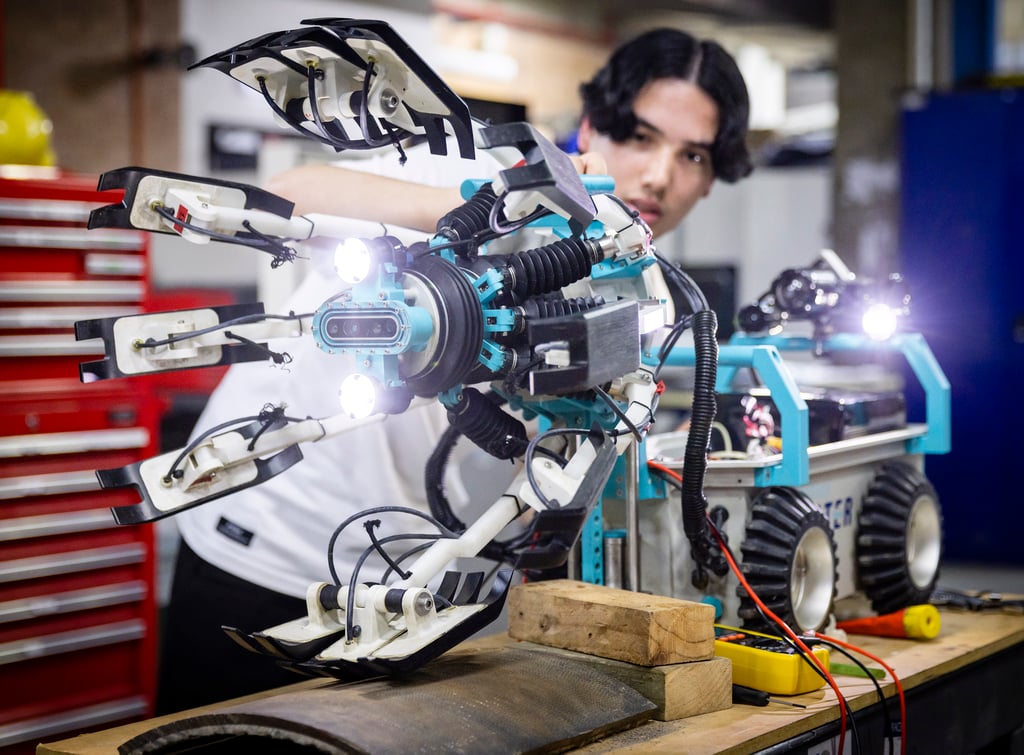
Building automation
Robots powered by artificial intelligence are revolutionising the construction industry.
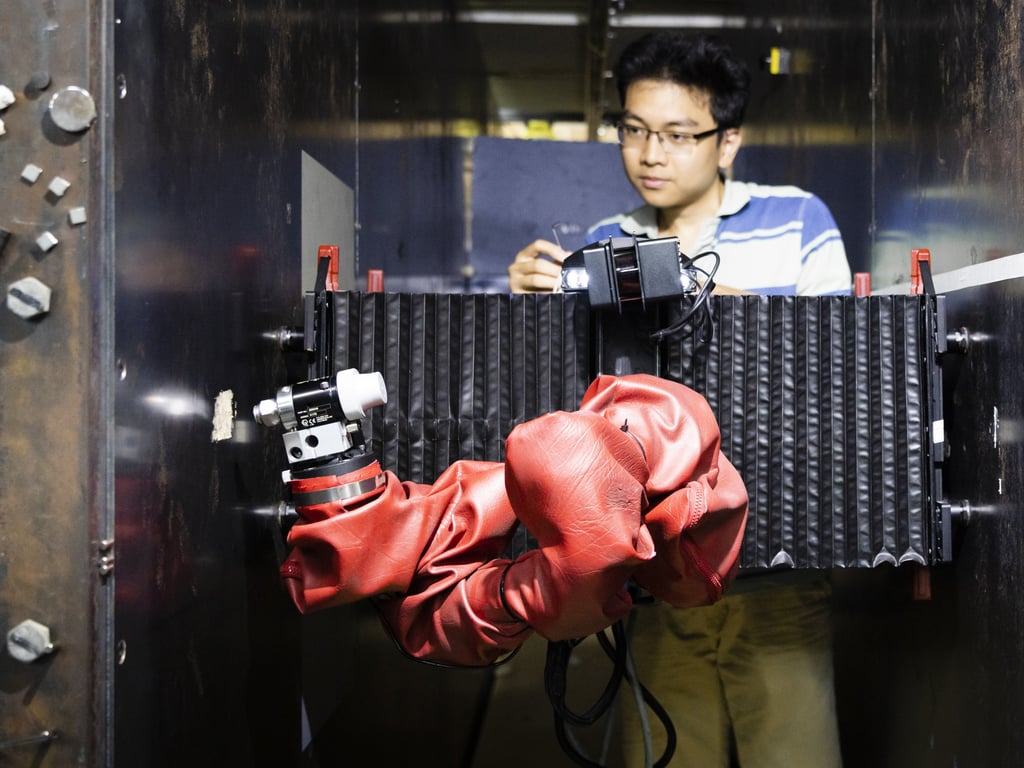
A chippy, a sparky ... and WALL-E
A world-first $23 million research hub will explore ways tradies can ‘get on the tools’ with robots on building sites in the future.
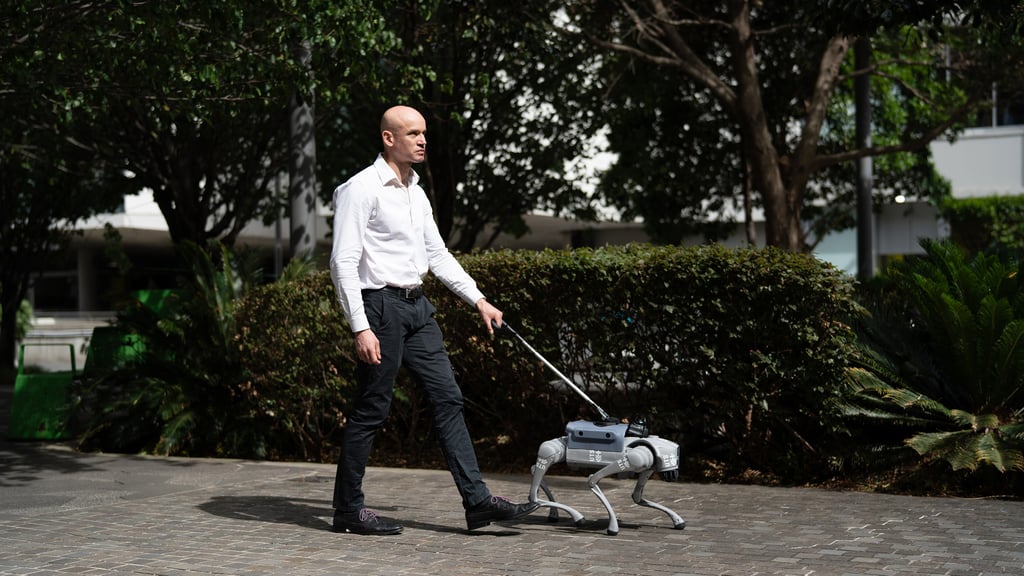
Eye robot: Inclusive mobility aid on leash for national award
An Australian-first robotic mobility aid for people who are blind or have low vision has taken out a leading national robotics award.
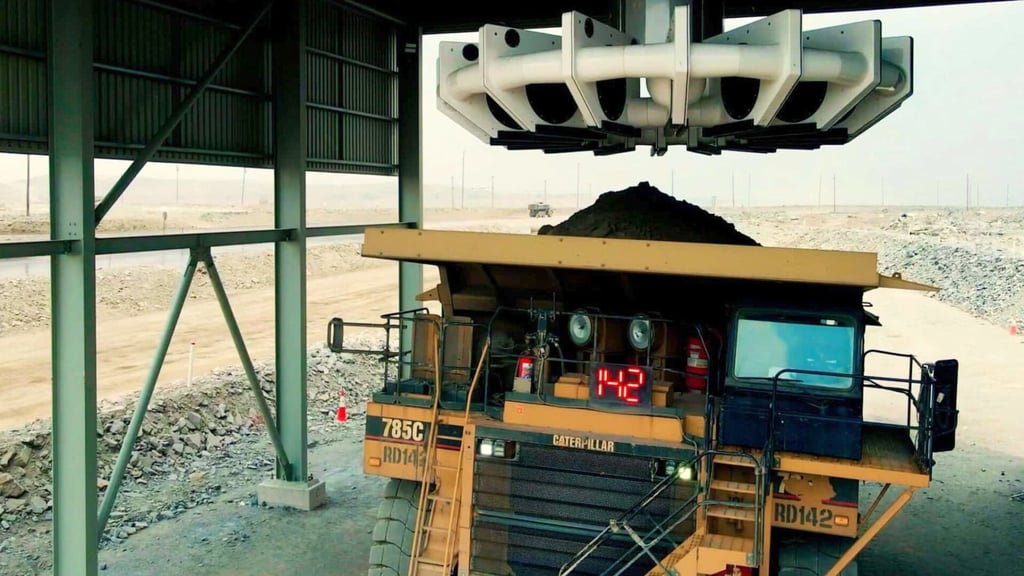
Robot sensors placed to make mining more efficient
UTS Robotics Institute is partnering with mining start-up NextOre on revolutionary ore scanning technology
Building automation
Robots powered by artificial intelligence are revolutionising the construction industry.
A chippy, a sparky ... and WALL-E
A world-first $23 million research hub will explore ways tradies can ‘get on the tools’ with robots on building sites in the future.
Eye robot: Inclusive mobility aid on leash for national award
An Australian-first robotic mobility aid for people who are blind or have low vision has taken out a leading national robotics award.
Robot sensors placed to make mining more efficient
UTS Robotics Institute is partnering with mining start-up NextOre on revolutionary ore scanning technology