


- Posted on 15 May 2026
- 8-minute read
By Michael Clarke, Elena Collinson, James Laurenceson, Wanning Sun and Marina Zhang
Fast Focus by the Australia-China Relations Institute at the University of Technology Sydney (UTS:ACRI) provides concise, informed commentary by UTS:ACRI experts and invited specialists on key developments in Australia-China relations.
IN FOCUS: What are the key takeaways for Australia from the May 14-15 summit between US President Donald Trump and PRC President Xi Jinping?
Dr Michael Clarke
UTS:ACRI Adjunct Associate Professor; Associate Professor, Deakin Centre for Future Defence and National Security, Deakin University
The most notable aspect of the initial discussions at the Trump-Xi summit in Beijing is Xi’s introduction of a new formulation of ‘constructive strategic stability’ to guide relations between the People’s Republic of China (PRC) and the US. This formulation, according to the official Xinhua report of the discussions, is defined as having four layers: ‘positive stability with cooperation as the mainstay’, ‘stability with moderate competition’, ‘stability with manageable differences’, and ‘an enduring stability with promises of peace’.
This is significant for two reasons. First, it demonstrates that while Beijing clearly sees US-PRC relations as ‘competitive’ it wishes to make it a bounded or managed competition. Second, it is suggestive of a desire to see these principles not only manage bilateral relations but also lay the foundations for the US and the PRC to selectively coordinate on systemic challenges.
The points of emphasis provided by both US and PRC readouts of the discussion however suggest there is convergence of interest in bounding bilateral competition – with both parties for example expressing common interest in stabilising the economic relationship - but divergence on the broader question of US-PRC coordination on global challenges such as the Strait of Hormuz, energy security or climate change.
Taken together this suggests that while both sides are at least looking to (re)establish a stable floor under the relationship (which after the turbulence of recent years is arguably a net positive), the visions of their respective roles in the international system remain distinct.
Elena Collinson
UTS:ACRI Manager, Research Analysis
Australia has a clear interest in US-PRC stability. The question is whether summit stability means reduced miscalculation, or accommodation over issues that directly shape the balance.
Xi’s ‘constructive strategic stability’ formulation suggests selectively cooperative competition. For Australia, the relevance lies in who defines its terms, and which issues are treated as manageable differences rather than matters of deterrence.
The asymmetry in time horizons matters here. Trump came seeking near-term deals; Xi is playing for stability over a longer horizon, framing 'constructive strategic stability' as a multi-year framework. For a country whose defence strategy depends on the durability of US alliance leadership, that asymmetry warrants attention.
The Strait of Hormuz remains unresolved. US deterrence and forward posture in the Indo-Pacific are under operational pressure while assets remain diverted to the Persian Gulf, shaping Beijing's assessment of leverage in any stabilisation process.
Trump's own summary captures the broader dynamic plainly: Xi ‘wants a lot of things’ from the US, ‘and we want things from them.’ For Australia, that transactional framing is the exposure. Stabilisation is beneficial if it preserves a favourable balance of power, consequential if it redefines that balance through bilateral understandings reached above allies' heads.
Professor James Laurenceson
UTS:ACRI Director
What Australia most wants is a stable US-PRC relationship where competition and differences are recognised but managed, and cooperation remains firmly in the frame. The Trump-Xi summit has delivered a high-level signal that this is a shared aspiration. The leaders’ comments ticked off on core national interests, such as Beijing’s position on Taiwan, but remained overwhelmingly positive and upbeat. That the US is now approaching the PRC with greater realism – in essence, accepting that it is a peer power, not one that can be bullied or coerced – also bodes well for stability going forward.
Talk of a ‘Board of Trade’ and a ‘Board of Investment’ also seems less worrying for Australia than the ‘Phase 1 trade deal’ in Trump’s first term. That earlier initiative threatened to hurt Australian exporters by forcing the PRC to preferentially purchase US goods. But this latest move appears more about freeing up US-PRC trade in non-sensitive goods, such as through cutting tariffs. The market will then decide how much trade flows.
Professor Wanning Sun
UTS:ACRI Deputy Director
Most reports in the Australian media focus on the so-called ‘three Ts’ – trade, Tehran and Taiwan – but Australia cannot afford to miss the broader symbolism.
First, the world’s two largest superpowers appear eager, at least for now, to prevent a hot war. ‘Constructive strategic stability’ has become the new shorthand for a period of détente. Some hawks in Australia may view this with scepticism or disappointment, and some are already nostalgic for the Biden era.
At the same time, the summit signals that, at least under Trump’s leadership, the US may be willing to soften aspects of its Cold War posture. Both sides appear interested in establishing a floor under economic exchange, managing escalation and disputes without total decoupling, and deepening and broadening cooperation despite ongoing structural competition.
Third, what may emerge is a period of ‘cold peace’. Alongside Beijing’s long-standing mantra of ‘peaceful coexistence’, this possibility is reflected in the very fact that the Trump-Xi summit took place at all.
As both a US ally and a partner of the PRC, Australia must decide whether to recalibrate its own positions and strategies accordingly, particularly regarding its commitment to AUKUS, or continue with business as usual.
Dr Marina Zhang
UTS:ACRI Associate Professor – Research
The Trump-Xi summit was framed as much by symbolism as by substance, so far. High-level security, temporary road controls, a 21-gun salute, the honour guard, children in colourful welcoming costumes, flowers on the negotiating table, the Temple of Heaven visit and the carefully staged banquet all conveyed the PRC’s distinctive hospitality and cultural confidence as host. They also projected, deliberately or otherwise, the authority of home ground.
Before more details emerge, one idea may help define the summit: a ‘constructive strategic-stability relationship’ between the PRC and the US. This means a tacit understanding between two great powers after repeated friction, one in which neither expects to change the other, neither seeks to overturn the other, both avoid direct violation of core interests, pursue profit where interests overlap and keep communication open on global flashpoints.
Taiwan appeared to be the unspoken issue behind the public smiles – not openly discussed, but central to the broader understanding. For Australia, the summit should therefore not be judged only by immediate or medium-term deliverables. Its larger significance lies in setting the tone for long-term bilateral management. AI development, deployment and governance also remain near the top of the agenda, as suggested by the presence of leading technology executives.
AUTHOR
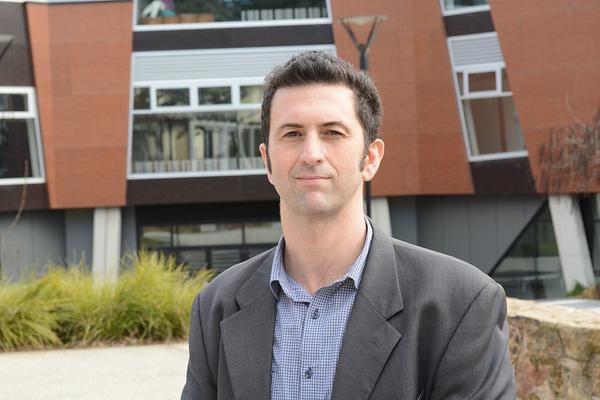
Michael Clarke
Adjunct Associate Professor, Australia-China Relations Institute, UTS and Associate Professor, Deakin Centre for Future Defence and National Security, Deakin University
AUTHOR

Manager, Research Analysis, Australia-China Relations Institute, University of Technology Sydney
AUTHOR

Director, Australia-China Relations Institute And Professor, DVC (International & Development)
Author

Deputy Director, Australian-China Relations Institute, DVC (International & Development)
AUTHOR

Associate Professor - Research, Australia-China Relations Institute, University of Technology Sydney
News
Australia-China Weekly Brief: October 2026 issues
The Australia-China Weekly Brief by the Australia-China Relations Institute at the University of Technology Sydney (UTS:ACRI) tracks key developments in...
News
The struggle over what China wants
China expertise is itself a field of epistemic struggle, shaped by competing convictions, dispositions and geopolitical perspectives. Doshi’s critique of Kang,...
News
Australia should turn critical minerals leverage into industrial capability
Australia’s Syerston Scandium Project is a test of whether critical minerals cooperation can make Australia not merely a supplier, but a critical capability...

News
PERSPECTIVES | Can Australia and China talk sensibly about AI Safety?
Australia will attend the APEC Economic Leaders’ Meeting in Shenzhen on November 18-19 2026 amid questions about the extent to which the two countries can, or...
News
Australia-China Weekly Brief: October 2026 issues
The Australia-China Weekly Brief by the Australia-China Relations Institute at the University of Technology Sydney (UTS:ACRI) tracks key developments in...
News
The struggle over what China wants
China expertise is itself a field of epistemic struggle, shaped by competing convictions, dispositions and geopolitical perspectives. Doshi’s critique of Kang,...
News
Australia should turn critical minerals leverage into industrial capability
Australia’s Syerston Scandium Project is a test of whether critical minerals cooperation can make Australia not merely a supplier, but a critical capability...
News
PERSPECTIVES | Can Australia and China talk sensibly about AI Safety?
Australia will attend the APEC Economic Leaders’ Meeting in Shenzhen on November 18-19 2026 amid questions about the extent to which the two countries can, or...