
- Posted on 29 May 2026
- 9-minute read read
By Lai-Ha Chan
This article appeared in UTS:ACRI's Perspectives on May 29 2026. Perspectives is the commentary series of the Australia-China Relations Institute at the University of Technology Sydney (UTS:ACRI), offering research-informed viewpoints on developments and debates in the Australia-China relationship.
A distinct pattern of middle power diplomacy is emerging as confidence in both Washington and Beijing becomes more uncertain. From Ottawa to Tokyo, Brussels to New Delhi, and Canberra to Seoul, governments are seeking new ways to protect their autonomy in a world where both great powers can generate risk. For Australia, the stakes are especially clear. The challenge is not only to manage rivalry between the US and the People’s Republic of China (PRC), but also to understand whether today’s middle power activism is best described as ‘hedging’, or whether something different is taking shape.
In recent months, leaders of major middle powers have been visiting one another and signing agreements, mainly in the areas of trade, economic cooperation, energy security and defence. To understand this activity, it is useful to begin with the ‘Carney doctrine’.
At the World Economic Forum annual meeting in Davos in January 2026, Canadian Prime Minister Mark Carney called on like-minded middle powers to ‘act together’ because there had been a ‘rupture in the world order’ under the second Trump presidency. In this ruptured order, ‘the strong can do what they can, and the weak must suffer what they must’. For Carney, the ‘strong’ did not refer only to the PRC but also to the US under Trump.
That message should resonate in Australia. Canberra has already sought to diversify markets, build resilience against economic coercion and avoid a binary choice between Washington and Beijing. If US-PRC rivalry hardens, or gives way to a G2-style condominium, Australia’s room for manoeuvre will narrow.
The wider pattern is visible across several regions. Following Davos, Carney visited India, Japan and Australia in February and March 2026. In January, Italian Prime Minister Giorgia Meloni visited Japan, where the two governments upgraded their relationship to a special strategic partnership. Although both Meloni and Japanese Prime Minister Sanae Takaichi are often regarded as ideologically right-wing and close to Trump, they jointly emphasised the importance of a rules-based international order.
A high-level European Union delegation visited India in January 2026 and concluded a free trade agreement that was described as the ‘mother of all trade deals’, alongside a defence and security partnership. In the same month, the EU signed a partnership agreement with the Mercosur bloc of South American countries. Japan is also set to negotiate with Mercosur towards an economic partnership agreement, partly to reduce dependence on crude oil imports from the Middle East and on Chinese rare earth minerals. Meanwhile, Japan and South Korea have moved to strengthen cooperation in supply chains and energy security, with their leaders meeting four times in six months, including visits to each other’s hometowns.
This raises the question of whether ‘hedging’ is the right term for what middle powers are now doing. Suzanne Nossel of the Chicago Council on Global Affairs has suggested that ‘hedging is now the new normal’. But what does ‘hedging’ mean in the context of international relations?
Before the term entered the vocabulary of international relations, it was widely used in finance. Hedging refers to a strategy designed to reduce the risk of loss in volatile markets by holding opposing positions at the same time. In international relations, the concept similarly describes states avoiding full commitment to one side in a rivalry and maintaining ties with competing powers to preserve flexibility.
In practice, the concept has most often been applied to the way middle powers manage the opportunities and risks created by US-PRC competition.
On this understanding, however, much of today’s middle power diplomacy is not hedging in the conventional sense. Rather than balancing between two opposing poles, middle powers are increasingly acting together to reduce dependence on both the PRC and the US. This is because the Trump administration is seen by many middle powers as generating risks that, while different in form, resemble those associated with the PRC under Xi Jinping, including the use of asymmetric interdependence, market access and pressure to extract concessions.
This comparison should be made carefully. The US and the PRC remain very different powers, and Australia’s relationships with each are fundamentally different. Yet from Canberra’s perspective, both relationships now require more active risk management, especially as any shift in US policy towards the broader regional balance would directly affect Australia’s strategic environment.
Japan’s experience is instructive. Reported delays in the delivery of 400 US Tomahawk missiles to Japan, attributed to depleted US weapons stockpiles amid the US/Israel war on Iran, have reinforced doubts about the reliability of American defence supply chains. Tokyo was also reportedly concerned before the Trump-Xi summit that Washington might offer concessions on Taiwan, reviving memories of the 1971 ‘Nixon shock’ when Japan was caught off guard by US-PRC rapprochement.
India’s experience points to a similar problem. Although Washington has often treated India as an important partner in balancing the PRC, the second Trump administration has also viewed India through a more transactional and competitive lens. In August 2025, White House Deputy Chief of Staff Stephen Miller accused India of financing Russia’s war against Ukraine by buying Russian oil. At the Raisina Dialogue in New Delhi in March 2026, US Deputy Secretary of State Christopher Landau warned that the US would not ‘make the same mistakes with India’ that it had ‘made with China 20 years ago’, mistakes he said had allowed the PRC to ‘develop all these markets’ and ‘beat [the US] in a lot of commercial things’. The implication is significant. For parts of the US right, the lesson of the PRC’s rise is not simply that Washington should strengthen partners such as India, but that it should be wary of enabling any rising power that might later challenge US economic interests.
Although the PRC and the US still compete across many fronts, including technology, middle powers are also alert to the opposite risk – a possible G2-style accommodation in which Washington and Beijing tacitly recognise each other’s spheres of influence. Whether through rivalry or condominium, middle powers lose room for manoeuvre.
This is why ‘hedging’ only partly captures what is happening. Hedging assumes that middle powers can manoeuvre between two meaningfully opposed great powers. But where both powers generate risk, or where their interests converge at the expense of smaller states, there is little space to hedge. The more important task becomes reducing vulnerability by building networks that give middle powers greater collective weight.
Australia illustrates this dilemma. It cannot afford excessive dependence on the PRC, its major economic partner, or excessive reliance on the US, its principal security ally. In an ‘un-order’ world, and with the Quad and AUKUS becoming less central under Trump 2.0, Canberra needs to move closer to the Carney doctrine, working with like-minded middle powers to preserve stability and defend the liberal international order.
As academic Nick Bisley suggests, middle powers such as Australia must adapt to a world in which order can no longer be assumed by cultivating diversified partnerships, regional coalition-building, stronger domestic capabilities and a more proactive role in shaping Indo-Pacific norms and institutions.
AUTHOR
Lai-Ha Chan
Research Associate, Australia-China Relations Institute, University of Technology Sydney; Senior Lecturer, Social and Political Sciences Programme, University of Technology Sydney

News
Linda Reynolds lives in a time warp, desperate to accelerate AUKUS to face an imaginary war
The former defence minister’s op-ed in The Australian is a classic example of the industrial-military-media complex at work, aimed at terrifying the public...
News
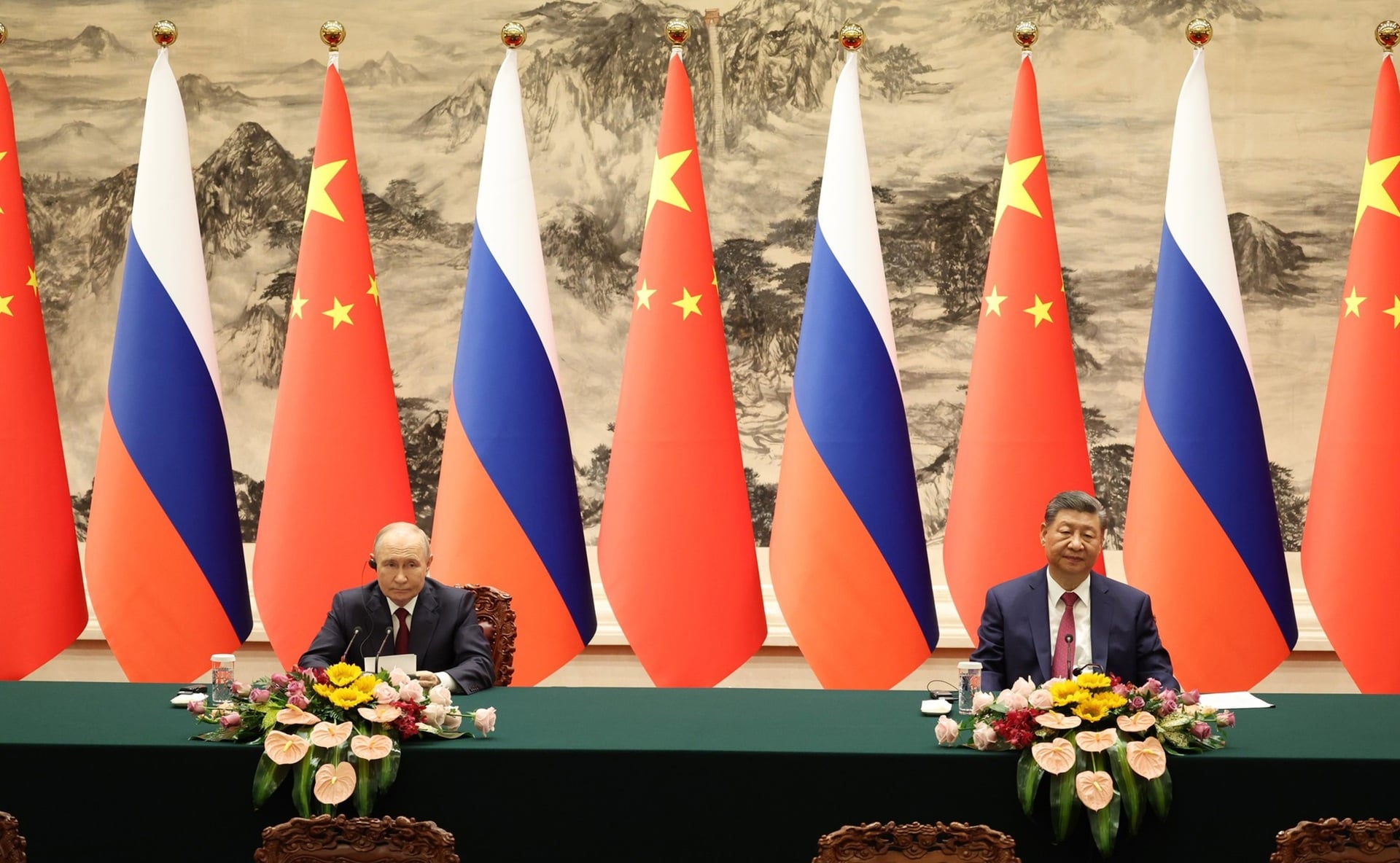
The Putin-Xi Summit and the Asymmetry of the China-Russia Partnership
While both states share dissatisfaction with the Western-led international order and seek a more multipolar system, the summit revealed important differences.

News
Australia and its China agenda: balancing contestation and engagement
This article appeared in The Pacific Review, published online May 26 2026 https://doi.org/10.1080/09512748.2026.2672990

News
Australia is forcing Chinese investors out of rare‑earths projects. That creates other risks
As a country with deep ties with both China and the US, Australia faces a hard balancing act in protecting its own interests, without putting either major...
News
Linda Reynolds lives in a time warp, desperate to accelerate AUKUS to face an imaginary war
The former defence minister’s op-ed in The Australian is a classic example of the industrial-military-media complex at work, aimed at terrifying the public...
News
The Putin-Xi Summit and the Asymmetry of the China-Russia Partnership
While both states share dissatisfaction with the Western-led international order and seek a more multipolar system, the summit revealed important differences.
News
Australia and its China agenda: balancing contestation and engagement
This article appeared in The Pacific Review, published online May 26 2026 https://doi.org/10.1080/09512748.2026.2672990
News
Australia is forcing Chinese investors out of rare‑earths projects. That creates other risks
As a country with deep ties with both China and the US, Australia faces a hard balancing act in protecting its own interests, without putting either major...