


- Posted on 28 Apr 2026
- 4-minute read
By James Laurenceson
This article appeared in UTS:ACRI's Perspectives on April 28 2026. Perspectives is the commentary series of the Australia-China Relations Institute at the University of Technology Sydney (UTS:ACRI), offering research-informed viewpoints on developments and debates in the Australia-China relationship.
When Prime Minister Anthony Albanese landed in Shanghai in July 2025, he was keen to emphasise the trade relationship between Australia and the People’s Republic of China (PRC). This was unsurprising. In 2024-25, two‑way trade topped $300 billion for the third year running.
But he was on less comfortable footing when a journalist asked a simple question: ‘What is your message to Chinese investors?’
The reporter noted that Australia would need foreign capital to develop new industries being promoted on the visit, such as green iron. They also pointed out a view now widely held in the PRC, that ‘Australia no longer welcomes Chinese money’.
Albanese replied that Australia ‘depends on foreign capital’ and ‘welcomes investment’, while stressing that proposals must pass a national‑interest test applied by the Foreign Investment Review Board (FIRB), on a case‑by‑case basis.
He repeated the same line two days later in Beijing.
Diplomatic language aside, the reality is stark: new Chinese investment in Australia has collapsed.
China no longer appears in FIRB’s list of the top 10 investor countries. Best available estimates indicate that Chinese investment approvals in 2024-25 totalled somewhere between $2.2 and $2.8 billion. That compares with $122.3 billion approved for US investors alone, and $190.7 billion for the top 10 countries combined.
Even that understates the scale of the decline.
When the China-Australia Free Trade Agreement (ChAFTA) was signed in 2015, Canberra also promoted the agreement as providing ‘a basis to deepen and diversify the bilateral investment relationship’.
By then Chinese investment in Australia – which only started taking off around 2007 – had already built up a stock that lagged only the US, Japan, the UK and the Netherlands.
Since 2019, that stock has gone backwards. According to the Australian Bureau of Statistics, Chinese investment holdings in Australia have fallen by almost $11 billion – a drop of nearly a quarter. In other words, it’s not just that new projects have dried up; existing investors have started pulling out.
In one case, the lease to operate Darwin Port, an asset acquired by a Chinese investor through a commercial process more than a decade ago, is now facing forced divestment.
What makes this trend stand out even more is that it runs directly against broader trends. Since 2019 the total stock of foreign investment in Australia has grown by around 80 percent. China’s overseas investment stock has nearly tripled over the same period, with many Asia‑Pacific countries remaining keen hosts.
So why is Australia different?
A new report by the Australia-China Relations Institute at the University of Technology Sydney (UTS:ACRI), Closing the Door: Why Chinese Investment in Australia is Collapsing Even as Investors Go Global, draws on more than 20 interviews with investors, advisers and regulators, backed by extensive comments from industry peak bodies and surveys of their memberships.
Its central conclusion is clear. While global factors and some on the PRC side matter, changes in Australian government policy have been decisive.
More Chinese investment proposals are now judged contrary to the national interest. National security concerns loom larger, while the list of sectors, assets and locations deemed sensitive continues to expand.
Interviewees were careful to acknowledge that security concerns are, in their words, ‘real’, ‘legitimate’ and ‘necessary’. But the overwhelming view was that the current system lacks clarity, transparency and predictability - with negative consequences that extend well beyond the firms directly affected.
Words used to describe FIRB’s processes included ‘a black box’, ‘no‑man’s land’, ‘irrational’ and ‘cumbersome’.
The experiences of long‑established Chinese investors are particularly striking. Beijing Energy International Australia has operated here since 2014, yet since 2023 it has had two large renewable energy investments fall over because it was unable to secure FIRB approval, even after nearly two years of trying.
From Canberra’s perspective, this does not amount to closing the door. Instead, tighter screening is seen as a prudent response to growing US-China strategic competition, and as necessary to maintain public confidence that Australia’s interests are being protected.
But the government has also been clear about something else: economic security underpins national security.
What remains unexplained is how Australia plans to strengthen its economic security while increasingly walling itself off from an expanding pool of world‑leading Chinese companies, technologies and supply chains.
In many sectors, an American or Japanese investor is not a like‑for‑like substitute. Chinese firms often offer superior technology, deeper talent pools and unparalleled access to fast‑moving regional supply chains.
Some business leaders report tentative green shoots in recent conversations with officials. But there is no concrete evidence yet of a meaningful policy reset.
For now, the baseline expectation is that Canberra will continue to view Chinese investment primarily through the lens of individual project risks.
The danger is that such decisions ultimately deliver the opposite – gradually weakening Australia’s economic security and, in turn, its national security.
AUTHOR

Director, Australia-China Relations Institute And Professor, DVC (International & Development)
News
Australia-China Weekly Brief: October 2026 issues
The Australia-China Weekly Brief by the Australia-China Relations Institute at the University of Technology Sydney (UTS:ACRI) tracks key developments in...
News
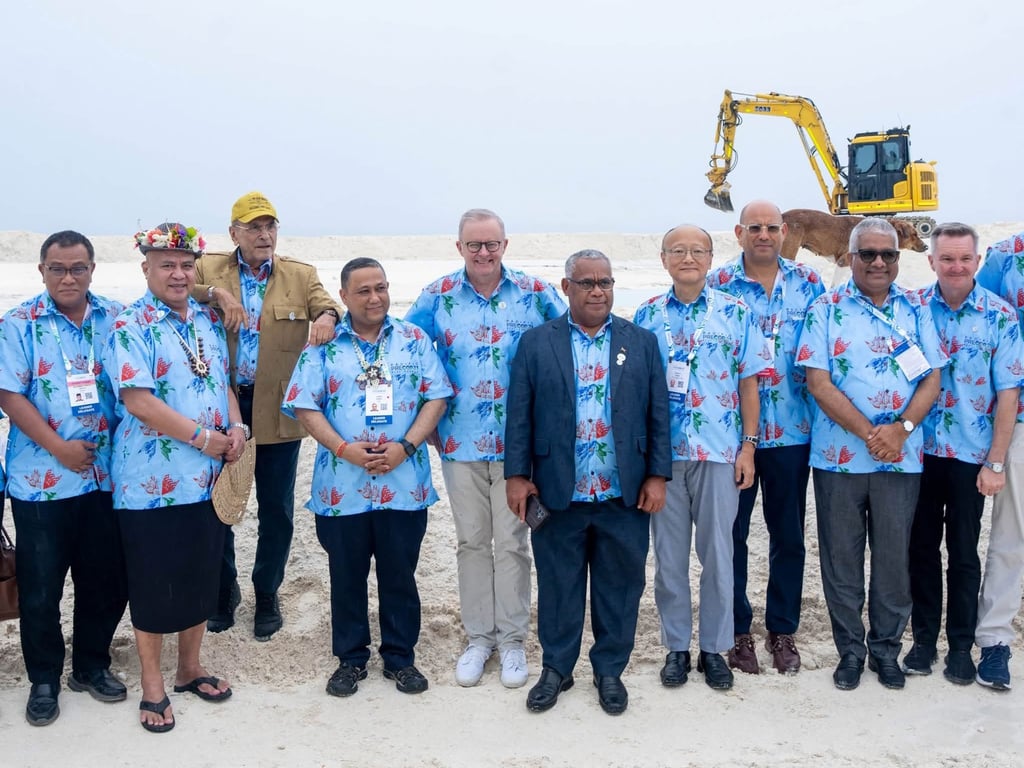
Whose security counts in the Pacific?
While climate-related spending gets criticised, billions forked out for security and strategic engagement gets framed as for the “national interest”.
News
Australia-China Weekly Brief: September 2026 issues
The Australia-China Weekly Brief by the Australia-China Relations Institute at the University of Technology Sydney (UTS:ACRI) tracks key developments in...
News
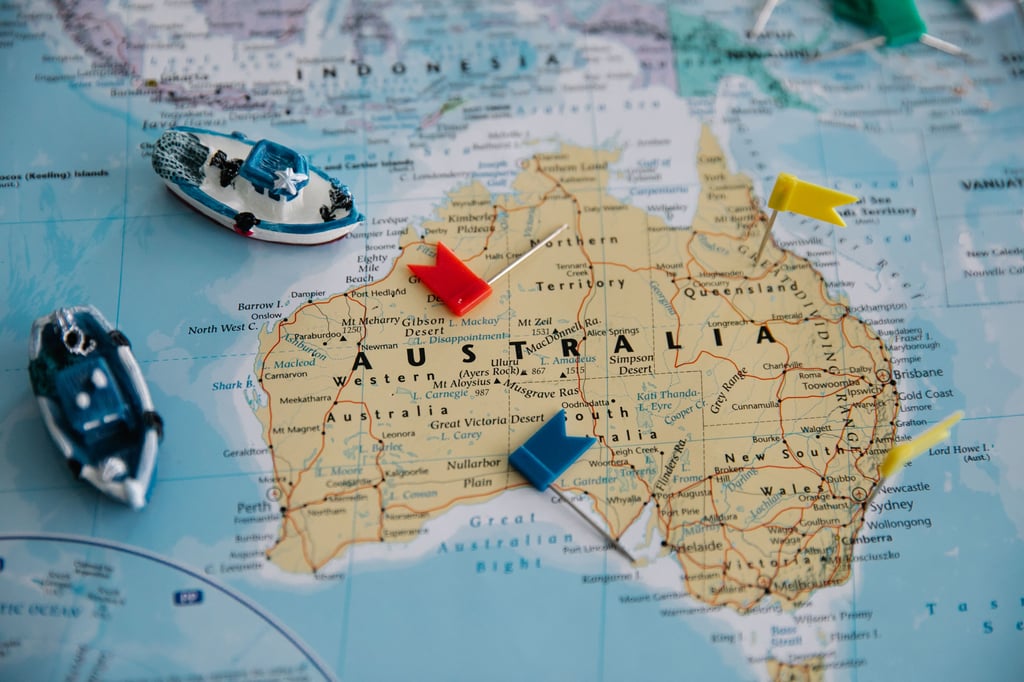
If we asked the Americans to leave, would they?
Canada is looking for ways to protect its independence from Washington. Australia has embedded itself so deeply in the US military system that it risks being...
News
Australia-China Weekly Brief: October 2026 issues
The Australia-China Weekly Brief by the Australia-China Relations Institute at the University of Technology Sydney (UTS:ACRI) tracks key developments in...
News
Whose security counts in the Pacific?
While climate-related spending gets criticised, billions forked out for security and strategic engagement gets framed as for the “national interest”.
News
Australia-China Weekly Brief: September 2026 issues
The Australia-China Weekly Brief by the Australia-China Relations Institute at the University of Technology Sydney (UTS:ACRI) tracks key developments in...
News
If we asked the Americans to leave, would they?
Canada is looking for ways to protect its independence from Washington. Australia has embedded itself so deeply in the US military system that it risks being...