


- Posted on 29 Apr 2026
- 4-minute read
This month, UTS was proud to be the first Australian university to partner with Monash University to undertake Brave Conversations training, a highly regarded development program designed to support constructive dialogue in complex and contested spaces.
Brave Conversations responds to the challenge of holding space for diverse perspectives amid heightened social, political and cultural tensions by shifting the focus away from what people disagree about, and towards how those disagreements are navigated.
“In an increasingly complex world, our responsibility as a university is not to shy away from challenging conversations, but to create the conditions for them to be navigated well. At UTS, fostering the skills to achieve this is central to how we sustain open inquiry and respectful learning alongside a sense of shared purpose,” said Professor Andrew Parfitt, Vice-Chancellor and President at UTS.
The two-day program brought together UTS leaders, student‑facing academic and professional staff, and student leaders.
This initiative reflects UTS’s deep commitment to fostering a safe, respectful and inclusive community where difficult conversations are not avoided, but handled with care, curiosity and authenticity.
In an increasingly complex world, our responsibility as a university is not to shy away from challenging conversations, but to create the conditions for them to be navigated well.
Conceived and delivered by Dr Daniel Heller from the Australian Centre for Jewish Civilisation and Dr Farid Zaid from Monash University’s Turner Institute for Brain and Mental Health, the training focuses on practical, evidence‑based tools to engage constructively in disagreement, safeguard open inquiry and strengthen learning communities.
Farid and Daniel have been awarded a grant from the Department of Home Affairs to deliver this training across higher education institutions throughout Australia, including both the university and TAFE sectors.
As part of this national rollout, they are planning to visit every capital city, as well as a range of regional centres, with the aim of supporting diverse educational communities across the country to engage more confidently and constructively with difficult conversations.
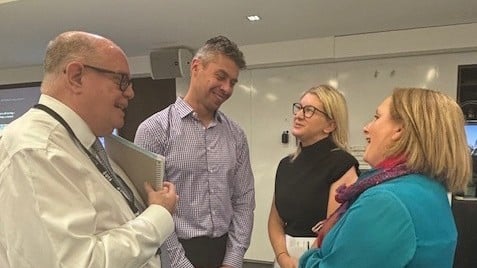
Reflections from UTS participants
Fifth year Business and Law student, Humzah, said one of the most powerful aspects of the workshop was its focus on understanding others’ perspectives more deeply.
“The most significant insight I gained from the Brave Conversations workshop was the fundamental importance of active listening and fostering a genuine understanding of others' experiences. This is particularly relevant given the contemporary media landscape, where specific agendas are promoted, often at the expense of factual accuracy and impartiality.
“In order to cultivate safer learning environments and a more inclusive and considerate culture at UTS, I believe the foundation must lie in the university's commitment to actively listening to and understanding the needs and concerns of its students, rather than allowing decisions to be influenced by external pressures or interests.
“While UTS has demonstrated commendable progress in this area, there remains meaningful opportunity to further strengthen and expand upon initiatives that promote safer and more supportive learning spaces.”
The session reinforced the importance of staying open, asking better questions, and holding space for differing perspectives rather than rushing to closure.
Kumar Srinivasan, Director of Risk & Insurance at UTS, reflected on the relevance of the training for leadership roles:
“I particularly valued the workshop’s emphasis on trading certainty for curiosity, delivered with a mix of wit and genuinely thought-provoking content.
“It was a timely reminder that effective leadership on campus is as much about how we listen as it is about the decisions we ultimately make. In my role, I often navigate complex and sensitive issues. The session reinforced the importance of staying open, asking better questions, and holding space for differing perspectives rather than rushing to closure.”
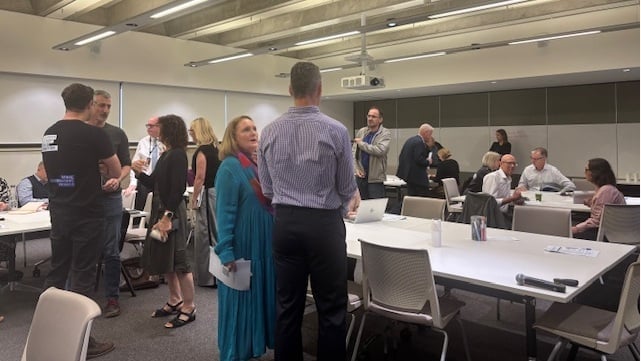
Supporting dialogue in increasingly complex environments
Drawing from research across psychology, education, neuroscience and philosophy, the Brave Conversations program emphasises skills such as active listening, intellectual humility, emotional regulation, and reflective questioning, supporting participants to remain engaged through discomfort, resist polarisation, and approach disagreement as an opportunity for learning and growth.
As the first university outside Monash to undertake the program, UTS hopes to broaden the reach of this work and explore how evidence‑informed dialogue practices can be meaningfully embedded across higher education.
This complements UTS’s existing efforts to create safer, more inclusive learning environments and to strengthen the skills required across classrooms, student services and leadership roles.
Together, these elements contribute to mapping out a way forward for institutions navigating increasing complexity to not avoid difficult conversations, but to lean into them with the care, humility, and human connection to engage thoughtfully and kindly.
News by topic
News
Moving from ‘cultural diversity’ to anti-racism
Over the past year Australia has been confronted with deeply disturbing reminders of the harm that racism drives and enables.
News
UTS improving complaint handling
UTS accepts all National Student Ombudsman recommendations and welcomes report.

News
Strengthening safety and support: UTS response to the National Code on gender-based violence
Student safety is at the heart of what we do at UTS. Creating a campus where people feel safe, respected and supported is not only our legal responsibility, it...

News
UTS 8th in Australia in global universities ranking
UTS placed 8th in Australia and 152nd in the world in 2027 Times Higher Education World University Rankings.
News
Moving from ‘cultural diversity’ to anti-racism
Over the past year Australia has been confronted with deeply disturbing reminders of the harm that racism drives and enables.
News
UTS improving complaint handling
UTS accepts all National Student Ombudsman recommendations and welcomes report.
News
Strengthening safety and support: UTS response to the National Code on gender-based violence
Student safety is at the heart of what we do at UTS. Creating a campus where people feel safe, respected and supported is not only our legal responsibility, it...
News
UTS 8th in Australia in global universities ranking
UTS placed 8th in Australia and 152nd in the world in 2027 Times Higher Education World University Rankings.