


- Posted on 27 Mar 2026
- 45-minute read
By Marina Zhang, Shengpeng Wang, Yanhui Wei and Zuanxu Chen
share_windows This article was published in Science and Public Policy, 2026. https://doi.org/10.1093/scipol/scag017
ABSTRACT
Global AI research has shifted from an open, collaborative enterprise to a domain shaped by strategic rivalry. This study examines the evolution of international AI research collaboration networks from 2000 to 2025 through bibliometric and social network analysis of 1.4 million publications from the Web of Science. We identify four phases: a unipolar Western-led network (2000–2009), China’s rise and bipolar emergence (2010–2016), peak collaboration amid geopolitical strain (2017–2021), and strategic bifurcation (2022–2025). The findings reveal asymmetric centrality: China dominates in publication volume, while the US retains structural influence. Rather than emerging solely from intrinsic scientific dynamics, collaboration patterns are increasingly shaped by political interventions and techno-industrial strategies. Technological breakthroughs catalyse investment cycles that reshape global networks, while geopolitical forces disrupt established partnerships. The study highlights the policy imperative to support multi-polar research ecosystems, empower intermediary ‘bridge’ nations, and pursue nuanced strategies that balance competition with sustained international cooperation.
share_windows Read the article online here.
AUTHOR

Associate Professor - Research, Australia-China Relations Institute, University of Technology Sydney
Shengpeng Wang
College of Landscape Architecture, Zhejiang Agriculture and Forestry University, China
Yanhui Wei
School of Management, Shandong Technology and Business University, China
Zuanxu Chen
Institute of Finance and Trade, Sichuan Academy of Social Sciences, China
News
Australia-China Weekly Brief: October 2026 issues
The Australia-China Weekly Brief by the Australia-China Relations Institute at the University of Technology Sydney (UTS:ACRI) tracks key developments in...

News
The struggle over what China wants
China expertise is itself a field of epistemic struggle, shaped by competing convictions, dispositions and geopolitical perspectives. Doshi’s critique of Kang,...
News
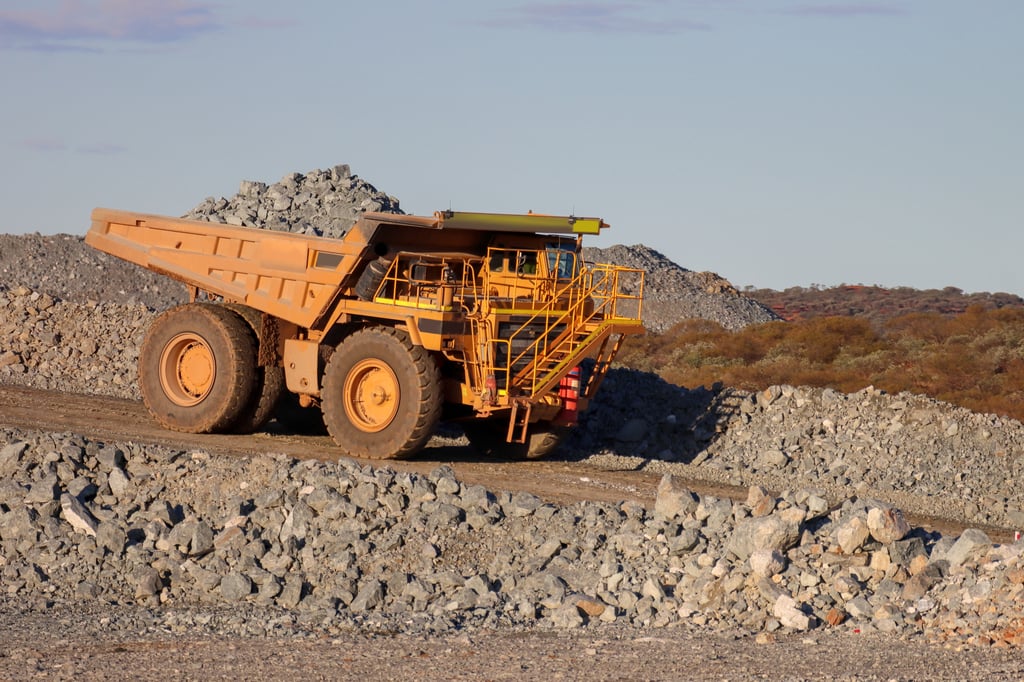
Australia should turn critical minerals leverage into industrial capability
Australia’s Syerston Scandium Project is a test of whether critical minerals cooperation can make Australia not merely a supplier, but a critical capability...
News
PERSPECTIVES | Can Australia and China talk sensibly about AI Safety?
Australia will attend the APEC Economic Leaders’ Meeting in Shenzhen on November 18-19 2026 amid questions about the extent to which the two countries can, or...
News
Australia-China Weekly Brief: October 2026 issues
The Australia-China Weekly Brief by the Australia-China Relations Institute at the University of Technology Sydney (UTS:ACRI) tracks key developments in...
News
The struggle over what China wants
China expertise is itself a field of epistemic struggle, shaped by competing convictions, dispositions and geopolitical perspectives. Doshi’s critique of Kang,...
News
Australia should turn critical minerals leverage into industrial capability
Australia’s Syerston Scandium Project is a test of whether critical minerals cooperation can make Australia not merely a supplier, but a critical capability...
News
PERSPECTIVES | Can Australia and China talk sensibly about AI Safety?
Australia will attend the APEC Economic Leaders’ Meeting in Shenzhen on November 18-19 2026 amid questions about the extent to which the two countries can, or...