• Posted on 11 Mar 2026

Can young women wield influence in places of power?

This International Women’s Day, we spotlight young women leaders who are claiming their seats at tables of policy, public institutions, and community – spaces that have excluded their voices for too long. These trailblazers are challenging systems, amplifying underrepresented voices, and redefining what leadership looks like for the next generation.  

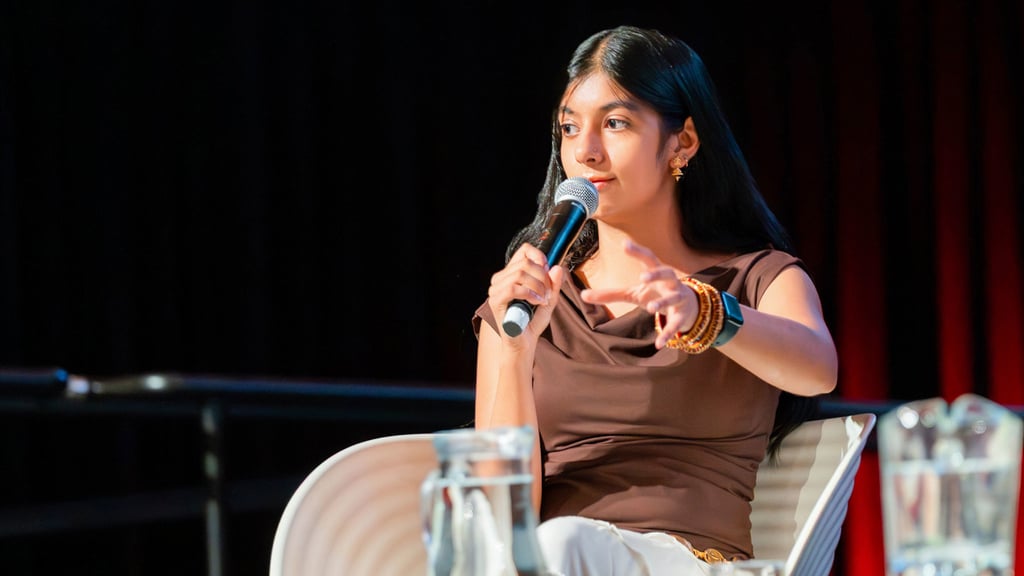
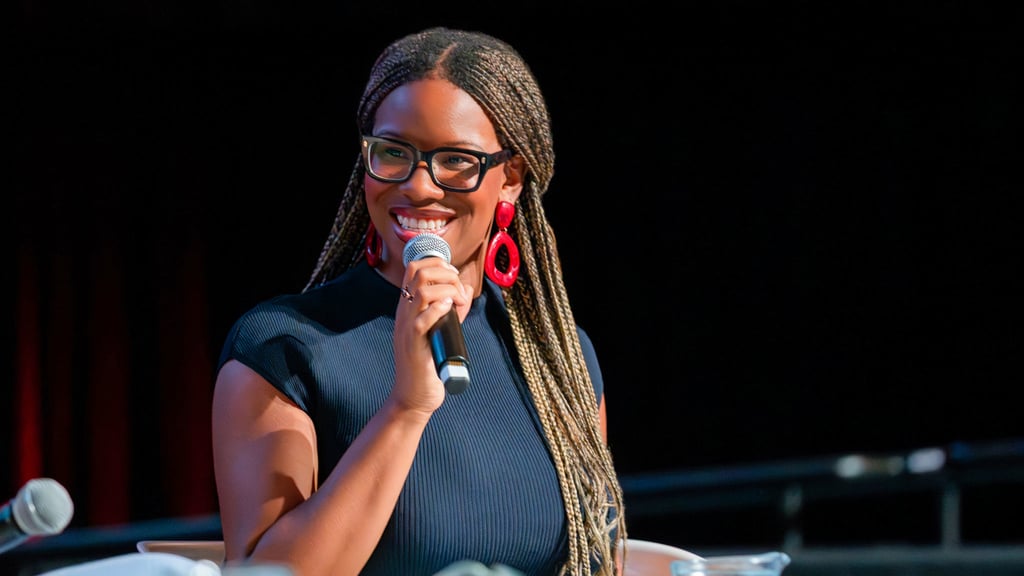
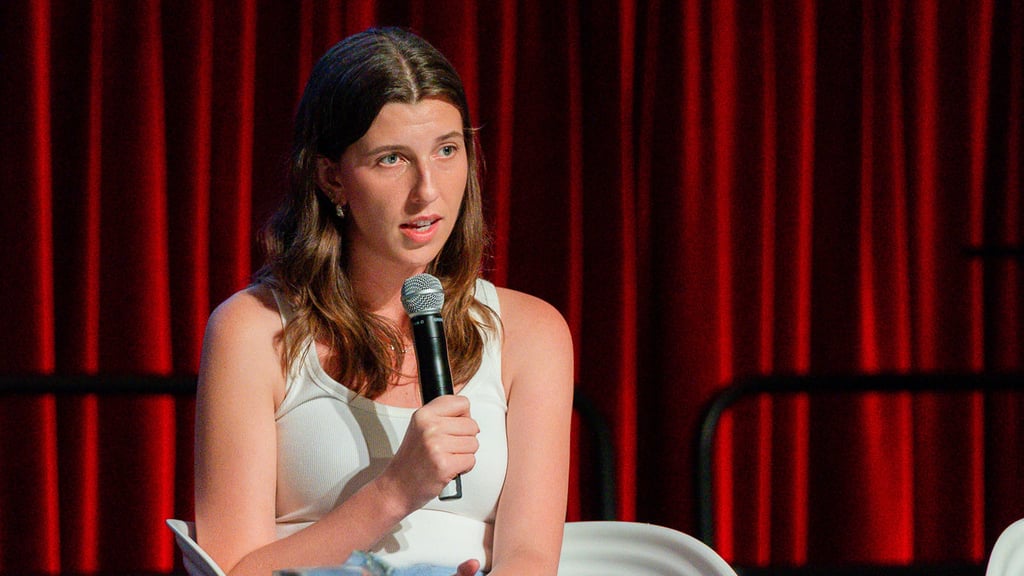
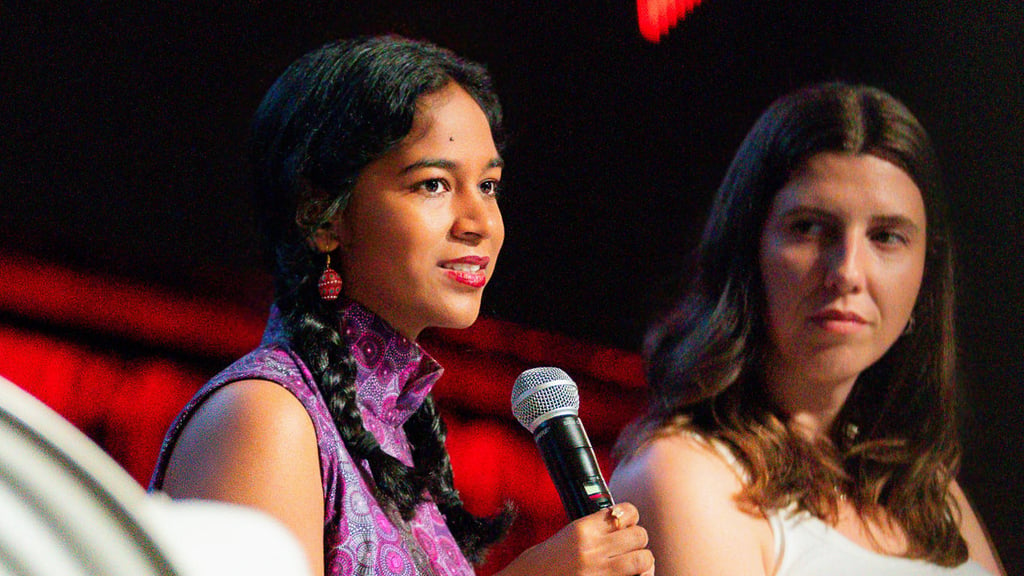
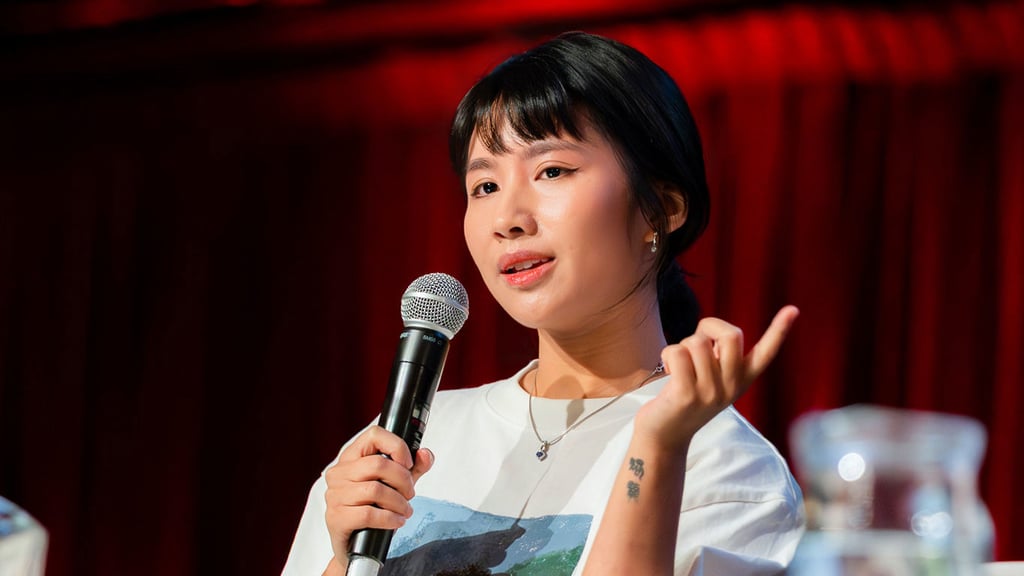
In this session Hannah Ferguson, Satara Uthayakumaran, Vivian Pham, Anjali Sharma and Angelica Ojinnaka-Psillakis (moderator) unpacked how they navigate barriers and success of their work, and the power of youth-led social change and impact. 
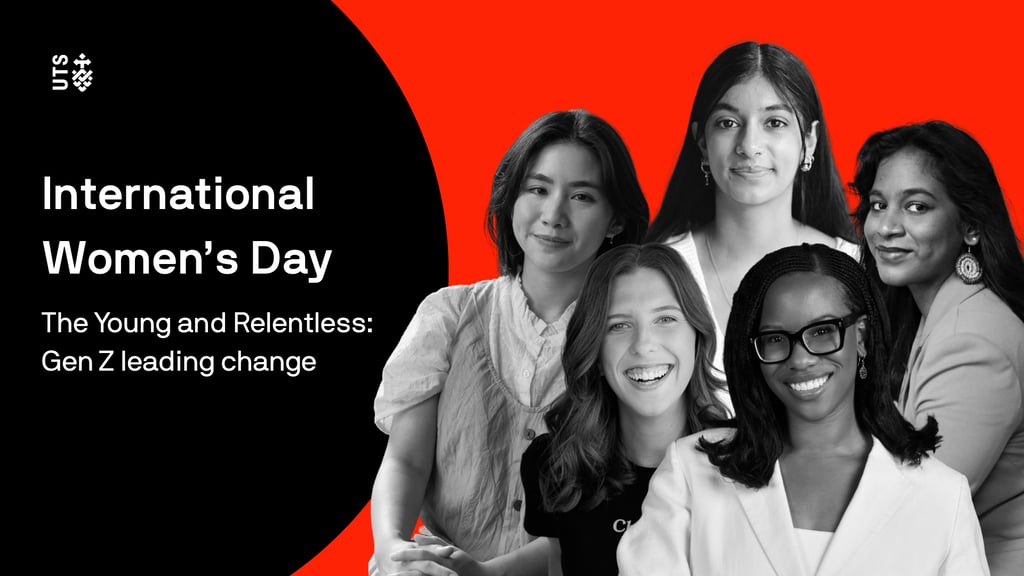
International Women's Day – The Young and Relentless: Gen Z leading change

UTS International Women's Day 2026

(01:24:23)

UTS International Women's Day 2026 transcript

ANDREW PARFITT: Welcome.  It's great to see many people in the room and I understand there are upwards of 1,000 people online watching the event today, so that's fantastic. For those who don't know me, I'm Andrew Parfitt and I'm the ViceChancellor here at UTS and it's an absolute privilege to be here to celebrate International Women's Day with you all.  To begin, a very special woman from our community will give us an acknowledgment of Country, 'Australian' 'Australian', who is our ElderinResidence at UTS. (Applause).  
 
AUNTY GLENDRA STUBBS: Thank you, Andrew. My son's 'Andrew'.  Did I tell you that means 'manly'? I like to find out what people's names are.  So my name Glendra is really 'Galiindurra', which means 'peaceful waters', which is mostly correct, unless there's no social justice and then I become a raging torrent! Not very many people have seen it but it's not very pleasant! But, you know, strong women, eh! So welcome. (Speaks in language).  So I am proud to be part of UTS.  It's a place where everybody is made feel welcome.  Every culture comes here.  We are taking people's best babies into our arms and loving them like they're at their own home.  It's really a privilege to see people grow and expand and make new friends and step outside their comfort zone. So welcome to International Women's Day 2026. The theme this year is: to give is to gain.  I've always had that thought, that what you give out you get back three times over.  I always say that: what you give you get back.  Someone said to me, "Are you a Buddhist?" and I said, "I don't know.  Maybe I am".  I just think if we all give a little, we get a lot back and we're a better country.  We're a big country.  We've got a lot of room.  We're better for people that have come from other countries coming here, otherwise we would be still eating meat and three vege! True.  
 
So this is 115th year of International Women's Day, which I thought: gosh, that's a long time.  115 years of celebrating women.  We still have a bit to go, eh. I just thought if it's been 115 years, that's a long time to be celebrating.  I haven't seen such a big celebration as we've got here every year.  So let's just get bigger and better, eh. So when we give, we get back and we forge equality to thrive, an abundance in giving.  International Women's Day started in  you will all fall off your chairs so hold on to it  1911.  Now, who knew that? Noone. So I win the trivia quiz! 115 years, we have not done enough.  We have to give, give it to keep it.  Just like culture: if you give it out, you get to keep it, just like we do with culture.  So I'm proud to be here.  I'm proud to be part of International Women's Day.  Thank you for always putting up with my little ravings and little bits of trivia.  I'm the proudest Aunty to be here, and Aunties are much more important than mothers, so nah, nah, nah!  Thank you, guys.  (Applause). Thank you, Andrew. That's why I loves ya!   
 
ANDREW PARFITT: Thank you, Aunty Glendra, and it's so important to recognise the importance that people like Aunty Glendra have in our community in bringing people together as part of the UTS family.   
 
Let me acknowledge that we are on Gadigal land.  We're on Gadigal land.  It always has been, always will be, Gadigal land.  I pay respects to Elders past and present, acknowledging them as the Traditional Custodians of knowledge for this land.  And it would be remiss of me not to remark on this day of celebration that we still haven't moved totally towards an equal world.  Domestic violence rates among Indigenous women are three times higher than nonIndigenous women; incarceration rates are 20 times higher.  We have a way to go, and we should acknowledge that.   
 
UTS and other universities across Australia have a very long history of working closely with and for First Nations people to make a difference, and here at UTS, we are very proud of the work that our Indigenous colleagues do and others right across the university and faculties and in our Jumbunna Institute in policy, law, health, technology  all of those working towards shaping a future Australia that we want to see, one that's more equal, one that has opportunity for everybody, and one where actually we complete the task of reconciliation that we have set upon ourselves.  
 
But today, of course, we do have the opportunity to celebrate where we have made progress, and we are celebrating International Women's Day by shining a light on the next generation of leaders and changemakers who will inspire us and ensure that the future will be different to the past.  GenZ  and we had a little debate as to whether it's Gen 'Zed' or Gen 'Zee' a moment ago, but I'm going to use 'GenZed'  are actually driving some of the most powerful social, environmental and cultural movements of our time, and universities like ours play a critical role in giving young people the space, skills and support they need to advocate for the issues they care about. So I'll be brief.  I'm not of that generation, and we want to see GenZ leadership at work by hearing from some of our community.   
 
Let me give a few examples though.  One example is Layne Paull, one of our biomedical engineering students and a finalist for the 2026 NSW Young Woman of the Year Awards.  Layne is a leader with a passion for inclusion, innovation and community service.  As Inclusion Nippers Coordinator for North Avoca Surf Life Saving Club and Team Leader for the Disabled Surfers Association, she's developed programs that make aquatic environments welcoming for people of all abilities. And then there's Amelia Grace Wilson, one of UTS's SOUL program volunteers, whose advocacy in the domestic, family and sexual violence space has contributed to the coordination of rallies to  policy reforms and to national awareness.  Her advocacy and leadership has led to successful petition to the New South Wales Parliament and work with media to elevate survivor voices, demonstrating the tangible impact that young women can make when they're supported to lead with purpose.  
 
Recently, design students Isabella Bucknell and Freya Rollo were featured in the ABC report about creating products to tackle climate change and climate liveability. They are innovating in ways to make life easier in a warming climate, designing cooling devices, air purifiers and reimagining things like bus shelters, and these sorts of practical projects really give hope that the next generation are setting us up for the future.   
 
Our GenZ graduates are leading the change too.  UTS graduates like Bella Filacuridi and Sophie Greiner are young founders creating new cultural spaces through DomeFest, Australia's first podcast fan festival.  With a focus on connecting and belonging, they're leading a startup that transforms individual listening into reallife community, providing what's possible when women back their ideas and build boldly.  They're just a small number of examples among so many across UTS  young women driving research, innovation, building community initiatives, championing mental health and shaping conversations on justice, sustainability and equity.   
 
International Women's Day invites us to reflect on how equity advances, and the answer is clear: we move forward when we listen to, invest in and genuinely support the next generation, when their ideas are not only welcomed but amplified, when their leadership is seen, valued and resourced.  Today is not just a celebration but a commitment; our commitment to ensuring that every woman, every young woman, at UTS can thrive, challenge and lead, and I'm delighted to join you all here today for International Women's Day at UTS.  I hope you enjoy and are inspired by this morning's event.  (Applause).   
 
AMY PERSSON: Thanks so much, Andrew and Aunty Glendra.  Hi, everyone.  I'm Amy Persson, the Pro ViceChancellor of Social Justice and Inclusion at UTS.  It's my pleasure to introduce our fantastic panellists for today's conversation.  These remarkable young leaders are challenging systems, amplifying underrepresented voices and redefining what leadership looks like for the next generation.  
 
On a personal note, I also want to add how in awe I am of these women.  It is really tough at any age to put yourself out there and fight for what you believe in and it's particularly tough in an age of social media.  So I just want to pay tribute to all of you for your bravery and courage and say thank you.  
 
Could I invite each of our speakers to join us on stage and take a seat while I introduce you. Moderating today's panel is Angelica OjinnakaPsillakis, a health and social researcher and fierce community advocate.  She is currently the National Ambassador for Plan International Australia and the ViceChair of African Women Australia.  Our panellists today joining her are Hannah Ferguson, cofounder and CEO of Cheek Media, an independent news commentary platform offering informed progressive analysis on subjects at the intersection of feminist, social and political issues.  Satara Uthayakumaran, a legal and social reform advocate who served as Australia's youth representative to the United Nations in 2025 and currently sits on ABC's Youth Advisory Council. Vivian Pham, an awardwinning writer, playwright, educator and the author of 'The Coconut Children'. She is also the youngest person ever appointed to the Board of the State Library of New South Wales. And our final speaker for today is Anjali Sharma, who became the lead litigant at 16 years old in a landmark class action arguing that the Environment Minister owes young people a duty of care on climate change.  She now campaigns to have this duty legislated in Parliament.  Please join me in warmly welcoming our speakers for today's panel. (Applause). 
 
ANGELICA OJINNAKAPSILLAKIS: Thank you so much, Amy, Andrew and Aunty Glendra, for your warm introduction.  And, Aunty Glendra, I think a lot of us in this room relate to being raging torrents.  I know some of us on this panel would probably, so thank you for reminding us that it is actually OK to be that.  We need that in this time and we need that raging sense of wanting to move something and change something for the better of the communities that we live in and want to thrive, that we need to do that.  So thank you so much.   
 
Hello, everyone.  My name is Angelica OjinnakaPsillakis, as you have heard, and I'll be the moderator for what I hope is a really grounding but also spicy panel as well, and conversation.  It is wonderful to see a lot of you in the room and many of you, hundreds of you, online as well that are streaming in.  So thank you for choosing to spend an hour or so with GenZ.   
 
What's really cool is one that you are all sold on the pun around 'the young and restless' but also that you value the time to listen to this generation as well, so thank you for coming and joining in.  We are a group, us on the panel, but also the audience and people online.  Lots of thinkers, lots of doers, lots of people who are trying to change systems, and so part of this conversation will also have an opportunity for you to engage in a Q&A as part of this.  So you will get to hear from us but also provide your insights and your thoughts, or maybe there is a thread you want to pick on.  So it won't just be me dictating the conversation.  You'll get an opportunity to provide your thoughts too.  So to do that, we'll be using Slido.  I think some of us might be familiar with this platform, but if you're not, there is a link that should be provided to you and we're using Slido to collect all the questions from both inperson and also our virtual participants too.  So all you have to do is just grab your device, head to the link that's on the screen.  It should be maybe put into the chat as well online.  And if you have anything that you're interested in posing to the panel, please put it there.  You can also upvote things that you're really interested in, so if you're like, "Oh, that's a spicy question that needs to be asked, Angelica", or if you're like, "Angelica, you haven't brought this thread into the conversation", please do put your questions in and we'll try to field through as many as possible towards the end of today's event.   
 
So hopefully we're really ready now to listen to GenZ just yap away.  So I'm going to jump straight into it in grounding us in what this panel is all about.  It's this question of: can young women wield influence in places of power? I feel like that's a rhetorical question for us on the panel.  I feel like we could say the answer really quickly: "Yes".  But we're going to delve a bit deeper into what this question means.  So it's a privilege to be on this stage with all four of you to go deeper into that and an honour to be able to speak collectively together to this question as well.   
 
Just a reminder that all five of us are not the same.  We're young women, young people, GenZ; we're not a monolith.  And sometimes there can be this perception and language that we all think the same, that we all go into systems in the same way or we're thinking about change in the same way, and so I think what's been really exciting, even in initial chats with everyone, is that this is a place to remind us that difference is accepted and difference is actually what we need when it comes to advocating for change.  So let's get straight into it.   
 
I would love to begin by asking all of you to just introduce yourselves, share your journey, what's motivated you to pursue a path or the path that you're currently on and step into spaces where you've not always felt welcomed as a young woman.  You might also want to reflect on us what has kept you moving forward as well.  So allow you all to kind of dictate that.  Maybe we start with Satara.  
 
SATARA UTHAYAKUMARAN: Thank you.  Thank you so much for that lovely Welcome to Country, Aunty Glendra.  I too want to acknowledge the first mothers and the first aunties and the first sisters that came before us and who have really very generously welcomed us into this space.   
 
I suppose I might phrase my response to that in terms of the context of why we're here today, and that's by the women who have shaped me and have brought me here today.  I guess International Women's Day for me didn't start at an event like this or at a corporate breakfast with pink cupcakes.  But, rather, it was at my kitchen table watching my mum be a fulltime carer, clothing, feeding, bathing my younger sister, who has severe disabilities.  And my mum was really crucial in teaching me that powerful women are not necessarily those who hold a lot of influence, have the titles or are seen the most, but also those who work behind the scenes to bring society to where it is.  And I'm quite curious if everyone here could raise their hands if they have a female in their life, whether that be a mother, a carer, a sister, a grandmother, who has made sacrifices so they could be here today.  Yes, that's incredible.  So I think that is the invisible infrastructure of women that holds up our lives in the society.   
 
But I learnt also very quickly that the way that our policies and laws are enacted are not in a way that actually supports those women.  So the other woman that was very influential in my life was my sister, who is deaf, nonverbal and has Down Syndrome, and I've had to see how she as a young woman navigates these systems in a world that was not built for her.  There's a sign in Auslan for 'feminism', which is this, and I think it's a really powerful reminder of how something gentle and something unseen should be something powerful, and often I think we forget that, particularly when it comes to discourse around International Women's Day and the voices that we platform in that space.  
 
So in our household, we consistently had to battle with systems to do with the NDIS, with social services, with laws that were built against us.  So I was in a community that was consistently left behind when it came to these conversations and these national policies.  So what I wanted to do with my career was actually step into that space and bring my experience to change the law and to change things so that communities like mine weren't left behind.  So I decided to pursue a law degree at university but then I also started to work with organisations like Amnesty International and the Human Rights Commission to look at things like, for example, enacting a Federal Human Rights Act that meant that rights were entrenched and that we actually had to take into account the experiences of intersectional women in our policies.   
 
Then very luckily, last year, I was privileged to be appointed Australia's Youth Representative to the United Nations, and that was a role that took me across all 7.7 million square kilometres of Australia, talking to young people from Christmas Island, from the Tiwi Islands, from remote central camps out on Country, speaking with young people in detention, in schools, in communities which often get left behind.   
 
I thought I might finish off my introduction with a letter that I collected from one young woman in a youth detention centre in the ACT who wrote this letter to the Prime Minister, and this is the reality of girlhood for this young woman.  It says, "Dear Prime Minister, my name is Hannah.  I'm 15 and I'm writing from Bimberi Youth Justice Centre in the ACT.  In Bimberi most of the time, we are locked in our cells for up to 17 hours.  I've watched Bimberi use force on a young person for 20 minutes.  When I first came in, all the cells were disgusting and they make us clean everything ourselves.  The food here is absolutely putrid.  Bimberi doesn't listen to our help with female problems like endometriosis.  They refuse us to give heat packs or adequate medication. They make us use a point system which is equivalent to money in Bimberi to purchase female products like deodorant and pads.  It is impossible to get help.  They don't listen or help. I haven't been to school in over two years due to the lack of supports.  The system is not working.  End of story", from Hannah. 
 
So I think when we're talking about International Women's Day and we think about the discourse this year, let's also remember the girls like Hannah who don't have that voice and who are locked behind a cell door and, therefore, can't make it into rooms like this.  I think it's because of people like her and people like my sister and my mum that I'm here today because I want to make things better for communities like ours.  (Applause).  
 
ANGELICA OJINNAKAPSILLAKIS: Thank you so much, Satara.  That was really powerful.  Thank you so much for also reading and bringing that really real story and reality of injustice and the reality of what it's like to be caged by systems physically but also actually emotionally, culturally and all different ways that all young women across this country are feeling.  So thank you so much.  I might pass over to Viv now.   
 
VIVIAN PHAM: Oh, my God.  I'm so grateful that you spoke first, Satara, and I think one of the complications of being in a space like this, with all the good intentions that we have, the amazing people have had, UTS organising it, that you have had coming into a space like this, one of the complications, and us being on this panel  one of the complications is who is excluded from these rooms.  So I think it's beautiful that from the outset, you have made that something that we're all aware of. So thank you for sharing that.  
 
My path to where I'm at right now has been a little bit haphazard and a lot of luck.  A lot of luck has been at play.  I grew up in Western Sydney.  I grew up in Sefton and I went to Birrong Girls High School, so a classic, overachieving lowSES school. What else? I wrote a book during high school, in Year 10, because I was very interested in my family history.  I was very interested in why it is that I was growing up in Sydney, in a suburb in Sydney, and why I had family in Vietnam.  What did the Vietnam War mean? What does it mean to be the child of a refugee? So I wrote about that in Year 10, and that was in 2017.  So it's been, like, nine years now and I think that decision to write and to try to speak about those experiences and try to figure it out has set my whole career in motion basically.   
 
My book was published by Penguin Random House in 2020.  Since then, I've taught at the same nonprofit that gives creative writing workshops to marginalised communities across Western Sydney.  I've taught at that nonprofit, going into schools, primary schools and high schools, delivering termlong creative writing workshops.  So, basically, our whole goal was to empower young people through creativity, and through literacy by extension.   
 
Now I teach at Western Sydney University, the same university I got my philosophy and creative writing degree.  I'm on the Board of the State Library, and that came about  it's obviously a really cool legislative decision, but it came about because government passed that decision.  It just goes to show how hard it is to get your foot through the door unless it's mandated by someone, unless someone that's already in a position of power thinks that that's something that's necessary.   
 
And it's not just me.  All of the six major cultural institutions in New South Wales have also got a young Board member under the age of 25 on the Board now, helping them make decisions.  I'm coming at this from a very, very  I have experience with creative writing.  I have experience with working with nonprofits and creative writing workshops and sitting down with kids and telling them, "This is how you give your dinosaur a personality".  I have less experience with governance.  That's a completely new thing for me.  And I've only been on the Board for a few months and I have attended one meeting because I got really sick last week, so it's not a great track record for me right now!  So I'm still learning.  They give you training  like board Director, nonprofit cultural institution training. So  I haven't undergone that training yet, as you can probably tell.  And that's my journey so far.  I'll hand it over to you.  (Applause).  
 
ANGELICA OJINNAKAPSILLAKIS: There's something that you really said there, Viv, around the foot through the door, and that analogy that actually it takes a lot and requires a lot of actual systemic pushing, and often to get young people like yourselves in those governance positions  and it's amazing that you're in that position, congratulations as well for really breaking that kind of barrier in particular  but that requires actually seeing and valuing that young people's voice needs to be there, and requires that sponsorship from people to actually put their foot through the door to allow us to actually navigate those spaces.  And I think you're amazing already.  The training is just a little addition. But how about we go over to you, Anjali.   
 
ANJALI SHARMA:  Thank you so much.  My name is Anjali.  I'm 21 years old.  I'm really, really grateful to be here on beautiful Gadigal land, celebrating International Women's Day with these amazing, amazing women.  I am a young Indian woman, very, very proudly a migrant.  I would like to start by saying I stand on the shoulders of amazing young  not young, sorry  amazing Indian women who have come before me  my mum, my Nani, the Hindi word for 'grandma', and the generations of women before who have sacrificed so many things so that I can be here sitting on this panel here today.   
 
For me, my journey today can all be traced back to my family.  So, as I've said, I was born in India, and India is a country that is on the forefront of climate change and has been for years and years.  My home country now experiences a regular pattern every year of intense heatwaves that see deaths, that see livelihoods destroyed, that see 53degree Celsius days on end, asphalt melting, birds falling out of the sky, then followed by intense and horrific floods that wash away homes and cars and infrastructure.  It's rinse and repeat.   
 
The difference between India and here is that we're talking about a country where only one in five people has air conditioning, where we don't have the resources there to necessarily safeguard populations and rebuild after disaster.  So for me, it's been going back to my home country after having the privilege to migrate here, seeing my cousins, seeing the girls I've grown up with on my street, playing badminton with, seeing the effects that climate change has on them.  I was speaking to my cousin recently about how horrible the heatwaves have gotten.  He was telling me that he doesn't go outside if he can help it before 6pm.  I said, "Well, people have to, people have to go to school".  He said, "Yes, those who have to do but it's not uncommon to see people on their way to school passed out on the side of the road because by 8am, it's already too hot to function".   
 
So for me, having moved over to the other side of the world at a very, very young age, I feel this very unique, almost survivors' guilt, that this isn't the situation that I see in front of me, but it's a situation that is somehow so, so close through the people that I love.  The other difference there is that the rooms that I can walk into, the panels that I can speak on, the people that I can speak to, they don't have that opportunity because systems in India don't work the same way as they do here, and I'll leave it at that.   
 
So I'm here and I'm trying to make change because of the people that can't, and I think that that's a common thread that you will see throughout many of our stories today.  So my journey is I became involved in the student climate movement at the age of 16.  I was lucky enough to be the lead young person leading a group of eight people who sued the former Federal Environment Minister, arguing that she owed and was breaching a duty of care to young people to protect us in the face of climate change.   
 
Now, initially we were successful and the Federal Court of Australia ruled in our favour.  However, the Government then found it within their hearts to take eight young people back to court and appeal this decision.  And on appeal, it was found that this duty of care didn't exist.  But the court said something really, really interesting on that appeal decision.  They said that they were overturning this duty of care not necessarily because they believed that the Government didn't have one but that they believed that if a duty of care did exist, it was the role of Parliament to legislate it and not the role of courts to impose it.  Now, picture this.  I'm a 17yearold at this point.  I've never gotten over anything in my life ever.  So the natural next step was to take that to Parliament.  So I'm really, really lucky now to be the founder of the Duty of Care campaign, arguing for this legislation.  We've had a Bill introduced in Federal Parliament by Independent Senator David Pocock, a Bill introduced in South Australia.  We're working on similar legislation with States and Territories across the country.  
 
I guess for me, it all goes back to those young kids that I've grown up playing with on the streets of India who I see go through horrible coughing fits during normal games of badminton or suffering health problems that I just have never been exposed to because I've had the fortune to move here at a very, very young age.  So I hope 2026 is the year of a duty of care.   
 
ANGELICA OJINNAKAPSILLAKIS: I hope so too.  Thank you so much.  (Applause).  In that, just hearing that your sense of persistence and that determination to keep going, even though there was a somewhat negative or unexpected result, that you look for: well, actually there's still a channel and I'm going to keep pushing for that.  That's really awesome.  But also these experiences that we experience societally transcend beyond arbitrary borders, et cetera.  They live within us and within our communities, and we have this sense of urgency that keeps  it's something that we just keep feeling within us to keep going and to respond to.  And so with everything you said, thank you for the work that you do in that regard. Finally, Hannah.   
 
HANNAH FERGUSON: Can I just say, I know every year, people in the audience, people on this panel, say the same thing about International Women's Day and the cupcake and it's this womenrun, womenorganised, womenexecuted event for women, and men never know when International Men's Day is.  We know the jokes.  I feel like I've got more out of this panel in one question than I have in the last five years of IWD. (Applause).  Genuinely, there have been so many panels I have attended, that I've been invited to be on, that just don't scratch the surface, and use the word 'empowerment' every year and say very little.  It's just an honour to be here with all of you on Gadigal land today.  So I appreciate the opportunity. I also think there is a diversity of perspectives here with these really common threads that I was feeling as we were each introducing ourselves as well.   
 
But my context, my upbringing, that's got me to the media landscape that I'm in today is that I grew up between southwest Sydney and went to high school  primary school in Ingleburn, Macquarie Fields area, and then I actually moved to Orange in regional New South Wales for high school.  So I had a very split dynamic where my primary schooling and early high school was actually in a room of people where everyone could speak a second language except me.  Absolute loser behaviour from me on that front.  And then I moved to a regional area where I spent my formative toddler years and then high school where everyone was white and most parents were conservative.  And my parents were the people that said Pauline Hanson says what everyone's thinking.  That is the childhood home in which I grew up.  And it was really interesting to then watch my parents, who were lower middle class, who did not go to university, vote against their own interests, and not be able to actually articulate that to them because I was 7 and trying really hard. And then going to university, having the opportunity to have a scholarship to study law in Queensland, I met and had my world opened by so many different perspectives that I would not have encountered in the regional town that I spent my teenage years in.   
 
I remember getting to law school as still a privileged white person in society that had financial help from the university and I remember sitting in the law classroom and thinking: every person in this room has a parent that's a barrister or works in investment banking, and these people, for the large majority, are going to determine the rules and the systems that affect people who have a world view they'll never understand or try to.   
 
So I spent some of my time at law school going and working in community legal centres with prisoners, so I'm so glad we raised the issue of carceral feminism already.  It's so important to talk about the experience of prisoners. I spoke to pregnant women who were eight months pregnant who were in solitary confinement.  I went to prisons in Queensland to help people apply for parole that didn't even realise they could be on parole because they didn't know how to read or write and noone gave them a pen.  I really wanted to go into an environment to determine whether I could work in the legal system at all.  And my conclusion was no, I couldn't.   
 
So I did what any 22yearold woman in Australia does.  I started an Instagram account, which is not the right decision, but it's done some good things, I hope.  Essentially, I wanted to start a platform where women's perspectives that were progressive on political issues could be spread, could start a new kind of public square.  Now, over the last five years, Cheek Media now has 225,000 followers and in the week before the Federal election last year reached 12 million Australians.  And, yes, it was a very anticoalition campaign.  I wanted to speak about the power of minority voices, independent voices, in government and how we can lobby for genuine change in this country, but I also understand that the role of social media is increasingly murky, as I know that I participate in the algorithm that is siloed and is part of the issues where we're all facing where we're struggling to connect and to talk across the aisle now.  But I am really proud of the conversations I can have every day where I challenge people's thinking and hopefully empower a lot of people in their homes to have uncomfortable conversations with their family members that might be participating in the kinds of conversations that my parents are yet again.  My work is not over.   
 
But I think it's a joy and a privilege to just be in this space with so many people that I know want to be part of the change in their sphere of influence, and I just take it so seriously, the responsibility of new media, to offer a genuine change to legacy media in this country.  (Applause).   
 
ANGELICA OJINNAKAPSILLAKIS: That sense of responsibility again is a common thread coming through all of us, that we're living in a time now where we, as GenZ, feel like we need to respond to the situations that are happening, the conversations that still are seeped with discrimination, et cetera, in it.  I love that you're doing that through the form of media, which we'll get into in a little bit.  Even just for myself, to put my little spiel into this question, just like everything you all said, this sense of feeling like I've got to respond to the environment in which I'm seeing right before my eyes.   
 
For context, I'm the eldest of nine siblings.  I won't go into that really complicated family tree, but for my whole life, I've had to care for many siblings, one with a disability as well, so I resonate a lot with you, Satara, of being a young carer since the age of 9 years old.  But having to also navigate a lot of systems that if you put a checklist of those things, I would tick a lot of those boxes of what I've had to see in terms of violence, in terms of contact with policing, in terms of contact with systems that are extremely discriminatory to African Black people.  
 
For myself, I guess there was a critical point in 2013 where I was 15 years old I think, if I do the maths  I was 15 and I just got entirely frustrated with the fact that people would always label me as a risk, just because of circumstances that were inflicted on myself, that I had no control over and that I had to witness and take responsibility for as a child.  I thought surely I can't be the only one who has to hear the sounds of  and a trigger warning  hear the sounds of the glass bottles, hear the sounds of the yelling, hear the sounds of "You're not good enough", hear the sounds of "You should be excluded because of X, Y, Z".  And so I just wanted to create environments within school initially but also within my community spaces, particularly the African community, and just show, one, that we're allowed to participate and have joy, we're allowed to actually live life in a way that actually upholds our humanity and doesn't continue to dehumanise us. That didn't come from me thinking, "Oh, I want to do this as advocacy".  I just did. That's kind of the journey for a lot of us.  So I guess that's my path as to what I do now  chooking my head into a lot of different things but doing so because our communities just want to be seen as human, and that's what grounds me in the path that I do now in research, academia, in health advocacy, in all different spheres that I navigate around.   
 
So let's go a little bit more deeper into what's already been talked about.  I'm going to direct this question to Vivian and Satara because, as you hinted, you're both navigating really interesting institutions at the moment.  Viv, you mentioned your recent appointment to the Board of the State Library of New South Wales and, again, it's amazing to see young people at the heart of literary governance, and, Satara, through your role as the Australian youth representative to the United Nations  I can relate a lot to that  but also through legal human rights and international policy spaces where young people aren't always as visible or as present or invited to.   
 
Sometimes when young people are in these spaces, they're called 'changemakers', and I'm really curious to your thoughts as to: do you relate to this word 'changemakers'? And I'm also curious as to what it feels like to actually make change within these systems that you have both mentioned and how do you balance working inside established structures while also trying to challenge them to do better? Either of you can take the floor.  
 
SATARA UTHAYAKUMARAN: Thank you. That's a really interesting question.  I think I'll start with the 'changemaker' thing first.  I actually am not a super big fan of that term because I think when people say 'changemaker', I just picture comic sans font on like a Powerpoint.  I just think it's so blind to the reason why so many of us are here today, and that's not because we were told this is how you become a changemaker; it's because this is our lives, this is what we live, this is who we are.  Like, politics is personal.  This is not a career  I mean, maybe for some who live in very privileged circles, it is; that is something you want to aspire to do.  But it's not.  This is something we grew up seeing and living.  The unfortunate reality is that those in our institutions don't reflect that.   
 
Going to your point about these institutions and working within them, I think we need to come back to first principles and think about who these institutions were built for and who they should be accountable to, and I think we've lost sight of that, unfortunately, because of the way that power dynamics have played out in this country.  I remember last year a lot of my role was going and meeting with Ministers and Members of Parliament on both sides of the House.  I remember sitting in Question Time in the Lower House watching the debates that were going on and thinking: what is this? There's this yelling from every side of the House.  You've got Barnaby Joyce in the corner red as hell.  I was like: What is this? Is this our democracy? Are these the people we trust with our lives? I don't feel comfortable trusting these people to make decisions about my mother or my sister.  I remember thinking when I was hearing those debates: where is Hannah from the youth detention centre? Where are the girls in the Alice Springs town camps I met who have their power cut and, therefore, can't refrigerate their essential medicines?  Where is my sister? Where are the people that we love and care about? They're not there.   
 
So I think the way you actually have to change this is by changing the core of them.  I think the people that build up these systems and who in them are not the people that are representative of our populations, of our intersectionality, of our beautiful diverse country that this is.  That's why I really wanted to get into that space to be that thorn in the foot and be like, "No, actually we vote you in and we're the ones that should be deciding what policy you make, not your own political agenda".   
 
I guess coming to the whole thing of the United Nations as well, when I went over to the UN General Assembly, I saw very similar things.  We were in a room where more people were taking photos of the escalator where Donald Trump stalled himself than issuing the resolutions on the table about Indigenous women or people with disabilities. It's become this spectacle of diplomats and politicians having handshakes and making grand speeches for hours on end. But I think we need to come back to the UN Charter.  Who was the UN built for? It was for the farmer, it was for the nurse, it was for the teacher, it was for the student.  I think basically we need to have a revitalisation: why are these institutions there, who are they built to serve and bring that people power back to the forefront of it.  (Applause). 
 
ANGELICA OJINNAKAPSILLAKIS: Viv, do you relate to that, especially with the spotlight of the past few months, from last year to this year, in terms of the literary environment? Do you feel the same? How do you balance working in these established structures and try to challenge them?  
 
VIVIAN PHAM: I relate so much to what Satara said about my relationship to the word 'changemaker' and 'leader', it's very similar.  These are our lives and you're trying to cross the divide between what you're already living and the dignity that you want for your people.  So it's not a career.  It's not these airy principles.  It's how do you actually implement something or talk about people in a way that makes them feel like they're included and considered in decisions that affect them.  
 
What was I going to say? I'm sorry. I've had this writing thing as a career since 2020 and I think never before have I felt that writers are so at the forefront of Australian media and at the forefront of politics.  For a long time, at the beginning  my icons and my inspirations for writing have always been social activists, have always been civil rights leaders, so that's been a huge part of why, my intention this whole time.  But there's a real difference between people that, for example, share the quotes of James Baldwin and the quotes of James Baldwin's protest literature and on the outset agreeing with progressive principles and then seeing what's happening in Australian society today, how writers are blacklisted, how people on Boards and people in government try to censor writers' festivals has been really interesting to see, now as a writer and now as a person that's on a Board.  I don't feel torn at all.  I feel like it should be obvious that the decision to programming should never be a Board decision.  The decision to see certain writers, welcome certain writers, platform certain writers, should always come from the arts workers and the communities, the people that attend those festivals. So I've been thinking a lot about that.  It's never felt so contentious to just be a writer.  That's something that I'm grateful for because I've been really grateful to see how the solidarity that people in Australia's literary scene have been given to each other, we can take down a whole literary festival and we can create our own space.  It's not that hard.  We don't have to trust people in positions of power that know nothing about the arts community really, that come from investment banking  I'm not talking about the State Library, for example, right now.   
 
I think also I mentioned before that I'm also not entirely  I don't see myself under this banner of 'changemaker' because a lot of stuff has to happen behind the scenes, a lot of powerful people have to think you're worthy in order to usher you in and give you a seat at the table.  So already that's not very revolutionary of me.  I have fit certain criteria and I look a certain way, and you have to be aware of these things as a young woman.  But also I know that people on the Board, speaking from the State Library of New South Wales experience, have the same kind of principles as me, the same commitment to equality, of access and community care.  Those principles  we're all striving for the same thing.  It just so happens that we have such different experiences.  We come from such different social classes.  That's not anyone's fault, but that's what makes it so different.  So the way that I want to get there to those same outcomes might be different, might be a bit scary.  But we'll see.  
 
ANGELICA OJINNAKAPSILLAKIS: Thank you so much for that.  Both of you have really touched on the fact that it's less of being a changemaker but more so agitating, and sometimes agitating very aggressively, for the dignity that we want for our futures and for our communities but also the systems in a way in these institutions have been designed already from the outset to lock a lot of communities out, but part of the reason why, from what I hear from both of you, that you do what you do, or you push in the way that you do, is that you are trying to get systems to realise you cannot continue to operate without decisions coming from community and community solidarity and actually being guided by the people who live the reality each and every day and have to navigate their field each and every day.  So thank you for bringing that.   
 
That kind of naturally goes into both the environment, yourself, Hannah, and Anjali, that you've had to navigate two of Australia's most powerful institutions and systems, media and government  mainstream media in your case, Hannah, but in your case, Anjali, challenging the Government system as it is today.  Hannah, I'm keen to learn what have you learnt about taking on institutions, particularly the mainstream media, at a certain scale, and what helps you stay effective and grounded when systems are pushing against what can feel as unyielding?  
 
HANNAH FERGUSON: I think one of the biggest risks we face in creating a new media landscape is just retaining the old problems.  When I say that, I mean that new media has been a space that has been built to disrupt legacy media, and one of the things that frustrates me most about legacy media becoming so defensive and territorial about new commentators emerging who have a progressive lean and are pretty open about that as kind of like the dominant force, and was in the leadup to the last Federal election, but what's interesting is that legacy media's territorial nature, I think, proves that they're scared of becoming irrelevant and not actually being willing to learn to adapt, to kind of actually consult and be open to trying new things.   
 
But I think in demanding that accountability be applied to new media, I agree with that, but it should be applied in the same way to both.  I think the issues that we face with new media is copying the old problems of the commentators that are emerging and finding a lot of followers and a lot of views are white privileged people that have the opportunity to do this and create this lane.  So I want to acknowledge that the vast majority of podcasts that the Prime Minister went on in the leadup to the election were easier interviews with  I hate the word  'influencers', and, yes, some were people with a journalistic background that asked hard questions, but it's the same: that spectrum of quality and challenge sits on both sides.  Lots of people said, "You didn't probe him like Sarah Ferguson on 7.30".  And I said, "Does Channel 9? Does anyone except Sarah Ferguson probe like Sarah Ferguson on 7.30?" These kind of standards that are being applied and mirrors that are being held up, it's interesting because I think the entire media landscape in Australia needs to be diversified and feature different voices and perspectives, and very few people are adequately doing that.   
 
But in taking on this system, I think it's pointing out those flaws but being aware of the ways I can also fall into those traps, and if I'm not aware of them and if I'm stubborn in what I'm doing, people say, "Are you the Rupert Murdoch of the left?" And I go, "The left would never allow there to be a Rupert Murdoch of the left because the left is really good at accountability; the left is really good at creating new laneways and holding people to new structures and standards", and that's not possible but does it mean that I can't fall into the trappings of becoming kind of narrow in the way I perceive and I'm supposed to challenge? Yes, there is a really honest opportunity for me to say that I have failed and now went: OK, now that Cheek is more financially viable, can I open to taking external contributions from 100 new writers a year? Yes, that's first thing I'm going to do.  Is that going to need to improve over time? Absolutely. 
 
I think in challenging the institution, one of the most important things we can focus on is not becoming a new framework for the same issues as well, and taking them on and standing up to them is one thing.  Being able to respond to criticism from legacy media but also the people in your own camp calling you in, also another.   
 
ANGELICA OJINNAKAPSILLAKIS: Do you relate to that, Anjali, through your experience taking on the powerful institution that is government and how do you stay effective and grounded within these systems as well?  
 
ANJALI SHARMA: Yes, absolutely.  I find a similarity in the challenge that new media poses to legacy media, in that when you challenge these institutions, they hate it.  One thing I've definitely learned is that Parliament was not built for young people.  The halls of Parliament, whether it be Federal, whether it be State, whether it be Territory, are not welcoming for young people.  The office doors are not revolving for us in the way that they are revolving for those fossil fuel donors and lobbyists.  But that doesn't mean that you can't force your way in and that doesn't mean that you don't have, I guess, that almost responsibility to, if you can, force your way in.   
 
I think I'm really, really lucky to have been able to do that and to have been able to meet with the powerful MPs and Ministers and Senators that I have been able to.  And one thing that keeps me driven and keeps me going through those doors, even when they try to close on you, is the ability to tell those stories like we all have today on these panels.  Those stories of people who can't join you in that room but have a very, very worthy story.  Because it really is ultimately those stories of the people who are living through climate disaster today, the people who are in the global south who, as I've said, don't have these resources to safeguard, to rebuild, that aren't being beamed into our living rooms on 'Sunrise' or on the 'Today' Show, but they're the ones that people need to hear and people need to learn from.  
 
I guess I really mulled over this question of what keeps me effective, what keeps me grounded, because to be completely candid, it's really, really hard.  I've had meetings with MPs where they've held up a block of uranium and said, "This is uranium. Don't be scared".  I've had meetings with Members of Parliament who are part of the Government who have cut me off before I've started my first sentence and said, "Well, do you actually know anything about what the Government's climate policies are?". They patronise.  They condescend.  They don't want you there.  And it gets to you.  It really, really does.   
 
But I think one of the things that keeps me going is  I know for a fact that this panel will be a core memory for these because these are amazing, amazing women and I'm forgetting that I'm on the panel.  I'm feeling like I'm an audience member when the rest of them are talking. I'm just: whoa. It's the people that I get to talk to, the people that I get to hear from, the feeling that when you've leaned all of your weight against an institution that feels unjust and it's just not yielding, you have to remember that weight is cumulative and that as long as I'm pushing, Vivian and Satara and Hannah and so many others will be too, and that's ultimately  I guess if that's all there is, then I'm happy with that.  (Applause).   
 
ANGELICA OJINNAKAPSILLAKIS: I feel like we're all  I'm seeing the questions that are coming through, and some of what you have both said is really answering some of these questions around the pressure of having to be confronted with really egregious forms of defiance to our voices but also just to keep going.  It's community grounded.  A lot of what we do is not just for self and for selfgratification or whatever.  It's actually because there's a community that we're wrapped around and within and that we keep going, but I also love that both of you have highlighted that the reason why you do this is because also stories carry and sit with you and you're wanting to bring those stories forward and being grounded in that.  So I can relate to that a lot.  There's an interesting question here that hits onto what I was actually going to ask around tokenism and the feeling of sometimes these efforts being symbolic or not taken seriously.  I think this question has been upvoted most already around the fact that young people are often invited into decisionmaking spaces but not always given real power.  So how do we ensure our participation is meaningful rather than symbolic? I was going to ask a similar question and pose it to all of you really: how do you ensure your contribution is actually taken seriously and not treated as tokenistic? Anyone want to jump in?   
 
ANJALI SHARMA: I have some thoughts on this.  I kind of want to reframe that because the way that I see it, you can't control how other people take your contributions or how other people see you.  There's been many a conference, many a roundtable, where I've been invited in as the young person.  I'm the boxticking exercise.  I'm the reason that they can pat themselves on the back and say, "Yes, we had good diversity today; good job".  You can't help sometimes being invited into a space as "the woman", as "the brown person" as "the migrant", as "the young person", but what you can control is how you show up in those spaces.   
 
I think that a lot of the times when we're invited into spaces because of who we are, it's because other people have a perception of who we are.  We're invited in as the young person who is going to back every single thing that every other old white man is saying, or the woman who is going to sit there, is going to nod along and not challenge a single thing that anybody else at this roundtable puts forward.  And I hate to be blunt but sometimes you just have to break out of that box.  Sometimes you have to show up and be the square peg in the round hole and say, "Actually, what I'm going to do is I am going to say why am I the only young person here? Why am I sitting on this panel where there are old people talking about what the 'youth' want and I'm the only young person?".  I love pulling out a "look around and tell me how many women you can see" because it's getting into those spaces that gives you the platform to then call for more.  It's getting your foot in the door as whatever token it may be to then say, "I'm actually more than just a token.  I've got views.  I've got values and I know that people that are just like me do as well and more of them should be in this room".   
 
ANGELICA OJINNAKAPSILLAKIS: Thank you so much for that.  (Applause).  I want to connect that also to another question that's come through that's specifically for Satara and Hannah around the young women that you have already spotlighted that aren't in the room and present.  You talk about young women and girls in detention and in prison, and the comment here is that these women are largely voiceless and not seen as human by politicians and the public.  I love that this person has mentioned "not seen as human" because that is the truth and the reality.  So extending on what Anjali has mentioned, how can we ensure these women are visible and their voices are heard in a way that is not just purely symbolic and somewhat tokenised?  
 
HANNAH FERGUSON: I was going to add onto what Anjali said, I think two of the words that are most commonly used when we're talking about progressive women, young women specifically, is allegations of performative or tokenistic.  So when we're talking about performative activism or a tokenistic inclusion, it is interesting because I think it's another way in which patriarchy is quite clever in turning us against each other, this idea that anything can be demeaned and diminished and it's not functional or effective or is false or fake or not enough.   
 
It's interesting because when we're talking about tokenism and voices that aren't heard, if you're the first person that is going into a room on behalf of young people to speak about climate action  and it's exactly what you were speaking about  even if that is tokenistic on their part and you go in and disrupt, you learn something about the people in that room that you can use against them in future.  And also you go in and you learn something behaviourally, psychologically, about each of them that you can take away and use, even if they thought it was a tokenistic gesture.   
 
ANJALI SHARMA: Especially in Parliament. 
 
HANNAH FERGUSON:  They give themselves away in two seconds.  They think, "Oh, young person" and you go, "I've picked up seven things about you that you'll never know".  It's important to take that away, deliver that on to other women who then get invited into the same rooms, and eventually you have collected such a community of people insights that can be wielded for collective change.   
 
ANJALI SHARMA: That is why they say it's not gossip; it's journalism.   
 
HANNAH FERGUSON: No, it's not gossip; it's journalism. And on the performative front, I think there's a really easy way to diminish the voices of everyone who maybe feels scared to take the microphone for the first time and share their political views by saying, "You're sharing that Instagram infographic and it's performative".  And to that I say, there are a lot of people in this world who are terrified of sharing their political opinion for so many reasons that we will never understand, and for someone it's probably their first time and it might be clunky and they might get it wrong.  The worst thing we could do in that moment is say that it's fake or it's to get likes or it's to get someone to message them and say something kind to them.  I think we actually underestimate how scary it is for individuals to take the first step.  I think that the way that we can get underrepresented voices to step in and the way we can pass on the benefits of this knowledge is for the people who are maybe first at the door to then go and exactly deliver that message back and empower the next person and never pull the ladder up behind us, which is a hallmark of white feminism.   
 
SATARA UTHAYAKUMARAN: I agree with all that.  The other thing I also think is interesting is we talk about this metaphor of being invited to have a seat at the table. But we're always invited to have a seat. The hand is always extended as an invitation.  I want to just uproot this table and carve out a new one.  I think we actually need to go back to like I was saying before who's actually in these positions of power, not who is being invited to be part of a youth advisory group, which I'm not discrediting at all, but I think it's important not to just be kind of a tackon but also actually be the one who is making those invitations and controlling those systems.  I think a good example of where  we are talking about the voices not in the room today, how we can amplify them better.  We've got a Federal Senate inquiry into youth detention coming up and I was asked to give evidence as someone who has been to a lot of youth detention centres around the country.  I said, "Wait.  Hold on.  Why don't we actually bring in young people from detention?  You're having a Senate inquiry in Parliament House.  There's a youth detention centre 10 minutes from here.  Let's bring them in.  And, yes, it can be a closed hearing but I want those people to be in the room so that they can tell you directly".  I think it's kind of a responsibility of all of us in this room to think about how we can sometimes step back, use our power to make space for those other people, because they can tell it so much better.  They can tell their stories much more articulately than I can.  And so I think part of it is also where we can relinquish our own space when we've built up that power that we have to give to other people and make sure the door is wide open for them to very candidly say their responses.   
 
ANGELICA OJINNAKAPSILLAKIS: I love that analogy of the door being really wide open and left open, rather than closed just because you've had that one young person and then, "Yep, that's enough, tick the box, we're done here".  We also all have a collective responsibility to ensure that that door stays open for particularly those communities.  I feel like that hits on a question that I'm seeing has been upvoted that's directed at me actually but I'm also happy for this to be opened up to the group, which is there's an expectation that young leaders translate community experiences into language institutions can digest.  The question here is: do you feel pressure to adapt your message to fit those structures or to push them to expand their frameworks? I guess my answer to this, and I'm curious actually, particularly Viv, your thoughts around this pressure to adapt a message, since you write quite a lot, what your thoughts are on this? When I saw that question, I was like: one of the things about me is that I'm aggressively stubborn and I love that because I'm stubborn because whatever you're gonna get from me is what you're gonna get from me.  The stories from my community is you're gonna get them verbatim.  I refuse to make things digestible just to feel a sense of comfort in the room or coddle systems that won't coddle me, in all honesty, and have not.   
 
So I guess for me, one of the things that I particularly do is to actually just be really real about the experiences that our community has, and community is so vast, so I'm thinking about this from a very intersectional perspective here.  But that pressure early on, yes, I did feel like I've got to sound a little bit more articulate, I've got to sound a little bit more seasoned when I'm talking to people, and that might be the case.  That is the reality sometimes.  But I think now I've  I don't know what it is.  I kind of just got tired.  It's like, you know what, it is what it is.  You're gonna get that.  Why are we going around and beating around the bush to the reality that people are being dehumanised in so many areas of our lives?  For me, particularly when I'm talking about mental health and getting people to understand that what we have in terms of resources is not good enough for a lot of young people and a lot of young women and a lot of other communities that are often isolated, out of services and proper care, that is the reality.  So you're going to get there.  And if you're not willing to take that in  I mean, that's your business  but also this is an opportunity to reflect and learn as to what is sitting underneath this resistance to that response that I'm giving or sharing? Is it resistance that's still shrouded in racism or discrimination or a sense of ableism in many cases that I've experienced in some of the work that I do?   
 
I like to push people to really think beyond this box in which they see me or see my reality or my community's reality as much as I can.  Sometimes that's met with a lot of pushback and I think there's a question also here about care.  How do I care for myself in moments or how do we care for ourselves in moments like that? When your work is grounded in community, the care comes from that.  Community care is so foundational to any form of advocacy that we do.  But I'm so curious, Vivian, do you feel pressure to adapt to institutions or do you push them to expand their frameworks?  
 
VIVIAN PHAM: I love this question.  I'm going to link it just a bit to the previous question just because I loved everyone's answers.  So this one was about language.  The previous one was about how do you make sure that the change that you bring or that your presence there is meaningful and is not only symbolic, that it's not performative.  But I've been thinking a lot about how politics and political change is especially today so much a performance.  A lot of people have pointed to world leaders as basically being  they should have been in drag, that it's so performative.  It's just so flashy that it's hard for comedians to satirise our politics right now because it's so ridiculous.  So I think about that a lot.  I think about how it's inherently performative.  That's one thing.   
 
Also, I don't see symbolic as separate from meaningful presence, like the symbol lends itself to meaning.  That's the way I think about it.  So you can be there and, like you were saying, Anjali, you can be there and you can know that you've been invited with good intentions and then probably really misinformed intentions, and it's what you do with that.  It's how you turn that on its head.  I also love what Hannah said about what information are you collecting from these interactions with people because that's all the work that we do basically is; it's how do we bring our community with us every step of the way, even if they're not there, and then also how do we be informed by the state that our community is in while we're interacting with people that know nothing about us and have been structurally kept from our experiences and alienated from our experiences, just as we have been alienated from them.  So that's one thing.   
 
Then on the question of language, I've been thinking about this a lot too.  As a writer, one of the problems, the scariest things for me, about fiction writing is dialogue.  How can I create a character that feels like they're speaking on their own and I'm not using them as a mouthpiece for another side of my brain and making the plot function through them?  So how do I speak to people? And these people that you meet when you're on boards or advisory councils or you're at the UN, they speak in a completely different way, and some of them are able to meet you halfway.  Some of them can only speak in their language, in this very rigorous framework of diplomacy and politeness and etiquette and just strangeness.   
 
If you can learn another language  I'm thinking about Hannah and being in that classroom in Orange  not in Orange  in Ingleburn, and I'm sure even if you didn't speak a second language at home, just being in that kind of space  (inaudible) that counts as another language  but also just being in that space, having an awareness that there are other languages besides English  it already opens your mind so much.   
 
So I've had a lot of joy actually, frustration but also joy learning these people's languages, the way that language operates in these kinds of rooms, in these boardrooms or in these political rooms.  To draw a concrete example, one of the things I really hope to see and one of the moves for change that I want to see is a basic income for writers.  I've been speaking to people about this at different advocacy organisations and other members of my community, specifically in Western Sydney.  I don't think she minds me saying this  I was speaking to Lucy Hayward of Australian Society of Authors, who's absolutely incredible, and I was like, "What do you think of a basic income for writers?", and Lucy said the ASA have been advocating for this for a while now.  It's very hard to get politicians on board, especially because we live in a society that is scared of anything that has to do with a universal basic income, anything to do with welfare.  It really scares people.  They see it as why should writers get a legup and noone else should? So she basically mentored me and coached me: "You could just label it as something else? Why don't you label it as a literary investment scheme? Because it is an industry.  You're kind of like priming their brain to think of it in a way that they can actually accept, which is you put money into something and then you will get a reward, you will get some money back". And that is a really interesting thing that my brain has had to do recently that it's never had to do before.   
 
ANJALI SHARMA: Can I just really quickly add on to the conversation that we were talking about adapting to certain institutions.  I know we've all touched on it but I just want to say it explicitly, that that notion is very rationalised, and to be an advocate, you have to advocate  that's kind of an entrylevel qualification  but it's about how you do it, and for people of colour, it's about your accent, it's about your hair being different to theirs, it's about the way you carry yourself, the way you walk, the stories you tell and the way that you tell them.  It's about every single part of you that is very, very true to yourself as a person who is not white.  So I just really wanted to, I guess, get across that intersectional lens.  I'm glad that you're tired because I'm tired as well.  I'm glad that we're both able to acknowledge that sometimes it's great to just show up as you are, wearing my bangles and my Indian earrings because that's who I am and that's how I want to advocate.   
 
ANGELICA OJINNAKAPSILLAKIS: That's amazing because I was just about to highlight the fact that I wear these braids on purpose and I show up as Black as I can because, one, that's all I know, but that is the reality that we have to navigate.  But also it's not just us as young women.  Intergenerationally, we stand on the shoulders of people who've had to do this and push in many different ways.  Thank you for bringing that up and thank you, Viv, as well.   
 
We could talk for hours.  We could keep going and naturally we have reached time.  But if I could just get 20 seconds from each of you just around this question that's come through on confidence, how you just gain the confidence to keep going and to be involved in places and how would you like people in older generations to support you? Very quickly.  Maybe we will go from here and down.   
 
HANNAH FERGUSON: Do you want to answer as well?  
 
ANGELICA OJINNAKAPSILLAKIS: Sure.  I guess confidence.  I think for me, I don't know what it is.  I reflect a lot, I write a lot personally, and I love to actually see my journey on paper and so I've actually always  because of some of the situations I experienced from younger, naturally I would reflect every day and just write.  It was also a bit of a safety spot for me, and it's a habit that I've continued.  I look back actually into old things that I've written and I've gone, "Wow, Angelica, you didn't even believe in yourself as actually being human and now here you are happy and keep going".  And even just the little moments where I've celebrated, "Oh, actually, I gave a presentation and I wasn't like scared to death" or "I wore something that made me feel like I was truly me".  That's me slowly seeing and observing my confidence.  So I guess that's how I have gained confidence, but also in speaking to aunties in the community, et cetera, regularly as well to learn their journeys too.  That's how I gain confidence.  And I guess something that the older generations can do to support us is to have these frank, honest conversations together.  I think we're living in a time where it feels like there's this growing intergenerational divide but I also often point back to the fact that my cultural upbringing is inherently driven by community conversations.  That's just foundational to an Afrocentric approach.  So I guess if we can do more of this together, that would be amazing.   
 
HANNAH FERGUSON: My 20 seconds would be you're never going to gain confidence by looking at what's happening in the world and going, "That's going to give me the optimism to keep going".  It's not going to be that.  For me, it is the fact that I go to events like this  and I had one on Sunday in Adelaide and I got the opportunity to meet Dr Randa AbdelFattah, who was the Palestinian author and academic who faced such awful racism from the Adelaide Writers' Festival.  But during that event, there were so many people going up to her and saying  I met her and there was just this swarm of women who were saying to all of us on the panels, "I had my first political conversation with my family last night".  I had one woman in tears and I thought, "Oh, no, something has happened" and she went, "It went really well".  I don't even know if that means she got through to them but she was proud of what she said and the fact that she did it.  I think the only place at the moment to get that confidence to continue is the people that are taking their first step who are just so glad there are other people one in front of them as well.   
 
SATARA UTHAYAKUMARAN: Can I be so honest?  I'm actually terrified.  I'm terrified that my sister is going to get abused by someone in public when we are not there.  I am scared when my mum travels to work at 4 to 5am in the morning, that as a woman of colour on a train, she's going to get hurt. I'm scared that when I go back to Bimberi Detention Centre Hannah's not going to be there; she's going to be somewhere far worse. I'm absolutely terrified.  I'm not confident.  But it is that that actually gives you the courage to keep going because this is what we have to deal with and we have to act.   
 
Very quickly, just anecdotally, one thing that does give me some hope is one thing I did when I travelled around the country was collect all these letters for the Prime Minister.  When I was in Tasmania in Ashley Youth Detention Centre,[] I spent a whole day with the young people there, with girls as young as 12 and 13, writing letters about what they were experiencing and what they wanted, inviting Albo to come and visit them, and a week later I got a call from the centre manager who said the young people were so proud of what they had written that they have stuck up all their letters around the centre so that when ministers, when prison guards, when their parents, when justice reform comes in, they can see all these words, this outpouring of voices coming behind a cell door.  That's what keeps me going.  It's the fight for more because we can't just pretend that we live in this very happy, cheery place.  We don't. We live in a country where people are treated as inhuman.  That's what gives me the confidence and courage to make sure we bring those voices and we really disrupt those halls of power.   
 
ANGELICA OJINNAKAPSILLAKIS: Amazing.  Viv? (Applause).   
 
VIVIAN PHAM: Thank you.  Really quickly, two sides.  I think look at what you want to do, look in your industry, who are the people that are being targeted right now, who are the people that need uplifting, who can you stand by, who can you hold community with and be in solidarity with? I'm in literature, in books and publishing, so that is people like Dr Randa AbdelFattah that are being smeared by folks.  And just celebrating people's wins. Evelyn Araluen recently won the biggest prize in Victoria recently.  So celebrating with people in your community and standing by them.   
 
The flipside of that is what do you want to do so badly that you could risk being bad at it? Because anything you want to do, you'll be bad at first.  I think a lot about this filmmaker Neil Breen.  He's an American filmmaker.  He's been called the worst filmmaker ever because he makes such terrible films but he's his own director, his own writer, his own lead, his own catering, his own makeup designer, and they're all terrible films that all have the same plot, but I really respect that.   
 
ANGELICA OJINNAKAPSILLAKIS: I love that.  And last, Anjali?  
 
ANJALI SHARMA: My contribution to this is that if you are ever looking to be confident enough to walk into a room, you will never be confident enough because there's no such thing.  You will never, ever feel like you are the smartest person in a room and you will never, ever feel like you are perfect enough to be advocating for something.  Do it anyways.  Do it imperfect.  Do it slightly wrong.  Do it slightly off.  But the world needs more imperfect people advocating for change because perfect is an unrealistic standard that we are all striving to, that we are all waiting to get to, before we raise our voices.  We don't have to wait for that.  We can raise our voices as the imperfect, as the people that we are, showing up today.  We are just as valid.  We are just as welcome in those spaces.  Well, we should be.   
 
I know that you're about to finish up right now, so I'm just going to quickly say thank you so much to the UTS for having us here today, but I also do want to raise that the UTS is actually one of the worst employers in the sector when it comes to paid parental leave entitlements.  The NTEU is doing a lot of work around this and is advocating really, really strongly in terms of rejecting staff requests for reproductive health leave, super for parents, leave entitlements for pregnancy loss.  So I think that as amazing as it is that we are such, I guess, powerful, storied women here speaking to an amazing crowd, we do have to acknowledge the reality on the ground is very different to this utopia that we all want to live.  So given that there are powerful decisionmakers in the room, I would just like to raise that and encourage them to listen to the voices that are actually on the ground here at UTS.  (Applause).  
 
SATARA UTHAYAKUMARAN: Just very quickly, also just a quick reminder, International Women's Day started as a protest, so let's not forget the roots of that when we're celebrating next week at a corporate breakfast.   
 
ANGELICA OJINNAKAPSILLAKIS: Rely on GenZ to just bring it to us, being real and being straightforward and being real straight shooters with what we say.  Thank you so much, all four of you.  Thank you for sticking around to hear us, to listen to us, to listen to our realities and why we do this, and again this is grounded in the reality that we want dignity and absolute humanity for all women, regardless of the circumstances that they're in, and those circumstances are driven by unjust systems that still continue to not respond to us.  So we are going to do this imperfect because that's what this movement has always been  an imperfect, but push in a messy way for change.  So I hope that you're challenged to really go out and continue doing that with people particularly most at the margins in this socalled country.  So thank you again all four of you.  A massive round of applause for everyone again.  (Applause).  
 
And thank you so much for contributing online.  To everyone as well, thanks for sticking around.  Just a reminder for those who are in the room, before you head off, that our friends at Better Read Than Dead are outside in the foyer if you are looking for further resources.  There are lots of books you can purchase and buy that are from our speakers.  But also a plug as well that Vivian has a stage adaptation of The Coconut Children happening in the Belvoir Theatre later this year so please stay tuned for that.  Thank you for coming.  It's not compulsory to listen to GenZ but I think it should be.  So thank you so much and have an amazing day.  


Speakers 

Angelica Ojinnaka-Psillakis is a health and social researcher and fierce community advocate. She currently serves as National Ambassador for Plan International Australia and Vice Chair of African Women Australia. Angelica is a PhD Candidate and manages the Future Healthy Countdown 2030 at the Murdoch Children’s Research Institute, a national initiative bringing together academics, policymakers, and young people to drive accountability for child and youth wellbeing.
 
Anjali Sharma is 21 years old. At 16, she became the lead litigant of Sharma vs Environment Minister, a class action legal case which argued that the Environment Minister owes all young people a duty of care to protect them from the impacts of climate change. She now campaigns for this duty to be legislated through Parliament, campaigning for parliamentary accountability for the disproportionate impacts of climate change in relation to young people and future generations.
 
Hannah Ferguson is at the forefront of the Australian media industry, and she's doing it differently! As the co-founder and Chief Executive Officer of Cheek Media Co. she's driving change in Australian media by encouraging people to be informed and engaged over disinterested and detached. The independent news commentary platform provides informed, progressive opinions on subjects that sit at the intersection of feminist, social, and political issues.
 
Satara Uthayakumaran is a legal and social reform advocate was Australia’s Youth Representative to the United Nations for 2025. She serves on the ABC’s Youth Advisory Council, was a National Youth Advisor for Amnesty International, and has worked with the ACT Human Rights Commission. Satara also served as the youngest board member of the Domestic Violence Crisis Service. In 2024, she was named a Young Woman to Watch in International Affairs.

Vivian Pham is a Vietnamese writer, author of The Coconut Children, and educator from southwestern Sydney. In 2021, she won the Sydney Morning Herald Best Young Australian Novelist Award and the Matt Richell Award for New Writer of the Year. Vivian sits on the Literature and Writing Panel of the Artform Board of Create NSW and is the youngest person ever appointed to the board of the State Library of NSW. 
Share

Discover more

News

Looking to connect with like-minded students? Explore the clubs, collectives and societies ready to welcome you.
News

UTS has been recognised for its targeted and sustained work to address gender inequity in recruitment and promotion for women in STEM disciplines.

News

What does a future without patriarchal violence look like, and how can we get there?
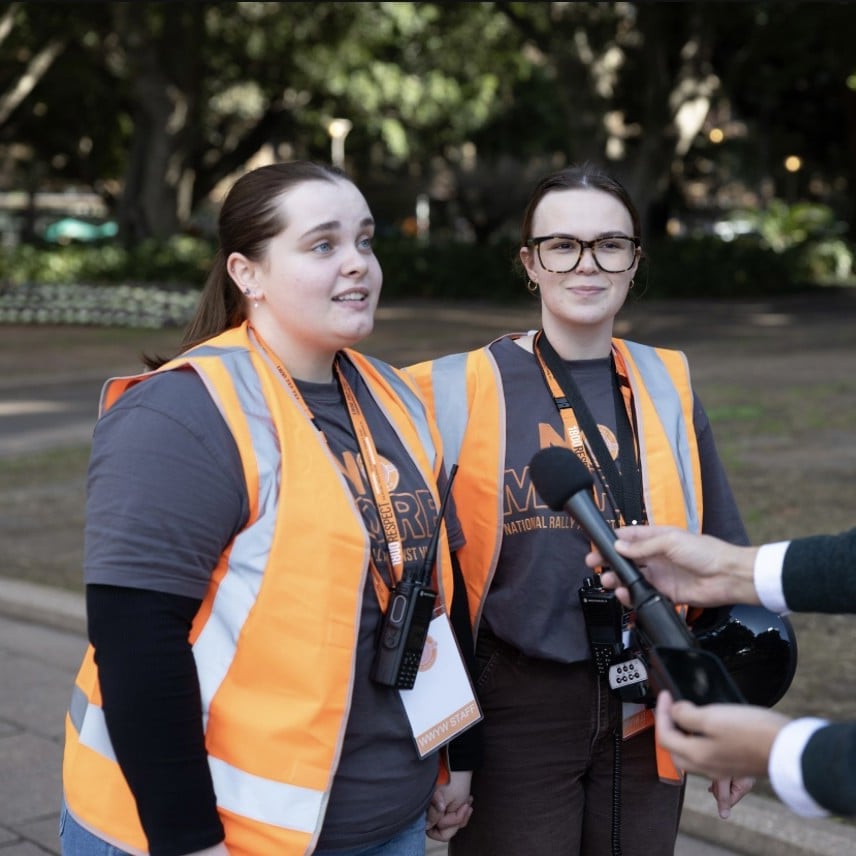
News

For Amelia Grace Wilson-Williams and Mahir Munot, volunteering isn’t just something they do – it’s part of who they are.