


- Posted on 4 Mar 2026
- 4-minute read
Hi-vis garments are increasingly being used as uniforms, often regardless of whether visibility is a safety issue. The irony is that the proliferation of poor-quality gear is itself posing a work health and safety risk.
Complaints have emerged that the new Australia Post uniform is causing sunburn and privacy issues. The Communication Workers Union claims new high-visibility (hi-vis) polo shirts are so thin that their members have suffered sunburn, and that transparency problems mean undergarments (like bras) are visible. Australia Post has confirmed that testing of the fabrics is underway, including checking whether the polos afford adequate SPF protection.
This is not the first time the safety of hi-vis clothing has been in the headlines for the wrong reasons. In 2019 a Western Australian engineer suffered first degree burns from the retroreflective material on his uniform (the silvery strip for nighttime visibility), prompting the emergency department doctor to publish a letter in the Medical Journal of Australia.
With hi-vis clothing now so prolific – both as a work health and safety (WHS) measure and an easy and cheap uniform for employers – there are complex safety and industrial issues at play. While the facts of the Australia Post uniform are still under investigation, it is clear that the production of garments offshore at cheapest cost, and the efforts of employers to maximise profit, impact delivery of adequate WHS protections.
The development of hi-vis clothing: Workers’ bodies at the centre
Striking a balance between costs, fluorescent visibility, colour-fastness and lightweight fabric (suitable for workers labouring in the sun and heat) has been a challenge in Australian hi-vis since the early 1960s.
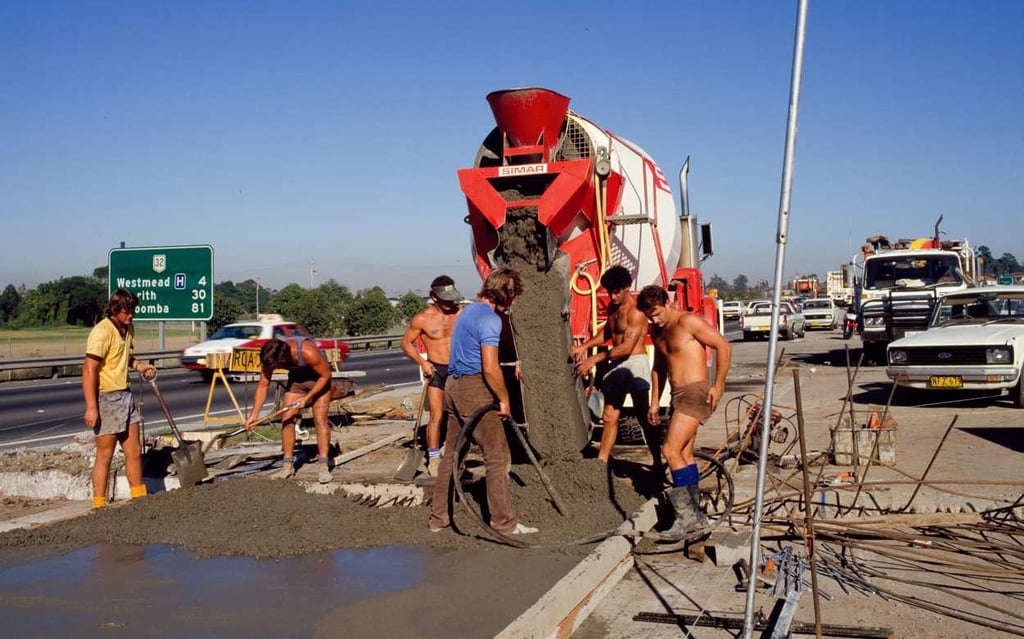
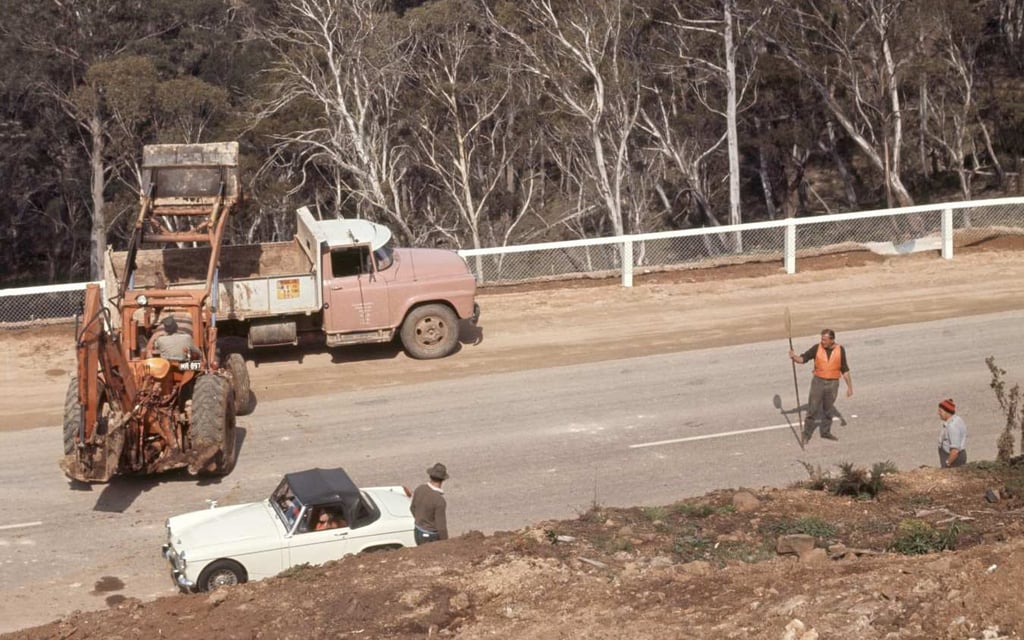
Last month our team published the first history of hi-vis clothing in Australia, tracing its emergence across the 1960s to the 1980s. Initially this ‘conspicuous’ clothing was limited to very high-risk workers: for example at traffic works run by the NSW Department of Main Roads (DMR), only the ‘flagmen’ (carrying the Stop/Slow signs) were required to wear orange vests.
Bodies like the NSW DMR and the Victorian Railways (VicRail) worked to develop hi-vis vests that could both aid safety through visibility and be comfortable in hot and humid conditions. Early hi-vis vests in the late 1960s were initially limited to plastics such as PVC and vinyl: materials that could hold bright orange pigment well.
Following complaints in 1968 at the DMR about the discomfort of the vinyl vests, a new material was introduced for testing: fibreglass mesh. It might sound horrifying to us today, but workers at the time reported that the fibreglass vests were ‘light, cool to wear’ and ‘considerably cooler’ than the vinyl vests.
Profit over worker safety?
Hi-vis clothing became somewhat more common from the mid-1980s, before exploding in use in the first decade of this century. For employers, giving workers hi-vis clothing was also a relatively quick, affordable way to address (or appear to address) safety.
A significant development was new WHS regulations, and the national harmonisation of state-based WHS legislation in 2011. Alongside this, there were improvements in the longevity of colour-fast pigments and availability of new fabrics more suitable for Australia’s heat were key.
Economic restructuring from the 1980s onwards also delivered changes to the production and distribution of clothing, with new global supply chains that made hi-vis cheaper and more accessible. Local Australian textile manufacturing declined rapidly, with new production zones in the Global South able to mass-produce garments more cheaply given the low wages and poor working conditions often involved.
The growth of offshore production of hi-vis, alongside drastically increased use in Australia raises safety and ethical issues. There is a deep contradiction in the growing mass-production of hi-vis garments, while those whose labour to produce them are underpaid and work in unsafe conditions, including instances of modern slavery.
Hi-vis is big business. Market research conducted in 2025 estimated the global hi-vis clothing market at US $16.9 billion ($22.9 billion AUD), which is predicted to grow by 2034 to US $30.5 billion ($41.4 billon AUD).
Hi-vis in the era of climate change
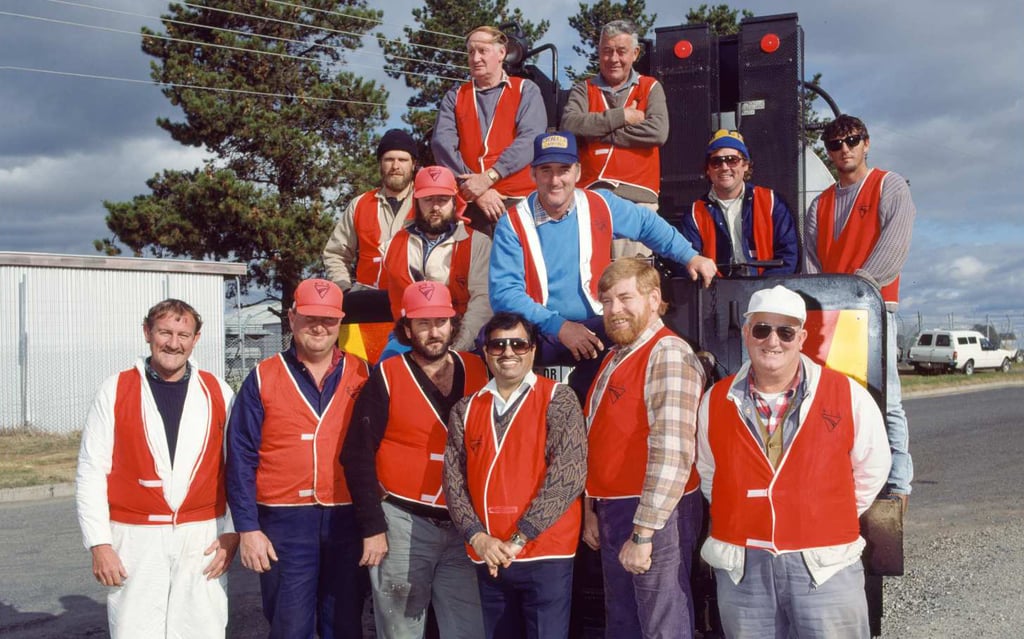
Hi-vis garments are increasingly used as uniforms, often unconnected to whether visibility is a safety issue that needs addressing. The mass proliferation and use of poor-quality garments can create new WHS risks.
Climate change means that extreme heat – more hot days, higher humidity and longer heatwaves – are a growing problem for worker safety in Australia. The International Labour Organization released a major report on WHS and climate change in 2024, identifying that extreme heat, as well as ultraviolet radiation (UV), require urgent action by national governments, employers and labour organisations to ensure WHS. Research by one of our team found too little is happening in Australia to address these risks.
Employers need to ensure that hi-vis workwear does more than provide visibility or pass as a uniform . Factors like breathability and comfort are becoming even more important. While Australian Standards exist for high-visibility workwear, not all garments on the market meet those standards, and nor do they have to. Employers can choose whether to use items that meet standards for daytime and nighttime visibility, sun-protection, fire-retardance and other risks. Those choices can have major consequences for workers.
Authored by

Associate Professor, Faculty of Design and Society

Associate Professor, Faculty of Design and Society

Senior Lecturer, Faculty of Design and Society
News by topic
News
What the Australian government’s apology to LGBTQ+ Defence personnel and veterans means
Current or former Defence personnel can now “apply to have historical homosexual convictions extinguished from their service records”.
News
AI gives rural doctors tools to tackle antibiotic resistance
Evaluation shows new decision support tool helps rural and remote doctors make better antibiotic prescribing decisions.

News
A new study finds that to counter misinformation online, we need to copy its style
Online wording matters, even when the information stays the same, new research finds.
News
The electric car myths Australians can’t shake
Electric cars are dangerous, bad for the environment and impossible to use in the outback. These are just some of the claims circulating among Australians...
News
What the Australian government’s apology to LGBTQ+ Defence personnel and veterans means
Current or former Defence personnel can now “apply to have historical homosexual convictions extinguished from their service records”.
News
AI gives rural doctors tools to tackle antibiotic resistance
Evaluation shows new decision support tool helps rural and remote doctors make better antibiotic prescribing decisions.
News
A new study finds that to counter misinformation online, we need to copy its style
Online wording matters, even when the information stays the same, new research finds.
News
The electric car myths Australians can’t shake
Electric cars are dangerous, bad for the environment and impossible to use in the outback. These are just some of the claims circulating among Australians...