


- Posted on 13 Feb 2026
- 4-minute read
By Elena Collinson
This article appeared in UTS:ACRI's Perspectives on February 13 2026. Perspectives is the commentary series of the Australia-China Relations Institute at the University of Technology Sydney (UTS:ACRI), offering research-informed viewpoints on developments and debates in the Australia-China relationship.
Angus Taylor’s elevation to the leadership of the Liberal Party follows a party room spill after months of internal disagreement over policy direction and electoral strategy, including divisions on climate policy, immigration, hate speech legislation and the future of the Coalition. Temporary separations between the Liberal and National parties in May 2025 and again in early 2026 intensified these pressures and exposed underlying ideological differences.
Sussan Ley had led the opposition since the Coalition’s defeat at the 2025 federal election, but her authority was constrained from the outset - she defeated Taylor in the initial leadership ballot by four votes, leaving an organised alternative within the party room. Taylor’s subsequent 34-17 victory provides a clearer internal mandate, consolidating his authority and giving him greater latitude to shape the party’s external positioning.
Taylor’s appointment does not alter the bipartisan framework that has guided Canberra’s approach to the People’s Republic of China (PRC) since 2016-2017. The likely shift is one of emphasis. Taylor’s public record suggests greater comfort with declaratory deterrence, a stronger inclination to frame PRC policy through visible alignment with security partners and a willingness to position national security as a primary axis of differentiation from Labor.
As opposition defence spokesperson, he asserted that Beijing was testing Australia by ‘projecting power in ways designed to intimidate and undermine the rules-based order’, describing live-fire exercises and naval activity near Australia as ‘part of an emerging pattern of provocations Australians cannot ignore. He linked this assessment to higher defence spending, advocating expenditure of ‘at least three percent’ of GDP in response to a ‘dangerous and uncertain time’ marked by authoritarian ‘muscle flexing’, including reference to the PRC’s military build-up. He framed increased spending as an alliance responsibility, contending that Australia must ‘support our allies with real capability’.
While much of this rhetoric sits within established Coalition positioning, Taylor’s July 15 2025 remarks on Taiwan marked the clearest point of divergence. He stated that Australia should have a ‘joint commitment’ with the United States to Taiwan’s security and that this commitment should ‘underpin what we are doing in AUKUS.’ Although he did not codify specific military contingencies, the formulation moved beyond the longstanding strategic ambiguity maintained by successive governments, which have supported deterrence and the status quo without offering explicit guarantees. On the same day, Senator James Paterson signalled caution, noting that Australia should not articulate a position more explicit than that of the US, which has substantively retained ambiguity since 1979.
Taylor has also treated alignment with Japan as a public signal. In December 2025, former Japanese ambassador Shingo Yamagami published a pointed opinion piece in The Australian criticising the Albanese government’s response to Beijing’s reaction to Tokyo’s Taiwan-related remarks. Taylor endorsed the substance of that critique and urged Labor to back Japan unequivocally and to speak more directly about PRC economic coercion. In Senate Estimates, Department of Foreign Affairs and Trade Secretary Jan Adams rejected Yamagami’s call, observing that ‘a loud, assertive approach isn’t always the best approach.’
The broader strategic environment provides the outer boundary for any leadership shift. The PRC’s military modernisation and use of economic leverage remain enduring features of the regional landscape. The US continues to press allies for greater burden-sharing, even as its expansive use of tariffs and industrial policy introduces additional complexity into alliance management. Debates in Washington about trade policy and alliance conditionality have injected a degree of uncertainty into regional calculations. Japan is expanding its defence capabilities, while many Southeast Asian states remain wary of overt bloc dynamics.
The domestic political environment is equally consequential. The 2022 and 2025 election results identified challenges for the Coalition in metropolitan and multicultural electorates, including seats with significant Chinese-Australian populations where support shifted toward Labor. In this context, the election of Jane Hume as deputy leader adds complexity. During the 2025 campaign, controversy surrounding her claim that ‘Chinese spies’ were volunteering for a Labor opponent generated backlash among segments of Chinese-Australian communities.
For Taylor, this presents a dual challenge. A sharper declaratory stance on deterrence and alliance alignment may consolidate support within the party’s security-focused wing. Yet electoral recovery will likely require rebuilding trust in culturally diverse electorates. The political challenge lies not in the substance of PRC policy, but in ensuring that assertive positions are communicated in ways that minimise unintended domestic spillover, recognising that even carefully framed rhetoric can carry domestic political effects beyond its intended audience.
Consolidating authority within the parliamentary party is only the first step. Presenting a unified and electorally competitive alternative to Labor will require managing ideological breadth within the Coalition, spanning security-focused conservatives, economically liberal constituencies and more populist voters.
This balancing act is sharpened by competition on the Coalition’s right flank. Parties such as One Nation continue to attract protest and identity-based votes, complicating the task of assembling a broad centre-right coalition.
Whether Taylor can convert his internal mandate into a coherent external offering that competes effectively with both Labor and right-wing challengers will shape not only the tone of PRC policy but the Coalition’s broader pathway back to government.
AUTHOR

Manager, Research Analysis, Australia-China Relations Institute, University of Technology Sydney

News
The US and China cannot slow the AI race, but they can make It safer
The United States does not need to trust China, share frontier models with China, or slow its own AI development to have a national security interest in AI...
News
Australia-China Weekly Brief: October 2026 issues
The Australia-China Weekly Brief by the Australia-China Relations Institute at the University of Technology Sydney (UTS:ACRI) tracks key developments in...
News
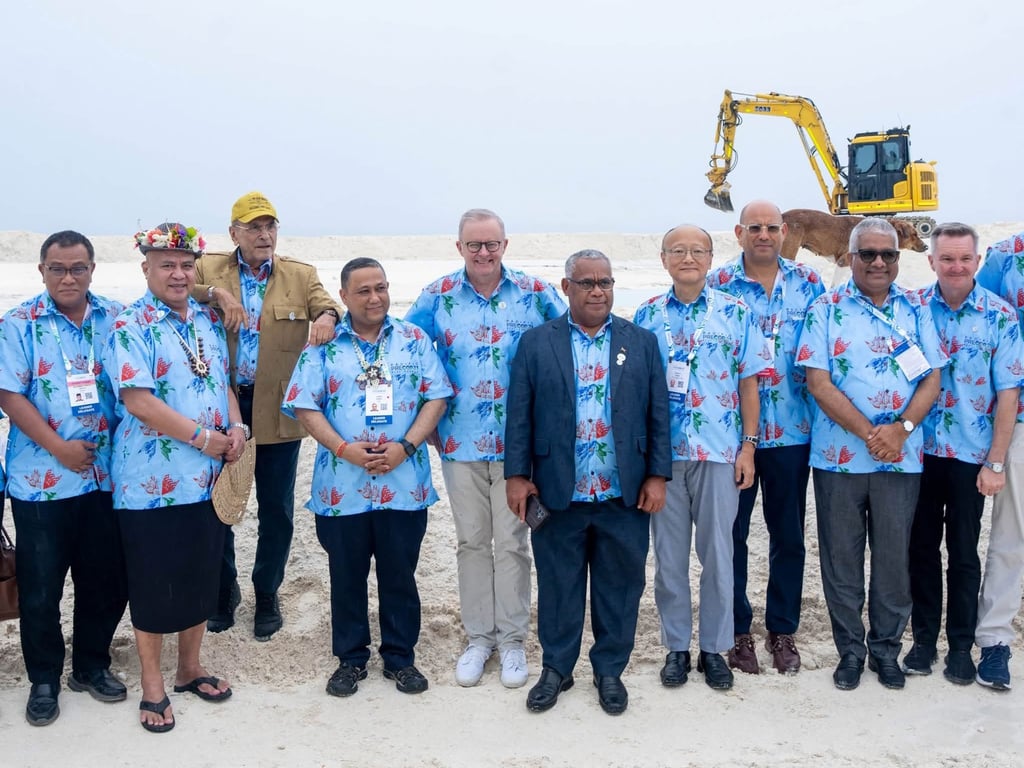
Whose security counts in the Pacific?
While climate-related spending gets criticised, billions forked out for security and strategic engagement gets framed as for the “national interest”.
News
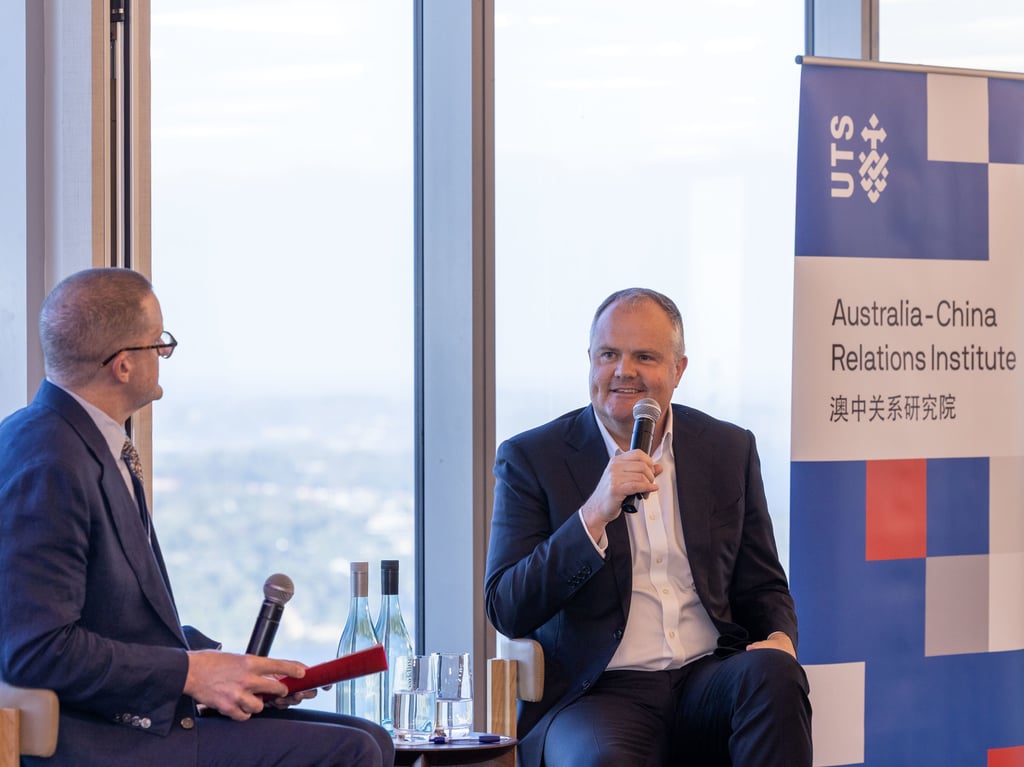
In conversation with Mr Ted O'Brien MP
On October 7 2026, the Australia-China Relations Institute at the University of Technology Sydney (UTS:ACRI) welcomed Mr Ted O'Brien MP, Australia’s Shadow...
News
The US and China cannot slow the AI race, but they can make It safer
The United States does not need to trust China, share frontier models with China, or slow its own AI development to have a national security interest in AI...
News
Australia-China Weekly Brief: October 2026 issues
The Australia-China Weekly Brief by the Australia-China Relations Institute at the University of Technology Sydney (UTS:ACRI) tracks key developments in...
News
Whose security counts in the Pacific?
While climate-related spending gets criticised, billions forked out for security and strategic engagement gets framed as for the “national interest”.
News
In conversation with Mr Ted O'Brien MP
On October 7 2026, the Australia-China Relations Institute at the University of Technology Sydney (UTS:ACRI) welcomed Mr Ted O'Brien MP, Australia’s Shadow...