


- Posted on 23 Feb 2026
A new research report and toolkit from the UTS Centre for Social Justice and Inclusion demonstrates how community-led initiatives and place-based leadership can power more just and sustainable neighbourhoods.
In the heart of inner-city Sydney, a new kind of sustainability movement is taking root – one powered not by policy or profit, but by people.
Through the Community-led Sustainable Cities project, the UTS Social Impact Lab has been working alongside residents, community leaders and local organisations in Glebe, Ultimo, Haymarket , and Pyrmont to reimagine what sustainability looks like when it starts from the ground up.
Rather than beginning with top-down targets, the project began with listening to lived experience, local knowledge, and the quiet leadership already at work in these neighbourhoods.
More than 120 residents took part in storytelling sessions, workshops, and co-design activities that surfaced the values, aspirations and everyday actions shaping sustainable living in the inner city.
From listening to leadership
The year-long collaboration revealed three community priorities: sustainable food, waste reduction, and climate resilience.
UTS Social Impact Lab provided seed funding and mentorship to turn these priorities into grassroot initiatives.
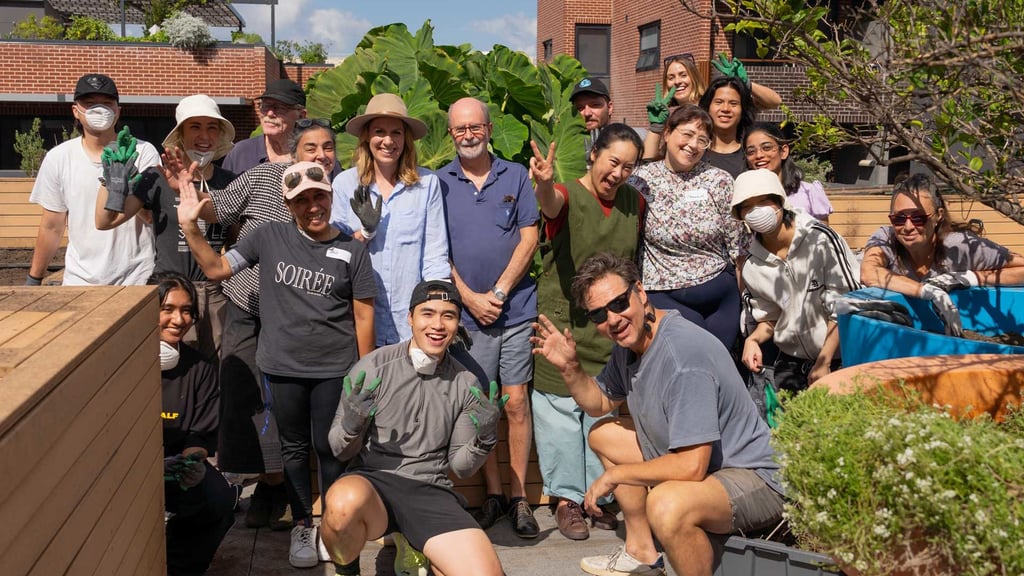
In Glebe, over a period of nine months, social housing tenants transformed a neglected rooftop into a thriving community garden through 11 engagement events involving 160+ attendees. The project helped reclaim a space once associated with antisocial behaviour and was recognised in NSW Parliament as ‘a fantastic example of sustainable solutions in our urban areas.’
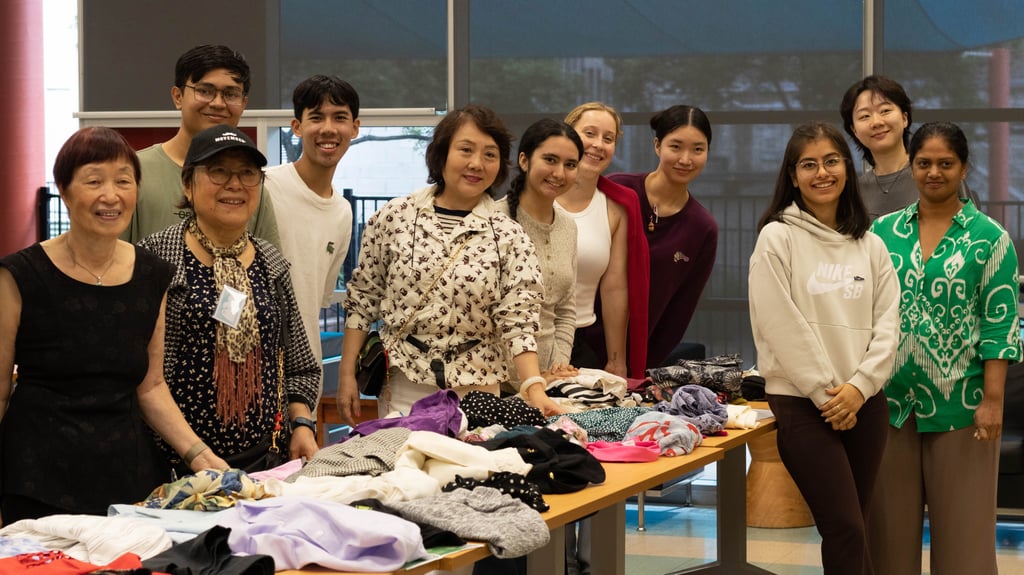
In Ultimo, a group of retired residents from Chinese and Hong Kong diaspora communities led two bilingual clothing swaps and a hands-on sewing workshop, bringing generations and cultures together to tackle fashion waste. Across both swaps, 120 people participated and more than 300 garments were reused, with zero waste sent to landfill. Beyond environmental outcomes, the social impact was clear. As one attendee shared, ‘A fantastic initiative – the cross-cultural interaction was wonderful,’ while another reflected, ‘It was incredibly rewarding for the community.’
Also in Glebe, a small group of locals led two Community Climate Forums, bringing together more than 85 residents, experts and advocates to explore practical, place-based responses to climate change. Together, these forums laid the foundations for the Inner Sydney Community Climate Action Network (now a member of the Climate Action Network Australia). Participants described how the conversations ‘fed off each other’, with one attendee saying they felt ‘encouraged by everyone’s commitment’, and others reflected that connecting around a shared issue ‘deepens connection.’
Each project was small in scale but big in spirit, showing how with the right scaffolding – time, trust and modest resourcing – local ideas can have a lasting impact.
‘The capacity to lead was already there,’ said project co-lead Joey Shaw. ‘Our role was simply to connect the dots – to help people use the strengths and relationships already within their community.’
Art, storytelling, and systems change
Art and storytelling were at the heart of the project, culminating in a collective artwork, A sustainable Story of Change for our neighbourhood, that brought community hopes and challenges to life.
These creative approaches helped make complex issues tangible and inclusive, allowing residents from diverse cultural and social backgrounds to engage meaningfully in imagining their future city.
‘Art gave everyone a way in,’ said visual artist and UTS Senior Lecturer, Dr Pat Grant. ‘It turned abstract systems into something personal and real.’
Universities as neighbours
The project also demonstrates how universities can act as true anchor institutions – not just places of learning, but partners in community transformation.
Through the Social Impact Lab, UTS contributed research expertise, student volunteers, and, crucially, a commitment to redistributing power.
‘UTS didn’t come in with the answers. They listened, they stayed, and they built trust,’ said one community partner. ‘That’s what made people want to be involved.’
‘This project showed what happens when universities stop talking at communities and start working with them,’ said project co-lead Dr. Kathleen Blair. ’It’s slower, it’s messier, but it’s also where the most meaningful change happens.’
Where traditional engagement might extract community knowledge for academic purposes, this model flips the script: community members are co-researchers, co-designers and decision-makers.
‘UTS has really embedded its brand locally,’ one community leader reflected. ‘They’ve made things happen because they’re part of the community, not apart from it.’
The road ahead
All three community projects have continued beyond their initial funding, with new partnerships and activities already emerging.
To share what they’ve learned, the Social Impact Lab has published a practical toolkit – Making Change Together – offering step-by-step guidance for practitioners and communities who want to replicate the model.
The work has shown that building sustainable cities isn’t just about infrastructure – it’s about relationships, equity, and shared leadership.
‘Change doesn’t have to be imposed from the top,’ said Nick Grinpukel, co-lead of the project. ‘When people are trusted to lead, the impact can be extraordinary.’
Find out more
The Social Impact Lab invites other universities, councils, and community organisations to explore the Making Change Together toolkit, available free online.
Discover how to embed creativity, care and collaboration in your sustainability journey. Read the full research report Community-led Sustainable Cities: How local place-based leadership is powering sustainability transitions.
Upcoming event – Commuity-led Sustainable Cities
When: Thursday 12 March, 1–2.30pm
Where: UTS Great Hall
Climate change is a global challenge – but its impacts are felt locally. From extreme heat and rising costs to waste and energy pressures, building a sustainable future depends on solutions that reflect the realities of everyday life.
Too often, climate responses are designed from the top down. While policy is critical, lasting change happens when communities are trusted as leaders and co-designers of solutions.
This forum brings together community leaders and university partners involved in the Community-led Sustainable Cities initiative, a collaboration between residents across Glebe, Haymarket, Pyrmont and Ultimo and UTS.
Panellists Tania Thompson, Yimmy Seifert, Dr Glen Powell (Wesley Mission), and Nick Grinpukel (UTS) will share how local knowledge, lived experience and partnership can turn ideas into action – from a revitalised social housing garden to clothing swaps and a suburb-level climate forum.
Join us for a practical conversation about power, participation and what it really takes to build a just, community-led transition.
Written by
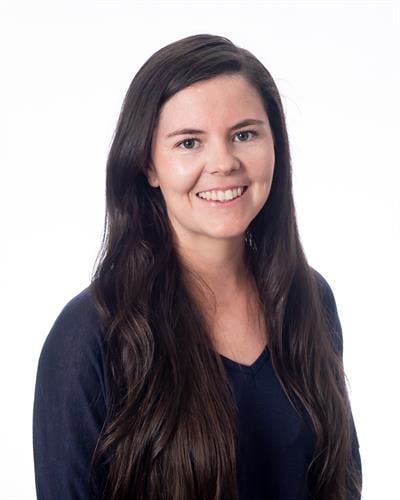
Research And Evaluation Manager, Deputy Vice-Chancellor (Education and Students)

News
Tell us what we want
Centre for Media Transition newsletter - Tell us what we want, what we really really want | Issue 18

News
Embedded links
Michael Davis looks at the recently announced partnership between USA Today Co. and Palantir, whose reputation has the company’s reporters up in arms.

News
A'muse'ing
Harry Craigie looks at Meta’s newly released agentic AI system Muse, which like many AI products, gives us plenty of what we want, but likely at the price of...

News
Australia-China Weekly Brief: October 2026 issues
The Australia-China Weekly Brief by the Australia-China Relations Institute at the University of Technology Sydney (UTS:ACRI) tracks key developments in...
News
Tell us what we want
Centre for Media Transition newsletter - Tell us what we want, what we really really want | Issue 18
News
Embedded links
Michael Davis looks at the recently announced partnership between USA Today Co. and Palantir, whose reputation has the company’s reporters up in arms.
News
A'muse'ing
Harry Craigie looks at Meta’s newly released agentic AI system Muse, which like many AI products, gives us plenty of what we want, but likely at the price of...
News
Australia-China Weekly Brief: October 2026 issues
The Australia-China Weekly Brief by the Australia-China Relations Institute at the University of Technology Sydney (UTS:ACRI) tracks key developments in...