


- Posted on 26 Aug 2025
- 3-minute read
Three UTS experts will contribute to major reports for the world’s most trusted authority on climate change.
Three UTS researchers have been chosen as Lead Authors of reports for the Intergovernmental Panel on Climate Change (IPCC).
Established in 1988 by the United Nations Environment Programme and the World Meteorological Organization, the IPCC is the leading source of scientific information on climate change.
The IPCC periodically publish Assessment Reports interrogating research in three thematic Working Groups:
- The Physical Science Basis – assessing the physical science of climate change
- Impacts, Adaptation and Vulnerability – assessing the impacts, adaptation and vulnerabilities related to climate change
- Mitigation – assessing actions that propose to reduce the rate of climate change
The Assessment Reports are a crucial tool used by governments to inform policy and strategies.
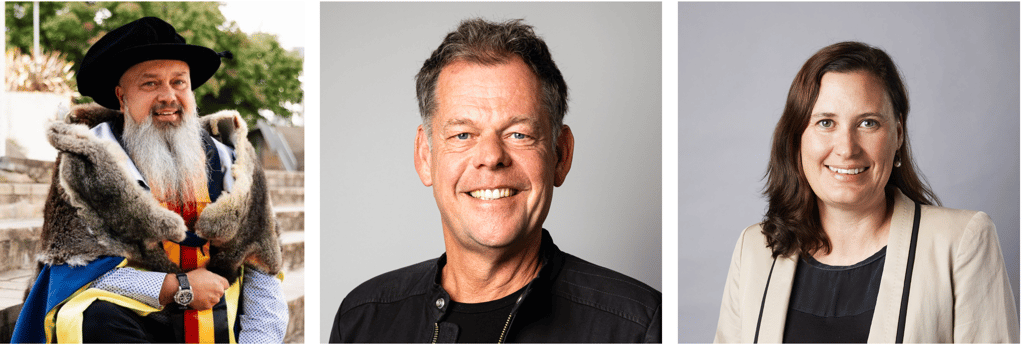
The IPCC is now beginning work on the Seventh Assessment Report (AR7), due to be published in 2029. Among its 664 international authors are UTS Faculty of Science Associate Dean (Indigenous Leadership and Engagement) Professor Bradley Moggridge and UTS Institute for Sustainable Futures Research Director Professor Sven Teske.
It is an honour for me to be selected. I’ll be examining the technical and economic feasibility of published long-term pathways to decarbonisation for various industrial sectors.
Professor Moggridge will bring expertise in hydrogeology and environmental science and an Indigenous Australian perspective to the report.
Professor Moggridge says:
“As a Kamilaroi scientist at UTS, I feel privileged to be appointed by the IPCC as Lead Author in Working Group 1.
The IPCC has been talking publicly and within their planning documents about the inclusion of Indigenous and Local Knowledges into AR7, and I suppose I am one the outcomes of this, I just hope I am not the only Indigenous climate scholar for AR7.”
Joining Professor Moggridge is Professor Sven Teske, whose One Earth Climate Model is internationally recognised for producing highly detailed carbon-reduction pathways for industry sectors and countries. Professor Teske is a Lead Author in Working Group 3.
Professor Teske says:
“It is an honour for me to be selected. I’ll be examining the technical and economic feasibility of published long-term pathways to decarbonisation for various industrial sectors. As a trained engineer and energy systems modeller with 30 years’ of experience, I’d like to contribute to the development of knowledge for the practical implementation of the energy transition.”
Alongside the AR7, the IPPC is working on another report, the Special Report on Climate Change and Cities. This report differs from the Assessment Reports in that it was specifically requested by the IPCC’s member states.
UTS Institute for Sustainable Futures Research Director Associate Professor Dr Samantha Sharpe is one of 96 Lead Authors of this report. Dr Sharpe is a labour market economist, with expertise in understanding the socio-economic implications of climate action in cities.
Dr Sharpe says:
“It is a huge honour to be selected and a career highlight to work with colleagues across the world on this report.
Cities are critical to climate action – they are where most of us live, where most carbon emissions are generated and where we can achieve transformative climate action.
The chapter I am working on looks at how action can and is being implemented across the enormous diversity of cities, seeking to find where lessons have been learned and what is transferrable.”
The Special Report on Climate Change and Cities is expected to be published in early 2027.
News
Professor Juliet Willetts appointed UN Special Rapporteur on human rights to water and sanitation
Professor Juliet Willetts will bring more than two decades of water and sanitation research and practice to her new role as a United Nations Special Rapporteur.
News
Liquid gold: could we turn our pee into fertiliser?
For thousands of years, human urine has had real value.
News
Australia’s EV sales are skyrocketing. Our charging infrastructure may soon struggle to keep up
Tighter regulation and careful planning will ensure our public chargers actually work.

News
Australia's first roadmap helps investors tackle the hidden carbon in buildings and infrastructure
For years, investors have focused on the emissions generated when buildings are operating.
News
Professor Juliet Willetts appointed UN Special Rapporteur on human rights to water and sanitation
Professor Juliet Willetts will bring more than two decades of water and sanitation research and practice to her new role as a United Nations Special Rapporteur.
News
Liquid gold: could we turn our pee into fertiliser?
For thousands of years, human urine has had real value.
News
Australia’s EV sales are skyrocketing. Our charging infrastructure may soon struggle to keep up
Tighter regulation and careful planning will ensure our public chargers actually work.
News
Australia's first roadmap helps investors tackle the hidden carbon in buildings and infrastructure
For years, investors have focused on the emissions generated when buildings are operating.