


- Posted on 18 Aug 2025
- 2-minute read
The Strengthening Health Workforce in the Pacific (Nursing and Midwifery) (SHWP) Program aims to strengthen Pacific health systems to improve the quality of, and access to, health care and population health across the Pacific.
As part of the SHWP Program under the Australian Department of Foreign Affair and Trade’s (DFAT) five-year Partnerships for a Health Region (PHR) initiative (2024–2028), WHO CCNM UTS and South Pacific Chief Nursing & Midwifery Officers Alliance (SPCNMOA) are running in-country workshops across 13 Pacific Island Countries in 2025.
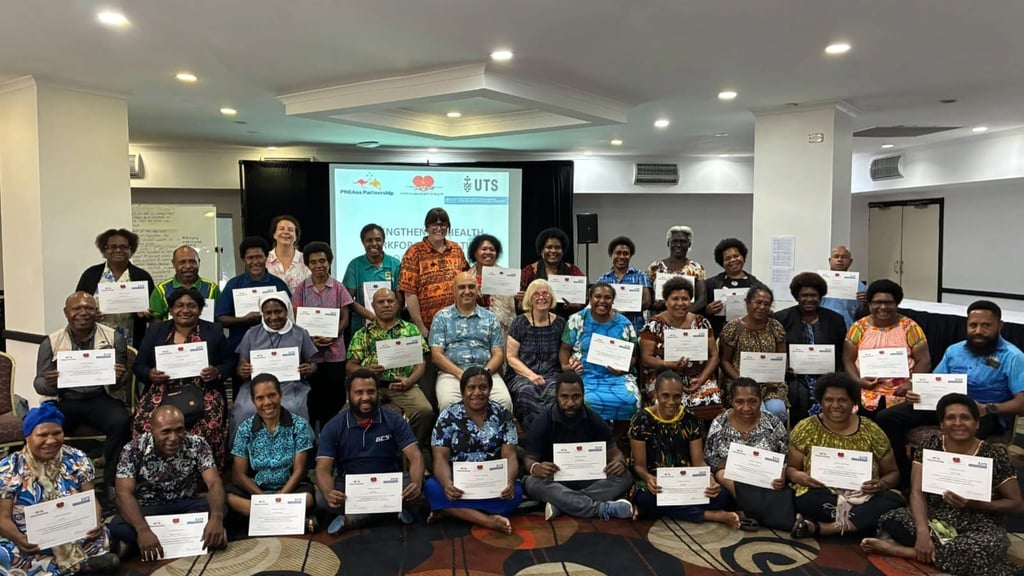
The Vanuatu Country Workshop from July 22-23, 2025 in Port Vila, Vanuatu drew in 70 participants from the Ministry of Health (MoH), Vanuatu Nursing Council (VNC), Vanuatu College of Nursing Education (VCNE), Vila Central Hospital (VCH), other key partners, senior nurses and midwives and 5 outer island province representatives (Tafea, Shefa, Penama, Malampa, Sanma). The workshop, as is with all 13 workshops set to take place this year, was facilitated by Pacific Leadership Program 2025 fellows from Vanuatu.
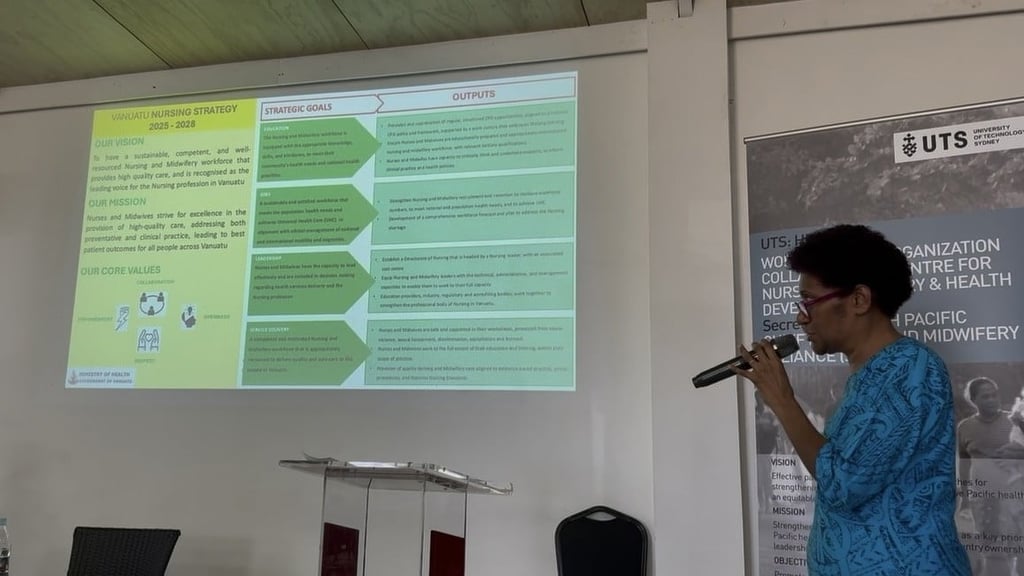
The workshop was highly successful, meeting its objectives including: 1) exploring and understanding the framework for professional regulation, 2) examining and discussing Vanuatu’s country traffic lights action plan and strategy, 3) assessing Vanuatu’s regulatory status against the regulatory framework to determine work priorities, 4) agreeing on priorities and a plan of action, and 5) collecting baseline data for GEDSI and raising awareness of GEDSI principles.
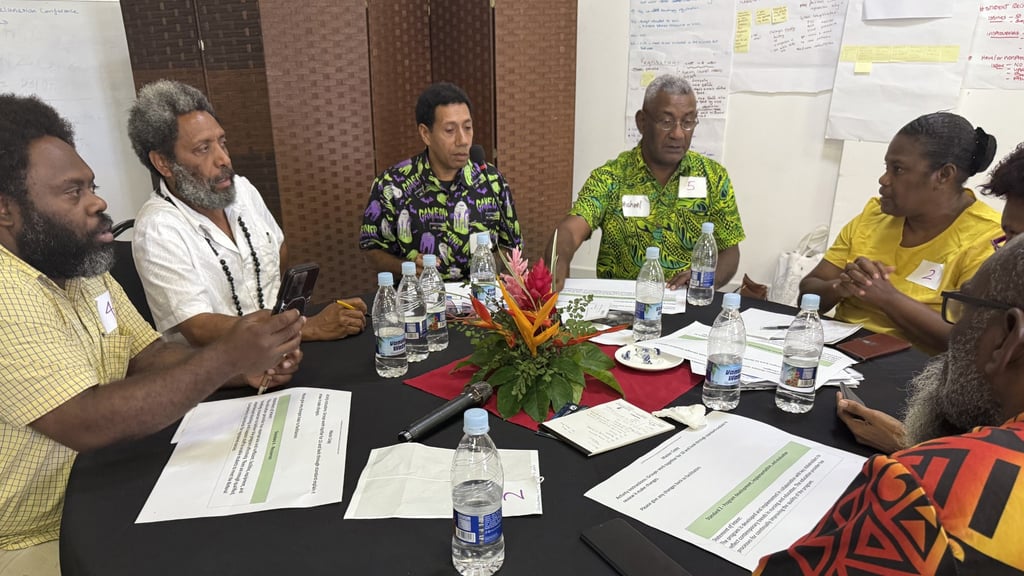
Participants engaged in “World Café” discussions, analysing Vanuatu’s Nurses Act (2000) and identifying gaps and challenges within the five areas of health professional regulation: registration, standards and codes, accreditation, complaints, and governance.
A major focus was placed on developing accreditation standards for VCNE’s nursing education program to support the VNC in enhancing the quality of nursing education. Draft accreditation standards, including governance, curriculum development and evaluation, resources, assessment, clinical placements, and GEDSI, were reviewed and adapted to Vanuatu’s specific context.
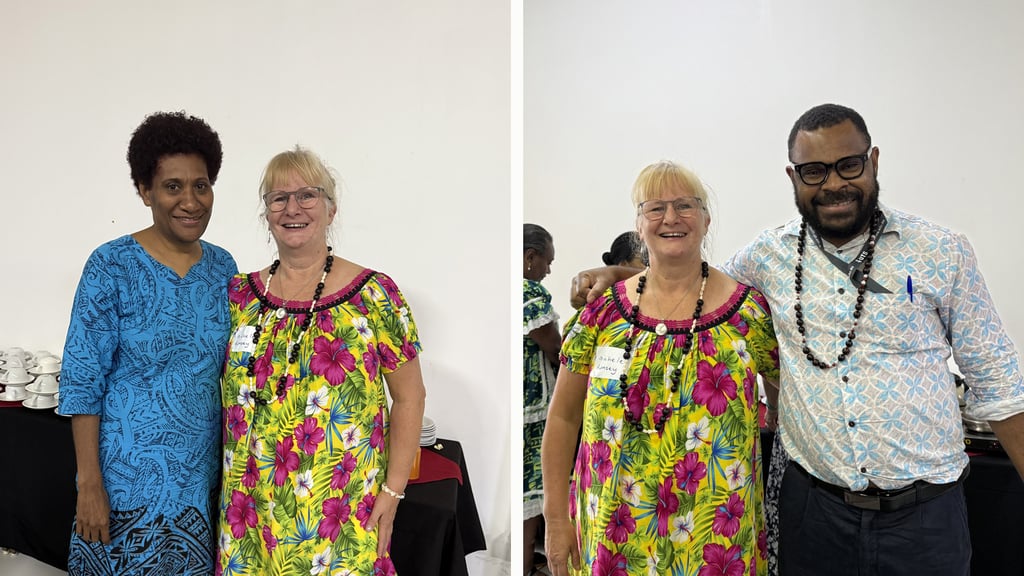
An evening event was also held for special guests and participants, where Minister of Health, Hon. John Still Tari Qwetu, and Director of Policy, Planning and Corporate Services, Dr. Posikai Samuel Tapo, gave a moving address highlighting Vanuatu’s commitment to developing the nursing workforce and population health.
Read more about the workshop in our brief.
The success of the workshop needs to be credited to all those involved, and the developed challenges and recommendations will be carried forward into future works to strengthen Vanuatu’s health systems, as well as in upcoming workshops across the region.

News
Historical First-Ever Global Forum for WHO Collaborating Centres in Lyon
More than 800 WHO CCs across 80 countries attended, with 85 participants representing the Western Pacific Region’s Centres. WHO CCNMH Director, Professor...
News
Strengthening Health Workforce Education at the University of Papua New Guinea
From 3–7 November 2025, the WHO Collaborating Centre for Nursing, Midwifery & Health Development (WHO CCNMH UTS) delivered an intensive Continuing Professional...
News
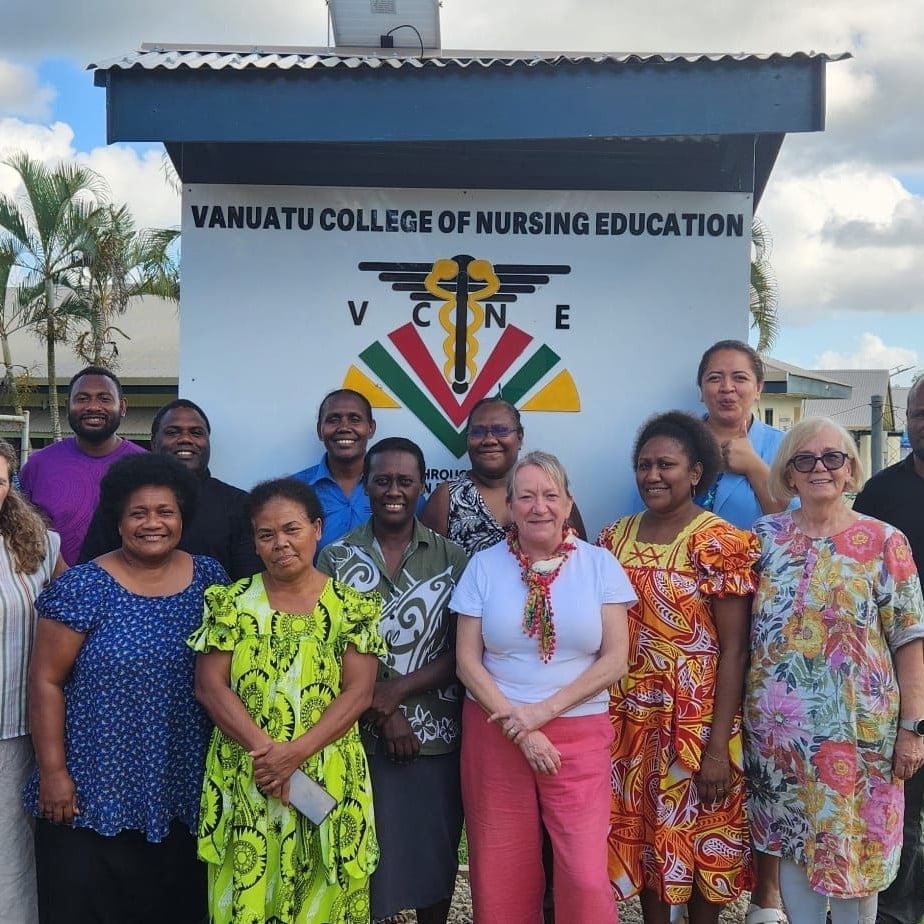
Vanuatu College of Nursing Education and UTS continue to support nurses through quality education
The Vanuatu College of Nursing Education (VCNE), under the Vanuatu Ministry of Health, has been continuously working towards strengthening nursing education...
News
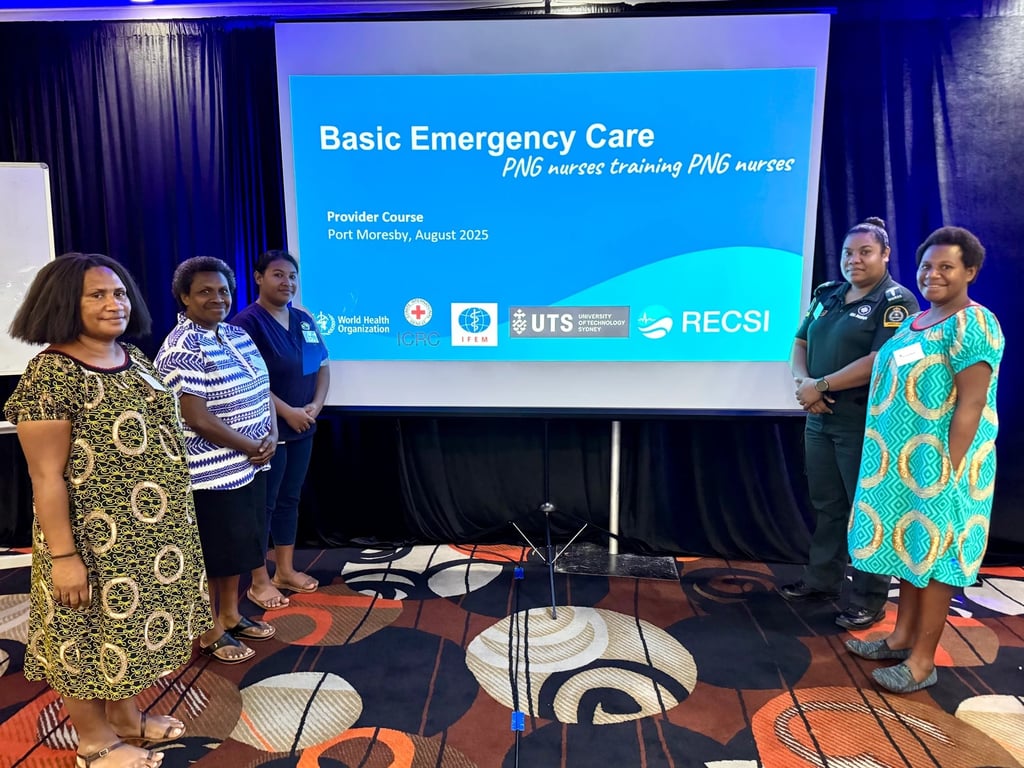
PNG Delivers Historic Emergency Care Training By Nurses, For Nurses
Held between August 18-22, 2025, the week-long course was a testament to local ownership of knowledge and practice, delivered by nurses, for nurses, with 18...
News
Historical First-Ever Global Forum for WHO Collaborating Centres in Lyon
More than 800 WHO CCs across 80 countries attended, with 85 participants representing the Western Pacific Region’s Centres. WHO CCNMH Director, Professor...
News
Strengthening Health Workforce Education at the University of Papua New Guinea
From 3–7 November 2025, the WHO Collaborating Centre for Nursing, Midwifery & Health Development (WHO CCNMH UTS) delivered an intensive Continuing Professional...
News
Vanuatu College of Nursing Education and UTS continue to support nurses through quality education
The Vanuatu College of Nursing Education (VCNE), under the Vanuatu Ministry of Health, has been continuously working towards strengthening nursing education...
News
PNG Delivers Historic Emergency Care Training By Nurses, For Nurses
Held between August 18-22, 2025, the week-long course was a testament to local ownership of knowledge and practice, delivered by nurses, for nurses, with 18...