


- Posted on 22 Jun 2024
- 2-minute read
UTS Transport Research Centre (TRC) led by Distinguished Professor Buddhima Indraratna is renowned nationally and internationally for innovations in transport geotechnics, including recycling off-the-road rubber tyres for energy absorbing railway foundations, and novel preventive measures for mud pumping in tracks built over soft coastal soils.
On Wednesday 12 June, Professor Indraratna and his TRC colleagues together with Professor Michael Blumenstein, Deputy Dean of the Faculty of Engineering and IT, were delighted to welcome Senator Hon. Tim Ayres, Assistant Minister for Trade & Manufacturing, and Ms Jacqui Walters, Chair of the National Rail Innovation Council, and other Council members to the geotechnical and railway laboratories located at the UTS TechLab in Botany.
“The UTS Transport Research Centre is a world leader in research and development in the field of Transportation Geotechnics and corresponding technical standards,” Senator Ayres highlighted.
“That means more efficient and faster railways carrying heavier loads, and improved safety and comfort for commuters. These research outcomes have had a direct impact on the quality of locally made trains and railways, thus fostering a smart approach to better manufacturing industry.”

The Hon. Senator Ayres and his delegation were invited to visit the geotechnical and railway laboratories and they were keen to observe the iconic equipment and current research being conducted. The engagements on real-life projects were demonstrated through large-scale physical models and unique testing devices designed by Professor Indraratna and his team and custom-built by Australian manufacturers in NSW.
This visit is expected to create more future opportunities in integrating TRC’s cutting-edge research in collaboration with the rail industry, thus amply supporting the government’s strategies for sustainability and circular economy perspectives. The flow on effects will greatly benefit a wide range of stakeholders including industry organisations, public sector infrastructure divisions, and collaborating Universities.
News
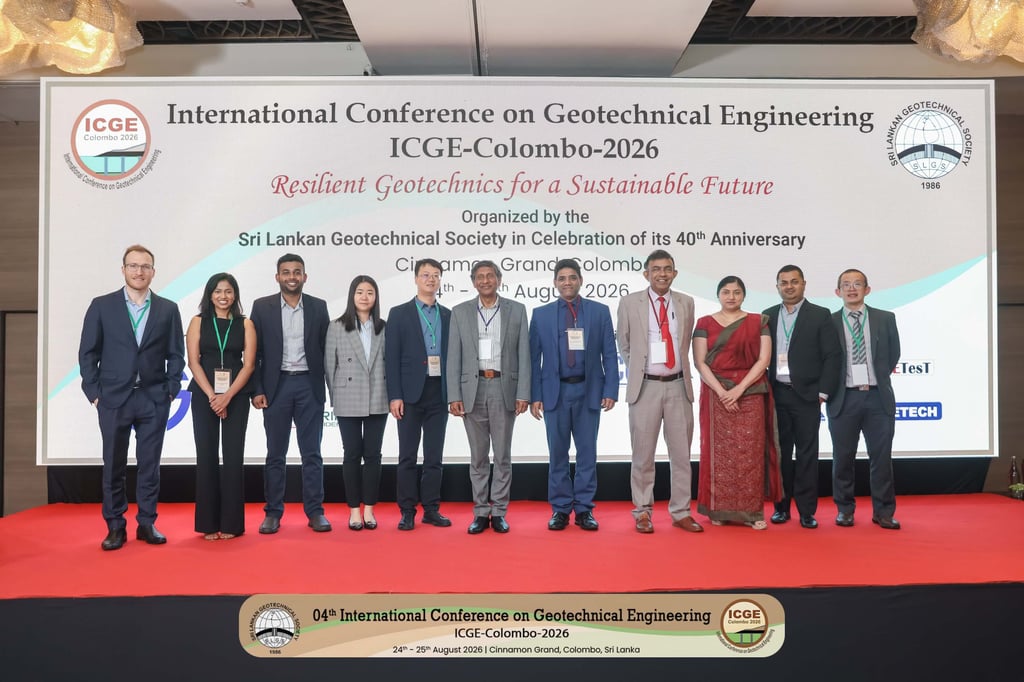
Transport Research Centre showcases sustainable transport geotechnics at ICGE-Colombo 2026
The UTS Transport Research Centre played a prominent role at the 4th International Conference on Geotechnical Engineering-Colombo, held on 24–25 August 2026 at...
News
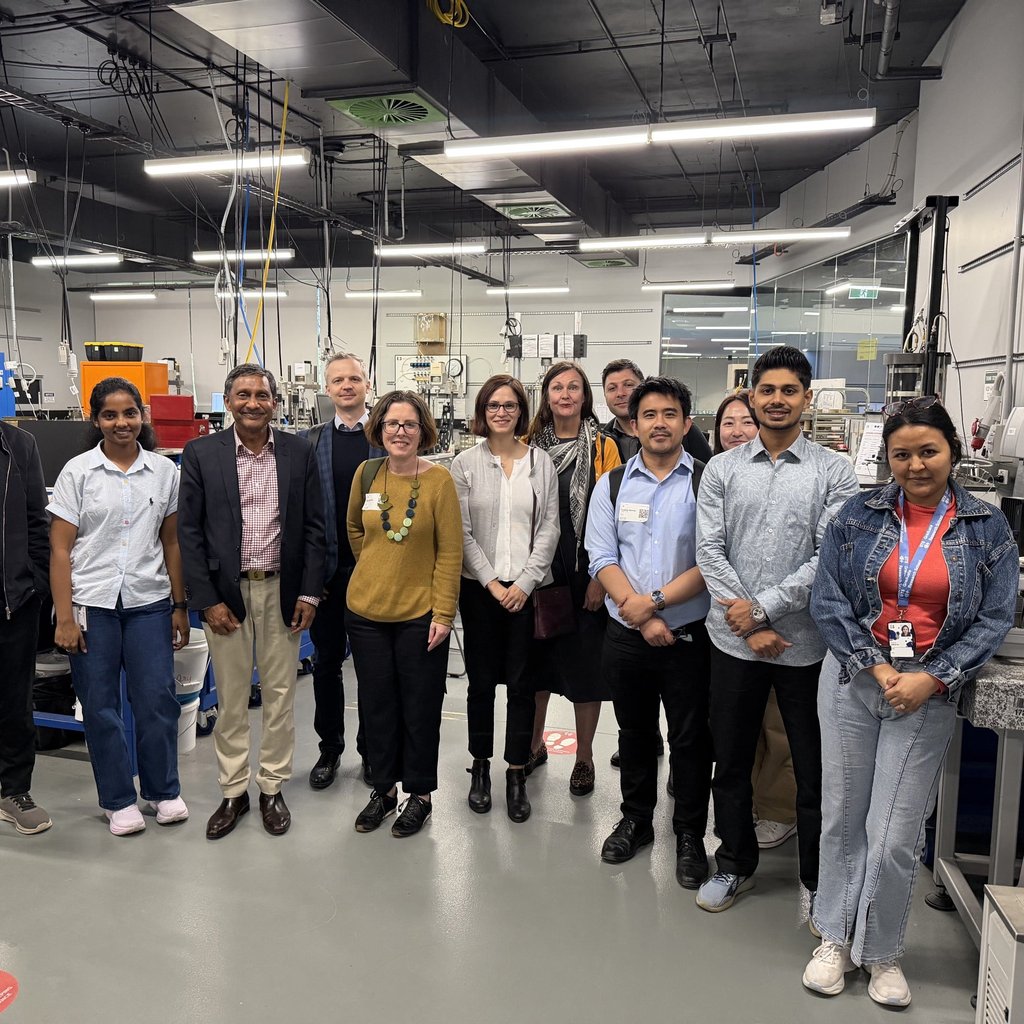
Transport for NSW delegations visit UTS Tech Lab to advance research collaboration
The UTS Transport Research Centre (TRC) welcomed two delegations from Transport for NSW (TfNSW) to UTS Tech Lab on 30 July and 9 September 2026.

News
UTS Transport Research Centre received prestigious international engineering award
The UTS Transport Research Centre (TRC) team has been honoured with the 2026 Donald R. Stanley Award by the Canadian Society for Civil Engineering (CSCE).
News
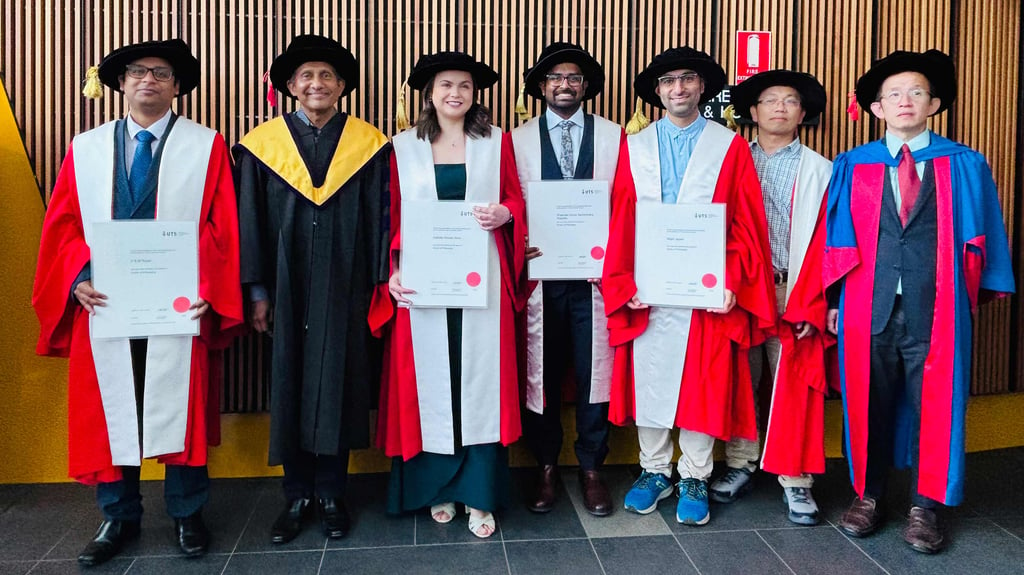
UTS Transport Research Centre celebrates doctoral student completions
The UTS Graduation Ceremony this month marked a proud milestone for the UTS Transport Research Centre and its academic team.
News
Transport Research Centre showcases sustainable transport geotechnics at ICGE-Colombo 2026
The UTS Transport Research Centre played a prominent role at the 4th International Conference on Geotechnical Engineering-Colombo, held on 24–25 August 2026 at...
News
Transport for NSW delegations visit UTS Tech Lab to advance research collaboration
The UTS Transport Research Centre (TRC) welcomed two delegations from Transport for NSW (TfNSW) to UTS Tech Lab on 30 July and 9 September 2026.
News
UTS Transport Research Centre received prestigious international engineering award
The UTS Transport Research Centre (TRC) team has been honoured with the 2026 Donald R. Stanley Award by the Canadian Society for Civil Engineering (CSCE).
News
UTS Transport Research Centre celebrates doctoral student completions
The UTS Graduation Ceremony this month marked a proud milestone for the UTS Transport Research Centre and its academic team.