


- Posted on 17 Sep 2026
The UTS Transport Research Centre (TRC) welcomed two delegations from Transport for NSW (TfNSW) to UTS Tech Lab on 30 July and 9 September 2026.
The visits provided an opportunity to showcase the Transport Research Centre’s research expertise and laboratory capabilities and to explore closer collaboration on future road, rail and port infrastructure projects.
The first delegation, led by Sherri Fields, visited TRC on 30 July. Distinguished Professor Buddhima Indraratna, Director of TRC, introduced the Centre’s research programs and its commitment to translating research outcomes into practical infrastructure solutions.
The delegation also heard presentations from three TRC higher degree research students. Taskid Hossain Asif presented his research on the effects of flooding on ballasted railway tracks; Nekasiny Thayananthan discussed recycled granular mixtures for railway capping layers; and Kavishka Ganhewayalage presented the use of tyre fibres for greener and more resilient railway infrastructure.
The visit concluded with a discussion between the TfNSW delegation and TRC researchers, followed by a tour of the Centre’s geotechnical laboratory facilities.
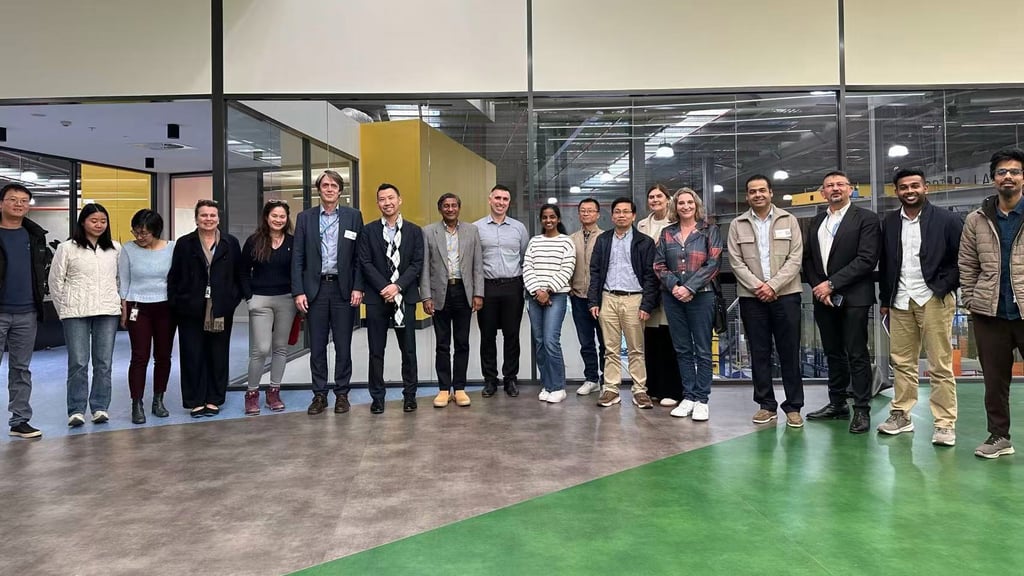
A second senior executive delegation, led by Helen Borland, Senior Executive Director, Infrastructure Strategy at TfNSW, visited UTS Tech Lab on 9 September. The visit built on the earlier discussions and explored potential areas for more extensive collaboration across roads, railways and port infrastructure.
Following an overview of TRC’s research by Distinguished Professor Indraratna, Dr Thanh Nguyen presented the integration of bioengineering principles into ground improvement as a sustainable approach for transport infrastructure.
The three TRC research students also shared their latest work on flood-affected railway tracks, recycled materials for railway capping layers and tyre-fibre applications. Dr Yujie Qi delivered the concluding remarks before the delegation toured the laboratory facilities.
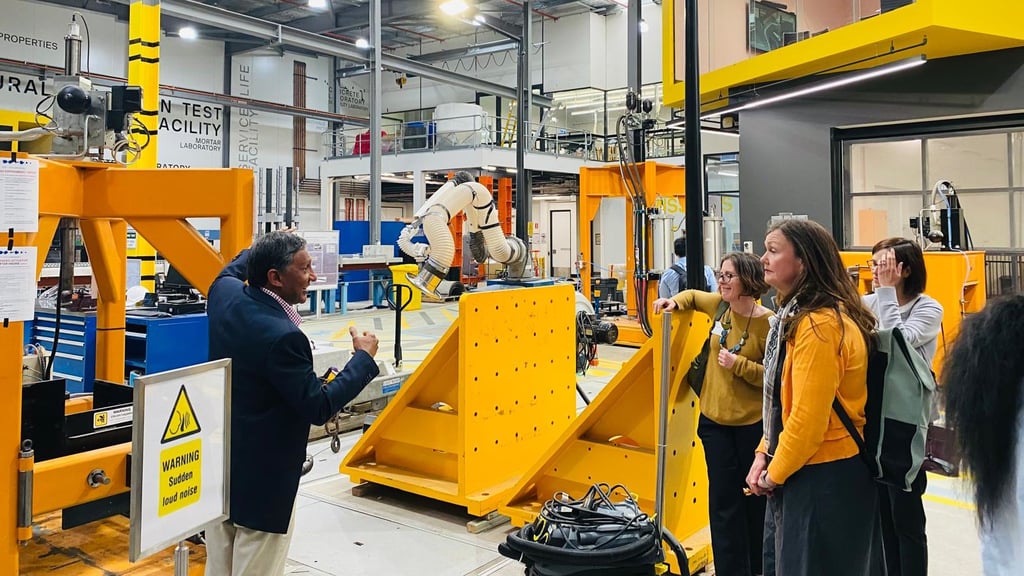
Discussions during the two visits covered sustainable ground improvement, soft-ground stabilisation, prefabricated vertical drains and vacuum-assisted consolidation, recycled materials for road and railway construction, flood-resilient railway systems, bioengineering solutions and advanced infrastructure monitoring.
Following the September visit, Helen Borland commended TRC’s commitment to addressing infrastructure challenges across NSW, its collaborative approach and its support for the next generation of researchers.
TfNSW and TRC will continue discussions on potential collaborative projects, field implementation opportunities and the wider dissemination of TRC research across the transport sector.
News
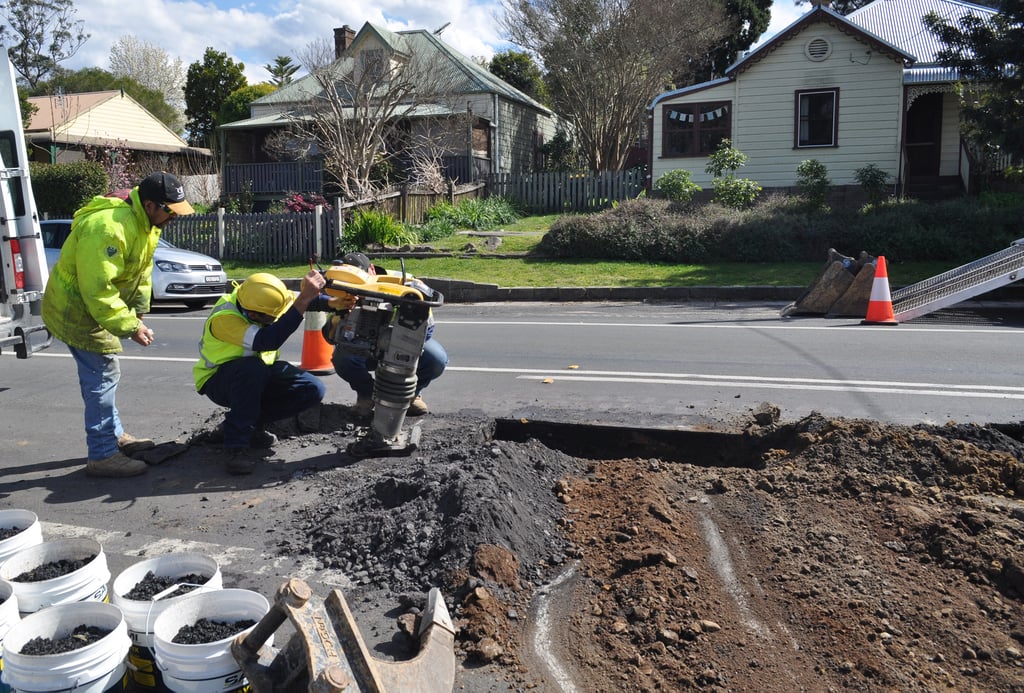
Research puts resilient infrastructure on solid ground
Groundbreaking $24 million research centre will develop sustainable technologies that stabilise the foundations underpinning major infrastructure.
News
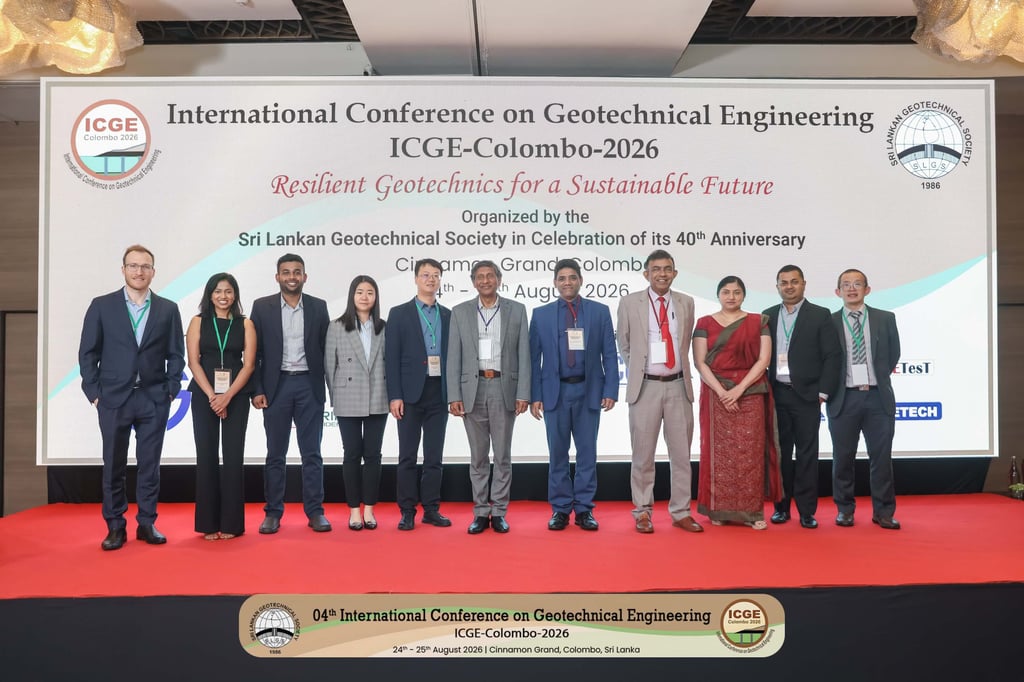
Transport Research Centre showcases sustainable transport geotechnics at ICGE-Colombo 2026
The UTS Transport Research Centre played a prominent role at the 4th International Conference on Geotechnical Engineering-Colombo, held on 24–25 August 2026 at...

News
UTS Transport Research Centre received prestigious international engineering award
The UTS Transport Research Centre (TRC) team has been honoured with the 2026 Donald R. Stanley Award by the Canadian Society for Civil Engineering (CSCE).
News
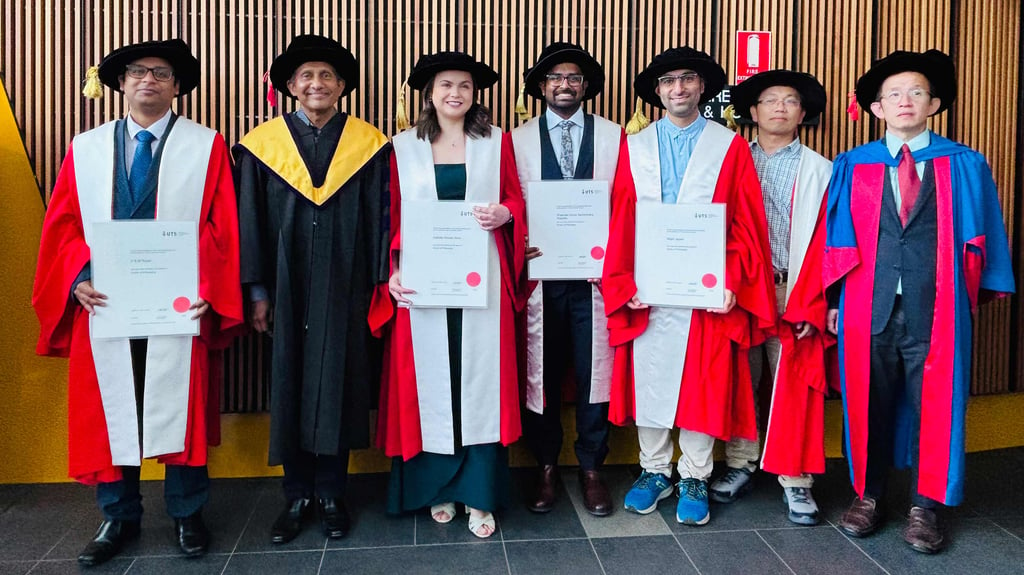
UTS Transport Research Centre celebrates doctoral student completions
The UTS Graduation Ceremony this month marked a proud milestone for the UTS Transport Research Centre and its academic team.
News
Research puts resilient infrastructure on solid ground
Groundbreaking $24 million research centre will develop sustainable technologies that stabilise the foundations underpinning major infrastructure.
News
Transport Research Centre showcases sustainable transport geotechnics at ICGE-Colombo 2026
The UTS Transport Research Centre played a prominent role at the 4th International Conference on Geotechnical Engineering-Colombo, held on 24–25 August 2026 at...
News
UTS Transport Research Centre received prestigious international engineering award
The UTS Transport Research Centre (TRC) team has been honoured with the 2026 Donald R. Stanley Award by the Canadian Society for Civil Engineering (CSCE).
News
UTS Transport Research Centre celebrates doctoral student completions
The UTS Graduation Ceremony this month marked a proud milestone for the UTS Transport Research Centre and its academic team.