


- Posted on 28 Sep 2023
- 3-minute read

James Laurenceson, Director, Australia-China Relations Institute, University of Technology Sydney

Marina Zhang, Associate Professor – Research, Australia-China Relations Institute, University of Technology Sydney
CRITICAL FACTS, CRITICAL MINERALS AND CHINA: WHAT AUSTRALIANS NEED TO KNOW
As the Australian federal government implements its critical minerals strategy, the Australia China Business Council together with the Australia-China Relations Institute at the University of Technology Sydney (UTS:ACRI) have embarked on releasing Critical facts, critical minerals and China: What Australians need to know – a series of thought leadership analysis pieces around China's historical and potential future involvement in Australia's critical minerals and rare earths sectors.
Aside from China being a major market, it is not well known that whether it be through foreign investment, labour up-skilling or technology transfer, Chinese companies have played a crucial role in Australia's emergence in the critical minerals and rare earths sector. With China's booming green economy, the demand for such resources and interest in partnering with Australia is likely to continue and to increase. However, there have been questions raised in the Australian national debate as to whether Chinese interests are welcome in the sector. This series of analysis pieces explores and unpacks some of the history and facts that are required to have a wholistic understanding of what an ongoing presence or lack thereof of Chinese involvement in the sector is likely to mean for Australia.
The views and opinions expressed are those of the authors and do not necessarily reflect the official policy or views of the ACBC. UTS:ACRI also does not take an institutional position on any issue.
Critical Insight 1. Understanding vulnerabilities and leverage in critical minerals supply chains
Australia’s fears around the resilience of critical minerals supply chains focus on a concentration of activity in the People’s Republic of China (PRC) and the coercive leverage this might afford Beijing to advance its geopolitical objectives. But this fails to take into account the broader context that the PRC has supply chain vulnerabilities too and attempts to disrupt supply chains can easily backfire. One example: the PRC’s lithium processors and related downstream manufacturing relies heavily on Australia to supply unprocessed lithium. The PRC has not been able to ‘lock up’ Australian supply by investing in local mines. Rather than feeding a spiral of insecurity, Canberra and Beijing can engage in dialogue and take steps to reassure the other and preserve mutual benefits.
Authors
Professor James Laurenceson, Director, Australia-China Relations Institute, University of Technology Sydney
Dr Marina Zhang is Associate Professor – Research at the Australia-China Relations Institute, University of Technology Sydney.
News
Australia-China Weekly Brief: October 2026 issues
The Australia-China Weekly Brief by the Australia-China Relations Institute at the University of Technology Sydney (UTS:ACRI) tracks key developments in...
News
The struggle over what China wants
China expertise is itself a field of epistemic struggle, shaped by competing convictions, dispositions and geopolitical perspectives. Doshi’s critique of Kang,...
News
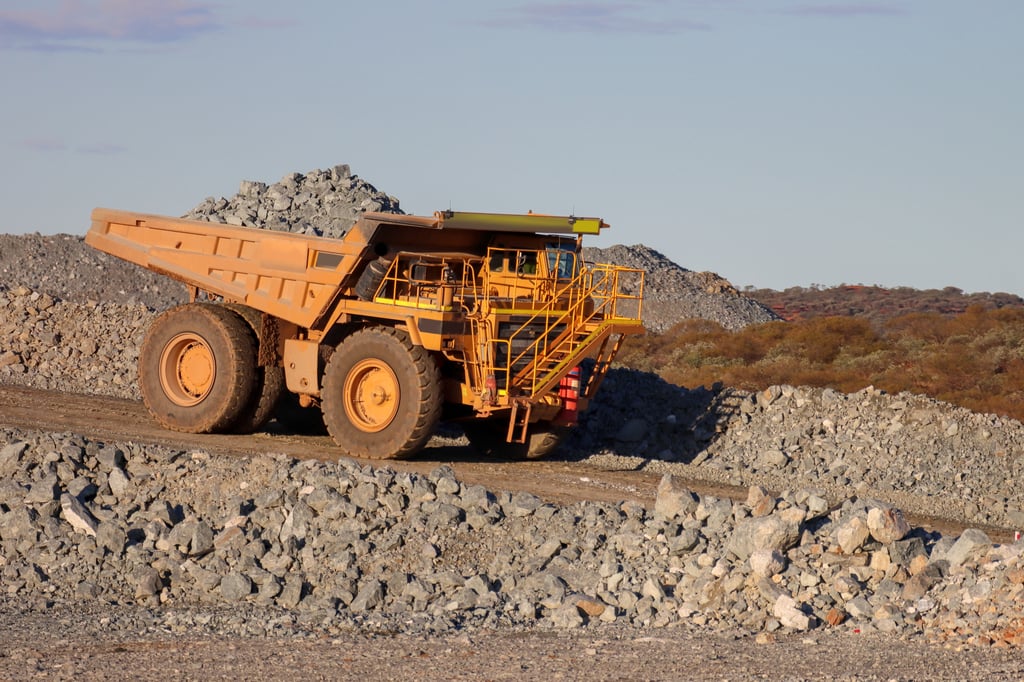
Australia should turn critical minerals leverage into industrial capability
Australia’s Syerston Scandium Project is a test of whether critical minerals cooperation can make Australia not merely a supplier, but a critical capability...

News
PERSPECTIVES | Can Australia and China talk sensibly about AI Safety?
Australia will attend the APEC Economic Leaders’ Meeting in Shenzhen on November 18-19 2026 amid questions about the extent to which the two countries can, or...
News
Australia-China Weekly Brief: October 2026 issues
The Australia-China Weekly Brief by the Australia-China Relations Institute at the University of Technology Sydney (UTS:ACRI) tracks key developments in...
News
The struggle over what China wants
China expertise is itself a field of epistemic struggle, shaped by competing convictions, dispositions and geopolitical perspectives. Doshi’s critique of Kang,...
News
Australia should turn critical minerals leverage into industrial capability
Australia’s Syerston Scandium Project is a test of whether critical minerals cooperation can make Australia not merely a supplier, but a critical capability...
News
PERSPECTIVES | Can Australia and China talk sensibly about AI Safety?
Australia will attend the APEC Economic Leaders’ Meeting in Shenzhen on November 18-19 2026 amid questions about the extent to which the two countries can, or...