

• Posted on 25 Jan 2019
  • 3-minute read

In a case of paws for a good cause, UTS startup Ruff Sleepers is bringing support to people living on the streets with pets.

For co-founder Linda Castelazzi from UTS Business, the startup is also a voice for reform in how we approach homelessness and crisis accommodation.

Pet-washing service Ruff Sleepers is promoting better social understanding. Photo by Lesley Parker

Give us your elevator pitch – what is your startup?

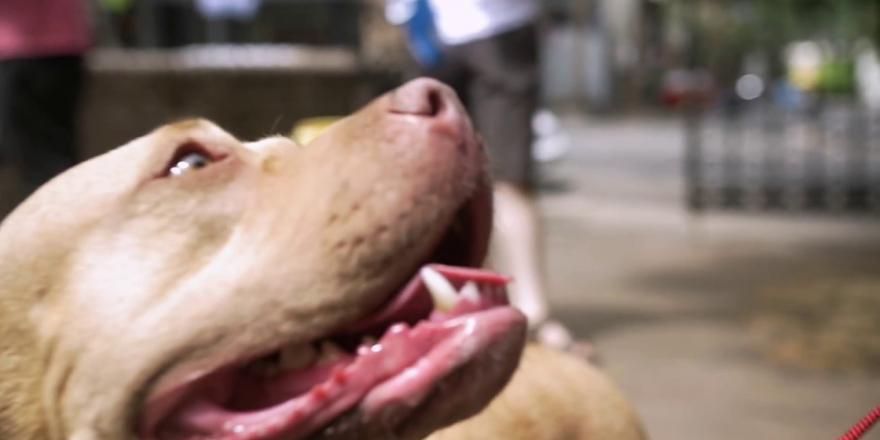
Ruff Sleepers helps homeless people with pets by providing them with a free and mobile grooming service, flea treatment, pet food, toys and a chance to socialise with other owners.

What's the problem your startup is solving?

We advocate for homeless people with pets' rights, and for the access to crisis accommodation, because we don't want to see vulnerable people having to choose between a warm bed for the night and their dog.

We also want to raise awareness about the importance of protecting women with kids that escape domestic violence, who don't want to leave behind their loved pets, but don't know where to go.

Why is solving this problem important? 

Pets play an important role in families but the bond between a homeless person and their dog is even stronger because pets give unconditional love without asking for anything in exchange, and without judging or criticising.

Many homeless people are on the street because emergency accommodation doesn’t accept pets and many often feed their dog or cat before themselves. The pet is their family and, in some cases, the only relationship they have with another living being.

How long have you been working on it?

Over a year ago I co-founded this organisation with my lecturer and Head of Management at UTS, Dr Bronwen Dalton, and Tully Rosen, another student who is now the Deputy CEO at Homelessness NSW.

We have been operating in Darlinghurst for almost a year and we’re now collecting funds to buy a mobile grooming station to provide our service in surrounding areas and help even more people.

What key challenges and successes have you faced so far?

One of the challenges we face every day is the stigma surrounding homelessness. We want to make society aware that homelessness is not a choice, and behind it are hidden terrible stories of abuse, poor mental health and social isolation.

Who or what inspires you?

What inspires me is the smile of a person that accepts our help and the support of people that believe in Ruff Sleepers and want to give us the means to help more people and pets.
xT5trDm1-7M

Descriptive transcript

Sometimes loneliness is the worst enemy of any person. I say to anyone watching this video: think to yourself, if you were alone and you had something beautiful like this in your life, what would you do to protect it? Because that's what we all want, isn't it? Love.

Ruff Sleepers is an idea we have and we're about to launch. It's a mobile dog washing service, but for homeless people.

Previously, we had a huge program to help homeless people, but I found that those who owned dogs could not enter the program unless they gave up their dog. So basically, we gave them a heartbreaking decision: either give up their best friend or remain homeless, and many chose to remain homeless.

So we have a few rules here. As you know, our clients are homeless people and people at risk of homelessness, and as any other individual, they deserve dignity and respect. That's our first rule. The second is having fun while washing the dogs. Many people believe that homeless people take pets just for money, but I don't think that's true.

During the past two years, I've been walking on the street and talking to half of the homeless people in Sydney, and no one gave me this impression. They love their dog. They wouldn't change their dog for any sum of money. The dog is protection, the dog is love, the dog is family.

My dog for me is an assistance dog. She helps me get through day to day. I struggle with mental health issues. She actually helps me get out of bed because I've got to take her for a walk, so that forces me to do so. Without her, I'd probably be quite a bit lost. Having her near me all the time makes me feel at ease.

The more people have pets, the less they need social infrastructure. They still need to see people, counsellors and that sort of thing, but what pets can do for people like me and other people here is amazing.

Family. If you experience the bond that you can have with a dog, it's one of the greatest gifts in life. I think dogs have been the biggest blessing in my life. I've just about always managed to have a dog or two around with me. She's family. If you're a dog person, my love, you can keep them forever.

There are many people involved to help us in this project—not only professionals in the not-for-profit sector or students at UTS, but also homeless people who gave me their feedback. They told me what they really need.

Our ambassador is Tim. He is an amazing man I had the pleasure to meet a year and a half ago. He is originally from South Africa, has two degrees in IT, and this shows that anybody can end up on the street. Anybody can have problems.

When I first came here, I was earning good money because I was in the right time and place—Y2K—and I had a lot of mainframe IT experience. Shortly after Y2K, that sort of fell away.

My wife left me for, you know, she followed her islands. Somebody had a better bank balance, and I've carried on. First we had dogs; it's been good for me, good for the dogs I've had.

There's a growing body of research that talks about the huge benefits that come with pet ownership for all types of groups of people—for the elderly, young people—but a growing body of research particularly focuses on the benefits of pet ownership for the homeless.

It's not only in terms of protection or just companionship, it actually has a measurable effect on the health and well-being of the homeless person in question when they own an animal.

It can sometimes lead to less drug and alcohol abuse as they have a sense of responsibility for their pet. It can lead to a sense of connection, it can reduce their sense of loneliness, and overall improve their mental health.

They say they remain sane because of the dog or the cat, because when they had troubles on the street, they had to be responsible not just for themselves but for the dog or the cat.

So this means that when you are on the street, many homeless people lose themselves, but if you have a pet you cannot lose yourself. They give you a lot. I never feel alone, I never feel lonely. As long as my dog's around—might be in the next room or just outside—you're never alone.

Having her near me all the time makes me feel at ease. She senses bad vibes from people, and I don't have to worry then with my mental health. This fella, he's helped me through some of the hardest times in my life that I've had to face.

It is clear, talking to homeless people on the streets, that it is almost impossible to get into social or affordable housing with a pet. I think we need to advocate and push for homeless people to be accepted in the housing system with their pets, because you can't separate families—so why can you separate an owner and their dog?

Discriminated against and people won't have you, even though it's a companion animal—it's your family, it's your friends, it's what keeps you going. And then you get people that exploit you.

I was in a boarding house in Sydney and it was $200 a week for me, and then they were charging me $100 a week extra for the dog. Basically, I'm on the pension and I was left with about $80 a fortnight to feed me and the dog.

I couldn't get a place because I couldn't get into a room at a boarding house or something because I had a dog. I actually did go into one place and I put my dog across the road, cardboard boxes and sort of built a bit of a shelter for her, and I was standing at the window looking down on my dog and I just thought, what a bloody idiot am I?

I just went out and they said if you go out after six you can't come back. I said that's fine, I won't be back, and I was homeless for four years with my dog and it was a great decision—just being with my dog, just so worth it.

What's needed is three things I hope Ruff Sleepers can achieve. One is that we raise enough money and interest to have maybe fancier equipment down the track so we can do this on a very regular basis and with better equipment.

Two is to raise money to develop an emergency fund for emergency surgery for the animals. The wonderful vets that volunteer at Pets in the Park will be there working with us. They can do so much, but for serious cases where there's surgery required, it'd be amazing if we can raise some funds to pay for life-saving surgery and treatment when and if any of those homeless people's pets get in real danger.

But ultimately, if we're going to provide accommodation for these people, we have to allow them to take their pets. They have had everything taken away from them; we don't want the system to take their best friend as well.

UTS Startups is a community dedicated to growing and supporting student-founded ventures, powered by the UTS Innovation and Entrepreneurship Unit. For more information, visit UTS Startups and sign up to our newsletter.

Have an idea for an impactful startup? Scale your potential impact at startups.uts.edu.au.

Share