


Learn how to tell the stories that matter most
If you have an interest in storytelling, news and growing truth, UTS’ Journalism degrees are for you. Learn from industry experts and understand the role of journalism as key to democracy and to societies around the world. You’ll also enjoy extensive opportunities for work experience and international exchange.
You’ll gain practical experience in text, audio and video journalism, producing a professional portfolio throughout your degree. This ensures you graduate ready to succeed in the real, fast-paced world of journalism, where you’ll be at the cutting edge of our ever-changing world.
-
trophy Internationally ranked
Top 150
UTS is ranked in the global top 150 universities for communication and media studies.
QS World University Rankings by Subject 2026
-
build Job postings
29,770 currently employed
Australia has a wealth of opportunities for journalists across print, radio, television and more.
Jobs and Skills Australia 2024
Courses
Why study Journalism at UTS?
- Join the ranks of one of the most respected journalism programs in the country, led by discipline head Professor Monica Attard.
- Thanks to our practical approach to learning, every semester you'll be producing stories, reports and multimedia content that will form your professional portfolio. You'll also have the opportunity to publish and broadcast your work before you graduate in various student and community publications such as U:Mag, Vertigo and 2SER-FM radio.
- All UTS Journalism students are invited to join Central News, a dedicated multi-platform news service based at UTS. At Central News, you'll put your studies into practice by producing text, audio and video stories ranging from breaking news to interactive features. You'll also receive one-on-one mentoring and support from Journalism Lecturer and Multimedia Editor Martin Newman.
- Benefit from our strong international links and exchange opportunities. As a journalism student, you can undertake a Global Exchange to a partner university or spend a whole year abroad with a combined degree in International Studies.
- As a UTS student, you can access the Women in Media and Walkley Foundation networks, which provide professional development programs and networking opportunities. As a graduate, you'll be eligible to apply for professional-level membership of the Media, Entertainment and Arts Alliance (MEAA).
- Expand your career opportunities by adding a second major to your degree. Options include Public Communication, Creative Writing, Digital and Social Media or Social and Political Sciences. An Honours degree is also available for outstanding students who want to prepare for higher degree research.
Get inspired
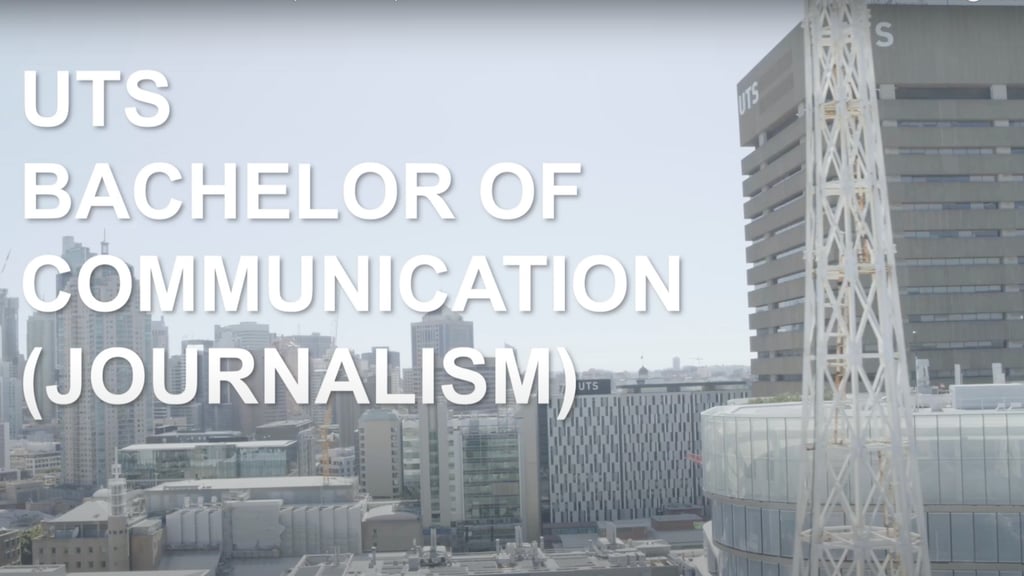
Discover what makes ours one of Australia’s most respected undergraduate journalism programs. Our students have won Ossie awards for outstanding student journalism and many of our graduates have gone onto receive prestigious Walkley awards.
Related study areas
Digital and Social Media
The future is digital, so get ahead with a degree designed for the world of tomorrow. At UTS, we blend hands-on learning with practical, to-the-minute theory,...
Strategic Communication
In a world overflowing with content, true communicators rise above the noise. UTS’s Public Relations and Advertising courses put you at the centre of today’s...
Media Arts and Production
Do you dream of working on film sets, world-famous television programs or even small-scale productions? If you’ve got the passion and the creativity for a...
Social and Political Sciences
Our social and political spheres are inextricably linked, each informing the other to create our modern world. If you’re interested in the interpersonal,...
Find more Communication and Social Sciences courses

-
calendar_today
On-demand
-
location_on
Online
-
attach_money
Free admission

-
calendar_today
On-demand
-
location_on
Online
-
attach_money
Free admission

-
location_on
City campus
-
attach_money
Free admission
-
calendar_today
On-demand
-
location_on
Online
-
attach_money
Free admission
-
calendar_today
On-demand
-
location_on
Online
-
attach_money
Free admission
-
calendar_today
On-demand
-
location_on
Online
-
attach_money
Free admission
-
location_on
City campus
-
attach_money
Free admission
-
calendar_today
On-demand
-
location_on
Online
-
attach_money
Free admission
Make an enquiry
Considering studying at UTS? Connect with our team to explore your study options, the application process, and discuss any other questions you may have.
Contact us
Domestic students
1300 ASK UTS (1300 275 887)
+61 2 9514 1222 (outside Australia)
International students
+61 2 8806 0230
WhatsApp (messages only): +61 489 089 375