


Sai Muthukumar was the first person in his family to go to law school, so he didn’t know what to expect when he enrolled in a Bachelor of Laws at UTS. Back then, he “just wanted to become a lawyer,” he says.
As a kid at high school, he’d found his niche in debating and writing. Being forced to think on his feet and construct the perfect rebuttal scratched an itch deep in his brain. Alongside his love of a good argument, he had a strong sense of justice. A law degree promised to feed both.
At UTS, he threw himself into the fundamental study of the law, from contracts and constitutional law to torts, commercial and civil litigation. But it was the extracurricular programs that transformed his theoretical learning into real-world practice and set the scene for his future career.
Finding his legal niche
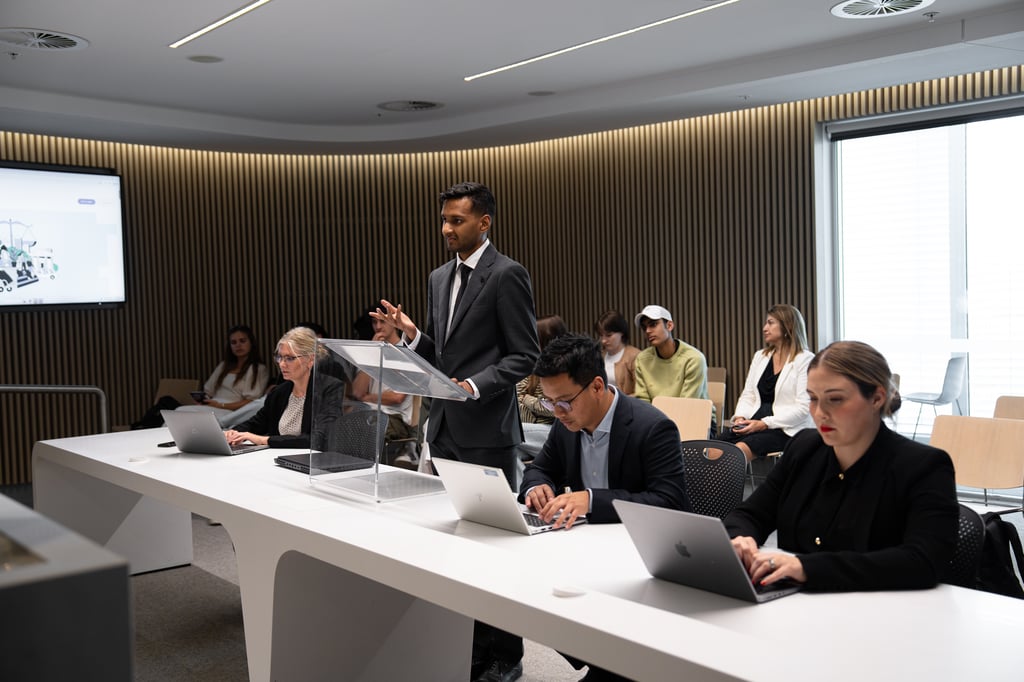
Early on, Sai signed up for the Wotton Kearney Neota Law Tech Challenge, an extracurricular competition in which student teams build no-code legal software solutions for non-government organisations. Part of the challenge involves navigating app and data ownership, implementation and copyright issues; these experiences became Sai’s first introduction to the world of intellectual property (IP).
Intrigued, he started enrolling in IP-focused electives in areas like trade marks, copyright and designs, and patents. When he discovered the overlap between the law and his second love, art, he was hooked.
I’ve always been into art; I love drawing and painting and animation. I have huge stacks of comics, manga—the whole nine yards. That really sparked my interest in copyright and trade marks and the role of the law in protecting people’s creative work.
With support from the University’s leading IP academics, who also lead the highly regarded postgraduate Intellectual Property and Trade Marks and Practice programs, he started building his expertise in this niche area of the law.
“UTS has one of the premier IP law teams and some of the leading Australian and international academics in that space,” he says.
“They were incredibly helpful in guiding me through the fundamentals of IP Law.”



From Australia to the world
Sai’s burgeoning interest in all things IP soon became his ticket to a truly global degree. UTS prides itself on providing a wealth of international experiences for students, and Sai took advantage of everything the University, and the Faculty of Law, had to offer.
He signed up for the Law Mooting Program, which invites students to participate in mock trial competitions in Australia and beyond, and reached the grand finals of an intervarsity moot focused on legal technologies. Later, he competed in the prestigious Philip C Jessup International Law Moot Court Competition in Washington DC.
He also took part in mediation competitions run by the International Chamber of Commerce, travelling to Hong Kong and Paris to build his negotiation capabilities. The competitions featured copyright disputes and a patent infringement involving the modification of a Big Pharma-developed product by a humanitarian-sector NGO.
In his fourth year of study, Sai travelled to Indonesia on a prestigious New Colombo Plan Scholarship, funded by the Department of Foreign Affairs and Trade. For six months, he studied IP issues at the top-ranking Universitas Indonesia. He also started building global connections in earnest, visiting one Indonesia’s top IP firms and completing IP short courses in Germany and China.
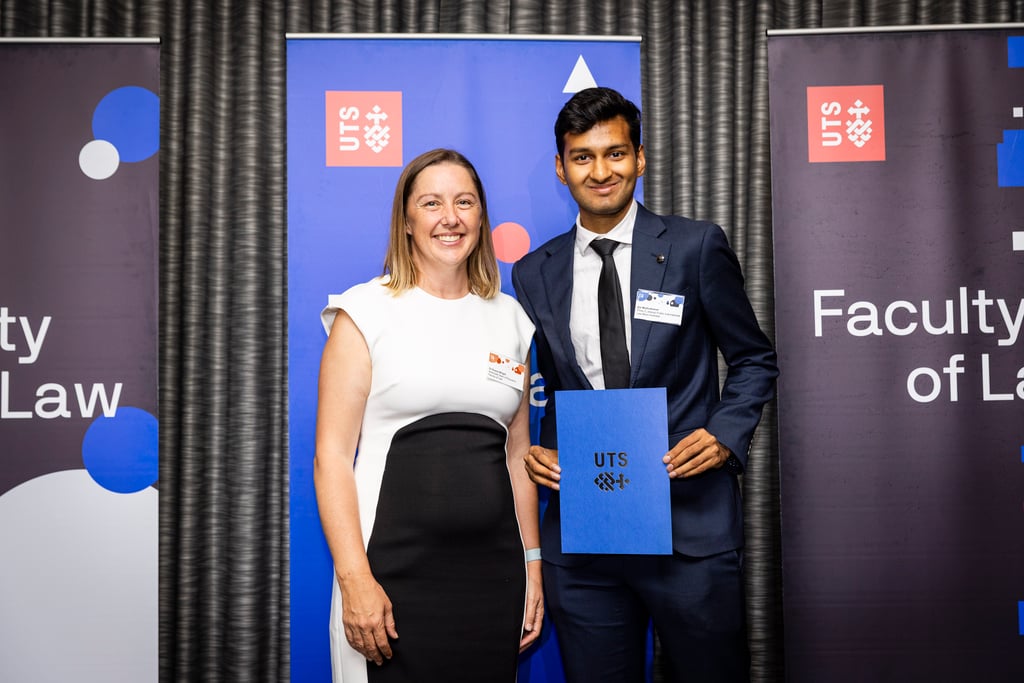
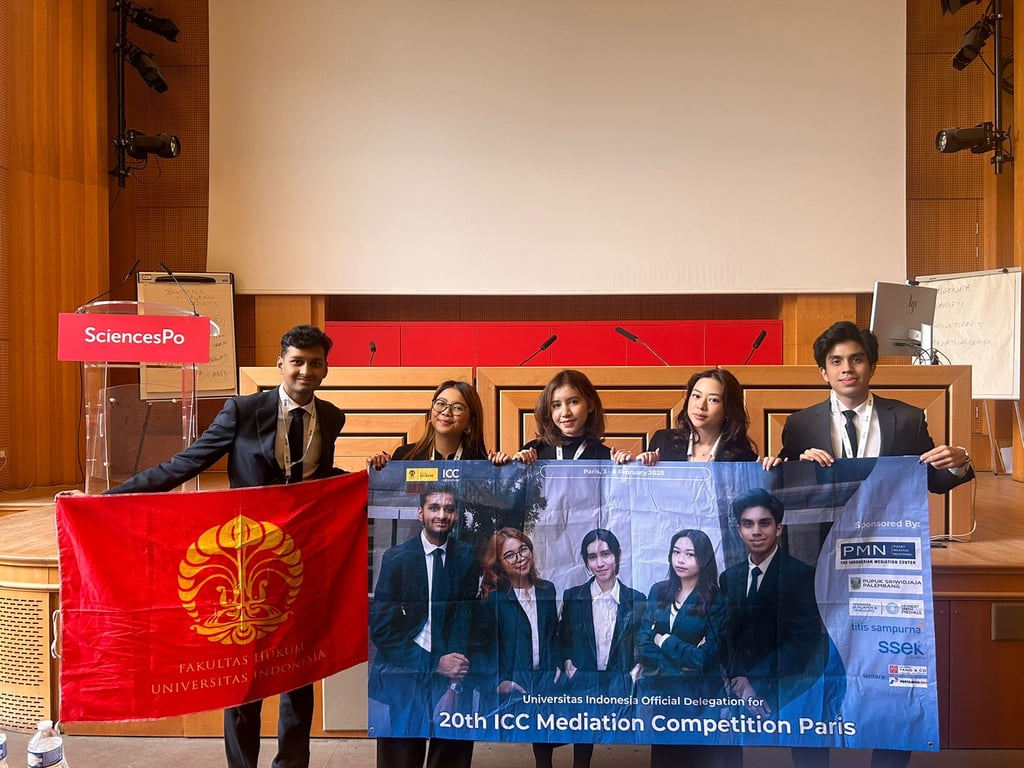

Collectively, these experiences have been extremely helpful both in building my professional network and learning different approaches to solving problems. I’ve also got so much confidence now; my goals have become more and more lofty.
Next stop: a postgraduate IP degree
Now a recent graduate, Sai is currently working as a paralegal for Gilbert + Tobin and for the Attorney General’s Department. He’ll start a graduate role in commercial litigation next year. But while he’s still in the early stages of a law career, his aspirations are already leaps and bounds ahead.
“My hope is to work in litigation for a few years and then branch into IP litigation,” he says.
To that end, he’s also committed to taking the next big step: pursuing a postgraduate IP degree. Combined with the professional experience he’s building now, postgraduate study will prepare him to fully embrace the opportunities ahead.
“It’s not a consideration; it’s 100 per cent happening,” he says.
“I’m positive it will create more opportunities for my career.”


Your future in intellectual property: Career guide
Curious about where a career in intellectual property could take you? Explore career pathways in patents, trade marks and intellectual property law, and discover the legal and strategic skills helping protect innovation in a rapidly evolving world.

This toothbrush is starting a women’s health revolution
Discover how Jaya Dadwal is combining her UTS Bachelor of Laws and Yale University Master of Public Health to develop a toothbrush to improve women's health

At UTS Law, international travel is key to learning
From exchange and study abroad to overseas internships, faculty-led tours and global short programs, international opportunities are key to learning at UTS Law.

The law plus more: what will you learn in a law degree?
When you study Law at UTS, building legal expertise is only the beginning. Discover the additional skills you'll develop, to help you make an impact throughout...
Here's how mooting can make you a better lawyer
Discover how UTS Law students gain practical courtroom experience through mooting, building their confidence, advocacy skills and career-ready legal expertise.
This toothbrush is starting a women’s health revolution
Discover how Jaya Dadwal is combining her UTS Bachelor of Laws and Yale University Master of Public Health to develop a toothbrush to improve women's health
At UTS Law, international travel is key to learning
From exchange and study abroad to overseas internships, faculty-led tours and global short programs, international opportunities are key to learning at UTS Law.
The law plus more: what will you learn in a law degree?
When you study Law at UTS, building legal expertise is only the beginning. Discover the additional skills you'll develop, to help you make an impact throughout...
Here's how mooting can make you a better lawyer
Discover how UTS Law students gain practical courtroom experience through mooting, building their confidence, advocacy skills and career-ready legal expertise.