


At UTS Law, legal expertise is only the beginning. No matter what you study, you’ll gain skills to make an impact in any field you choose.
Five skills you’ll gain at UTS Law

1. Practical legal skills
All law degrees equip students with fundamental legal knowledge, but at UTS, it’s the translation of theory into practice that prepares learners to succeed. From drafting documents and conducting client interviews to practising negotiation and dispute resolution skills, students engage with the real-life scenarios they’ll encounter in their careers.
“Our assessments are practical and authentic to make sure that we're really testing those skills that are fundamental to legal practice,” says Juris Doctor Program Head Dr Kathryn Greenman.
“At UTS, we have a reputation for producing versatile, practice-ready graduates with the skills we know they’ll need.”

2. Digital Literacy
Technology has been part of the legal landscape since the 1950s, but the growth of digital tools like blockchain and AI has changed the game. Now, law graduates need to know not only how to leverage the value of legal technologies but to identify and mitigate their risks.
At UTS, subjects like Disruptive Technologies and the Law, Media and Digital Platform Regulation, and Privacy and Surveillance Law provide students with real-world exposure to contemporary legal technology issues.
UTS graduate Ethan Huang studied a range of technology-related subjects as part of the Legal Futures and Technology major in the Bachelor of Laws. Now a tech lawyer at Gilbert + Tobin, he says the subjects push students to think about issues like ethics, security and balancing regulation with innovation as part of their legal practice.
“A trusted legal advisor not only provides sound legal advice but can also adapt the way legal services are provided in the face of technological change,” he says.

3. Communication
Public speaking, negotiation and advocacy are just a handful of the communication skills that all lawyers need to master. At UTS Law, classroom learning and extracurricular activities like the Law Mooting Program help students develop them.
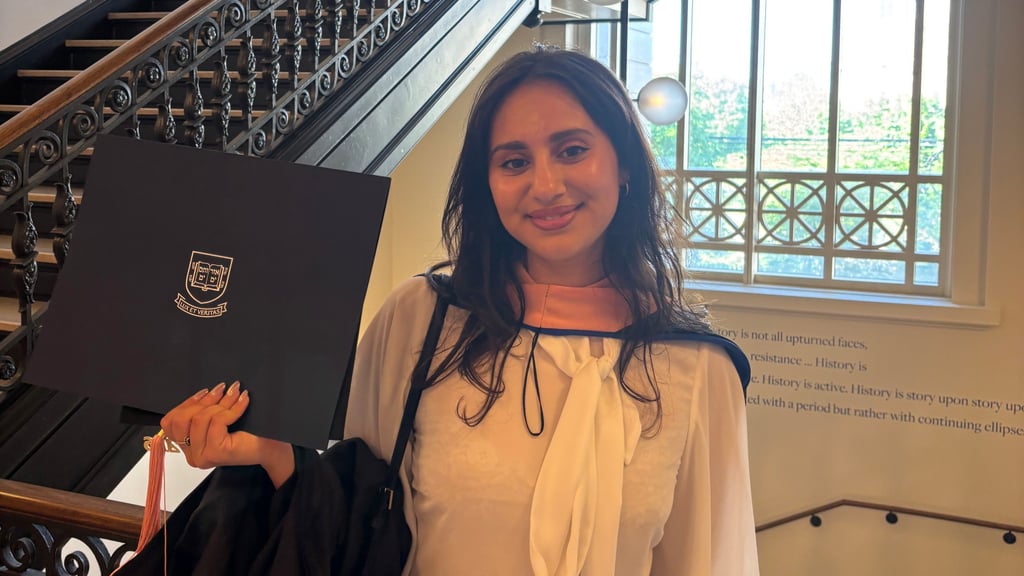
Mooting is a courtroom simulation that blends debating, public speaking and advocacy training. Mooting experience is helping UTS graduate Jaya Dadwal to grow forEVA, the women’s health tech start-up she founded in 2024. Her persuasive communication skills and broader legal experience work together to bring investors on board.
“People are really interested in the fact that I came from a law background and that I was looking at medical malpractice in my professional career,” says Jaya, who completed an honours thesis on women’s reproductive technologies.
“I reference my legal experience in every investor call.”

4. Time management
Law degrees are among the most demanding university qualifications. Juggling course content alongside work and life pushes students to build solid time management skills, fast.
Just ask Georgia Barlow, who worked full-time throughout her Bachelor of Laws and her subsequent Practical Legal Training. She’ll be the first to admit that combining work and study was a shock to the system, but she says the experience prepared her for the realities of her career.
“It’s the most organised I’d ever been in my life,” says Georgia, who has now been admitted as a solicitor of the Supreme Court of New South Wales.
“As a lawyer, you have to be able to thrive under pressure, you have to be able to work with competing deadlines because you’re going to have a practice of 80–120-plus matters, so you need to learn how to manage that and keep your composure.
“It’s 100% doable. It just requires grit and determination to get through.”

5. Cultural competence
The law in Australia is just one part of a global system, which is why UTS Law students have access to a wealth of international learning opportunities while they study.
Few students have leveraged these opportunities quite like Bachelor of Laws (Honours) graduate Sai Muthukumar. During his degree, Sai spent nine months in Indonesia on a prestigious New Colombo Plan Scholarship; took part in mooting and mediation competitions in the USA, Hong Kong and France; and completed a series of comparative law courses focusing on commercial and IP law in Germany and China.
These experiences have built his specialist legal skills, cultural competence and ability to adapt in new environments. But it’s the professional connections he made that are set to have a lasting impact:
“Now I really have a truly international network. I think this will pay off when I become more senior in my own career,” he says.


This toothbrush is starting a women’s health revolution
Discover how Jaya Dadwal is combining her UTS Bachelor of Laws and Yale University Master of Public Health to develop a toothbrush to improve women's health

At UTS Law, international travel is key to learning
From exchange and study abroad to overseas internships, faculty-led tours and global short programs, international opportunities are key to learning at UTS Law.

Here's how mooting can make you a better lawyer
Discover how UTS Law students gain practical courtroom experience through mooting, building their confidence, advocacy skills and career-ready legal expertise.

Technology is transforming the legal sector. Graduates must transform too.
The legal sector is being reshaped by technology. Discover how UTS Law is preparing graduates to understand and use emerging technologies.
This toothbrush is starting a women’s health revolution
Discover how Jaya Dadwal is combining her UTS Bachelor of Laws and Yale University Master of Public Health to develop a toothbrush to improve women's health
At UTS Law, international travel is key to learning
From exchange and study abroad to overseas internships, faculty-led tours and global short programs, international opportunities are key to learning at UTS Law.
Here's how mooting can make you a better lawyer
Discover how UTS Law students gain practical courtroom experience through mooting, building their confidence, advocacy skills and career-ready legal expertise.
Technology is transforming the legal sector. Graduates must transform too.
The legal sector is being reshaped by technology. Discover how UTS Law is preparing graduates to understand and use emerging technologies.