


Through the UTS MBA, fashion retail leader Alison Gibson combined industry experience with formal study to take a more responsible and sustainable approach to business.
For Alison Gibson, a career in fashion retail leadership was never in question. She started working full‑time at 17 and was managing a store by 18. What she didn’t expect was that, more than a decade later, those years of experience would lead her back to study.
Over more than 15 years, Alison worked her way up through a national fashion retailer, eventually taking on a state lead role across New South Wales and South Australia. She now works as head of retail for a major Australian fashion business, overseeing recruitment, finance and store operations.
She never completed an undergraduate degree. Coming from a single working‑parent household, she went straight into full‑time work after high school.
“I didn't have the opportunity to go to university and not earn a full‑time wage,” she says.
“Retail was the obvious line of choice.”
Recognising experience
By the time Alison considered further study, she had already spent years in senior leadership without formal qualifications – a common story in an industry where many leaders work their way up from the shop floor.
While experience had taken her a long way, she wanted a deeper understanding of leadership and the tools to navigate complex issues around people, ethics and responsibility in the industry she knew so well.
What stood out when she applied for the Master of Business Administration (MBA) at UTS was an admissions process that recognised professional experience rather than focusing on undergraduate transcripts.
“They actually said, you’ve essentially already done this in your working life – send through your resume and the experience you’ve built, and we’ll consider you for the Master’s degree,” she says.
However, being accepted into the MBA was one thing. Balancing study alongside a demanding executive role was another.
Support that matched her pace
With more than 800 staff reporting to her, flexibility was essential for Alison to take on study. MBA course materials and reading lists were available well in advance, allowing her to work ahead when she could and slow down when work became busy.
That flexibility extended to her lecturers. During a period when she was supporting her mother through chemotherapy, Alison says she never hesitated to ask for an extension.
“I always felt I could go to someone and say, this deadline isn’t going to work for me, and I never felt any pressure,” she says.
“There was a lot of understanding about life outside study and having a full business life as well.”
She describes teaching staff as accessible and supportive, with several becoming long‑term mentors she still keeps in touch with.
“They were always wanting you to succeed and really supportive of your thoughts and ideas,” she says.
Support at UTS also shaped how Alison learned. Rather than being marked down for thinking differently, she was encouraged to explore her own ideas and use research to support her thinking.
“As long as you prove your argument with research, you’re really encouraged to look into any area you’re passionate about,” she says.
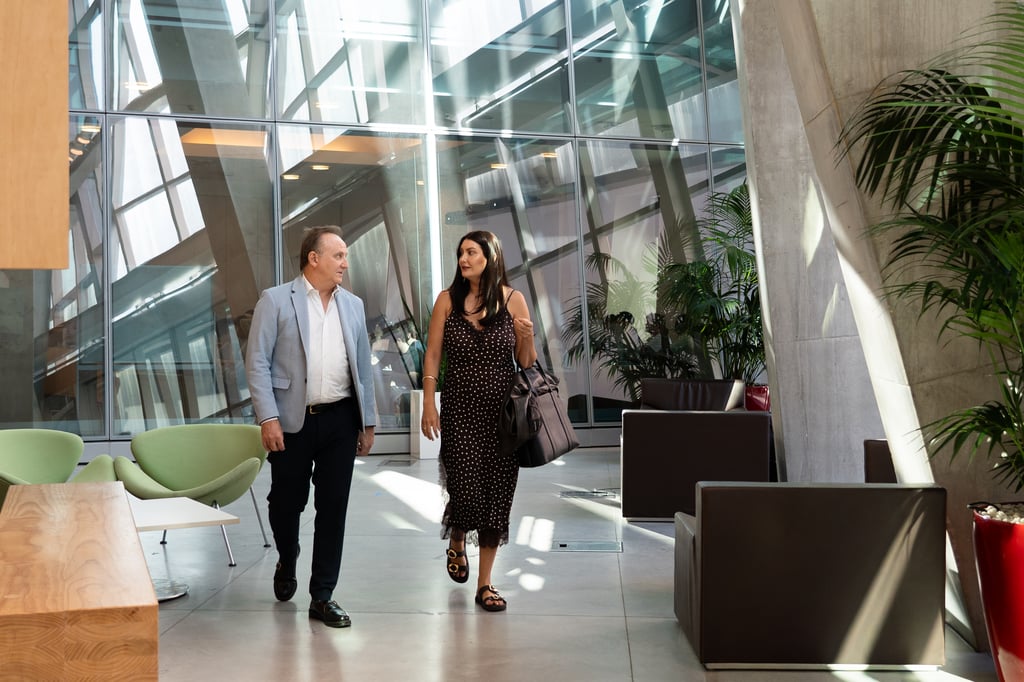
They actually said, you’ve essentially already done this in your working life – send through your resume and the experience you’ve built, and we’ll consider you for the Master’s degree.
Applying it in real time
What Alison learned during the MBA quickly began appearing in her work.
Courses on industrial relations and leading people through change gave her tools she could use straight away. She later drew on this learning during a company‑wide restructure.
Although Alison already had extensive commercial experience, the finance and economics subjects gave her a more structured framework for applying that knowledge at an executive level, from presenting budgets to evaluating risk and return before approving new projects.
“I definitely feel a lot more confident now,” she says. “I can access research that I wasn’t able to before.”
Global business subjects also shifted how she thought about growth. Earlier in her career, Alison watched a retailer expand overseas without fully understanding the cultural differences involved.
Today, discussions about entering new markets are more measured. Rather than focusing only on opportunity, she now considers the cultural and practical realities of operating in different regions.
One assignment examined a robotics rollout at a major port and who should be responsible for retraining workers affected by automation – a question that later became very real as AI began reshaping parts of the retail industry, including the recruitment processes Alison was involved with.
Learning beyond the classroom
Learning at UTS wasn’t limited to lectures or assessments.
After spending most of her career in retail, Alison found herself studying alongside people from a wide range of industries, including law, marketing and finance. Group projects exposed her to different ways of approaching problems and challenged her to think beyond the perspective of a single sector.
Coming onto campus was also an important part of the experience. Based mostly in Building 8, Alison says it became a place where she formed close friendships throughout the degree.
Some classmates have since returned to countries including India, the UK and the US, but the connections have continued. Staying in touch has given her insight into different ways of working and different approaches to leadership.
Beyond the relationships she built, the MBA also challenged Alison to think more broadly about the role business plays in society.
“I always knew it mattered, but I never had the skill set to really make change,” she says.
Through the degree, Alison developed a deeper understanding of how business decisions affect communities and the environment. It also prompted her to think more critically about the impact of the fashion industry and the role she could play in driving change.
“Working in retail, I understood that the industry I was part of contributed to the challenge,” she says.
Leading with purpose
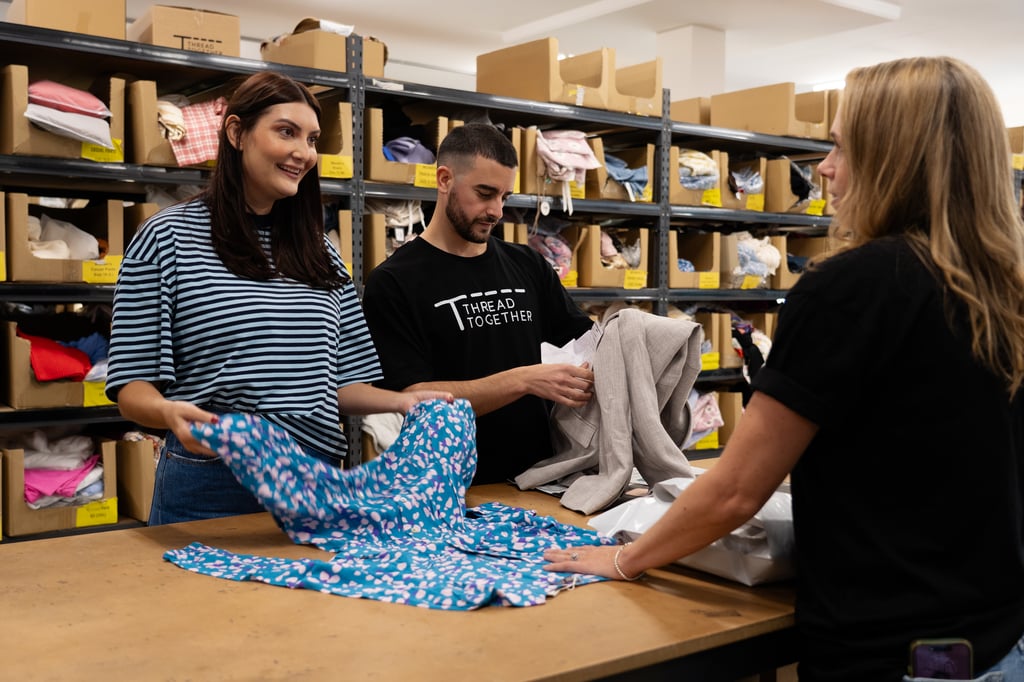
Wanting to be part of the solution, Alison began volunteering with Thread Together, a charity that redirects new, unsold clothing away from landfill and into the hands of Australians experiencing hardship.
Over several weekends, she helped sort and prepare clothing for distribution and invited members of her retail team to volunteer alongside her. The experience opened a conversation between Thread Together and the national retailer where she was working, leading to an ongoing relationship that redirected excess clothing from landfill to Australians experiencing hardship.
The experience reinforced Alison’s belief that responsible leadership extends beyond commercial performance.
She points to common practices in fast fashion, such as excess stock and plastic packaging, as examples of decisions that can have a significant environmental impact. The MBA also gave her the confidence to question industry habits and sustainability claims that are not backed by action. With growing concern about greenwashing, she believes businesses need to demonstrate real impact rather than simply talk about it.
That focus continues to shape her future plans.
Alison is currently completing a second postgraduate degree and says that if she pursues a PhD, it will likely explore sustainability and accountability in the fashion industry.
“I always cared about the community and the environment, but I wasn’t able to really prove to anyone why we should care about it,” she says.
Now, with both industry experience and formal study behind her, she hopes to do exactly that.
Explore

This UTS Accounting student is turning opportunity into achievement
For Liv Coxsedge, success came from saying yes to opportunities, backing herself and helping others do the same.

Taking the classroom into the community
What happens when business education steps beyond the classroom? Explore how UTS students are applying their skills in community settings - building meaningful...

Reinventing life and career with a supply chain course
A UTS MBA helped international student Shiva Sharma find confidence, connection and a career in supply chain management.

In the UTS Master of Sport Management, the teacher becomes the student
A Matildas penalty shootout sparked a career‑defining moment for long‑time teacher Leif Smith. Now a graduate of the UTS Master of Sport Management, he’s gone...
This UTS Accounting student is turning opportunity into achievement
For Liv Coxsedge, success came from saying yes to opportunities, backing herself and helping others do the same.
Taking the classroom into the community
What happens when business education steps beyond the classroom? Explore how UTS students are applying their skills in community settings - building meaningful...
Reinventing life and career with a supply chain course
A UTS MBA helped international student Shiva Sharma find confidence, connection and a career in supply chain management.
In the UTS Master of Sport Management, the teacher becomes the student
A Matildas penalty shootout sparked a career‑defining moment for long‑time teacher Leif Smith. Now a graduate of the UTS Master of Sport Management, he’s gone...