


How UTS Business students helped a Sydney community organisation get heard
In the Managing for Social Impact subject, UTS Bachelor of Management students work directly with community partners, building practical skills while creating tangible change. This semester, one team tackled a problem at the heart of how a not-for-profit connects with the people it serves.
Kogarah Community Services (KCS) offers healthcare navigation, social connection programs, and family support to some of southern Sydney's most vulnerable residents. Many of those residents have never heard of it. Closing that gap became the task of five final-year UTS business students - and the project turned out to be more complicated, and more meaningful, than any of them expected.
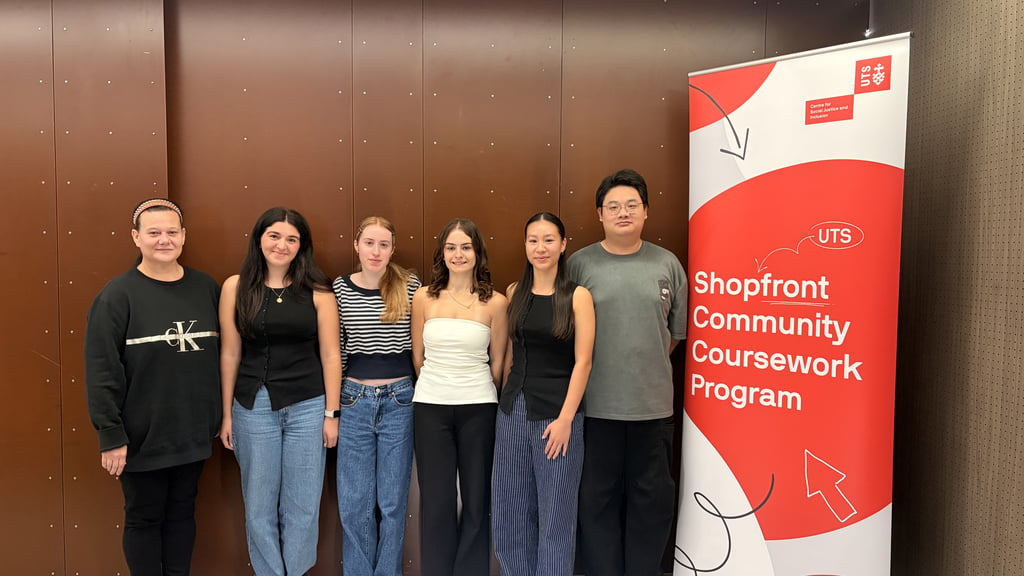
"A written brief only tells a small part of the story," said Naomi, a Bachelor of Management student. "When we met with the client, we realised how much more there was to understand."
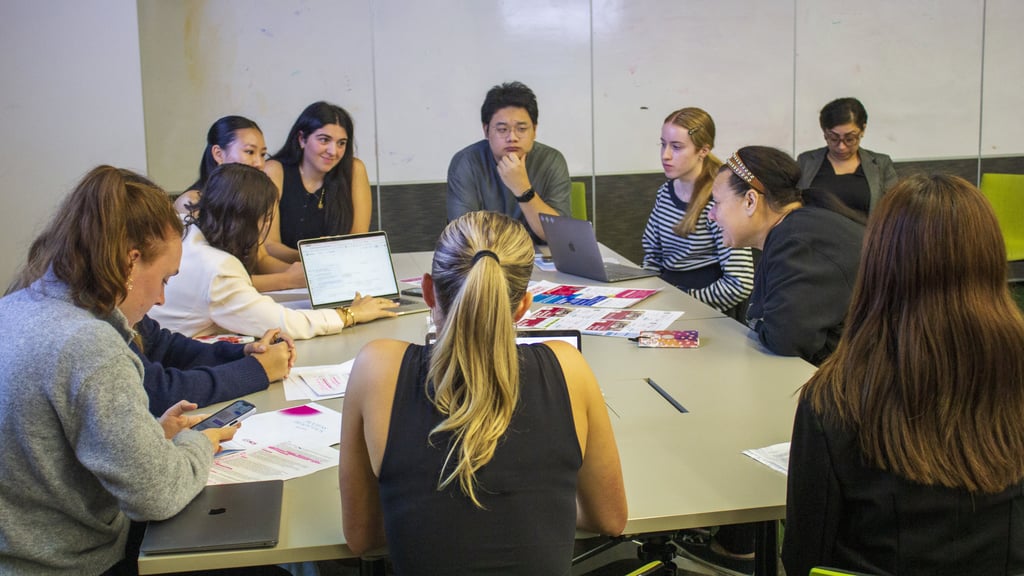
This is Managing for Social Impact - one of the most distinctive subjects at UTS Business School delivered in partnership with UTS Shopfront. Rather than working through case studies or theoretical frameworks, students are placed in small teams and partnered with a genuine community organisation, tasked with solving a challenge that affects people's lives. Teams typically consist of four to six students working across a full semester, and the subject is the Capstone in the Bachelor of Management, typically undertaken in the students’ final semester.
"You're constantly working towards an outcome with purpose behind every task," said Kiara, another student on the team.
A community not being heard
Kogarah Community Services (KCS) is a not-for-profit supporting culturally and linguistically diverse communities, families, and socially isolated individuals across the St George region of southern Sydney. Its programs span healthcare navigation, social connection, and family support - but students quickly uncovered a critical gap: the people who needed these services most, often didn't know they existed.
"Information was fragmented across too many channels," said Naomi. "People were either missing out or finding it difficult to access."
"The community was missing out on opportunities for connection, healthcare and support," said Siena, a fellow team member.
For KCS, this wasn't an abstract communications problem. Reduced awareness meant reduced participation and for vulnerable individuals, a missed service can have significant consequences.
What a written brief can't tell you
The team began with a project brief, but it became clear early on that the document was only a starting point. The deeper understanding came through direct conversation.
"We learned about their true capacity, their limitations and how they actually operate," said Kiara. "It's not about what you think the solution is - it's about understanding what the client actually needs."
Through those conversations, students encountered the everyday realities of running a not-for-profit: limited time, constrained resources, and the complexity of serving communities with widely different needs and languages. Gathering even basic insights required persistence.
"We realised quickly that even simple things like getting survey responses can be challenging because people are busy," said Annabelle, a fellow team member.
Students also found that different people within the organisation held different priorities and perspectives - something rarely encountered in traditional coursework.
"We had to focus on what would actually work in their environment, not just what looked good on paper," said teammate Junxi.
Interested in studying at UTS?
Explore the Bachelor of Management
When students become collaborators
One of the most unexpected aspects of the experience was the level of genuine engagement from KCS throughout the project.
"We were surprised by how invested the KCS team was," said Kiara. "They were open, honest and genuinely wanted to create a solution that would work."
KCS staff actively contributed across the semester providing feedback, attending presentations, and sharing organisational context that shaped the team's approach. That engagement changed how students felt about the work.
"They didn't treat us like a university project - they treated us like collaborators," said Siena.
"Knowing our ideas could actually be used made us take the project to another level," said Annabelle.
Recommendations built for implementation
By the end of the semester, the team delivered a set of practical recommendations focused on improving how KCS communicates about its services — addressing accessibility, channel consolidation, and community engagement in ways that accounted for the organisation's real capacity.
"We wanted to create something that would realistically improve awareness and accessibility," said Junxi. "Not just in theory - something they could actually act on."
Presenting back to the client was a defining moment for the group.
"Seeing their reaction and excitement - that was one of the most rewarding parts," said Kiara.
Skills built through doing, not studying
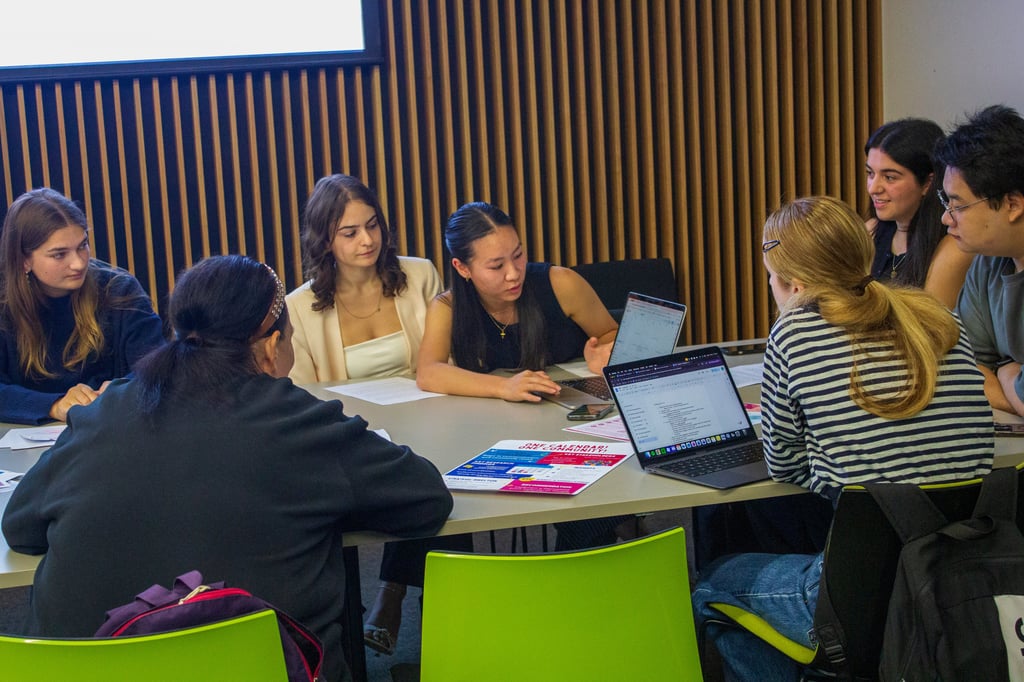
Over the course of the project, students developed capabilities that are difficult to teach in a lecture setting: how to ask the right questions of a client, how to navigate competing stakeholder priorities, how to translate research into recommendations a resource-constrained organisation can actually use.
"It gave me a much clearer understanding of how organisations actually operate," said Junxi. "You're not just analysing problems, you're working with people to solve them."
For many students, the experience also built something less tangible but equally important: confidence.
"It's completely different to sitting in a lecture. You're leading the project, working with a client, and delivering something that matters," said Kiara.
Rethinking what a business career can look like
For several students, the subject reshaped their sense of where they might want to work and what they want to achieve when they get there.
"I hadn't really considered the not-for-profit sector before, but seeing the impact they have was eye-opening," said Kiara.
"It made me realise that no matter where I work, I want to create something meaningful," said Naomi.
That shift in perspective from outcome-focused to impact-focused, is something students carried beyond the subject itself.
"It's not just about delivering outcomes. It's about making sure those outcomes are accessible and create genuine value for people," said Kiara.
A different kind of business education
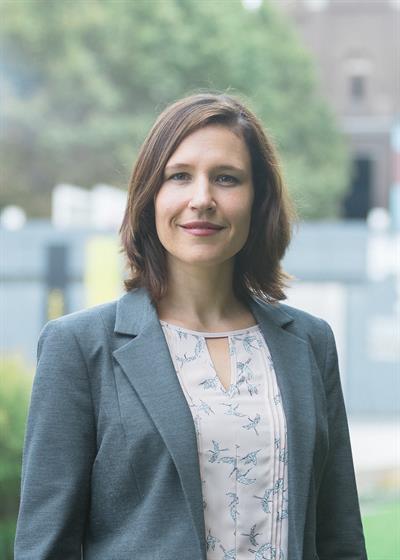
As a socially committed business school, UTS Business School embeds this kind of experience throughout its degrees, ensuring students graduate with both practical capability and a strong sense of purpose. The Managing for Social Impact subject is one example of how that approach comes to life. It is a subject that has been carefully co-designed by Dr. Simone Faulkner, her colleagues in the School of Management, UTS Shopfront and the students.
Dr. Faulkner, whose work on socially embedded education has earned recognition across the sector, sees subjects like this as central to what a modern business degree should be. "We want students to graduate knowing they can create value, not just for shareholders, but for communities," she said.
"Nothing feels like busywork. You're working towards something real," said Naomi.
"You feel proud - not just of the outcome, but of the impact you've had."
— Siena, Bachelor of Management
Meet our academics
Senior Lecturer, Business School
Explore
Related stories

Leading with impact: universities as gateways to community
UTS is redefining what it means to be a civic institution – through collaboration, co-design, and community-led impact.