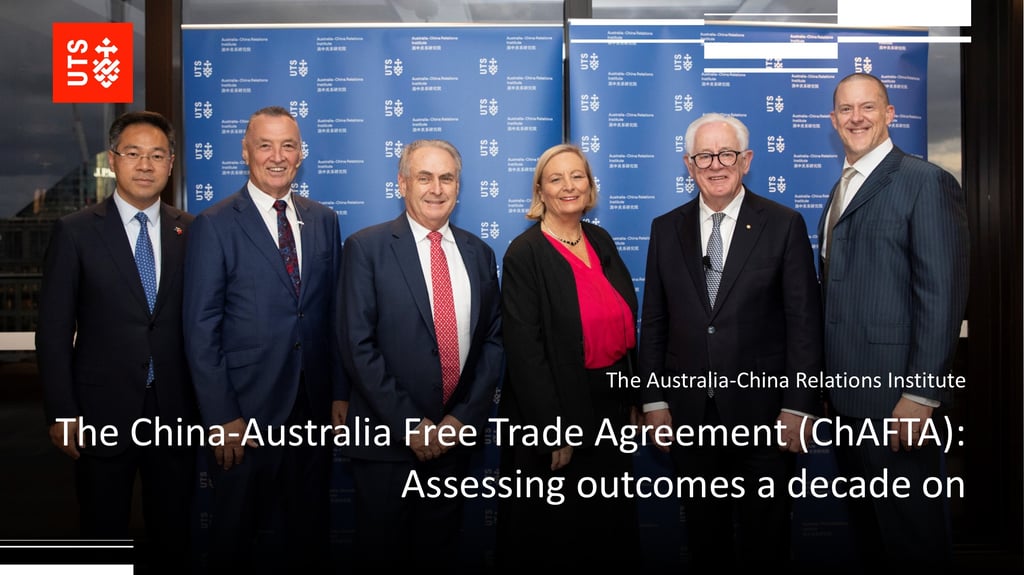
The China-Australia Free Trade Agreement (ChAFTA): Assessing outcomes a decade on

WHEN

8 April 2025
Tuesday
5.45pm - 7.30pm Australia/Sydney


WHERE

Online
MA Financial Group
Level 27, Brookfield Place, 10 Carrington St, Sydney NSW 2000

COST

Free admission

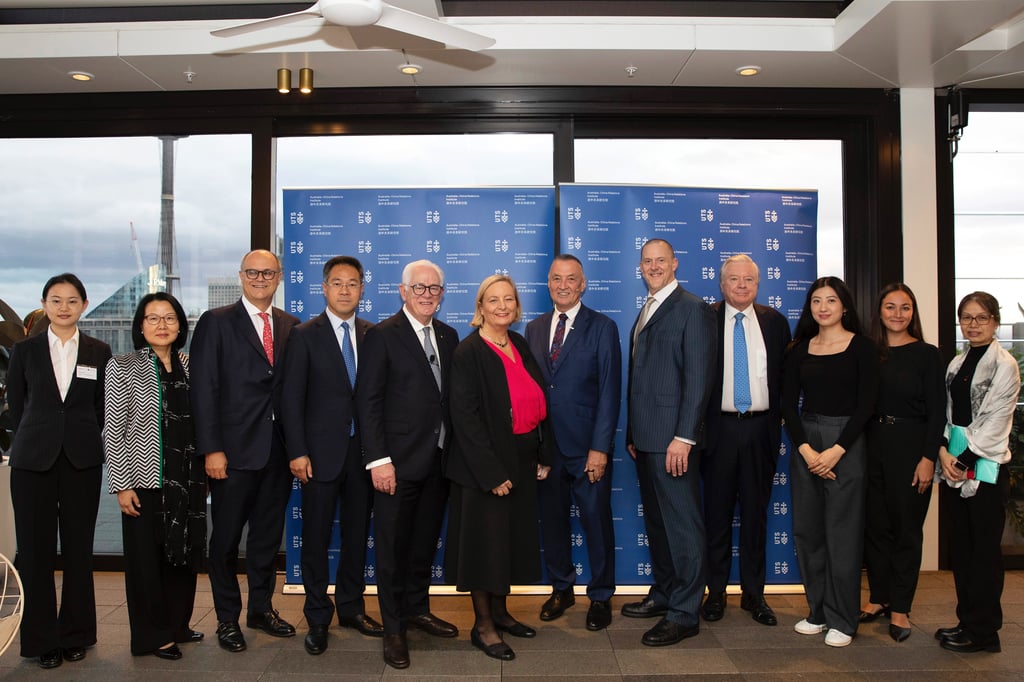
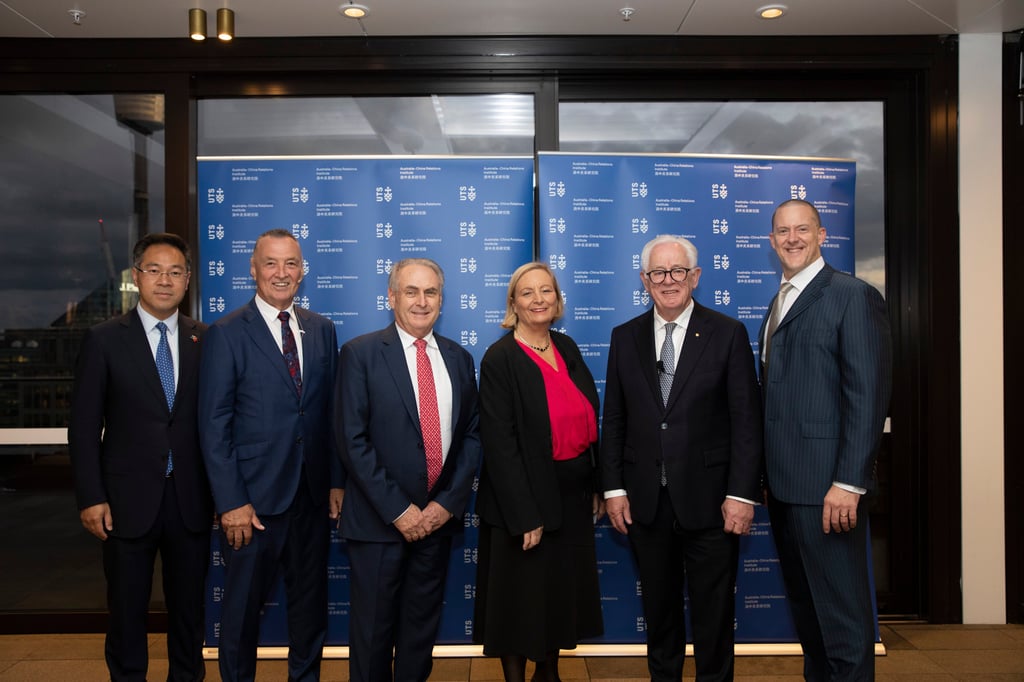
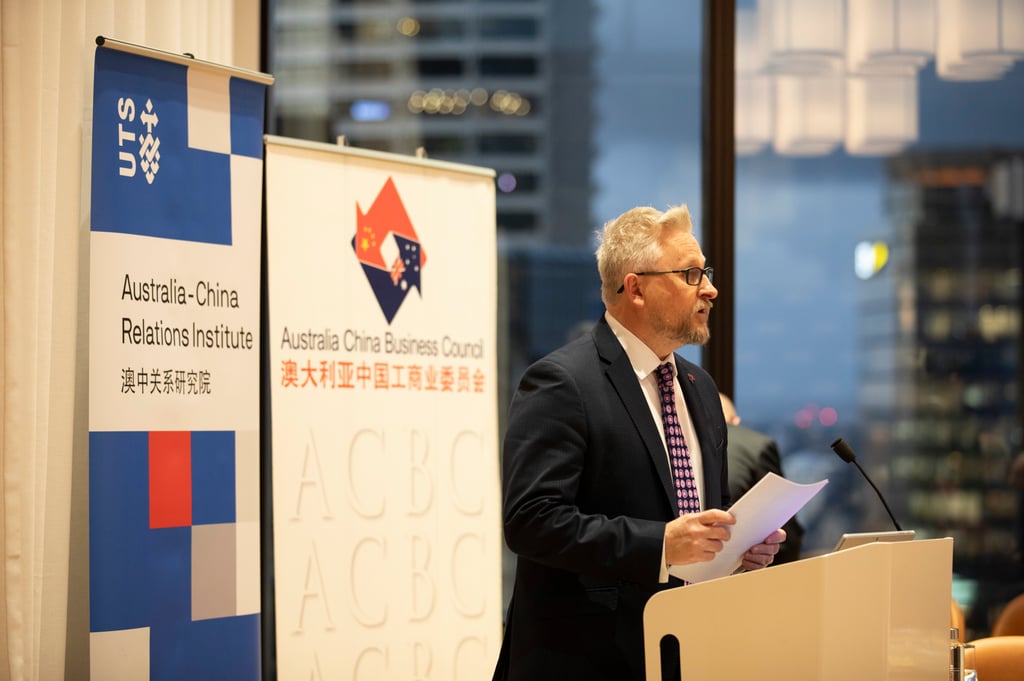
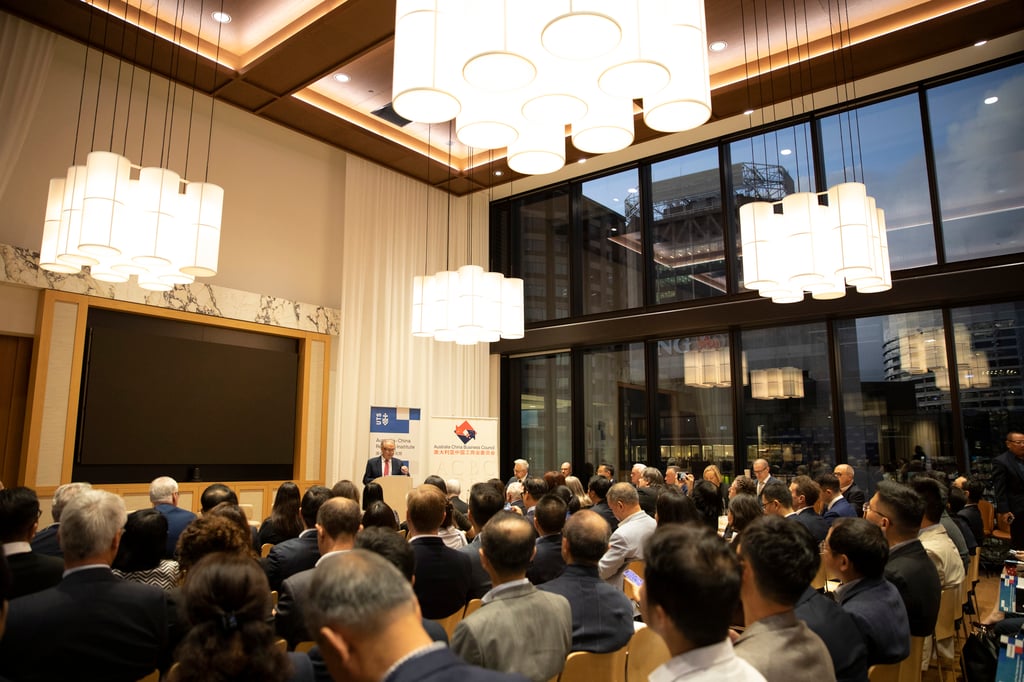
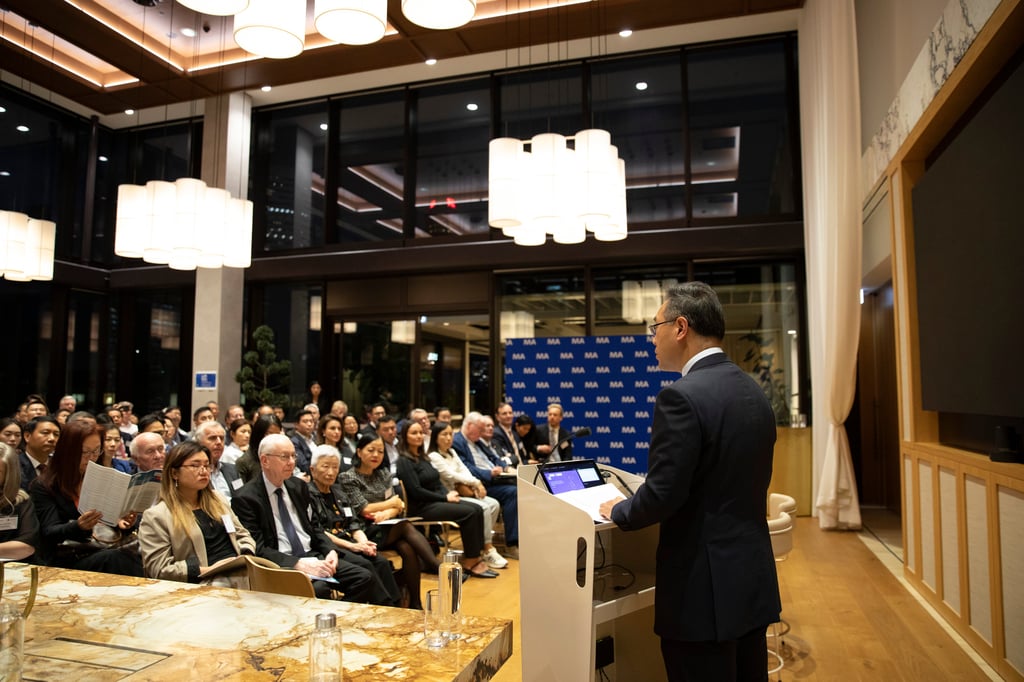
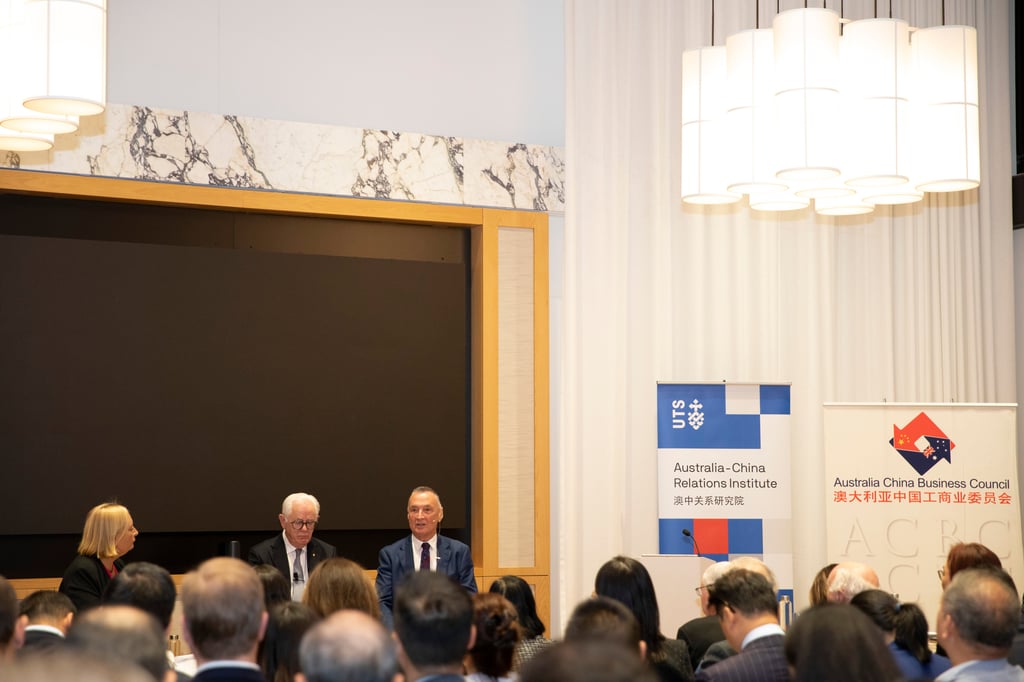
With the China-Australia Free Trade Agreement (ChAFTA) now a decade in operation, the Australia-China Relations Institute at the University of Technology Sydney (UTS:ACRI) in partnership with the Australia China Business Council (ACBC) hosted a discussion assessing the deal’s impact on Australian trade, labour market and strategic outcomes.

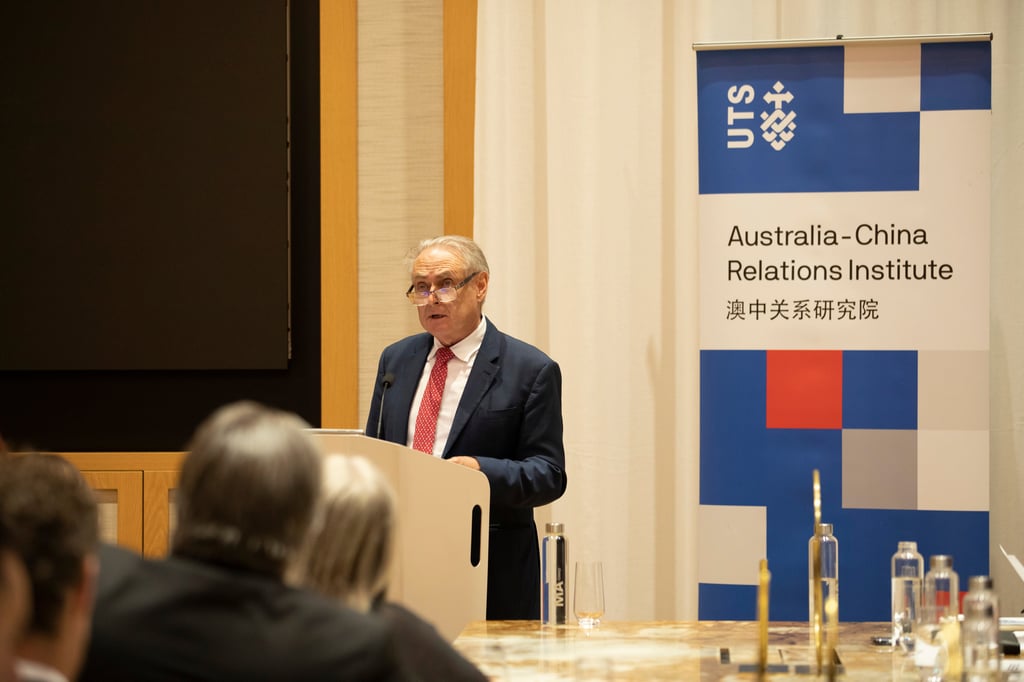
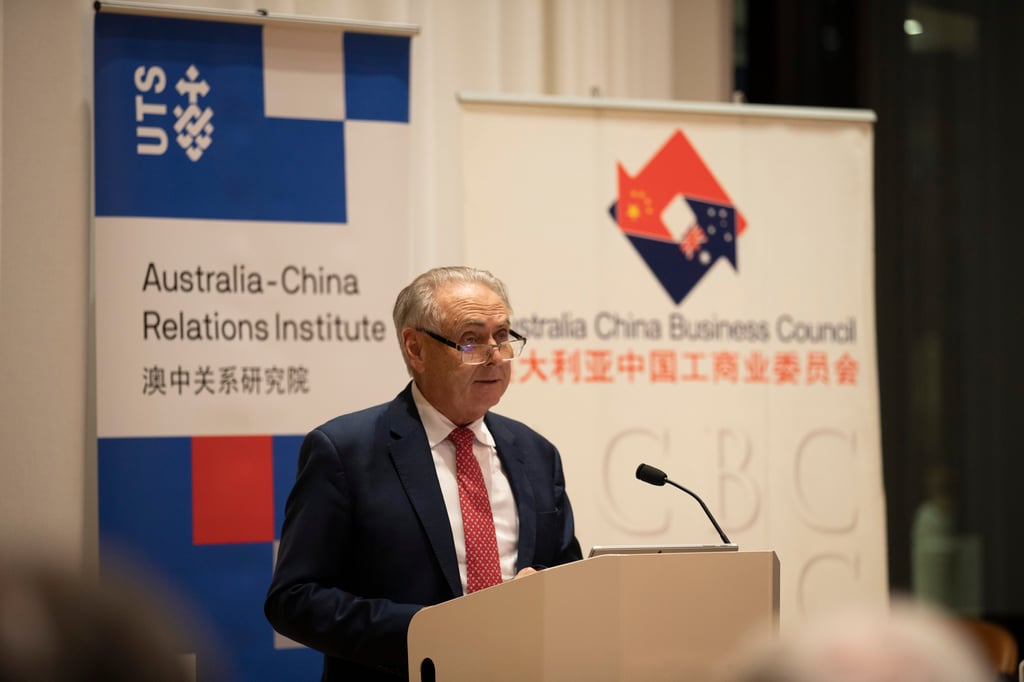
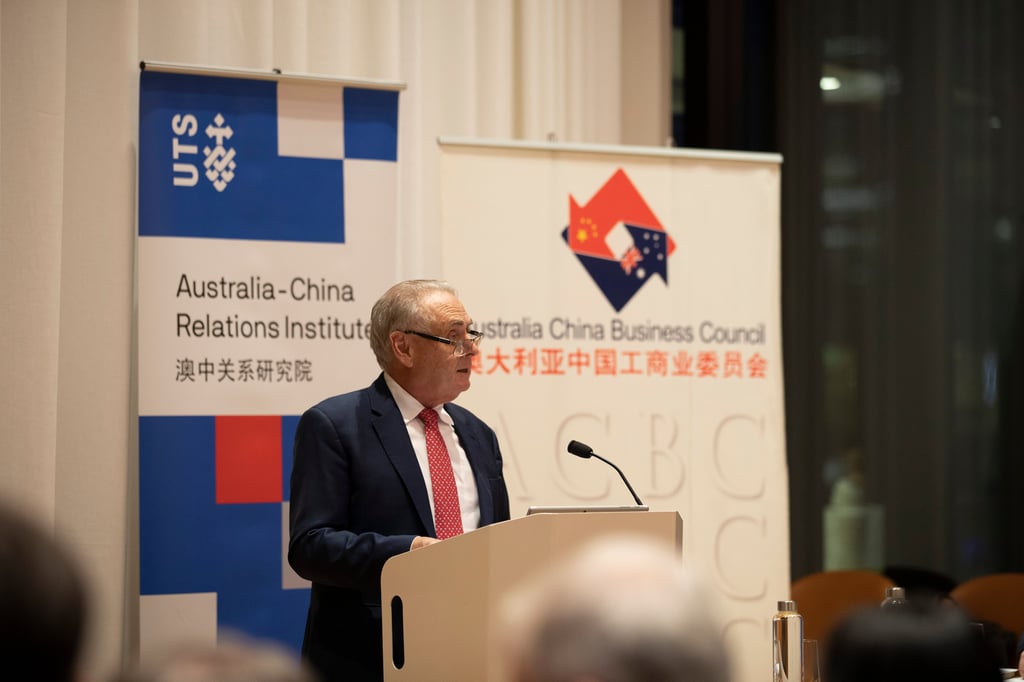
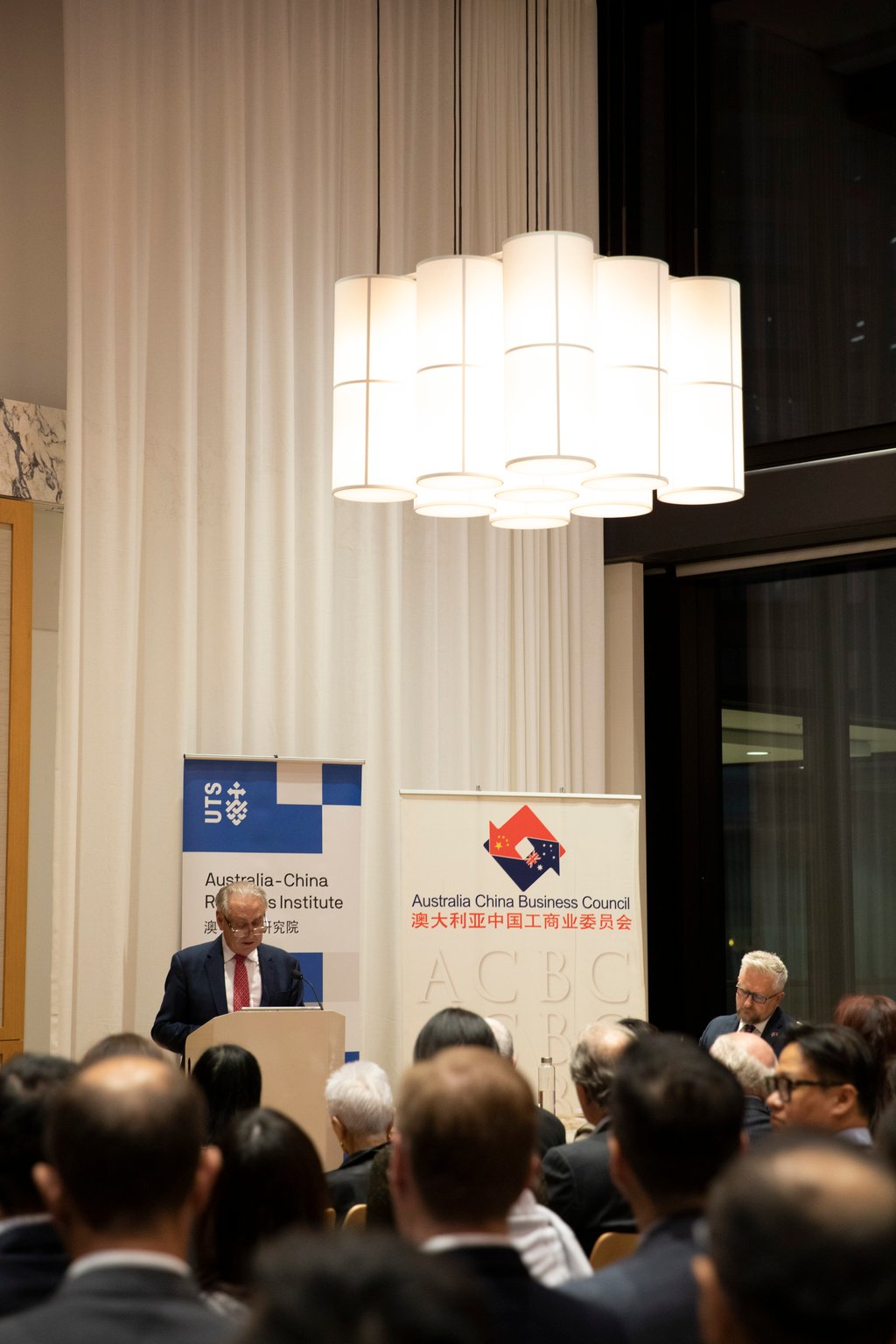
Senator the Hon Don Farrell, Australia’s Minister for Trade and Tourism, Special Minister of State and Deputy Leader of the Government in the Senate, delivered the opening address.

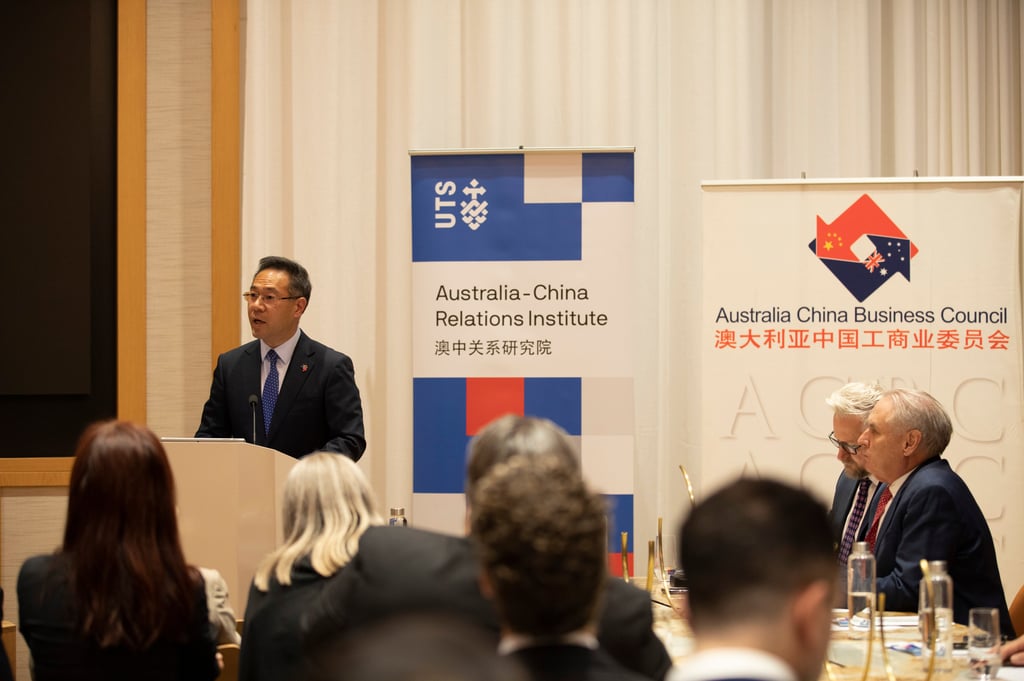
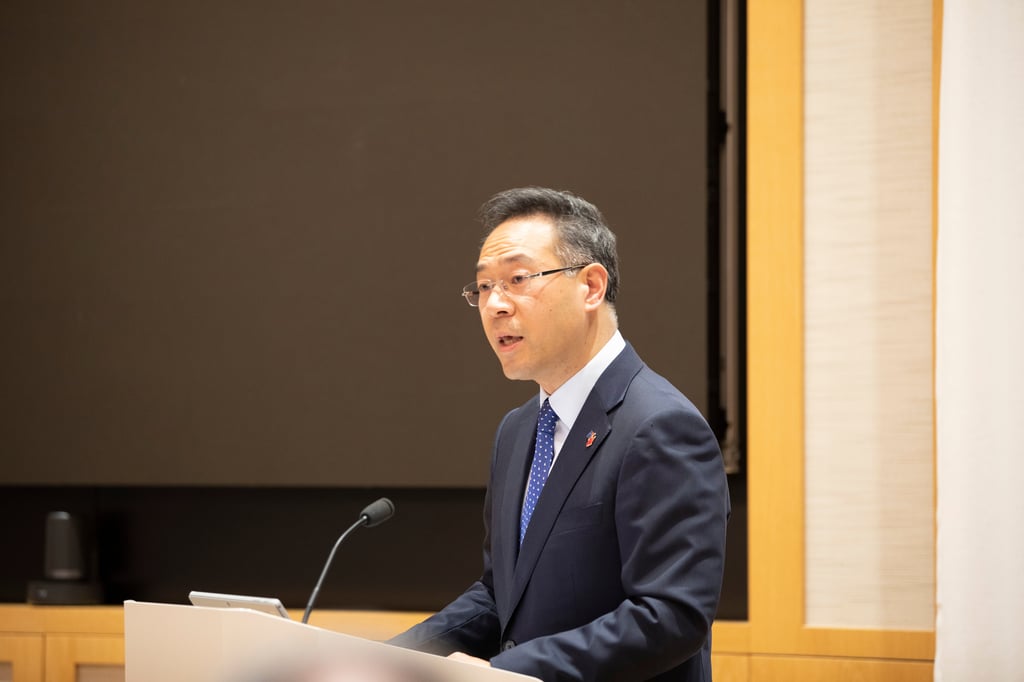
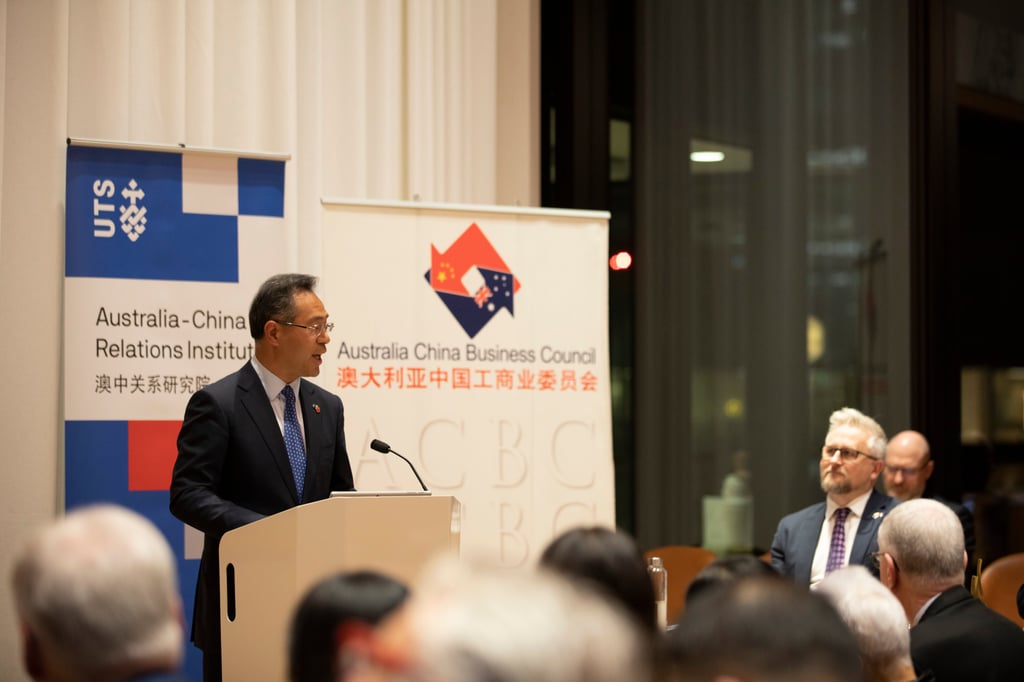
Special remarks were delivered on behalf of HE Xiao Qian, Ambassador of the People’s Republic of China to Australia, by Mr Gao Feng, Minister-Counsellor for Economic and Commercial Affairs at the Chinese Embassy in Australia.

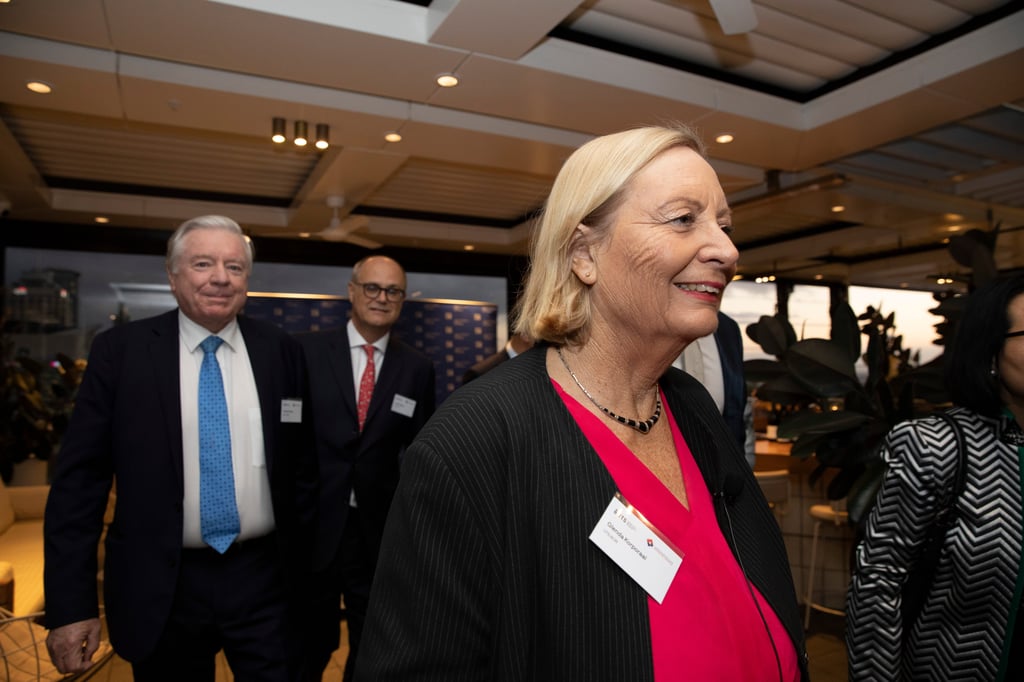
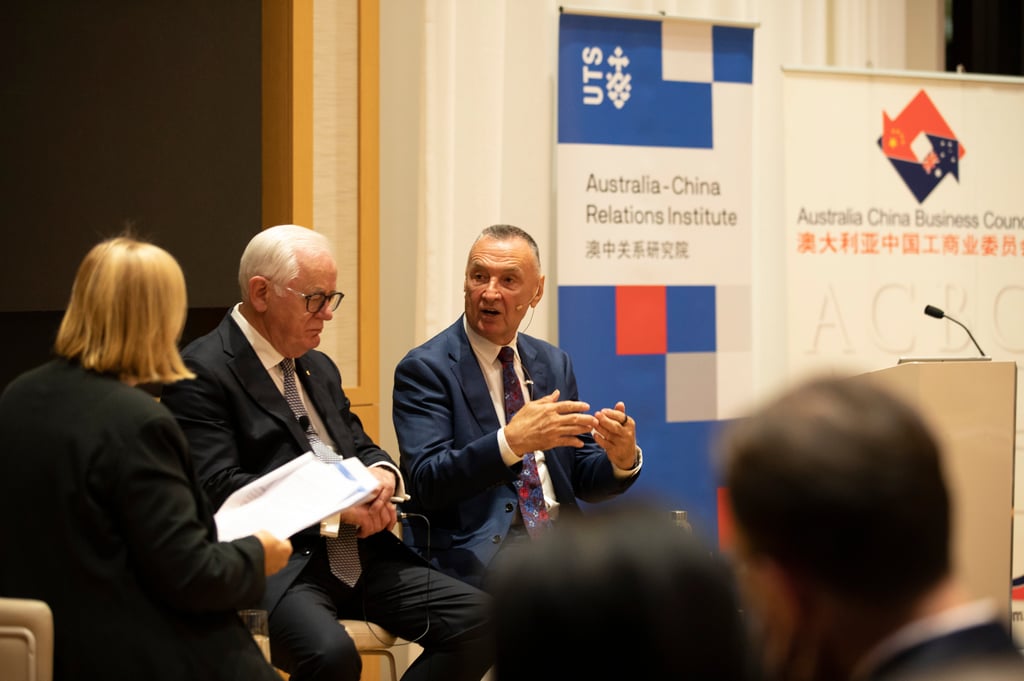
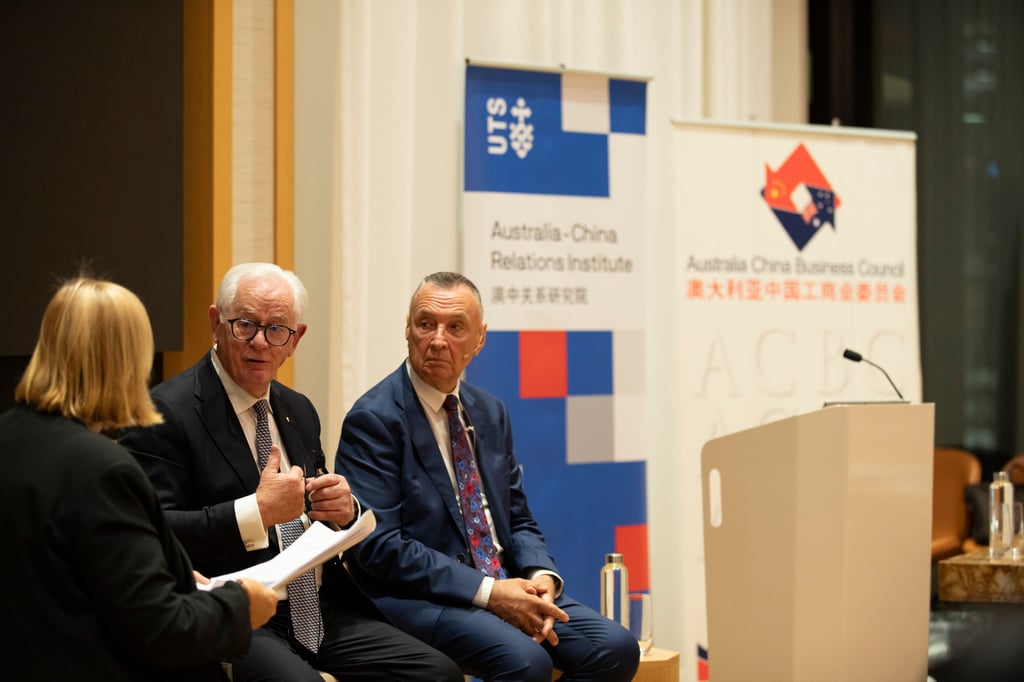
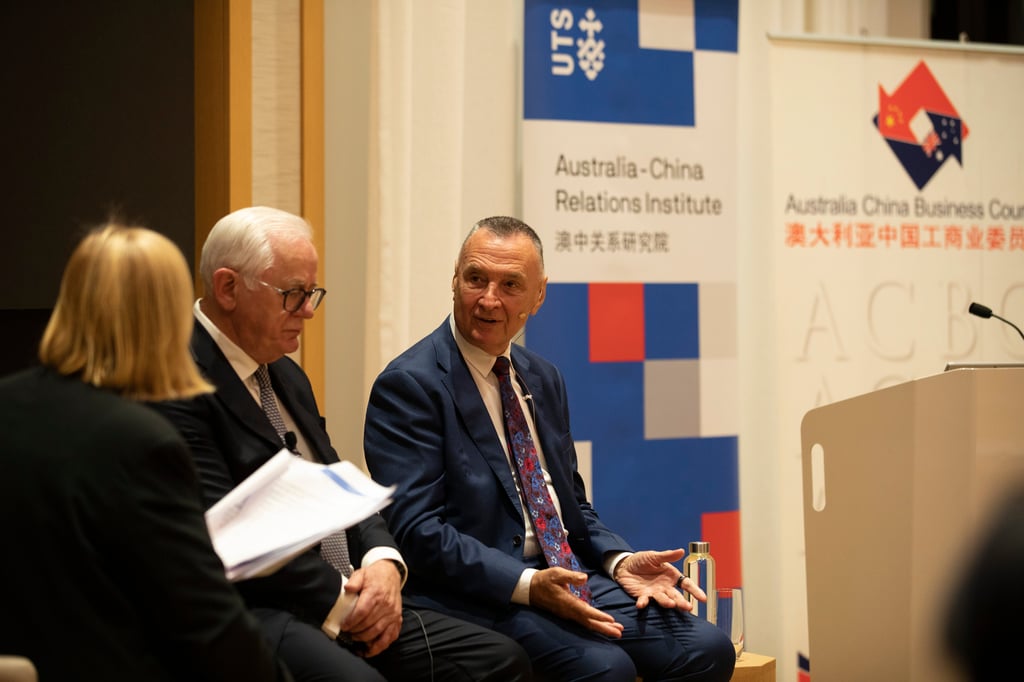
The Hon Andrew Robb, Chair of the Robb Group and the Australian Trade Minister whose leadership saw the successful conclusion of the ChAFTA negotiations, signing the deal in Canberra on June 17 2015, and the Hon Dr Craig Emerson, eminent economist and the Australian Trade Minister who played a pivotal role in expanding trade with the PRC in the years leading up to ChAFTA's signing and has Co-Chaired the Australia-China High Level Dialogue for the last two years, were interviewed by Glenda Korporaal, UTS:ACRI Adjunct Industry Fellow and columnist for The Australian.

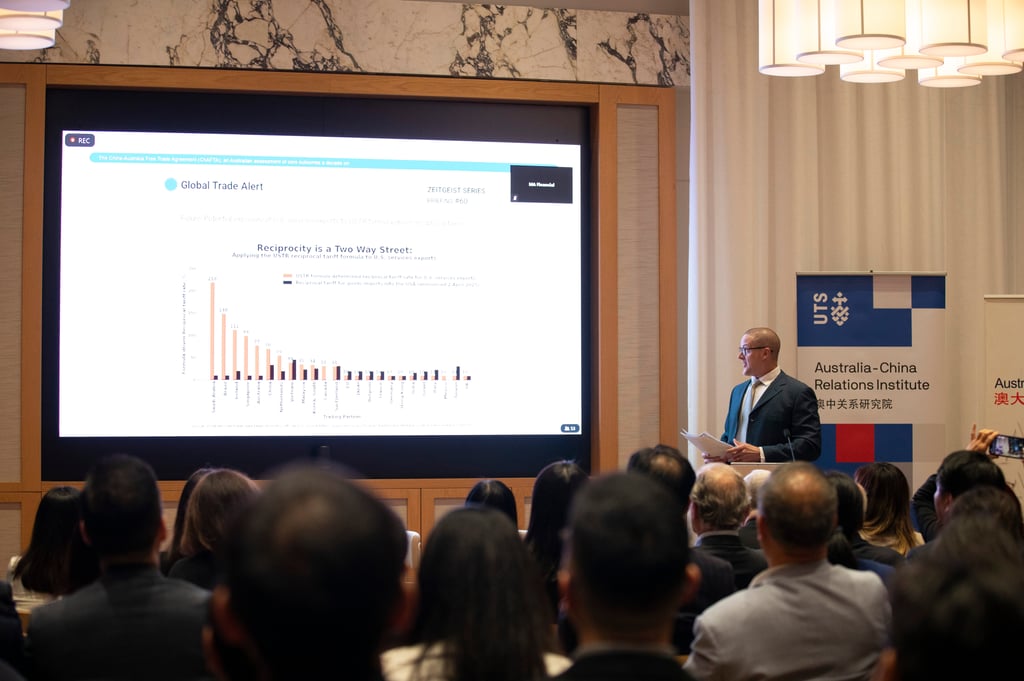
Professor James Laurenceson then presented the key findings of a UTS:ACRI Analysis released on the day, ChAFTA: An Australian assessment of core outcomes a decade on

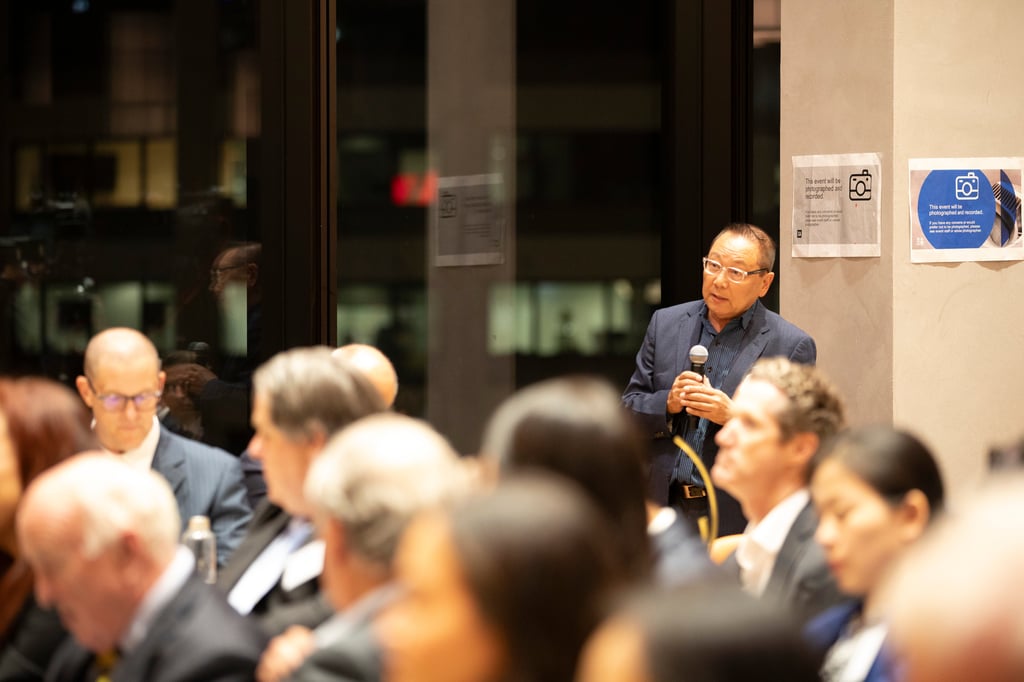
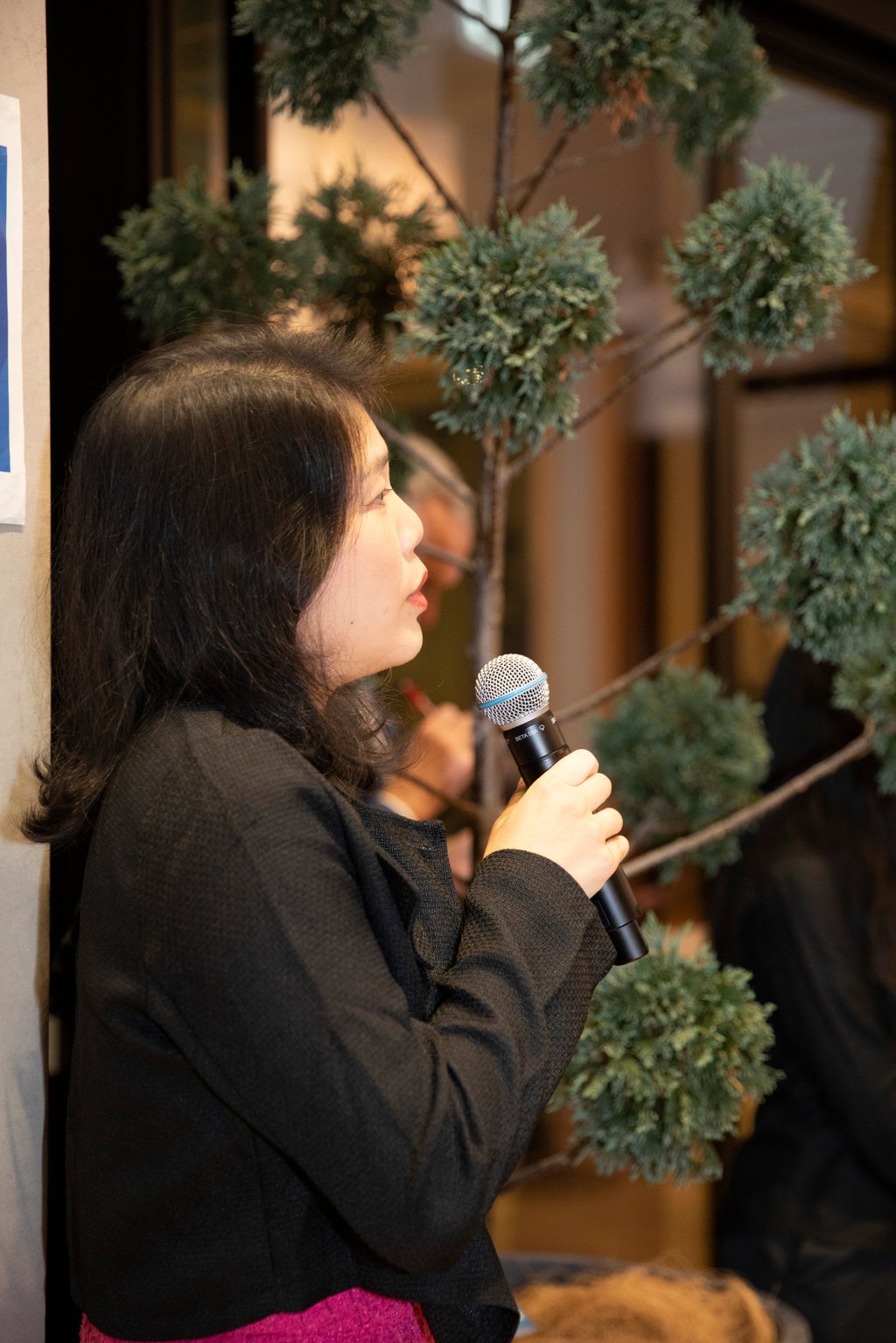
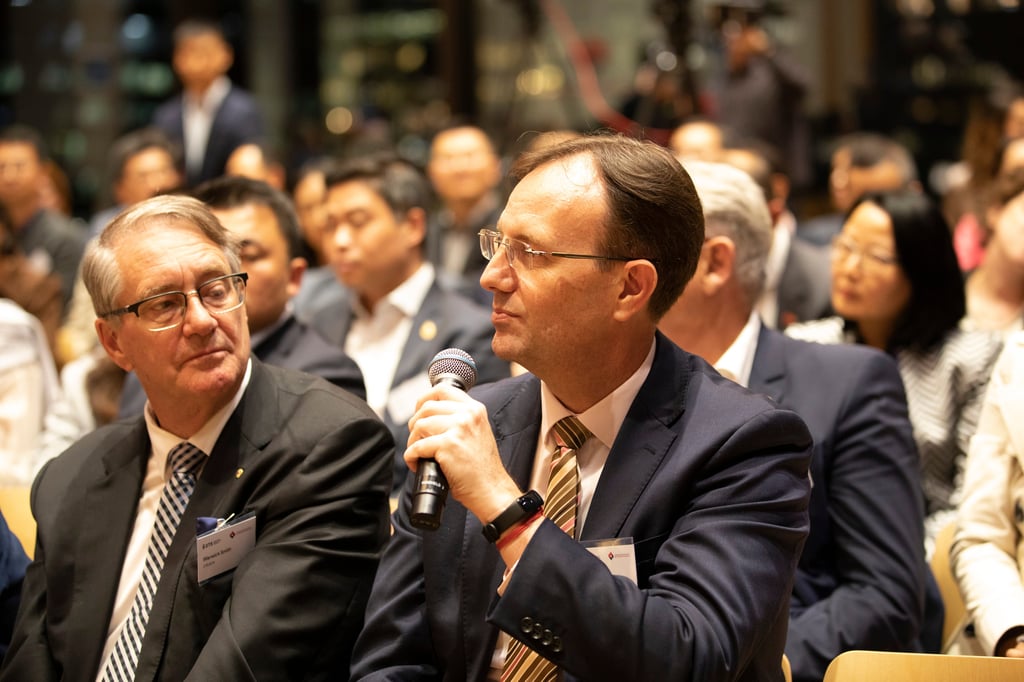
The discussion was followed by audience Q&A.

This event was made possible with the support of MA Financial.

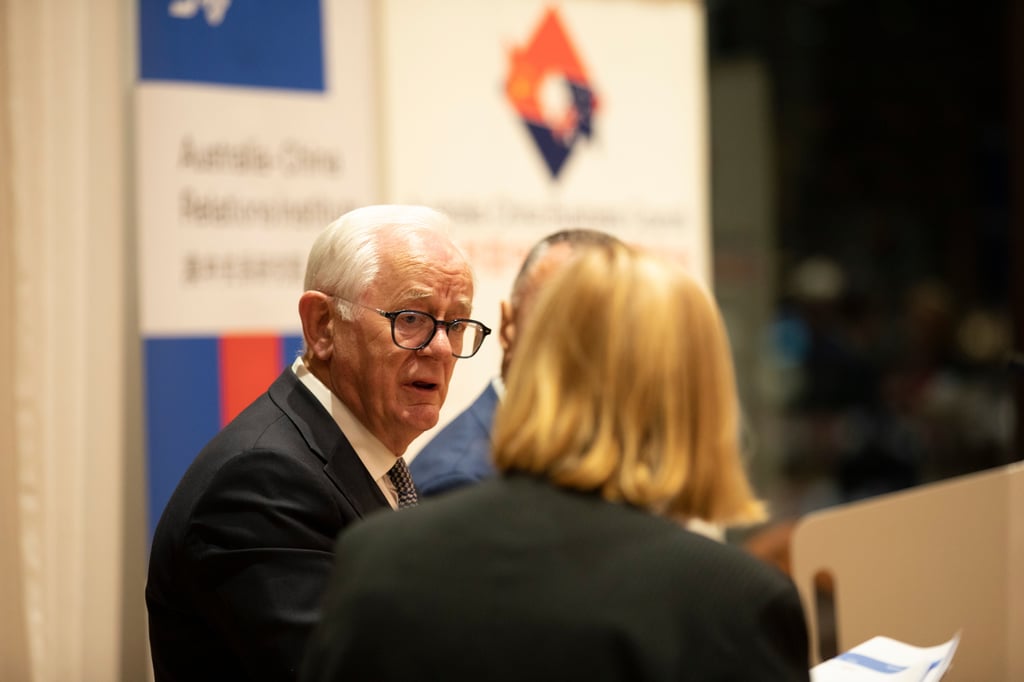
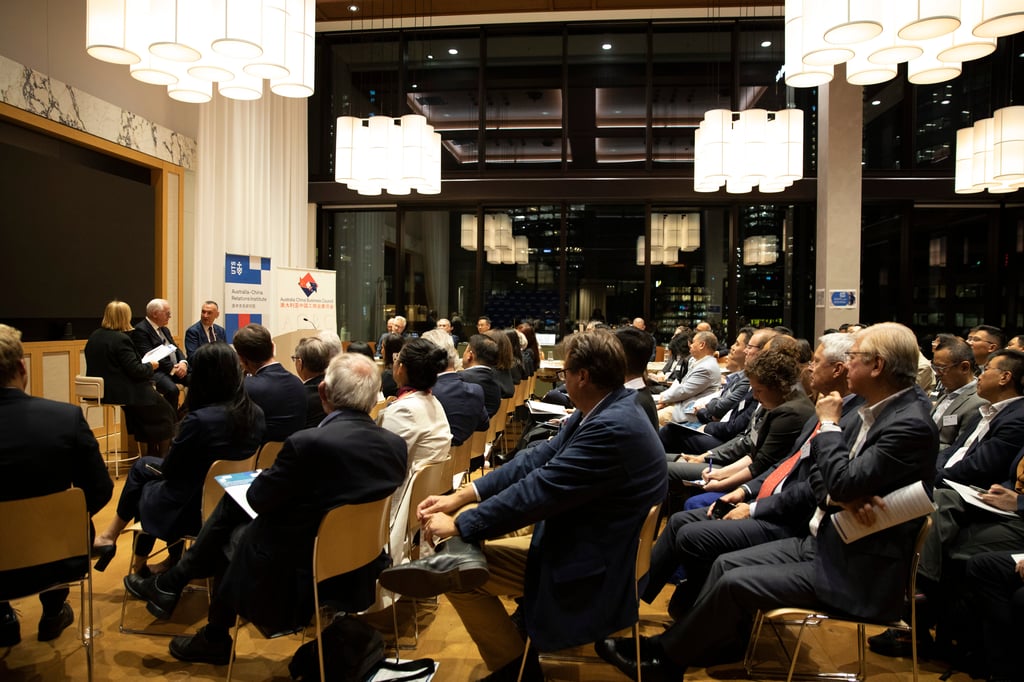
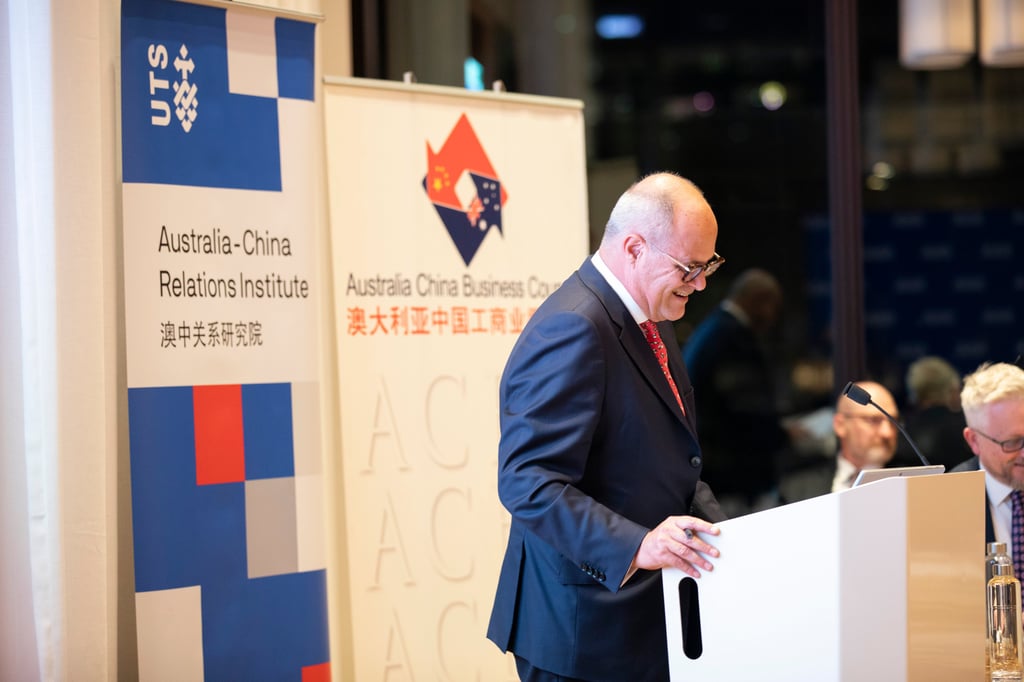
Image gallery, video, transcript and audio are available below.

About the speakers

Senator the Hon Don Farrell

Don Farrell was born in Murray Bridge, South Australia, and is a fourth generation South Australian.

While studying law at the University of Adelaide, he worked as a shop assistant and later joined the South Australian Shop Distributive and Allied Employees' Association, beginning a 32-year career working for the rights of retail and fast-food workers. Don led the union at the state and national level, overseeing the introduction of the 38-hour week and universal superannuation for retail workers.

He was elected to the Senate in 2008, and served as Minister for Science and Research, Minister for Sport, Minister Assisting on Tourism, and Parliamentary Secretary for Sustainability and Urban Water during his six-year term in the Rudd and Gillard governments.

Following his first term in the Senate, he spent time tending his small vineyard in South Australia's Clare Valley wine region and knows firsthand the daily challenges faced by local growers and primary producers.

He again nominated for the Senate and was re-elected in 2016, serving as the Shadow Special Minister of State, Shadow Minister for Sport and Tourism, Shadow Minister Assisting the Leader of the Opposition and Deputy Leader of the Opposition in the Senate.

Following the election of the Albanese Government in 2022, Senator Farrell was appointed Minister for Trade and Tourism, Special Minister of State and Deputy Leader of the Government in the Senate.

As a proud South Australian, Senator Farrell is honoured to represent the people of his home state in Federal Parliament.

Senator Farrell lives in Adelaide with his wife Nimfa and enjoys spending time with his three daughters, and doting on his grandchildren.

Mr Gao Feng

Mr Gao Feng currently serves as Minister-Counsellor for Economic and Commercial Affairs at the Embassy of the People’s Republic of China in the Commonwealth of Australia.

After graduating from Beijing Language and Culture University with a bachelor’s degree, and acquiring a Master of Law from Renmin University in China, he began his career in the Ministry of Commerce of the People’s Republic of China (MOFCOM). From 1997 to 2017, he worked as Deputy Director, Director and Deputy Director General in MOFCOM. From 2017 to 2022, Mr Gao was assigned as the spokesperson of MOFCOM. He was posted to the Chinese Embassy in Australia in October 2022.

Mr Gao also served as Deputy District Director of the Hailing District, Taizhou City, Jiangsu Province, China from 2011 to 2013.

The Hon Andrew Robb AO 

Until his recent retirement from politics, Andrew Robb was Australia’s Minister for Trade, Investment and Tourism.

In this role Mr Robb negotiated Free Trade Agreements with South Korea, Japan and China, as well as the 12 country Trans Pacific Partnership (TPP) free trade agreement and the Comprehensive Strategic Partnership with Singapore. Additionally, he conducted 85 investment roundtables with 28 countries.

Mr Robb is currently Chairman of The Robb Group (wealth management, corporate and investment advisory company), the AgriFood Data Exchange, CDMA and CLARA Energy; a Board Member of the Kidman cattle enterprise, Mind Medicine Australia, and strategic advisor to Seafarms Ltd as well as a range of national and international businesses.

The Hon Dr Craig Emerson

Dr Craig Emerson is an eminent economist with 40 years’ experience in public policy, politics and public service. He is the Executive Chair of the Australian APEC Study Centre at RMIT University and Managing Director of Emerson Economics.

He is a Visiting Fellow at the Australian National University and an Adjunct Professor at Victoria University’s Centre of Policy Studies.

Dr Emerson has been Co-chair of the resumed Australia-China High Level Dialogue for the last two years.

Dr Emerson is a member of the Trade Minister’s 2040 Trade Taskforce and the Chair of the multi-party Australian Political Exchange Council.

Dr Emerson was Australia’s Minister for Trade from 2010 to 2013.

He was the architect of the 2012 White Paper on Australia in the Asian Century and was appointed Minister Assisting the Prime Minister on Asian Century Policy.

Dr Emerson is also a former Minister for Tertiary Education, Skills, Science and Research, Minister for Competition Policy and Consumer Affairs and Minister for Small Business.

Dr Emerson was economic, trade and environmental adviser to Prime Minister Bob Hawke.

He is a former economic analyst at the United Nations in Bangkok, Assistant Secretary in the Department of the Prime Minister and Cabinet and Director-General of the Queensland Department of Environment and Heritage.

Dr Emerson has a PhD in Economics from the Australian National University.

Ms Glenda Korporaal OAM

Glenda Korporaal is an Adjunct Industry Fellow at the Australia-China Relations Institute, University of Technology Sydney (UTS:ACRI).

Ms Korporaal is a Sydney based journalist with The Australian newspaper specialising in business, financial affairs and international relations. She is a former London, Washington and New York correspondent of The Australian Financial Review (AFR) and was the first woman deputy editor of the AFR (1986-1988).

She has been business editor of The Bulletin magazine, editor of The Australian’s monthly business magazine, The Deal, and associate editor (business) of The Australian.

She has a strong interest in Asia, particularly China, since her first visit to the People's Republic of China (PRC) on a 'farm study tour' in 1978. She was the China correspondent for The Australian in 2018 and 2019. She has lived and worked in Hong Kong (2001-2003) and Singapore (1998-1999).

She was awarded an OAM for her contribution to print journalism in the Australia Day honours of January 2019.

Professor James Laurenceson 

Professor James Laurenceson is Director of the Australia-China Relations Institute at the University of Technology Sydney (UTS:ACRI). His research interests relate to the Chinese economy and the Australia-China economic and broader relationship.
Thumbnail

Video

Video transcript

Note

The following is a transcript of 'The China-Australia Free Trade Agreement (ChAFTA): assessing outcomes a decade on', hosted by the Australia-China Relations Institute at the University of Technology Sydney (UTS:ACRI) in partnership with the Australia China Business Council (ACBC) on April 8. This transcript was produced by a transcription service and may contain minor inaccuracies. It is provided for reference only.

Check against delivery

E&OE (Errors and omissions excepted)


Mr Tom Parker:

Evening, ladies and gentlemen, my name's Tom Parker. I'm the CEO of the Australia-China Business Council and I'm delighted to welcome you all to this evening's event, co-hosted and presented in partnership with the Australia-China Relations Institute at the University of Technology Sydney, and of course the ACBC. I'd like to begin by acknowledging that I'm speaking today from the lands of the Gadigal people of the Eora Nation. And pay my respects to the Elders both past and present, and extend that respect to all Aboriginal and Torres Strait Islander peoples joining us today. I also acknowledge the traditional owners of the many lands from which each of you connected through the live stream on today's event. I'd like to thank the ACBC members, the ACRI stakeholders, and of course ACBC's national sponsor, MA Financial for hosting this evening. For your support, hospitality in this magnificent venue is greatly appreciated.

To say this evening's event is timely is perhaps an understatement. As we witness America's retreat from globalisation and the enormous global financial disruption underpinned by Trump's tariffs, all of us have suddenly become geopolitical strategists and macroeconomists. But underlying the truth for Australia is that we are a trading nation, a nation that depends on a rules-based global order, underpinned by free trade agreements and regional agreements such as the 10th anniversary of ChAFTA, which we're here to explore and celebrate this evening. As many commentators have remarked, including our own ACBC national president, David Olsson, who sends his apologies and has just returned from two weeks in China, we are at a pivotal time as the region and China see an opportunity among the chaos. If we fail to respond strategically, Australia risks not only being sidelined in the critical trade flows, but also missing the capital, technology and partnerships essential to our economic and energy transition.

Inaction isn't an option, but neither is escalation. Australia must remain open to trade, to innovation, and crucially to investment that supports our economic transformation. Australia's strengths lies in building stable rules-based partnerships and shaping future standards of which ChAFTA is a brilliant example. Tonight is an opportunity of course to reflect on the importance of a historic bilateral free trade agreement that turbocharged our economic trade with China, but also to look to the future to ensure our continued prosperity. We are very, very fortunate to have the Senator the Honorable Don Farrell, Australia's Minister for Trade and Tourism with us tonight, in perhaps what might be a welcome break from the Zoom meetings and other things to secure our trade future supporting our industry. And no doubt trying to unpack the uncertainty that is emanating from the White House. Minister Farrell, along with the Prime Minister and Foreign Minister have played a crucial role in stabilising our relationship with China and removing the trade barriers, which ensures we can progress our shared interest in engaging and collaborate with our largest trading partner in the spirit of practical cooperation at such a pivotal time.

Thank you Minister Farrell for being such a strong supporter of both the ACBC and ACRI, and more importantly for joining us tonight. Thank you, Minister.

Senator the Hon Don Farrell:

Well, thank you, Tom, and thank you for the opportunity to come and address you all this evening. I was actually here on Friday night at the Opera House with my youngest daughter. And we had the pleasure of seeing Nijinsky the ballet and I can't say I'm an amazing fan of ballet, but I really did enjoy this one. So if you get a chance, I highly recommend it. As Tom did, I'll acknowledge the traditional custodians on the land in which we meet. I'd also like to acknowledge two of my wonderful predecessors. Yes, that's you, Mr Emerson and Mr Rob, both of whom were fantastic trade ministers and did wonderful things to promote our trade. And continue to be very actively involved in all of the things that we do in the trade space. Can I also welcome my good friend from the Chinese Embassy Minister Councillor Feng Gao, great to see you here tonight. And we've had many wonderful evenings together at the embassy, can you pass on my best wishes to the Ambassador?

We have developed a terrific relationship and I very much credit him with all of the good work that's occurred over the last three years, so if you can pass on my best wishes to him. Also, the event co-organisers, the Australia-China Business Council and the Australia-China Relations Institute. This is a really significant occasion because it marks the 10th anniversary of the China-Australia Free Trade Agreement. And when the world is all focusing on free trade agreements, it's fantastic to be here with a wonderful partner like China. ChAFTA has made a major contribution to the prosperity particularly of Australia, but I also like to think of China over the past decade. Our trading relationship with China is our largest accounting for around a quarter of Australia's total trade. And trade with China exceeds that with our next three largest trading partners combined, so I think that's a point worth making. Trade with China exceeds that of our next three largest trading partners combined, so an enormous amount of trade.

And as Professor Laurenceson in his paper released today, says Australia's trade with China since ChAFTA has more than doubled. And it's grown from roughly $146 billion a decade ago to $300 and almost 26 billion in the 2023, '24 year. Now, as Tom mentioned, the Albanese Labor government has worked tirelessly to stabilise the Australia-China relationship, which as I said, benefits both our countries. When the Albanese Labor government came to office, trade impediments imposed by China affected over $20 billion worth of Australian exports. And we have worked industry by industry, sector by sector to get these trade impediments removed. When I started out on this exercise, a lot of people told me that it couldn't be done. We couldn't get that trade back, that we'd lost it for good. It certainly didn't happen overnight but with hard work, persistence and continued engagement, we have secured a good outcome for both Australia and China. The Albanese Labor government's steady hand on the trade tiller has led to the stabilisation of an economic relation over the last three years. It's been a remarkable turnaround and it's a testament to the benefits of calm, careful and calibrated approach.

Since becoming a trade minister almost exactly three years ago, I have met my counterpart and a good friend, Commerce Minister Wang Wentao nine times, including in my home state of Adelaide where he came with Premier Li midway through last year. If Labor is re-elected for a second term and I have the honour of continuing as the trade minister, I plan to travel to Shanghai to attend the China International Import Expo in November and hopefully again meet up with Minister Wang Wentao, and also stay at my favorite hotel in China, the Peace Hotel and sleep in the Charlie Chaplin room which is my favorite room in the Peace Hotel. To be clear, the government is clear-eyed about the challenges in our bilateral relationship and the differences that we must manage. We are committed to navigating our differences wisely, while always putting our national interest first.

For a re-elected Albanese Labor government, the ongoing stabilisation of trade relations with China would continue as a priority, as would our efforts to open up new market access opportunities for Australian businesses to sell their products around the world. Australia is a great trading nation, as we face global uncertainties spurred by protectionist measures including the US tariffs, we are redoubling our efforts to strengthen relationships, diversify and find new opportunities. The benefits of this trade flow to Australians in the form of more well-paying jobs, more business opportunities, and a lower cost of living. One in four Australian jobs relate to trade. Jobs in export industries pay 10 percent more than the average, and Australia's economic prosperity is directly linked to open and stable international markets. That's why the Albanese Labor government is focused on generating new and diversified trade and investment opportunities for Australian businesses. Trade diversification will remain a key policy plank of a re-elected Albanese government.

As we have learnt the hard way, putting all of your eggs into one basket is not a good business strategy. If re-elected a Labor government will continue efforts to create new market access opportunities, whether that's through the removal of technical trade barriers with existing trading partners or enhancing regional like we are doing with our ASEAN free trade agreement. All by securing new trade deals as we've done with the United Arab Emirates and we're working towards with India and the European Union. Finally, a sincere thanks to the Australia-China Business Council and the Australia-China Relations Institute. I applaud the resilience that you have shown in maintaining your stake in the Australia-China relationship. A relationship that will continue to grow into the future. 

Thank you very much.

Mr Tom Parker:

Thank you very much, Minister Farrell. Well, the nature of this evening in ChAFTA demands that obviously that we listen and engage in dialogue with our Chinese partners. And I'm delighted to introduce a good friend of both ACBC and ACRI, Mr Gao Feng, Minister Councillor of Economic and Commercial Affairs at the Chinese Embassy since 2022. 

Thank you, Minister Gao.

Mr Gao Feng:

Thank you, Tom, Senator the Honorable Don Farrell, Minister of Trade and Tourism, the Honorable Andrew Robb, the Honorable Dr Craig Emerson. I know you are the ministers who had laid the solid foundation for ChAFTA, and Professor James Laurenceson. 

Ladies and gentlemen, it's my real delight to be invited to this remarkable event. I would like on behalf of the Chinese Embassy and his Excellency, the Ambassador Xiao Qian himself to extend sincere congratulations on the launch of the analysis on ChAFTA by Australia-China Relations Institute and the success of this tonight's event. First of all, please allow me to read the congratulatory message from the Ambassador Xiao. The message reads, ‘On the occasion of the 10th anniversary of the signing and entry into falls of ChAFTA, the Australia-China Relations Institute at the University of Technology, Sydney, in partnership with ACBC hosts this event: ‘The China-Australia Free Trade Agreement: Assessing outcomes a decade on.’

On behalf of the Chinese Embassy in Australia, I would like to extend my appreciation for the successful convening of this event and express my sincere congratulations on the release of the relevant report. In 2014 during President Xi Jinping's successful state visit to Australia, leaders of both countries jointly announced the substantive conclusion of negotiations on ChAFTA. In 2015, the agreement was officially signed and entered into force. Over the past decade, China-Australia bilateral economic and trade cooperation has achieved remarkable progress. The increasingly frequent exchanges in trade and investment have not only deepened our economic ties, but also build bridges of understanding and friendship between our two peoples.

In recent years, under the strategic guidance of the leaders of both countries, China-Australia relations have seen stabilisation, improvement and comprehensive turnaround. And then now at a critical stage of further development on basis of stability. Looking ahead, there is enormous potential and bright prospects for practical economic cooperation between our two countries. China is ready to work with Australia to further strengthen cooperation in traditional sectors such as energy, resources and agriculture. While actively exploring opportunities in emerging areas including green development, the digital economy, artificial intelligence, scientific and technological innovation, and the health industry so as to promote the greater development of China-Australia relations. At present, the world economy is facing growing fragmentation and rising instability and uncertainty. Under the pretext of reciprocity, the United States has imposed additional tariffs on imports from many countries, including China and Australia, in blatant violation of WTO rules and severely undermining the rules-based multilateral trading system. Trade wars produce no winners and protectionism will lead nowhere.

Both China and Australia are beneficiaries of free trade. China is ready to work with Australia to safeguard the multilateral trading system, maintain the stability of global industrial and supply chains, and protect an open and cooperative international environment and promote economic globalisation in the right direction. I hope that participants from the business and academic communities of both countries could seize this opportunity to contribute their insights and wisdom, fully tapping the potential of ChAFTA and deepening mutually beneficial cooperation so as to elevate China-Australia economic and trade relations to a new level. Wish this event a complete success. Wish China-Australia economic and trade cooperation a brighter future for the benefit of our two countries and our peoples.’

Ladies and gentlemen, as the Ambassador highlights in message, since the implementation of ChAFTA a decade ago, our bilateral trade and economic cooperation has boomed. Over the past decade, China-Australia bilateral trade has flourished rapidly.

While China remains stable on the top of Australia's trading partners, the two-way trade has more than doubled increasing from $144.8 billion in 2015 to $325.5 billion in 2024, last year. Australia's trade surplus with China has achieved nearly a five-fold increase. Australian wine, beef have become a kind of luxury for Chinese households. At the same time, more and more Australian consumers favour the cost-effective Chinese products such as home appliances, solar panels, EVs, et cetera. And Chinese brands like Hisense, TCL, BYD, Media, has been increasingly popular among Australian consumers. Made in China has become an indispensable part of Australian households, providing firm support for easing the cost of living pressure and green transformation. Over the past decade, our bilateral investment has been expanding. The aggregate investment from China to Australia has reached nearly $90 billion. More than 800 companies have been established by Chinese enterprises in Australia providing over 25,000 jobs.

Projects like CITIC Pacific Mining, Cattle Hill Wind Farm, Melbourne's high capacity metro trains, Walla's Solar Power Plant and Tianqi Lithium Kwinana facility have made their contribution to local economic and community development. Meanwhile, Australia's investment to China exceeds $55 billion with the establishment of more than 600 companies. In 2018, Cochlear built its first overseas production and R&D Center in Chengdu, China, who has so far enabled nearly 50,000 hearing impaired children in China to hear, speak and go to school. Today, Cochlear has evolved from in China, for China, to in China for the world, becoming an outstanding Australian company investing in China. The vibrant economic connection brings the flourish of people-to-people exchanges. Before the pandemic, there were nearly 200 flights every week between our two countries. And the two-way tourists reached nearly two million annually. These exchanges have in turn further promoted stronger business collaboration between our two nations and therefore benefited our peoples.

Ladies and gentlemen, we're living in a uncertain time. Just a few days ago, the US Liberation Day announcement has seriously undermined the rules-based multilateral trading system, which has brought us peace, stability, and prosperity since World War II. The so-called reciprocal tariffs is casting turmoil over the slowly recovering world economy. Multilateralism and free trade are facing unprecedented challenges as unilateralism and protectionism are soaring, and we are at a crossroads. China has reiterated that any trade war or tariff war has no winners, and protectionism leads nowhere. China is always ready to make the development pie bigger, benefit all the people around the world rather than putting yourself first without taking note of others' interest. Opening up is China's fundamental national policy. Despite the headwind against globalisation, China will unswervingly pursue reform and opening up. China will remain committed to open the door even wider. We'll advance our modernization with Chinese characteristics on all fronts, steadily expand its institutional opening up with regard to rules, regulations, management, and standards. China's market offers vast prospect, stable policy expectations, and a secure environment making it a thriving destination conducive to investment and business growth for enterprises worldwide. We have set the GDP growth target at around 5 percent this year. To achieve this goal, China's economy had the fundamental conditions required and we have full confidence in our governance capabilities and future growth potential. China stands ready to share development opportunities with countries around the world, including Australia. At this new starting point, marking the decade anniversary of CHAFTA, what should and can we do to advance our economic and trade cooperation and collaboration over the next decade and beyond?

I think we can tap the potential of CHAFTA to foster new growth and momentum, making our economies more robust and resilient to better address global challenges. We can expand bilateral trade by aligning policies and standards between our two countries, enhancing trade liberalisation and facilitation, and promoting emerging sectors like e-commerce. Minister Farrell has proposed $400 million trade target, which I believe is well-founded, achievable, and within reach. We can advance two-way investment. As China is building a modern industrial system driven by innovation and high-quality development, and Australia advances its Future Made in Australia agenda, our two nations can strengthen cooperation in traditional fields like energy, mining, agriculture, infrastructure, et cetera, as well as emerging areas such as climate change, energy transition, green development, the digital economy, AI, and health and life science. For the rational and resilient industrial supply chains, we can deepen our multilateral collaboration as before. Both China and Australia have benefited from economic globalization and free trade.

As key members of G20 WTO and other multilateral frameworks, we can continue to jointly advocate for open market, reject protectionism, amplify our shared commitment to the multilateral trading system, and ensure the global economy continues to share opportunities through openness for common development. Ladies and gentlemen, over the past decade, CHAFTA has propelled China-Australia economic ties to unprecedented heights. Looking ahead, I'm confident that this agreement will continue to provide a comprehensive, high-quality, and balanced institutional framework, guiding our cooperation toward even greater achievements in the decades to come. Last but not least, wish today's event a full success. 

Thank you.

Mr Tom Parker:

Thank you very much, Minister Gao. And also, please extend our thanks to Ambassador Xiao Qian for his kind remarks. 

We're now going to shift into a different phase of the evening, and as Minister Farrell mentioned, we're fortunate not only to have the current sitting trade minister with us tonight, but to be joined by Dr Craig Emerson and Andrew Robb. I'm not sure of the collective noun for trade ministers. ChatGPT suggested a tariff, but we won't go there. As many in this room would be aware and certainly, our friends online, as well, both the former trade ministers have continued to contribute and to serve the bilateral relationship. Craig is an ACBC New South Wales president and more recently, co-chairing the last two Australia-China high-level dialogues, and Andrew, through a range of honorary positions and chairmanships, as well as being the grand architect in many respects for CHAFTA.

They'll be joined to my right by Glenda Korporaal, who's a senior writer and columnist, and a former associate editor at The Australian with a 30-year career, including postings in Washington, New York, London, and Hong Kong. Glenda is very well-placed to moderate this evening's panel, which will also include a Q&A. 

For those of in the room, could you please join me in making Glenda, Craig, and Andrew very welcome to the stage.

Ms Glenda Korporaal:

Okay. All right. Look, thank you all for coming. And I think when James scheduled or thought about this event, he didn't realize that the timing of it was pretty amazing because it was meant to look at the 10 years of CHAFTA, but now, we're all in a very, the debates of the merits of trade and free trade and protectionism become headline issues. And it's interesting to talk about free trade, but when you don't have it or when there's a threat, it actually has huge economic implications. Anyway, we've got two former trade ministers here. 

Andrew, let's go back to November 2014. How hard when CHAFTA, the agreement was announced, how hard was it for you to get it done? And you're a liberal government. Abbott's the prime minister.

The Hon Andrew Robb:

Yeah, well, there's a couple of things. Firstly, Tony Abbott as PM, we had a chat very early on and agreed we both were very committed to it, but he brought his authority not only to this one but to all the others. And I said, ‘Mate, you've got to go on.’ And he went and he saw the president and they made a commitment on a date. And it's amazing how useful that became because things-

Ms Glenda Korporaal:

Nothing like a deadline.

The Hon Andrew Robb:

Things got fairly awkward at different times on different issues. And one in particular, we were nearly finished all the products and then we were going to do services and we lost nine months because every time I raised two or three products, in particular, it seemed to be a roadblock and we were going nowhere. And finally, I was talking to some Chinese businessmen who knew both countries and explained my problem and they said, ‘You've got to understand there's still a few hundred million people, 300 at the time, who below the poverty line.’ China's bought 800 million out of poverty in this century, but there's still 300 million. And he said, ‘They're at stable diets, two oilseeds and sugar.’ And if the agreement does something to that, they'll find out because of mobile phones these days, and they'll think, if Australia's got a benefit on our products, what did Beijing get?

Australia must have given them something and then they'd have grounds for even insurrection. And this was a thing. Next time I go in, I say to the minister, I've been thinking about what your problem is. I said, ‘Let's think we've got a box here and we'll put those three products in and we'll put it in the agreement to be open in three years time.’ And that's what they're doing now. It's taken a while longer than three, but after that big smile, see, it was local politics. His local politics was a problem. And I didn't know for a long time, I didn't know. We raced through the rest. It was just, so you have these issues, but once you get through it, because China really wanted, it wasn't just the products.

All the agreements to date with developing countries do products, but it was the services and most of them don't like opening up on services in any way and all of the trade establishment in Geneva, and that was saying to me, ‘Andrew, you shouldn't be in this. They're going to mug you. They're going to walk all over you and you're going to feel stupid.’ But it wasn't me, it was China could see down the line that with services, they wanted to be a mature economy and a mature economy, 70 percent of your GDP comes from internal consumption. Now, they haven't quite got there, that's why they're back focusing on exports again. But they opened up on services like you wouldn't believe and the establishment in Geneva were just gobsmacked. And that's why it's become, that's why it is the best bilateral agreement still in the world.

Ms Glenda Korporaal:

Craig, you were the trade minister before. I remember this went on for years and years. The talk about negotiating a free trade agreement. What was your role? And also, in the history of Australia-China relations, the Labor Party and Bob Hawke and Keating were pioneers in opening up things like the Pilbara, but why did it take a liberal government to negotiate this?

The Hon Dr Craig Emerson:

Well, I guess my role preceded that of trade minister. I was working for Bob Hawke in 1986 when he went to China and we knew all about Mount Chennai, I think it was 1987 election. Can I tell a little story about that?

Ms Glenda Korporaal:

Go for it. Yes.

The Hon Dr Craig Emerson:

We gambled and that's not unusual for Bob Hawke and gone to Perth and had nothing to announce because we wanted to announce the Mt. Chennai iron ore development. And it looked like it wasn't coming through. And Bob said, ‘Well, we're just going to take a gamble on. We're going to wait. We're not going back east.’ I think Ross Garnaut was the ambassador at the time, and it came through at about 5:00 that evening, pretty nerve-racking, but that were the early days. Much later, as trade minister, not long after I was appointed, I said to officials, ‘How's it going with the Australia-China free trade agreement?’ And they said, ‘We've had 17 meetings.’ And I said, ‘And what's been agreed?’ And they said, ‘Nothing.’ Right. Well, this is not going to the 18th, 19th, and 20th out going to lead to anything if we stay on this track. So, I went to the Chinese embassy in Canberra with Chen Yu-ming and his wife and I said, ‘How about we kick along this trade agreement?’

Ms Glenda Korporaal:

What year was this?

The Hon Dr Craig Emerson:

That would've been 2012 or it might've been 2011 actually.

Ms Glenda Korporaal:

Right.

The Hon Dr Craig Emerson:

And again, officials said, ‘Oh, that won't amount to anything.’ And I said, ‘Well, we'll see.’ And within about three weeks, a very senior Chinese official came to Australia and started talking to the departments, said, ‘Come on, let's get moving.’

Ms Glenda Korporaal:

So, it's sort of got it going.

The Hon Dr Craig Emerson:

And so, that's basically the role I played. I won't say any higher because we weren't actually getting into the negotiations as such. It was more like kick-starting it because it was in neutral. And then Andrew, I think, did a very good job in negotiating the detail of that agreement. And I looked up today, Googled it, that there was a problem it, Andrew, on the labor side, which was about the recognition of skills. And again, I was asked to get involved in that, which I did. And I think we simply changed that the people who do the recognising ultimately would be the minister, not-

Ms Glenda Korporaal:

But it did look like at one point, Bill Shorten might try and block it or oppose it.

The Hon Dr Craig Emerson:

Yeah, well, there was a lot of, I don't know, Don, but there was a lot of language, and there always is in Lindsay Tanner, a colleague of mine, once said to me when I first started in as an MP said, ‘Craig, in politics, everyone exaggerates.’ And it's true. There's all this really tough language, but if there was a way through, then we weren't going to stand in the way of it. And that was the way through, to give the minister the final say, rather to reassure plumbers and electricians and so on that their jobs weren't just going to be taken from them. That's a brief history of Labor's involvement in trade agreements.

Ms Glenda Korporaal:

I think that issue is addressed in James' paper that it was seen to be an issue, but in the end, didn't really emerge to be-

The Hon Dr Craig Emerson:

I think both sides actually were looking for a way out, a way through not withstanding the tough political rhetoric.

Ms Glenda Korporaal:

So, Andrew, yes.

The Hon Andrew Robb:

That I think Penny Wong was my counterpart. She was the shadow minister. And with all the agreements, look, the unions historically are not enthusiastic about trade agreements and a lot of it was all centered on people movement, et cetera. And I've got to say, every time there was that issue, and then I'd have a talk with Penny and she said, ‘Okay, thank you. I go away and have a look at it, da, da, da.’ She come back and she'd say, ‘Andrew, if you can do this and this and this, I can keep the caucus,’ which I think she met the unions happy, but if you look at it, it hasn't altered what she want. So, she was hugely constructive and I think what was, I really admired and was grateful for her contribution. And I'm sure it reflected the senior people within that they did. Both sides did want it actually.

The Hon Dr Craig Emerson:

And if I just quickly say, if you are the secretary of a union - 

Ms Glenda Korporaal:

Yes.

The Hon Dr Craig Emerson:

- You need to be seen to be doing something on these things. You need to be seen to be protecting your members. So, it goes from Penny to the union leaders and so on. And they're not all crazy people. They just say, ‘Well, this looks bad for us. It looks like we're very weak.’ So, give us something so we can say we're stronger, and that's how a lot of these negotiations work.

Ms Glenda Korporaal:

So, Andrew, if we go from the agreement it signed, I think Xi Jinping came out here, the progress, there was a progressive reduction in tariffs on things like wine and I think beef and things like that. Can you just describe how it opened, how trade expanded in those years? And maybe, we'll get to maybe peak after in 2018. We can discuss the situation there.

The Hon Andrew Robb:

It was very rapid. We started with a combined trade of 98 billion, which is quite significant, but we're now at 330 billion. It's just amazing. But it happened very quickly. You see, actually, the United States assisted China to come into the WTO in 2001. Before that, only the state-owned enterprises could trade and invest offshore. But with coming into WTO, they had to allow all of the private companies. 6 million private companies came into the global trading system. And of course, that's why we've seen that humanitarian miracle and economic miracle over the 20 years. But that was also a big part of seeing a highly, once they got the green light and they've got all these opportunities and the tariffs came off, so many things very quickly and then others were staggered. But even all of ours, I think by 2019, we were back to zero for a hundred percent of their inputs. And I think they've still got maybe even one or two together, I can't recall.

But again, they'll finish up 98 percent, 99 percent of zero tariffs. Now, that is a huge competitive advantage on so many fronts. Second thing is there's such complementary. What we do well, China needs. What China does well, we need. And really, there were very few, unlike other agreements where we had a problem with both being wanting concessions on the same product in some way or other. So, that also has made a huge difference. The third thing I'd say is that I don't know what it is. It's ideal still, energy in the region in Vietnam and Indonesia and in India, and they're all good partners of ours, et cetera. But there's something about the personalities. The Chinese business people seem to like doing business with Australian business people and vice versa. There's some chemistry there, which I can't, and I've got a couple of companies where we source everything from China, and so, I'm dealing, I get the same experience.

Even their sense of humour, once you get over the language issue is pretty similar. But so, these things are material in terms of you want to enjoy what you're doing. So, if you find a company where you've got a great trading advantage and you find you like doing business and the Chinese have become hugely professional on all of the post-deal stuff. It's one thing to reach a deal, and that can be still as hard as anywhere with the Chinese, obviously. But once they shake on it, one it sticks, they stick. You're not back a day later and looking for another 10 percent or something. It sticks invariably, but also, all the paperwork, like your container, they'll tell you when it's going to get on the port and when it's going to be in your warehouse, et cetera. They're on top of all that sort of minutiae, boring-

Ms Glenda Korporaal:

A deal's a deal. Yeah.

The Hon Andrew Robb:

A deal's done. But also, that costs a lot. If your container's left on the port for a month and then you're arguing about he's going to pay for it and all this, that's real. All of a sudden, a lot of what you're doing. But other people don't see that. So, when the Chinese, there's a lot of that very good efficient trade practice that's been, they've adopted very quickly to the customs rules and things in so many countries and they make that sort of thing happen. So, it is been a good experience and it's continued and it got us through. When we hit the political bumps, I see we have a commercial relationship with China, which has just got better and better and better. Nothing has interfered really with that COVID, of course, flattened out for everybody because they didn't see one another, but it's got better and better and better.

Then we've got a political relationship. That's the one we have to keep strongly working hard at, and I do give a lot of credit to the current government in Australia for stabilising that relationship and maintaining the stability of it. It's such an important thing. You read the report, what we're getting out of it as a country is unbelievable and we've got to be, these tens of millions of dollars have come out of this agreement year on year on year and thousands and thousands and thousands of jobs. And what are you here for but to make these things happen?

Ms Glenda Korporaal:

So, Craig, if we go to the Turnbull, Morrison government, there were strains in the relationship and then that led to Chinese action on barley...

The Hon Dr Craig Emerson:

Beef.

Ms Glenda Korporaal:

... Beef, and wine.

The Hon Dr Craig Emerson:

Wine.

Ms Glenda Korporaal:

And coal, I remember. And so, did you think that this could scuttle CHAFTA or it could scuttle this trade relationship, which has really grown under CHAFTA?

The Hon Dr Craig Emerson:

I was very concerned about it because China did it because it felt seriously aggrieved and we won't, there's no point re-prosecuting that. The more important part of it was how did it get unwound, and I'm going to use two words that have been used to me by the Department of Foreign Affairs and Trade, Jan Adams and this fellow sitting over there-

The Hon Dr Craig Emerson:

... and this fellow sitting over there, quiet diplomacy. You don't say, ‘When I go to China, I'll be demanding that they take the tariffs off this and that and all that.’ It's just going and meeting your counterpart, establishing a relationship. I think you might have shared a bottle of wine from-

Ms Glenda Korporaal:

Your vineyard.

The Hon Dr Craig Emerson:

Or two, apparently. But they developed a relationship and I suspect the first thing that Don did was develop the relationship. They knew why he was coming, and he went time and time and time again. But each time, there was a personal discussion and the building of that relationship. And I'll add one more word, respect. What he did is showed respect to his counterpart. Then the counterpart will go further at home, because he's got to get this approved by the president, members of the politburo. But I guess what we say in the old language going that extra mile, he was willing to do that-

Ms Glenda Korporaal:

On both sides.

The Hon Dr Craig Emerson:

... because of the way that the minister went about it. And I think we owe a great debt of gratitude to him.

Ms Glenda Korporaal:

I'm concerned we want to have some time for questions, but I think rather than go through the details of ChAFTA, I mean, let's get to now. I mean, it was interesting when China was imposing- Well, there was these issues with $20 billion worth of trade. People were saying that China needs to respect the rules-based order, and now we're seeing the US completely rip up the rules-based order. I'll start with you Andrew, then we'll- Where do you see ChAFTA fitting in, and where are we with the rules-based order, and what's going to be the relationship between Australia and China in this Trumpian world?

The Hon Andrew Robb:

Well, just because the US- which is unbelievable, but just because they've walked away from the system that they led and successfully helped exist and perform- The last 70 years has been the most successful period prosperity in the world ever. And it's all due to those rules and the commitment of so many countries, especially the West through most of it, and then progressively China and others. And this is what is frustrating because the evidence is there time and time and time again. If you open the economy up- In the 15th Century, China was by far the biggest and most successful country in the globe. And then they-

Ms Glenda Korporaal:

They closed the doors.

The Hon Andrew Robb:

- they closed the door and they missed the Industrial Revolution and then the rest happened. So having been king of the castle for 18 centuries, 200 years, but now they're heading back, they've re-emerged, not emerged, emerging, re-emerged, to share the global power and leadership. And the Americans don't like that to start with. And no one likes to be- This is the problem. It's a power struggle and the rest of us are caught in it and the Americans are perpetrating so much of it and throwing out all the rules. What's it mean for us? I don't see- We can't impact on the [inaudible 00:51:59] we can't do anything. We can't impact on China either, to be honest.

We're too small and we've got to look what we can do. And what we can do is to stay true with all of our other alliances. We've got 700 million people in the ASEAN. We've got 1.4 billion in India. We've got 1.4 billion in China. Now, that's a huge market in itself and they are important markets already. If you take the block ASEAN countries as a block, they're our second biggest trading partner after China and they're opening up and there's billions being invested there from around the world. So I think we've got to take even a set of rules that a lot of us have agreed to through TPP and RCEP, put them together, take it even further, go and do our deal with Europe.

Ms Glenda Korporaal:

Push even harder on free trade.

The Hon Andrew Robb:

Do a free trade agreement with Europe, which we're on the cusp of I think. And Don can talk to you more about that. But we should do those things. And actually this gives us an opportunity to focus. Six months ago, people said, ‘We're too busy.’

Ms Glenda Korporaal:

Who cares?

The Hon Andrew Robb:

But now there's an incentive and therefore you can't do anything about the Earth. We can do some things which will over time be very material to our future and all the rest of it.

Ms Glenda Korporaal:

So Craig, where does ChAFTA and our trade relationship with China and the rules-based order fit in with this sort of chaos that we're getting with the US?

The Hon Dr Craig Emerson:

I had the opportunity to have two conversations with Foreign Minister Wang Yi. I was, as you mentioned, I've been the co-chair of the Australia-China High Level Dialogue. And in 2023 we went to Beijing and they said there could be a meeting outside where we were in the guest house and so on. And that meeting did occur and we started talking about these things, put the notes away and he said to me, ‘China believes in the rules-based trading system.’ And then there was a second Australia China Business Council meeting in Canberra and he said the same thing to me. So let's take that as given. China's a big economy, it keeps pushing what is the right approach for China? Continue to push for free and open trade.

I don't want people to get offended with this word, but when I was doing trade policy at university on protectionism, it was said by very senior scholars, just because someone else shits in their nest, you shouldn't shit in your nest. And it's actually true because a country puts tariffs, what that is the big tax and that will increase the cost of living in that country. There's no way around that. It's just a fact.

Ms Glenda Korporaal:

Consumers will pay.

The Hon Dr Craig Emerson:

And then the consumers pay and then there's unemployment to follow. It's just the way it rolls. And so why would the other country who's being subjected to those tariffs say, ‘We're going to do exactly the same to our people.’? It's really the dumbest idea you could come up with. So the recommendation from me and from my very esteemed professors who talked about these things and nests is don't do it to yourself, don't do it to others, just keep going. And here's a possibility. I combine that thought of one year, we believe in that rules-based system, why wouldn't China say, ‘We have an opportunity to be the good global citizen. Not just regional, but the good global citizen where we show that we are not going to get into competitive tariffs and all that sort of stuff and we would redouble our efforts at the World Trade Organization and so on.’ I think that would be smart advice and I'm happy to give it, but that's the way I would be thinking of responding to the situation we find ourselves in.

Ms Glenda Korporaal:

So I've got plenty of questions, but we've got some very well-informed people in the audience. Does anyone have questions for any of our panelists? Okay, thank you.

Audience question:

I think, it's George here [inaudible 00:57:06], it's very interesting 10 years anniversary. This is a great time. Thank you very much. And I've got questions for those former minister and Australian relations, of course, go ahead. But now recently the Darwin Port both leader to talking about to get back to Australia, so which is in last year, and Australian Government informed the Darwin Port operator, which is not in national security matters. So it's clear when this year and both leader saying, okay, they would take the Darwin Port back to Australia. So now question is if Australian Government to force Chinese company to sell their share to Australian or whatever Australian Government to take back and is it because Australian-China relations will be damaged? Thank you.

The Hon Andrew Robb:

Yeah, thanks.

Ms Glenda Korporaal:

Do you want to start Andrew?

The Hon Andrew Robb:

Well, look, because we're in the middle of a campaign, I don't really want to start having a long discussion about the Darwin Port because it's a political issue and I'm not going to. But what I will say though is that as the former investment minister, not just trade but investment, I went round the world and met most of the big funds in most of the countries, the Middle East, in Canada, you name it. And so many of them said to me, ‘We're investing in Australia. But Andrew, it's very difficult because you're a very high-cost country and it's very hard to make the numbers come together.’ But they said, ‘We keep investing in Australia because there is no sovereign risk. And they said, ‘We are investing in Australia because once the deal's done you don't change the rules.’ So things like the coal tax in Queensland, one of our strongest friends, Japan, the training houses are beside themselves because of the change of rules which has cost them billions and billions of dollars. And it's been a great strength of Australia. So I say to both parties in this situation, think about that.

Ms Glenda Korporaal:

Do you want to come in on this?

The Hon Dr Craig Emerson:

Oh, not really.

Ms Glenda Korporaal:

All right, we'll move on. There was lady over there that had some questions.

Audience question:

Thank you very much. Mimi Tso from the University of New South Wales. Just first I want to thank James and your team for really excellent analysis of this important master and thanks for putting on today along with friends at the ACBC. It's wonderful to be here and really enjoyed the conversation with Craig and Andrew. Look, I really have to just put it out there being, obviously a representative of the higher education sector, that obviously this is going to be an interesting time for the sector given how important it is in the relationship between Australia and China and the fact that it is Australia's second-largest export.

So here, I mean I'm not representing my university, but certainly those of us who are in the sector are obviously seriously concerned about both parties policies in relation to international student caps. And so this is obviously something that I am not particularly optimistic. It could be a short-term political stint, but certainly there is, I think, a significant risk in basically undermining the importance of our international students in Australia in terms of not just economically, we shouldn't see these students as commodities, but also just how important this human-to-human relations like between the two countries is and that the international students body embody. Just your thoughts, both of you, on where this might head.

The Hon Dr Craig Emerson:

Well, I didn't mention something, this gives me an opportunity to do so. I was the architect of the white paper on Australia in the Asian century and we looked at newer things. We knew about iron ore. There's not much more you can write about it and the traditional commodities, coal and so on, natural gas, but we're looking more to the future. And Chinese students studying in Australia was right up there along with some other pretty interesting ideas. But we won't go through those.

I think that the limitations are not about China, they're more about housing and there is a real housing issue. And the only other caution that I would add is, and there's no evidence of Chinese students falling into the following category, but where there's rorting and there's no evidence of Chinese students being involved or institutions, they're the two kind of constraints, otherwise double it, triple it, quadruple it. I think it's fantastic and I think it's a massive investment in our relationships as well because the chances of those students either staying here or coming back are very high. And when they go home, they are ambassadors for our country and that it's just fantastic. So I think it's a great, I'm not going to call it industry because that sounds a bit impersonal, it's very personal and I think of all of those students as ambassadors for their country and for Australia.

Ms Glenda Korporaal:

Are you worried about debate on-

The Hon Andrew Robb:

Yes. I was, at one stage, Australia's minister for vocational education, but I've spent time and I'm really committed to- I spent the last two years taking the Australian vet curricula and teaching thousands in Vietnam, thousands.

Ms Glenda Korporaal:

Wow.

The Hon Andrew Robb:

And then got cut out overnight. And-

Ms Glenda Korporaal:

Right because the change is policy here.

The Hon Andrew Robb:

- that was to teach, we'd do thousands and then we could pick the top 5 percent, and so the best, and then we could say to builders here who wanted to sponsor, not only have they got the English level, they've done the first two semesters of our training and we're de-risking and they're the best, they're motivated, they're highly motivated. And it was a great model. And then literally we had four different streams of things with a joint venture with the Ho Chi Minh Technical College. And it just 18 months ago, the caps came in, the visas stopped, 98 percent of the visas applications didn't get in Vietnam. Where we were getting the first 300, we had one knockback and the other 299 got through in two or three days because we'd worked very closely with the visa... They understood what we were doing and the quality of it was Australian curricula.

So the opportunities, that's one thing in Asia, especially ASEAN countries, that they're opening up and they're getting all this money, but their skill level in so many areas, about 80, 85 percent. So micro credentials as well as training the younger ones, they're just unbelievable opportunities. But the second that's more important, you go with your strengths. When I went to every trade agreement, all I had in my head was resources and energy, agriculture, health, education and tourism. They're the five things I think we do as well as anybody and better than most. And so I looked to get really good outcomes in those five areas and then of course you work around the edge with all sorts of other issues. And people, you all should back your strengths.

Education, like Mimi just said, it's our second biggest, it's one of our great strengths and here we are doing what we're doing. I'm chairman of a little cladding company, wall cladding. I can tell you we've got lots of builders who've got lots of land and they've got hundreds and thousands of homes to build. They're not building them, not because of students, it's irrelevant, it's a political ploy, it's a dishonest thing that both parties are saying to the electorate that it's the student are causing-

Ms Glenda Korporaal:

[inaudible 01:06:47]

The Hon Andrew Robb:

The same number as we had in 219, right?

Ms Glenda Korporaal:

Yes, yes.

The Hon Andrew Robb:

So how are they causing more problems with housing? And the cladding, all of these builders are saying, ‘We've got a 30 percent increase in costs and we haven't got trained construction people. We're a hundred thousand short. So we're not doing anything, we're sitting on that land, we're not going to build until those costs change.’ That's the problem with housing. And as Craig said, we should be having more and more and more, but also going into the region, in my view, and helping them. Think of the soft power in all of those ASEAN countries if we help to train the trainers in there.

Ms Glenda Korporaal:

Now, I'm conscious that you've got to get a plane fairly soon, but do we have any other questions?

The Hon Andrew Robb:

I've got two minutes. Yeah.

Ms Glenda Korporaal:

Yeah. You.

The Hon Andrew Robb:

I'm sorry, but I've got to go to Brisbane where I'm meeting actually a lot of senior people from a Chinese company to get them involved in the new development of a port at Gladstone, a container port. It's already a very big resources board and build railways and all sorts of things. So this is consistent with the theme we've got tonight.

Ms Glenda Korporaal:

Consistent with the theme. Okay, all right.

Audience question:

Thank you. Lee Howard from Asialink at the University of Melbourne. 10 years ago, a different era, I'm interested in your reflections on what might've aged well with ChAFTA over the last 10 years and perhaps by what might not have aged so well. And perhaps the second part, if you were negotiating ChAFTA today to make it relevant against the current context, the volatility that we're seeing in global markets, what would be most important in a modernized chapter?

The Hon Andrew Robb:

Good question. Look, we try to build in, and we did build in, three-year reviews because nothing stays relevant for a long time. And when you think of the last 10 years with AI and everything, it's just ChAFTA needs to go back and have a look. And they are, they're engaged, I understand, on the review process. So a lot of it is all those things that Mr Finn, Mr Gao Feng had to say, all of the things that we can do together. He was reading the script from the review, I think, that they're putting together at the moment. So there's so much in that technology area that applies to all of- It's very relevant to agriculture, it's very relevant to the mining. It's not as though we leave all those strengths. It's how do we pick up all these other technological and other innovations that have occurred and how do we apply it across all of those sectors so that we stay leader of the pack with those five strengths.

Ms Glenda Korporaal:

What would you say?

The Hon Dr Craig Emerson:

I'd be similarly thinking of those things. Our daughter's a nurse and it's still the case that nurses and aged care workers do a lot of handwriting on stuff and then someone else puts it in. So bit of low-hanging fruit would be any advances in China that have been made in the digitization of all those manual processes. And then I go to AI, and this is just an idea that I mentioned the Chinese side a few weeks ago up in Brisbane, when we do scans of someone's body because there's a condition, the person who's doing the scan then looks at it and that's good because they've got some skills, but why not get a huge number of those scans and use AI to say, ‘There's a 95 percent probability of that being benign.’

 Now I think that is something without being an expert on it, if we could collaborate in those sorts of areas, both the cost of all of those... that scanning would fall, but more importantly the reliability would rise. Now, who would be against that? So that's what I think would be a great idea. And I did, as I said, I raised that with the Chinese side up in Brisbane at a ABAC meeting, which is APEC Business Advisory Council meeting. So it's my little hobbyhorse now.

Ms Glenda Korporaal:

Now, I'm conscious of the time, and I know James is going to give a little more detail of his paper, but, I mean, if we were here in a few years time, where do you see the rules-based order? Where do you see our trade with China? Are you optimistic, or are we going into a-

Ms Glenda Korporaal:

- a trade with China. Are you optimistic, or are we going into a very uncertain global time where trade and protectionism is wound back?

The Hon Dr Craig Emerson:

The rule about sitting in nests is that irrefutable cannot be reversed. People can try the protectionist route, but in the end it'll be to the disadvantage of their own people. Their own people won't say, ‘Oh, that's because of-’. They'll just say, ‘Gee, inflation's up. And now we've got unemployment rising as well.’.

In a sense, this will be self-correcting, but the trick is how quickly you can make that self-correction.

Ms Glenda Korporaal:

And maybe how painful it will be along the way.

The Hon Dr Craig Emerson:

I think advocacy of -

Ms Glenda Korporaal:

Free trade.

The Hon Dr Craig Emerson:

- the rules-based system is really important. We're talking about regional trade agreements, FTAAP, Free Trade Area for Asia and the Pacific. Andrew's got one model which is- And I'll let him speak for himself, but- looking at existing trade agreements and so on. Mine is different, where you take initiatives within APEC countries, not everyone has to be in it, any initiative, therefore it's like a plurilateral, and you say, ‘Why don't we work on that together?’. And then-

Ms Glenda Korporaal:

[inaudible 01:13:28].

The Hon Dr Craig Emerson:

- another group, or the same group but with a bit of overlap, work on something else together, and another group work and build the whole thing from the ground up. And if a particular country says, ‘We don't want to be involved.’, you say, ‘That's fine. If there's another time when you do, just knock on the door and the door will be open to you.’.

But I think that it's really important for the Asia-Pacific region, and I am advocating for APEC here to show that it can be dynamic in these circumstances. And if America doesn't want to be involved in that for the next few years, that's actually more their problem, because the economic consequences will be visited on America. I think we could say let's use APEC, let's use the WTO to the extent that they're still alive, and keep pressing on with free trade.

Ms Glenda Korporaal:

Okay, Andrew. We'll be quick, because I know you've got to dash.

The Hon Andrew Robb:

I agree. We should focus now. You can work on what you can do. We can't do anything with the US. They're not in any of the agreements now, in TPP or nothing. And that's what [inaudible 01:14:44]. I always used to say, ‘At APEC, we've got to eventually put TPP together with [inaudible 01:14:52], because basically you got nearly all the countries.’, and, as he said, if some don't want to- But we've actually got 15 in one and 12 in the other, and there's a bit of commonality.

But the main thing is, we also got China in [inaudible 01:15:05]. So, all of a sudden at the starting point. And then you work together and, of course, none of those rules [inaudible 01:15:15]. And then you've got an Asia-Pacific free trade [inaudible 01:15:19]. And then, of course, if the Americans want to come in.

We've had the benefit of TPP and RCEP, without the Americans, and life went on. It's been beneficial for all of us. So, I don't see a problem with that. That's a really great step forward. The other thing is, I think ChAFTA- I think there's a great commitment in both countries to keep opening up and a set of rules, et cetera. That's the economic side. That's the commercial side.

The issue is the political side, and we've just got to both work. The security people in all our countries, they've got a different view of the world than most of us. So, we've got to manage very hard, I think, the stability of the politics, or otherwise it filters into the commercial side, which- The commercial side, I think, with us and China, it's done. We get to keep improving it, reviewing it, dah-dah-dah, build it, but there'll be a lot of cooperation on both sides to do that.

In order to have those opportunities, we have to really keep an eye on that, and both sides have to be careful of this. Ships going up close to shore, all these sort of things, we're both doing it. It worries people and it creates then political unrest, and then that leads into the commercial side. So, we've got to work very hard at the politics.

China, because it's big, it's got a responsibility to have a big military. We shouldn't be frightening everyone because they've got another aircraft carrier. They're getting bigger, they'll- First thing my parents said to myself and my eight brothers and sisters-

The Hon Dr Craig Emerson:

Get an aircraft carrier.

Ms Glenda Korporaal:

[inaudible 01:17:21].

The Hon Andrew Robb:

Said, ‘The first responsibility of government is to protect their people.’.

Ms Glenda Korporaal:

Right, yeah.

The Hon Andrew Robb:

And then they've got a bunch of other things, but to protect their people. The thing is then, is it defensive or aggressive? That's the big issue. We've got to make sure that we're all on the defensive side, none of us are on the aggressive side.

Ms Glenda Korporaal:

All right. Thank you. I think we've all benefited from the collective wisdom of two former trade ministers. And I'll hand it back to you, Tom.

Mr Tom Parker:

Thank you very much. [inaudible 01:18:00]. Thanks very much, Glenda, Craig and Andrew. Ambitious to allow that amount of time with both of you-

Ms Glenda Korporaal:

Yeah.

Mr Tom Parker:

... partly because of the experience and the questions and the context that we're facing at the [inaudible 01:18:14]. Certainly, I think if it wasn't for a plane, we'd have a lot more time. It now gives me a great pleasure to introduce Professor James Laurenceson to provide a presentation, the third part of this evening, on the Australian assessment of the core outcomes of ChAFTA, a decade on, against the backdrop of claims by advocates and critics of the deal as we heard.

James? Thanks.

Professor James Laurenceson:

Great, thank you. Thank you, all. Minister Farrell, Minister-Counsellor Gao, thank you two in particular for being here tonight. And I must say also, as a mere academic, it's quite a thrill to also have in our room tonight two legendary former Australian trade ministers in Andrew Robb and Craig Emerson.

A quick observation. Wasn't it nice tonight to have a current Labor trade minister and two former trade ministers on different sides of the political aisle, and an international counterpart in favour of free trade? 10 years ago, it wouldn't have been so stunning. But I'm very grateful that in Australia that political center and that political common sense remains, because we know it doesn't remain in some other parts of the world.

On that note, until three days ago, Australian exporters knew that they could export their goods to two of our biggest trading partners, China and the United States, at very, very low tariffs indeed. The average trade-weighted tariff for Australian exporters to China was just 1.1 percent, and to the US it was 0.1 percent, both incredibly low.

Of course today, that's changed. Now the average tariff Australian exporters face to the US is very, very close to 10 percent. In other words, the US tariff on Australian exporters is nearly 10 times that of the average tariff that China now places on Australian exports. You may also be interested, I was doing the calculations on this as well, if Australia used the same tariff formula that Washington is currently using, I can tell you that we'd have a 27 percent average tariff on imports from America. And if we put a tariff on US services exports as well, that tariff would be 77 percent. Thank goodness, our trade minister at the moment and the Albanese government, it's supported in a bipartisan way, is not engaging in that sort of destructive activities.

When I moved to UTS in 2014, the China-Australia Free Trade Agreement was one of the big bilateral developments, one of the first big bilateral developments that I sunk my teeth into and was able to contribute to the public debate on. So, it's a real pleasure to actually look back on it 10 years later, this time assessing outcomes. And I've got to say, it's much easier to do this job when the data is in front of you, rather than just make your best estimates and best assessments at the time.

As the title of this research makes clear, this is an assessment of core outcomes. The big topics we stick to. Of course, there's any number of things we could talk about, but I just focus on the key issues. The second thing to say, is that this is an Australian assessment. It's deliberately so, it's an Australian assessment.

I would actually encourage my Chinese counterparts in China to undertake their own assessment because, of course, while Beijing and Canberra both agreed that overall it was a good deal for both countries, each side brought their own asks, their own sensitivities to the negotiations. Just one quick point on that, is that one of China's expectations would have been that the deal would have led to more access to Australian investment assets. I'm not sure if a Chinese scholar was doing the same assessment I did on the Australian side, whether they would come to the assessment that that expectation has actually been met. But I'll leave it to my Chinese colleagues to do that analysis.

The advocates of ChAFTA had a very simple message, and that was this message up here. Andrew, you're looking- I think Andrew actually had left, but you can see Andrew is looking fabulous in the photo. The message was that this deal would create trade and boost Australian prosperity. This is a quote from Prime Minister Abbott at the time, you don't get much more effusive than that, he said, ‘One day we'll be able to tell our children and grandchildren that, yes, we were there the day that this extraordinary agreement was signed.’.

The Business Council of Australia also said, quote, ‘That it would be transformative for the Australian economy.’, close quote. It would deliver this trade boost in a few ways, but the most obvious was massive Chinese reductions on tariffs for Australian goods, and also improved market access for Australian service providers. That said, the ChAFTA's passage through the Australian parliament was not straightforward. There was a four-month period from June to October in 2015 when it looked like there was a real possibility the deal could be sunk.

At the time, the Bill Shorten-led Labor opposition initially did not extend bipartisan support. Although to be clear, Labor at the time did say that it remained committed to the broader principle of free trade and to landing a free trade agreement with China. The Labor Party's position at the time largely reflected concerns from the trade union movement.

We had some trade union leaders say things such as, quote, ‘That ChAFTA would lead to a radical altering of the labor market.’, close quote, ‘And that in-’, quote, ‘- nearly every sector of the economy, jobs will be offered to Chinese nationals rather than locals.’, close quote. There was also some claims that some of the Chinese workers that these union officials imagined would enter the country would enter with substandard qualifications and so put Australian workplace safety at risk.

There was also a strategic critique. And that critique went something like if we have a free trade agreement with China, rather than promoting risk mitigating trade diversification, what will happen is that a greater proportion of Australia's trade will be with China. And that could be, in the words of one commentator, lead to, quote, ‘China's economic domination of Australia.’. That was the second critique. The first around labor, the second around strategic commentary.

What this analysis we're releasing today does is basically assesses these three big claims, the big claim of the advocates that it would promote trade and enhance Australian prosperity, and then look at the critics who are homing in on labor market issues and the strategic implications as well. I think we can knock the trade creation potential of ChAFTA on the head very quickly.

Of course, you don't need a trade agreement to have robust trading ties. China was already Australia's largest trading partner as early as 2007. But certainly, it helps to raise awareness around those underlying economic complementarities and allows Australian and Chinese households and businesses to more readily unlock those, that trade creation potential.

What we see in the trade data is that Australia's trade with China grew from 145 billion in the year before ChAFTA to 326 billion now. That's a 125 percent increase. That compares with a 77 percent increase with respect to the rest of the world. Tick.

If we just look at exports, we actually see a 149 percent increase in Australian exports to China, compared with 86 percent elsewhere. That more rapid rate of increase to China is more or less across all broad categories of goods and services. Similarly, when it comes to imports, a very similar picture. Imports from China increased by 89 percent, and that was against 69 percent compared with the rest of the world. And once again, imports from China increased at a more rapid rate compared with the rest of the world across all categories of goods and services imports.

So, I think it's reasonable to say that the claims made by ChAFTA's advocates that it would create trade and give a boost to Australia's prosperity has largely been borne out. Of course, it's also true that the claims of the critics could also be justified, except, except the data really does not support that conclusion. You'll remember that the claim was that ChAFTA would lead to a radical altering of the Australian labor market.

In fact, what the data show is that whether you're looking at the absolute number of temporary, skilled Chinese workers coming into Australia, or whether you're looking as a proportion of the total number of international, skilled workers coming in, both of those numbers have, in fact, declined. Last year, there were just 2,033 temporary, skilled Chinese workers given visas to enter the Australian labor market, accounting for 4 percent of the total of such visas. And don't forget, total employment in Australia is more than 14 million. 2,000 Chinese workers in a total employment pool of more than 14 million.

It's also the case that when you dig into some of the media reporting, suggesting that there were examples of Chinese workers undertaking unsafe labor practices in Australia, when you dig into those claims, as we do in this analysis, you find that those claims are essentially without any evidence whatsoever. I am pretty happy to say that that outcome, that there wouldn't be a flood of temporary Chinese workers coming to Australia, was exactly the point that I was making back in 2015 leading up to the eventual passage of the China-Australia Free Trade Agreement. That's not surprising, but I won't spend any time talking today. You can read the report as to why in fact the outcome that we've seen is the one that we should have expected all along.

There is still that strategic critique, and there is some data here we need to acknowledge. It is true that the proportion of Australia's trade with China has increased since ChAFTA was enacted. It's gone from 21 percent to 26 percent. That said, I think it's a difficult case to make that ChAFTA has altered in an unnatural way the geographical trade playing field for Australia. And that's because, in fact, Australia has FTAs now with its top 11 trading partners. It's not just China. And those top 11 trading partners account for about 75 percent of Australia's total trade.

I also think just generally it's the case that the argument that increased trade with China or greater trade exposure would lead to China to be able to weaponize that trade to influence political decision-making. I think that the evidence also does not bear out that claim. Let me explain to you quickly why.

It's certainly the case that despite this growing exposed trade exposure to China, that whether it's coalition or Labor governments, it seems very much to me that both sides of politics have continued to make decisions, strategic decisions that they both regard as being in Australia's national interest. And I don't need to recount all the examples, but let's just say there's been quite a few decisions made by previous coalition governments, and indeed by the current Labor government, that I don't imagine Beijing is entirely happy with.

We also learned that Australian traders are not defenseless. In fact, I think that was one of the big lessons to come out of the episode of trade disruption, which ran from 2020 to '24, that when China did not want our barley, did not want our coal, in fact, Australian producers are extremely adept at mitigating those risks. And of course, the big reason for that is Australia supports an open trading system, so when China did not want our goods, many of our exporters were able to readily find alternative markets.

And it's also true that the big ticket items in the trading relationship, China needs Australia as a supplier as much as Australia needs China as a customer. So the big ticket items, iron ore, lithium, wheat, wool, and so on, they continued even when there was some disruption at a more minor level. You put all those findings together, folks, and it does not strike me as odd at all that the Australian public, 10 years on, are very supportive of the China Australia Free Trade Agreement.

I'd like to point to some polling done here by my colleague, Elena Collinson. She's now run a national poll of Australian public opinion towards the China relationship over the last four years. And you can see that last year, 53.4 percent of Australians thought the China Australia Free Trade Agreement was beneficial to the country, and that's against just 13.5 percent who disagreed with that proposition. No surprise. It's created a lot of the trade. It's added to Australian prosperity. Most of the fears that were mooted have in fact not come to pass, and so the Australian public is largely on board.

I'll stop there. Let me just finish by thanking my partners for tonight's event, MA Financial, the Australia China Business Council, and I'd particularly like to acknowledge the industry partners of the Australia-China Relations Institute too. I think I'll finish there. Andrew, I might go to you now to wrap things up tonight.

I'll be staying around afterwards and very happy to respond to any questions you have about the report. Thank you.

Mr Andrew Martin:

Distinguished guests, ladies and gentlemen, on behalf of all attendees, I'd like to extend our sincere thanks to each of our speakers tonight. I'm sure you all agree, it's been incredibly insightful to learn more about the history of ChAFTA, the positive impact it's had on our two great nations, and importantly, the significance of ChAFTA today, especially in the context of the current trade tensions and global uncertainties.

On behalf of everyone here tonight, I'd like to make some special thank yous. Senator Farrell, Minister, thank you for your ongoing commitment to the Australia-China relationship, in particular all your hard work in stabilizing the relationship. Minister-Counsellor Gao Feng, thank you for your speech, and thank you for your message from the ambassador. Please pass on to the ambassador our sincere thank yous for his efforts in a positive engagement and significant contribution to the bilateral relationship.

Andrew Robb, in his absence, we thank him for his vision. We thank him for his leadership in helping drive the ChAFTA negotiations leading to the historic signing in 2015. Craig Emerson, thank you for your foundational work in expanding trade and the broader relationship with China in the lead up to ChAFTA. Thank you, Craig.

Glenda, well done on your moderation tonight. Never an easy task in the current global context, particularly with two former politicians, no disrespect. And of course, to James Laurenceson. As always, James, a huge thank you for your expert, calm and objective analysis. We expect nothing further from you. Thank you, James. To the ACBC and ACRI, thank you for your ongoing leadership in the bilateral relationship and to the huge task of arranging tonight's event.

Like all attendees here tonight, I have no doubt that we, at MA Financial, have been a beneficiary of ChAFTA and the enhanced economic collaboration between China and Australia. For that, we are truly grateful. But by continuing to work together, I'm sure China and Australia can navigate the evolving global trade landscape together and achieve ongoing, mutual prosperity.

Again, thank you for our speakers and attendees tonight for your insights and engagement. Please join us for a drink on the terrace this evening if you're able to. But importantly, please join with me in thanking the participants and speakers tonight.

Share