China, the South Pacific and Australia: A perfect storm?

WHEN

3 July 2025
Thursday
5.30pm - 7.00pm Australia/Sydney


WHERE

City campus
Dr Chau Chak Wing Building, Building 8
Level 3 Auditorium, UTS Business School (Building 8)

COST

Free admission

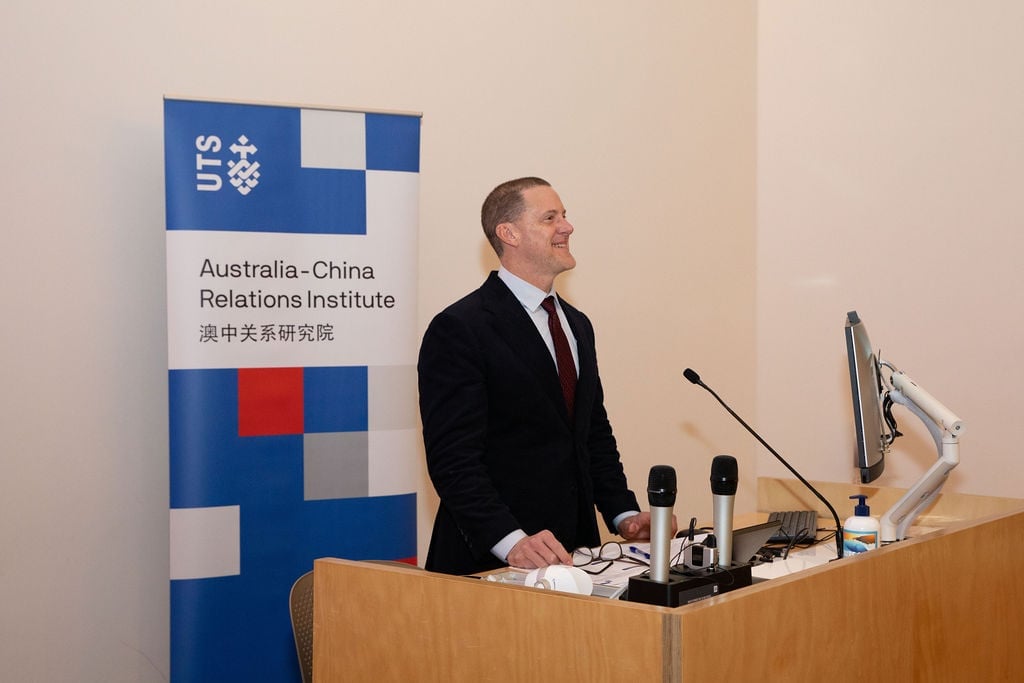
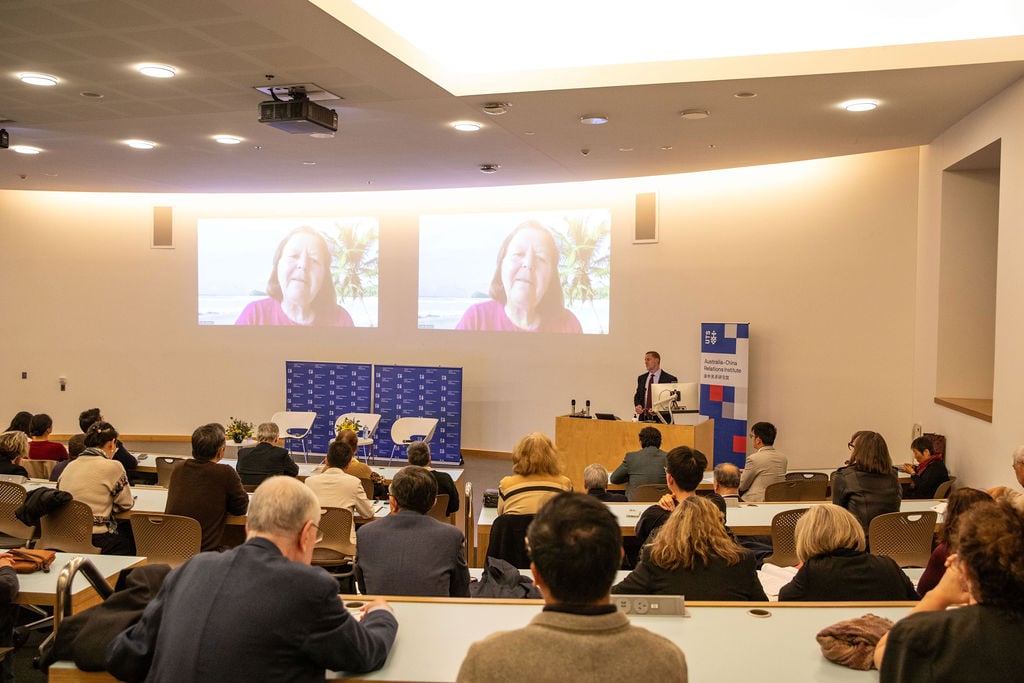
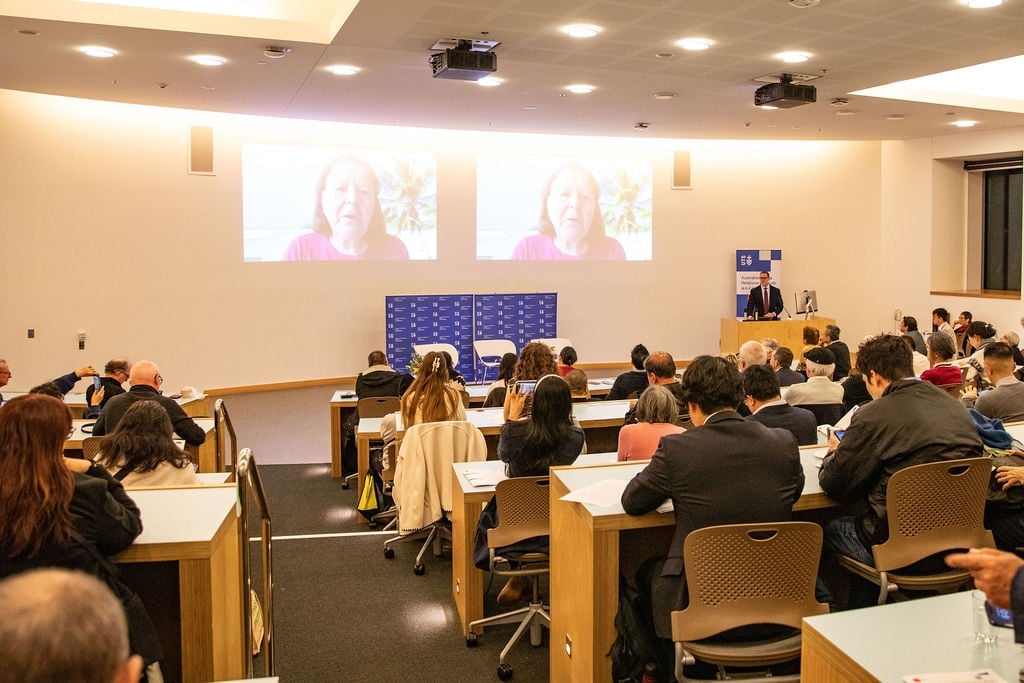
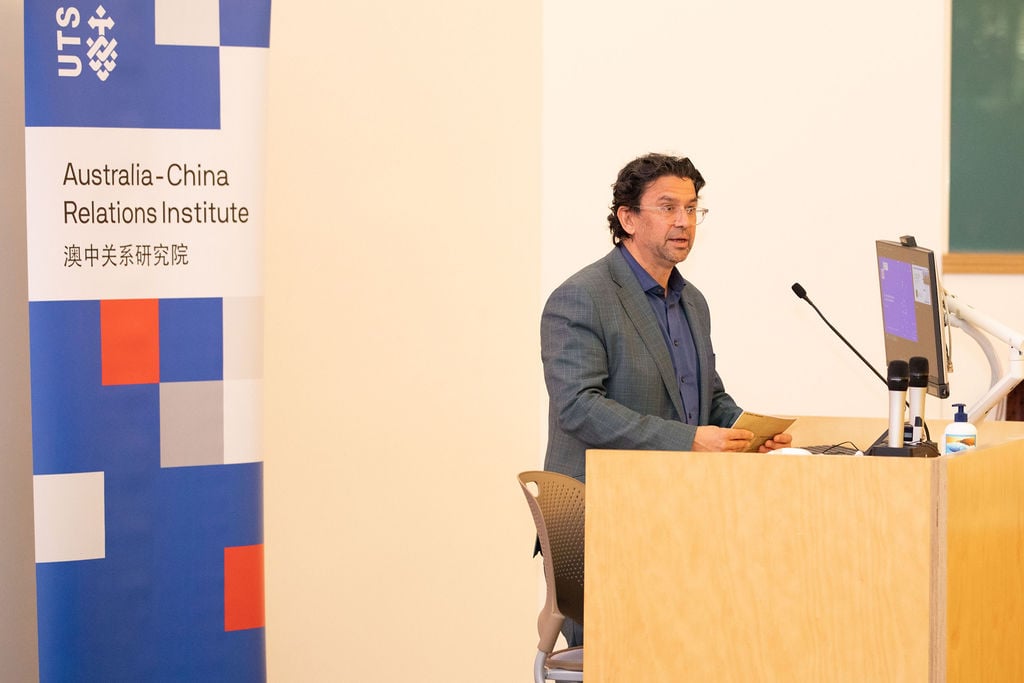
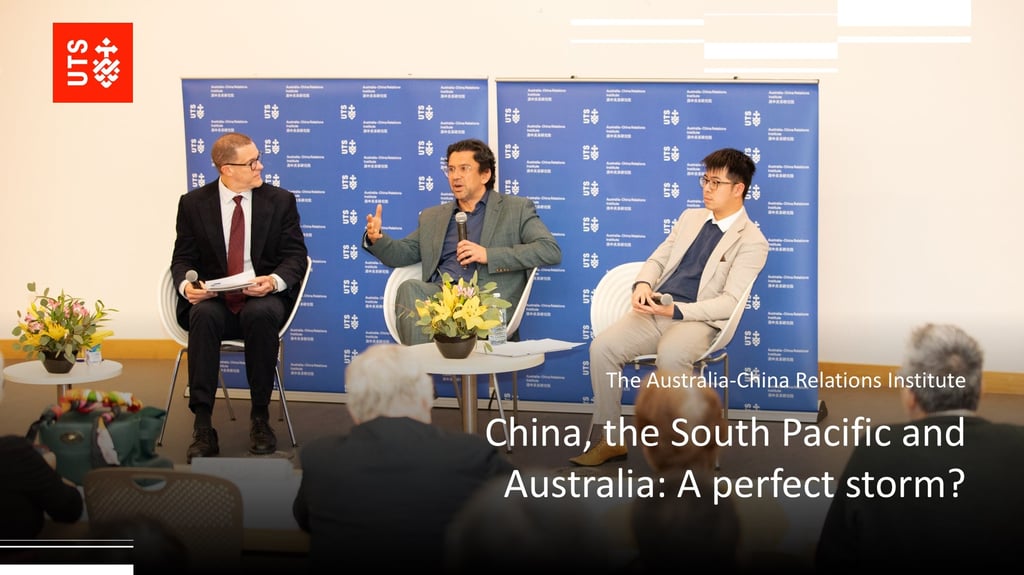
The Australia-China Relations Institute at the University of Technology Sydney (UTS:ACRI) hosted a special evening focused on Australia, the People’s Republic of China (PRC) and Pacific Island countries.

The Oceania region faces major challenges in the immediate future: global economic instability; rising geopolitical competition; and the effects of climate change threaten to create a perfect storm for these small, open and exposed societies.

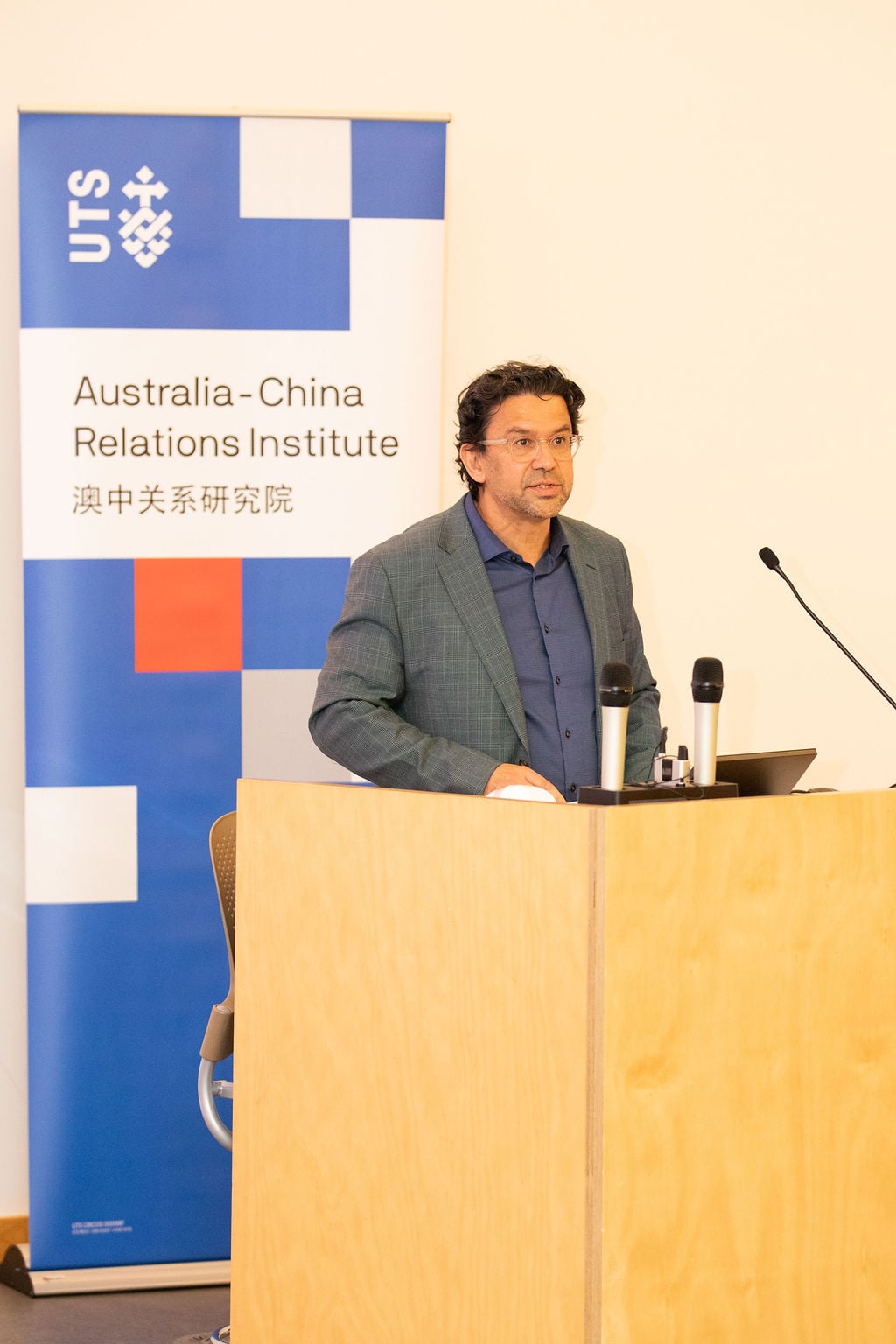
Professor Michael Wesley, Deputy Vice-Chancellor, Culture and Engagement, at Melbourne University and previously board director of China Matters, presented a keynote about the effects of the growing threats facing Pacific Island nations. He explored how these threats will affect Pacific Island states, and what may be their options for coping, including managing relations with Canberra and Beijing.

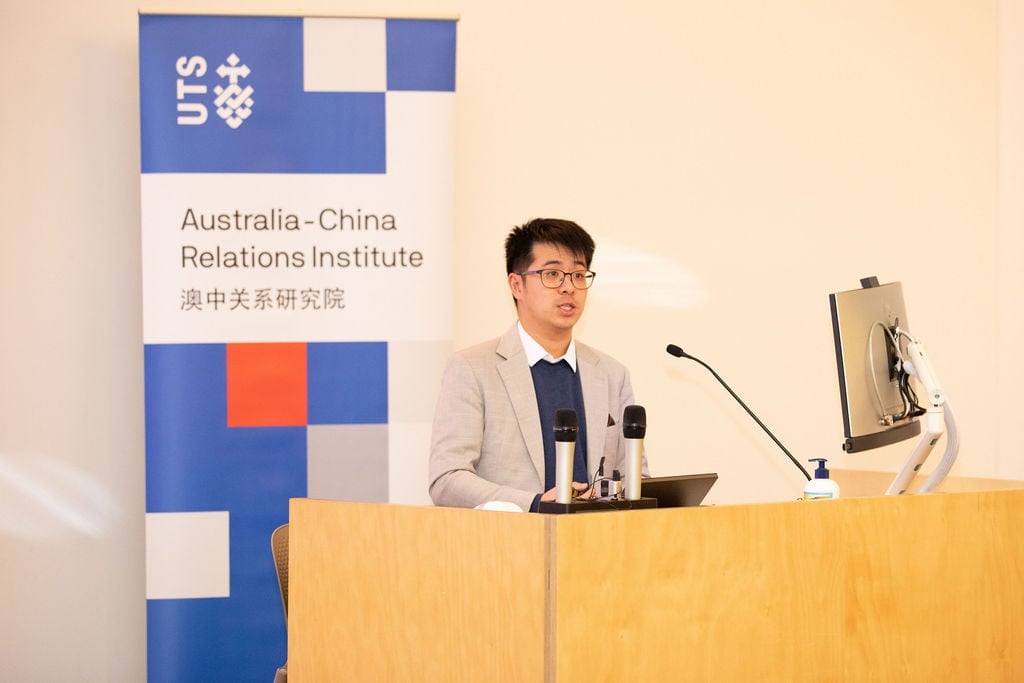
The inaugural China Matters-UTS:ACRI Fellow, Dr Edward Chan, shared key findings of his new policy research report about Beijing’s security ambitions in the South Pacific, and provided his assessment of how concerned Canberra should be. Dr Chan spent over 10 weeks in the PRC, Fiji and the Solomon Islands conducting research for this report. More about the Fellowship here.

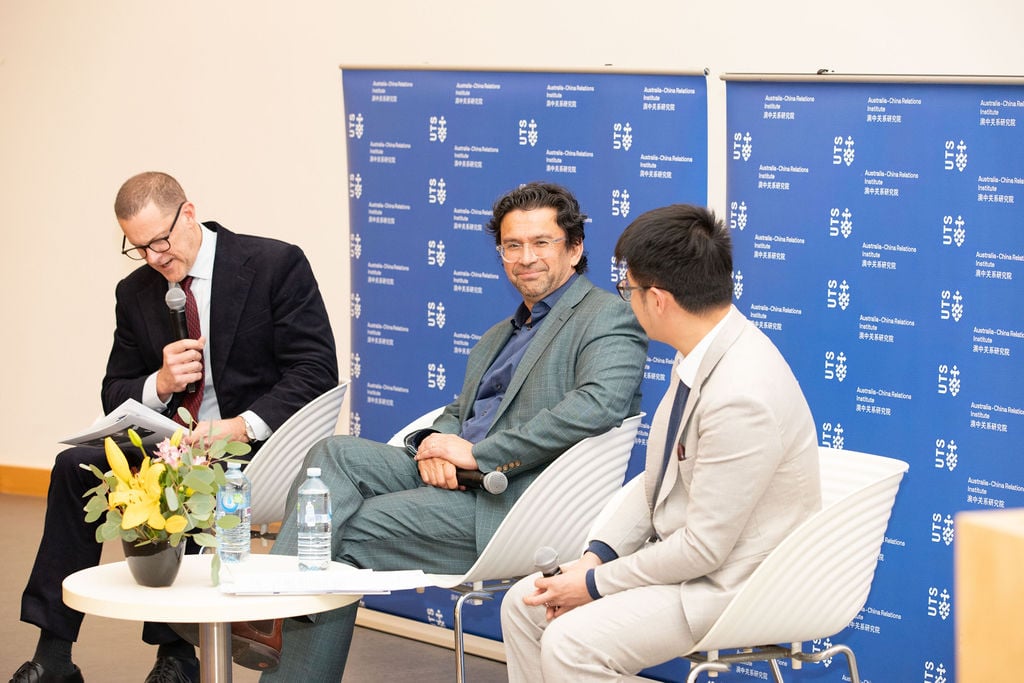
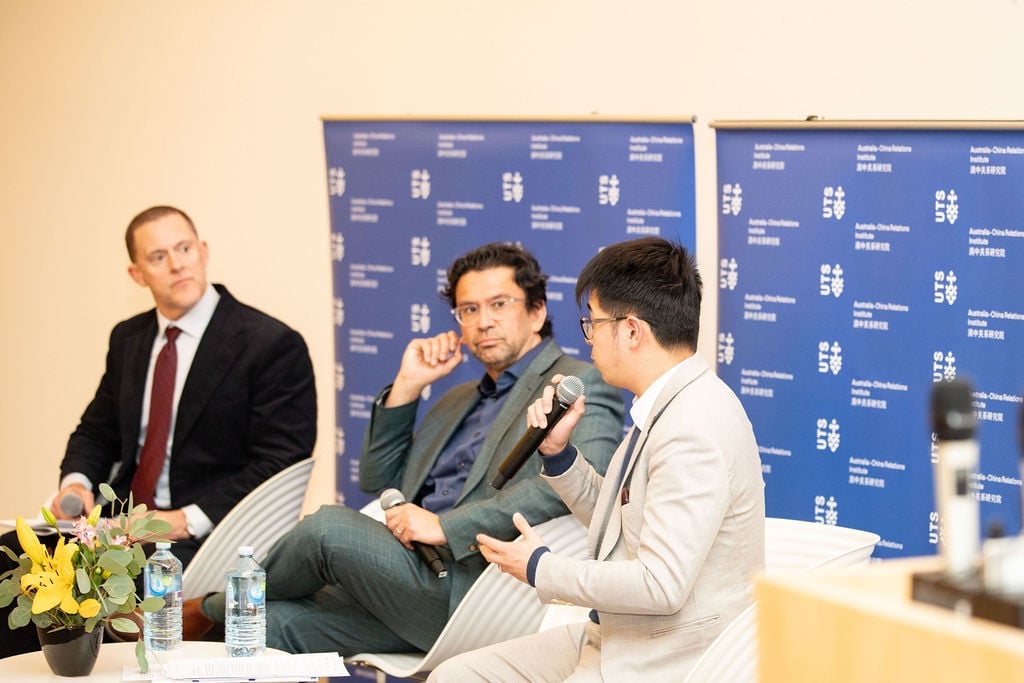
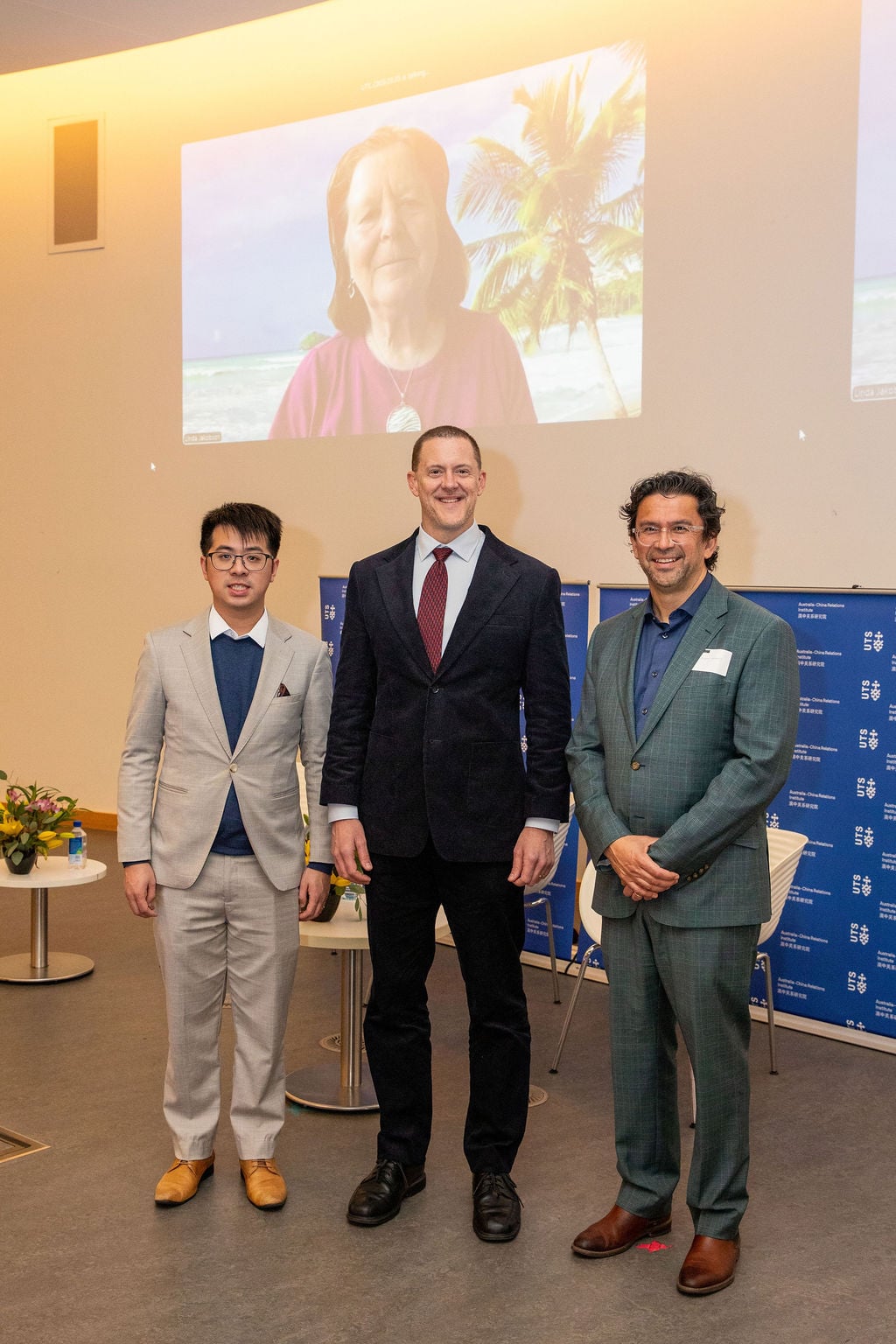
Professor James Laurenceson, UTS:ACRI Director, hosted a Q&A with both speakers. Linda Jakobson, founding director of China Matters, participated (remotely) in the discussion.

Image gallery, video, transcript and audio are available below.

About the speakers

Michael Wesley

Professor Wesley is the Deputy Vice-Chancellor (Global, Culture and Engagement) at the University of Melbourne. He is an expert in international affairs with extensive experience in international strategy and relations, and has worked in higher education, government and the private sector. He has published on Australian foreign policy, Asia’s international relations and strategic affairs, and the politics of state-building interventions.

Previously, Professor Wesley was Professor of International Affairs and Dean of the College of Asia and the Pacific at the Australian National University and the Director of the Coral Bell School of Asia Pacific Affairs at ANU. He has also held positions as the Executive Director of the Lowy Institute for International Policy, Director of the Griffith Asia Institute at Griffith University, and Assistant Director-General for Transnational Issues at the Office of National Assessments. He has a PhD in International Relations from the University of St Andrews.

Edward Chan

Dr Edward Chan is the inaugural China Matters-UTS:ACRI Fellow. He is a scholar and policy analyst specialising in China’s maritime security. He is a Postdoctoral Fellow from the Australian Centre on China in the World, the Australian National University (ANU). With expertise in international relations, Indo-Pacific security, China’s foreign policy, and maritime security, his current research focuses on China’s evolving influence in oceans governance. He is the author of China’s Maritime Security Strategy: The Evolution of a Growing Sea Power (Routledge, 2021). He is also the Associate Editor of The China Journal. 

Dr Chan’s Fellowship project is titled, 'Australia-China relations and maritime security in the South Pacific'. It aims to strengthen understanding of how Australia can effectively navigate its various maritime interests in the context of China’s rising presence in the South Pacific region, while seeking opportunities for engagement between the two countries in non-conventional security issues.

Linda Jakobson

Ms Linda Jakobson is the Founding Director and former Deputy Chair of China Matters. A Mandarin speaker, she has lived and worked in the PRC for 22 years and written five books about the PRC and East Asia. She is internationally known for her publications about the PRC’s foreign policy, cross-Strait relations, and the PRC’s Arctic ambitions. She has served as a policy advisor on China to governments in seven countries. 

About the moderator

Professor James Laurenceson 

Professor James Laurenceson is Director of the Australia-China Relations Institute at the University of Technology Sydney (UTS:ACRI). His research interests relate to the Chinese economy and the Australia-China economic and broader relationship.
YouTube thumbnail

Video

Video transcript

Note

The following is a transcript of 'China, the South Pacific and Australia: A perfect storm?', hosted by the Australia-China Relations Institute at the University of Technology Sydney (UTS:ACRI) on July 3 2025. This transcript was produced by a transcription service and may contain minor inaccuracies. It is provided for reference only.

Check against delivery

E&OE (Errors and omissions excepted)


Professor James Laurenceson:

On behalf of all those present, I'd like to begin by acknowledging the Gadigal people of the Eora Nation, upon whose ancestral lands we stand tonight. I pay respects to the Elders past and present, acknowledging them as the traditional custodians of knowledge on this land.

Welcome to all our members of the audience. We have a packed room here tonight, and I'm not surprised. Tonight is a special night for the Australia-China Relations Institute. We are launching a report, written by the inaugural China Matters-UTS:ACRI fellow, Dr Edward Chan, titled, How worried should Canberra be about China's security interests in the Pacific? A topical issue to say the least.

We're also thrilled that Professor Michael Wesley, from the University of Melbourne, is joining us tonight and has kindly agreed to deliver a keynote address. Michael, of course, is one of Australia's leading international relations scholars, and has a particular expertise in Oceania and the Pacific Islands region. He also previously served on the China Matters board of directors. And Michael, I believe in 2021 you wrote your own China Matters policy brief on how Australia should respond to PRC activities in the Pacific. So thank you for joining us tonight. Clearly, ideally placed.

Look, before going to Michael to deliver our keynote address tonight, let me begin by inviting my colleague and friend, Dr Linda Jakobson, who is joining us online tonight from Finland. Linda is the Founding Director of China Matters, to make a few remarks about the China Matters-UTS:ACRI Fellowship. Linda, I hope I'm coming through loud and clear. If I am, over to you.

Ms Linda Jakobson:

Thank you, James. 

Good evening, everyone, and a warm welcome from me as well. It's really a delight to be today launching the inaugural China Matters-UTS:ACRI fellow's report. It's been a very interesting, at times quite clearly good with Ed Chan, our inaugural fellow and my first [inaudible 00:02:26], where do you go to James and Ed. James, it's been a real pleasure working with you, collaborating with you on this fellowship. And Ed, you have been the ideal fellow; hardworking, wanting to learn, just wanting to learn more about Aus developments happening too, it's what the fellowship is all about. And I commend you, and congratulate you on this report.

I call my dear friend and colleague, fellow director of China Matters, and who brought me to Australia, thank you very much for coming tonight to give us a [inaudible 00:03:16]. I do want to also mention a few other people at UTS:ACRI, [inaudible 00:03:19], for the utmost support that you have provided for the report and [inaudible 00:03:29] behind it would not be possible, so thank you.

And lastly, thank you to our donors. This fellowship is funded with money that was left over from China Matters, [inaudible 00:03:44] by the board, but also by private citizens. And we are very grateful to support from the donors and for believing in this fellowship, what it is all about.

So just a couple of words about the fellowship. As most of you know on China Matters reaching a target in two months and diverse views on China-Australia relations, the public domain and I think the report that Ed Anderson really hits the bill and the legacy of China Matters, but it also was founded to provide work for [inaudible 00:04:30] for aspiring China students in Australia to help them on the road in their careers to do field work in China, which I feel is too important for any Chinese scholar, any policy-relevant China researcher. And so this fellowship really is about the next generation of Australia-China watchers. I don't want to take from the meaningful discussion we were going to have today, but once again, welcome everyone. And I think I'm turning over to the fourth, Michael Wesley. 

Thank you.

Professor James Laurenceson:

Thank you, Linda. 

And indeed let me invite Professor Michael Wesley to the lectern. We've not asked Michael to comment specifically on the report that we're releasing tonight, but rather we've invited him to provide some context, and his own independent assessment of the very challenging circumstances that Pacific Island countries find themselves in. Ranging from climate change to resource sustainability to geopolitical contestation and more. Michael, over to you. 

Thank you.

Professor Michael Wesley:

Well, good evening everyone. James and ACRI, thank you for inviting me to come and speak. Ed, congratulations on a great paper, and Linda, terrific to see you again. You are missed here in Australia. Finland's gain is Australia's loss.

As James said. I would like to provide a little bit of context to Ed's very good paper, but it will be more focused on Australia than on the Pacific, if that's all right. Because really Australia's interests in the Pacific, are this country's oldest, most foundational and most enduring foreign policy interests. Australia's interests in the Pacific predate its creation as a federation. And in the words of University of Sydney historian, Neville Meaney, it was Australia's interest in the Pacific that provided some of the early impetus for the federation process.

Very briefly, Australia's interests in the Pacific can be listed as four foundational principles. The first, is strategic denial, preventing hostile interests from establishing a presence in the Pacific Islands where they could be used as bases against Australia. Secondly, strategic depth, the ability for Australian forces to operate in the screen of islands to its north to prevent threats to the mainland materialising. Thirdly, Australian agency and responsibility. It has always been a goal of Australian foreign policy to be setting the key directions in the Pacific on behalf of our larger allies. And finally, fourthly, stability and benign neglect. Ensuring that the countries of the Pacific remain stable and relatively quiet in international relations.

Since the defeat of the Japanese in Southeast Asia in 1943, '44, there has been no serious external interest or involvement in the Pacific or for that matter in Maritime Southeast Asia. In fact, as I think about it, the Pacific and Maritime Southeast Asia, for Australia, form a common region and should be thought about as a common region. If you think about the way that our defense planners think about our strategic security, the ring of islands around Australia are the second ring of defense for Australia, and we've often thought of them as one line of security. This is until China arrived in the Pacific in a serious way about a decade ago. And China is the most serious challenge that Australia has faced in the Pacific since the departure of the Japanese. It is a resident power with growing strategic and economic reach.

The question is, and Ed ponders this in his paper, what does China want in the Pacific? Why is China in the Pacific? Well, there are a number of answers possible, but I would argue that China's strategy in Oceania and Southeast Asia is an integral part of its broader Pacific strategy. And what is its Pacific strategy? In a nutshell, I would argue that China seeks, eventually, to create a sphere of deference in the Asia Pacific region. To quote former Australian ambassador to China, Geoff Raby, "Whereas Russia seeks buffer states, China seeks client states."

I think, if you read and watch Chinese foreign policy and strategy, the overarching goal is to build an impression of the inevitability of Chinese power and wealth, and the general and specific benefits for all regional countries that would flow from this. And I believe, quite apart from dominant analysis, that China intends to do this without any overt hostilities. To do this anywhere in the Pacific, it must do it everywhere. And this means that its strategy in Oceania is no different from its strategy in mainland Southeast Asia or Maritime Southeast Asia. It also means China is using Oceania to work on Australia's fears and interests. It is my belief that China understands Australia's connections and imperatives in the Pacific very, very well indeed.

Now, China's role in the Pacific, in Oceania and in Southeast Asia, is and should be Australia's overriding strategic focus now and into the future. Why? Because we don't yet know what deference means, or what the consequences of resisting deference would be. The question, and the key question, is what we should do about it?

China's arrival in the Pacific has shown just how tenuous Australia's four Pacific imperatives are. China threatens our objectives of strategic denial and strategic depth. It has ended Australia's agency in the Pacific, particularly as the United States became involved in trying to counter China in the Pacific, and it's possibly turning Australia's commitment to the stability of Pacific states into a strategic liability.

China's Office of Security Partnerships are dragging Australia into commitments that it will struggle to meet in the Pacific. It could also well put Australia in direct confrontation with Chinese actors in the Pacific. Think of it as the possibility of the Mischief Reef on our doorstep and us having to do something about it.

Australia's strategy in the Pacific and Southeast Asia is best described as a sub-strategy of what could be called the American strategy of denial. It seeks to build collective resistance to Beijing's hegemony in the region, denying China the deference that it seeks. This strategy of denial requires convincing our Pacific and Southeast Asian neighbors that China is, A, bent on hegemony in the region; B, that China's hegemony would be worse than America's in the past; and C, that the best way of securing their interests is to side with the US and Australia against China. It is a strategy that either misunderstands or overlooks the interests of the Pacific and Southeast Asian states.

I believe that the countries of Oceania and Southeast Asia see the passing of the Asia-Pacific era of deep US engagement in Asia and the Pacific to the benefit of both sides of the Pacific. That world is gone in their view. They are looking to what comes next. They are seeking, I believe, the creation of an alternative framing for their development and for regional stability. And they now can see that the next strategic and economic order will have a major role for China. The question is, what role for China will the next strategic and economic order in the region be?

What they hope for is an order that gives them certainty and options at the same time. And they're different things. They differ on which they weight most heavily. Do you weight certainty ahead of options or do you weight options ahead of certainty? And I think various states in Southeast Asia and the Pacific have done this in different ways. Laos, Cambodia, perhaps Thailand, have opted for greater certainty, but fewer options by siding more heavily with China. Australia has gone for a level of certainty with fewer options by siding heavily with the United States. Some have opted to maximise options over certainty, and I would list Singapore, Solomon Islands, Malaysia, and other countries are somewhere in between.

In the Pacific, we need to understand that the name of the game is increasing the options that they have. For decades, since the end of the Second World War and the period of decolonisations, the Pacific had one set of options, Australia and New Zealand. The arrival of China has given them more options. And we need to realise that the competition in the Pacific is seen by most Pacific elites as good for their countries because it gives them sustained Australian, New Zealand, and up until President Trump US attention, while also giving them the option of the access that China's attention gives them as well. Pacific countries' problems haven't been solved anywhere near enough. And so we need to realise that the states of the Pacific have an interest in continuing the competition. They do not have an interest in following Australia in the strategy of denial against China.

We need to realise that Australia's strategy of denial in Oceania or in Southeast Asia is failing and will fail. Far from building solidarity to deny China's influence in these regions, it is actually isolating Australia from the two regions on which our security most depends. Australia's constant warnings about the danger of China come across as condescending and hypocritical to Southeast Asian and Oceania states. Moreover, Australia's close identification with and support for US grand strategy in the Pacific is a major advantage for China's messaging on South-South solidarity that is gaining such ground in the Pacific and Southeast Asia.

Donald Trump has emphatically reinforced Beijing's narratives that the West is exploitive, self-serving, hypocritical, and in decline, and that the United States is hell-bent on provoking a conflict in the Pacific that will devastate the whole region. So in conclusion, we need a radical change in how we address these challenges in the Pacific and Southeast Asia. We need a new conversation about regional futures. What sort of region do we want, and what sort of region do our neighbors want, and where do they overlap, and how do we bring this about and avoid the worst possible outcomes? Thank you.

Professor James Laurenceson:

Thank you, Michael. You said that the region, the Pacific Islands and Southeast Asia, can see the old order passing and recognise that China will play a key role in their future. And so I think in Australia, what that draws attention to is that we have an even greater need to understand Chinese and Pacific Island perspectives. And I'd particularly say that Chinese perspectives in this country are sorely lacking. However, that's exactly one of the major contributions that the China Matters-UTS ACRI fellow, Dr Edward Chan, has been spending the last year seeking to understand. Ed, let me invite you to the lectern to share the key takeaways of your report. Please welcome, Ed.

Dr Edward Chan:

So good evening, everyone. Thanks for joining us for this report launch. I mean, it's great to share my research founding over the last 12 months. It also has been a real honor to receive this fellowship and to carry out this research project. I mean, this journey has been highly rewarding, including mentorship of two highly experienced experts in the field and also the opportunities to conduct field work in China. So I want to use these opportunities to encourage other young Australians to consider applying for this fellowship. And I also want to thank others who generously agree to be interviewed for this project, including Professor Wesley. Thank you for your time to share your insights with a junior scholar. Also, a special thanks to the four external reviewers for this report. I mean, your thoughtful feedback and perspective have been highly appreciated.

This project focused on Australia-China relations in the Pacific, which is a topic I chose because both Australia and China relations and the developments in South Pacific among the most widely discussed areas of Australia's policy today. And over the two or three years, Australia has been increasingly concerned about China's expanding security footprint in the Pacific. These concerns include the potential establishment of military bases, the provision of security and police training, and also broader forms of security cooperation. And these anxieties have increased, especially after the signing of the China-Solomon Islands security agreement in 2022. And also more recently, the memorandum of understanding with the Cook Islands earlier this year. And this raised an important question to me. How concerned should Australia be about China's security interests and ambitions in the Pacific?

While there has been significant attention on trade and diplomatic engagement between Canberra and Beijing, I mean their interactions in the Pacific region remain relatively underexplored in both public debates and also in academic research. So in this paper, I focus specifically on how China's security presence is viewed from both Chinese and Pacific Islands' perspectives. So my aim is to offer a more nuanced understanding of China's role in the region, particularly inside that are often being overlooked in Australian policy and media discussion.

So to explore this question, I have spent 10 weeks in China and also following by two weeks in Fiji and the Solomon Islands. And during my trips, I conduct interviews with academics, think-tank researchers, government officials and diplomats, and try to seek understanding of how Australia and China relations in the Pacific are viewed from both China and key Pacific Island countries. In my view, their perspective are often bit overlooked in mainstream Australian media and also policy discussions. However, these are country that affect regional geopolitics and their views would be very critical to Australians on how to frame our policy in the Pacific. So this is why field work was such a vital part for this project, in many ways, the highlights of this fellowship. And therefore, again, I would strongly encourage other young Australians to apply for these very precious opportunities.

And just a quick disclaimer here. I mean, the interviews that I conduct do not claim to represent the full spectrum of views within each countries. However, they do provide some insights and diversities of perspectives that I believe can meaningfully contribute to the policy debate in Canberra. So how worried should Canberra be about China's growing security interests in the Pacific? So in this report, I argue that while China's security presence in the region is indeed growing, it should not be viewed as a military threat. While I encourage you to read my full report in your own time, let me begin by sharing some of the key highlights from my findings. So let's start with how China sees the Pacific.

So based on my interviews with Chinese scholars, many of them still see China as an outsider in the Pacific. This perception implies two things. Firstly is that there's an understanding that the region does not fall automatically within China's traditional spheres of influence. And several scholars refer to the region as Australia's backyard, and therefore, they do not believe that China really have been influential in the region. And second, the outsider perspective reflect a very limited understanding of the region. Many Chinese researchers still treat the Pacific as a single block and overlook its internal diversity. Some Chinese scholars even told me that they believe the decision on the security agreement with the Solomon Island was not really well thought by Beijing. However, this doesn't mean that China has no or limited interest in the Pacific. I mean, during my interviews, any Chinese scholars were very clear to me that the PRC would have security interests but not military ambitions.

I mean, I recall one of the round table I conducted in Shanghai, and I mentioned that China had limited strategic interest in the region. And one of the scholar in the round table just quickly corrected me that he said surely China absolutely would have strategic interest in the region. And he refers to development interests, economy interests, security interests, but not military interests. And let me say it again, security interest, not military interest. And scholars from China has made a very clear distinction between the two. Indeed, some security cooperation has already happening, but it's focused rather on non-traditional security issues. In Fiji and the Solomon Islands, for example, I was told that Chinese official has been offering training education and also exchange visits for their police and security personnel.

So what does China think about Australia's role in the Pacific? Interestingly, while Australia show very little interest in engaging with China in the region, many Chinese scholars also express a very similar view. Some see mistrust as a key barrier. I mean, they say if Australia fundamentally distrusts China, there's a little room for them to cooperate. Others suggest that it's simply more direct, more efficient for China to deal with Pacific Island countries bilaterally.

So now let's move on and talk about the Pacific Island perspective. I mean, how do they see China's security interest in the Pacific? I mean, at first, I want to emphasise that my findings should not represent the full range of views across the region. I mean, I only spent two weeks in Fiji and the Solomon Island and only spoke to a limited number of people. And, in fact, I hope to return to some of the Pacific Island countries in the future and continue to learn about their perspective on Australia and China relations. But that said, one clear takeaway, at least from my interview with Pacific Island countries officials and scholars, is that it seems that they themselves feel fully aware of China's growing presence in the region. I mean, there has been a perception in Canberra that Pacific countries tend to avoid talking about geopolitics, and therefore, we should do more to prevent them turning to China. But based on my time in Suva and Honiara, I would argue that this is a misread.

People are fully aware of China's growing presence. I was told, for example, that Chinese survey vessels have docked in Suva. And also during my visit in Fiji, in the Department of Foreign Affairs, I even crossed path with PRC embassy officials. And for some reason, we happen to exchange our business cards. And so why do Pacific Island countries still engage with China even when they understand its intention? I mean, the first reason is primary development. Over and over again, I heard that Pacific Island countries prioritise the national development and they will work with partners who can deliver on that front. I mean, in some cases, they are drawn to some of China's development rhetoric, such as the global south and development. I mean, for example, I was asked about my views about China's rural revitalisation strategies or China's eCommerce model, even I'm not an economist. I mean, they asked me about what might be required to replicate such a model in Pacific Island countries. The second reason is diversification. Pacific countries are engaging not just China, but also the US, Japan, and the others. From their perspectives, China is just one of the many sovereign partners in the multipolar world. I've been told in several occasions that they think that Australia is not in the position to tell Pacific Island countries not to talk to China, given that Australia has China as their largest trading partner.

And that said, when it comes to security cooperation, I've been told that Pacific Island countries still prefer to engage with their traditional security partners, mainly Australia and New Zealand. The reasons are quite straightforward. The relationships are more long-standing, more institutionalised and more trusted.

And interestingly, although China prefers bilateral engagement, many Pacific Island countries express a preference to work with China through regional or multilateral mechanisms. These platforms would allow them to amplify their collective voice and reinforce their own national development priorities. In this regard, I would argue that Australia has a comparative advantage as a member of the Pacific Island Forum and also a long-term partner in the region.

So in conclusion, how worried should Canberra be about China's security interests in the Pacific? To me, I think it's reasonable for Australia to be concerned about China's expanding security presence in the region. But it's also equally important not to overreact by framing China as a conventional military threat.

For both Beijing and most Pacific Island countries, military engagement remains a low priority, and therefore a more comprehensive approach to address PRC expanding security presence in the Pacific is necessary. First, Australia should continue to invest in areas where we hold comparative advantage, such as training programs, vessel maintenance, and also operational supports. And second, Australia should or may need to be more open-minded towards bilateral ministerial dialogues and occasional visit among PRC and Pacific Island countries.

This would demonstrate our respect to Pacific Island countries' sovereignty. And finally, in areas of non-traditional security, such as climate resilience, disaster response, and humanitarian assistance, Australia should carefully weight their regional needs against its own capacity. It's neither realistic nor sustainable for Australia to shoulder all security responsibilities in the Pacific.

And therefore, Australia may need to accept that Pacific Island countries will, at time, choose to work with other countries on certain non-traditional security issues. And that brings me to the end of my remarks, and I hope this report contributes a more nuanced and constructive policy debates on Australia-China relations in the Pacific. Look forward to your questions and comments. Thank you.

Professor James Laurenceson:

Thank you, Ed. Look, I'm very conscious with a packed room we're going to have a lot of questions from our audience tonight. I've got a few questions, but let me just put one to each of you and then let's go to our audience. And I'm conscious that we have Linda in the background as well who might be keen to lob her own question or two.

Michael, can I start with you? Ed's field work has suggested that perhaps we shouldn't overweight the likelihood of Australia's worst security fears being realised, that is a Chinese military base on an island off our coast. That's both because China may not accord it as high a priority as many Australian commentators seem to think. And also because Pacific Island countries, as Ed said, are cognisant of geopolitical contestation and are cautious about engaging with China in the security realm. And there's also some historical experience here.

Let me read to you, Michael, a quote from an analyst at the Australian Strategic Policy Institute, commenting in the Sydney Morning Herald in 2018 on a wharf being built in Vanuatu by a Chinese construction company. Here's the quote, "My guess is that this is a Trojan horse operation here that eventually will set up a large facility that is very modern and very well-equipped. Their hope is that the debt of the Vanuatu government will be so onerous that they can't pay it back.

"The Chinese will say the facility is ours for 99 years. And the next thing you've got a PLA, navy Luyang class destroyer docking there. Clearly, the Chinese are serious about establishing a military base in the Pacific." Well, Michael, that was eight years ago. And as far as I'm aware, nothing along those lines has happened yet. Yet we still see examples of this sort of commentary today. Why do you think that is?

Professor Michael Wesley:

Far be it for me to speculate on the motives of an ASPI analyst. But look, I agree, and I agree with Ed as well. I think that the Australian discussion of China's interest in the Pacific has become too militarised and has become fixated on bases. I agree that both from the Chinese world point of view, but also the willingness of Pacific states to agree to a military base in the Pacific, I think, is just not there.

And so I think, look, the other very unfortunate thing that's happened in Australia is that the discussion about China's role in the region has become highly politicised. And I think part of the fate of China matters reflects that politicisation. And I think one of the first things we need to do is to depoliticise it. Foreign policymaking should not become a partisan plaything. It should be very much bipartisan and it should be very rational.

Professor James Laurenceson:

Thanks, Michael. Ed, let me put a question to you, and I'll be frank. I think this is a pretty challenging question. I don't mean it to be antagonistic, but I think there'll be people in the audience who will want to know the answer to this question. And it's something like this. You talked about Chinese and Pacific Island perspectives being often overlooked in mainstream Australian policy discussions.

You added, and I'll quote you here, "They provide critical context that helps us to move beyond assumptions and see how Australia's actions are being interpreted on the ground." I think over the last decade, there's probably been a greater appreciation in Australia to listen more intently to Pacific Island voices. That's good. But tell me more about the value associated with Chinese voices.

China is, according to Canberra, the country that Australia is competing with in the Pacific. Is it simply a matter of if we understand Chinese voices more, Australia will be able to compete more effectively with China? And relatedly, what would you say to the possible criticism that in 2025, a Chinese interlocutor is not going to tell you, Ed Chan, a foreigner that China might have military ambitions? A long question. I'll stop there.

Dr Edward Chan:

Thank you, James, for giving me opportunities to clarify. The point I want to make is that it's not that the more we learn about China, the more capabilities we can compete, but instead, the more we understand China, the less we fear about the country. As Professor Wesley had pointed out, our understanding of China is still pretty limited in this country.

And regarding your question about whether Chinese scholar will tell me there's a military ambition in the region, there's two way to answer the question. Firstly, it's not just the Chinese interlocutor talk about China's unlimited military ambition, but also the Pacific Islanders that I spoke to. Let's go back to the trust question. To what extent do you trust Chinese and other Pacific Island countries? And the second one made is whether China had a very clear distinction between security presence and also military presence.

By evidence, we are not sure in longer-term, but as far as we know so far, for example, in Vanuatu, there's an airport construction. It's never turned into military bases or any military facilities. So this point out that something we always based on assumption, et cetera. And in regards to dialogues or military exchange between the PRC and Pacific Island countries, I think it's normal. Even when I spoke to former Australian diplomat, they think it's normal. So we should accept that and be open-minded on this.

Professor James Laurenceson:

Yeah, interesting. So by listening to Chinese voices, it's not just about being able to compete more effectively with China, although that might be part of the payoff, but it's also about forming more accurate assessments for Australia's own national interests.

Well, that strikes me as being a pretty sensible thing to be wanting to do. Look, Linda, I might just quickly check in on you here. Linda, don't feel like you have to lob in a question, but I do want to give you the opportunity before we go to our audience tonight.

Ms Linda Jakobson:

Thank you, James. Thank you to both Michael and Ed for the presentations. Michael, for focus on this issue of dissonance is really, really important, and also when we think about understanding China a bit more broadly. But Ed, I do have a question for you and I have a follow-up if James allows me a second one.

Ed, Michael's talk about the Pacific Island countries having interests in the continued competition between the United States and China in the Pacific. And you've touched upon this in your report and you dance around the question, but could you share perhaps any anecdotes, your own view of that statement that they do have a continued interest in the competition [inaudible 00:42:09]?

Dr Edward Chan:

Can you just repeat the question? I can't quite hear.

Professor James Laurenceson:

Linda, sorry, we just lost the audio for a brief second. So the question was for Ed to elaborate on what China's interests were in the geopolitical-

Ms Linda Jakobson:

No.

Professor James Laurenceson:

No? Give it to us one more time.

Ms Linda Jakobson:

Based on your research, Ed, and your field work, did you get the feeling that Pacific Island country interlocutors feel that they had an interest in the continuing competition between US and China?

Professor James Laurenceson:

Okay. So Pacific Island interlocutors were conscious that they had an interest in the continuing competition between the US and China?

Dr Edward Chan:

Well, because this project focused more on Australian-China relations, I didn't really touch on the US-China competition. But when I was in Honiara and Fiji, the [inaudible 00:43:19] told me that US presence in the region still has been quite limited.

For example, the US embassy in Honiara just set up since 2019, certainly because of the China's growing presence there. But to them, US is just another partner like China. So for them, Australia is always the top priorities in partnership. And then China, US, Japan maybe in the second or third tier.

Professor James Laurenceson:

Thanks, Ed. Linda, you said you had a quick follow up. Is that right?

Ms Linda Jakobson:

No, I think it's important that the audience get some questions. So I'll stop there.

Professor James Laurenceson:

Sure. Thanks. Michael.

Professor Michael Wesley:

Just a very quick point, Linda. It is no longer US-China competition in the Pacific. The United States is not there. Neither is it there in South East Asia. Australia is left alone on the field, and that's a big change in the situation that we have to acknowledge.

Professor James Laurenceson:

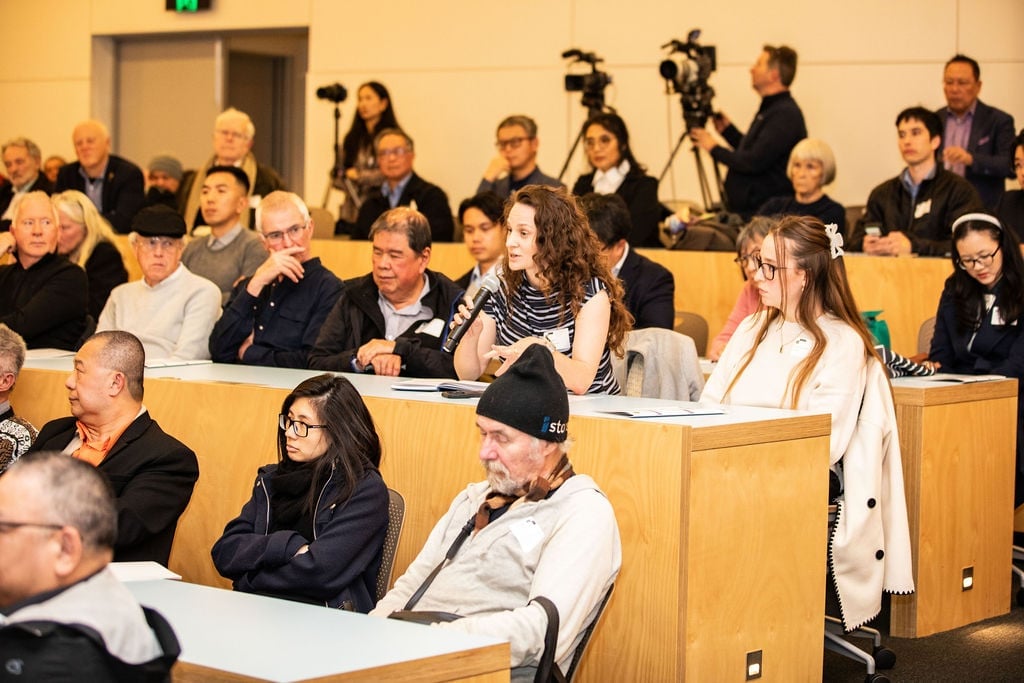
Okay. Look, let's go to our audience now. Please raise your hand. Why don't you start off by telling us your name and also if you have a relevant affiliation? Let's start from the front please.

Audience question:

Hi, I'm Janet, and I don't really have any... I'm just always fascinated by geopolitics. You mentioned, Edward, basically essentially reassuring us there's no actual panic in terms of China's current and it seems like future plans in the area. Has there been perhaps any hint in your research of perhaps any hint in your research of perhaps pursuing trilateral discussions, I guess, between Australia/New Zealand, Pacific Island nations, and China, and working more cooperatively. It seems like they're focusing on food security and perhaps resource security going forward from a commercial perspective. Thank you.

Professor James Laurenceson:

Yeah, please. That's a good question. Is there any potential for trilateral cooperation? I seem to remember your report was quite negative on that prospect, but I could be wrong, Ed.

Dr Edward Chan:

Thank you for the question. Yes, James' memory is correct. I am quite skeptical about trilateral relations. Australia and China did have trilateral cooperation in some area prior to the 2022 Solomon Islands-China security agreement, but a lot of that is paused because of that agreement. And when I spoke to China's interlocutors and also when I interviewed Australia's expert on this area, both of them are quite skeptical about the trilateral relations.

From China's side, they think that this trust is still ongoing. So they kind of say that if there's a fundamental understanding of security, I guess it's so difficult for Australia to cooperate with China. But speaking on this, I believe Australia and China is starting to have dialogues on this. So just last month, Australia had a dialogue exchange with China on matters in Pacific affairs. They exchanged views on different matters, including economics, climate change, but also security and policing. So we start seeing some sign here, but not sure how far it would go.

Professor James Laurenceson:

Yeah, that was one of the most interesting findings for me, Ed, because I wasn't surprised that Australians were skeptical about the prospects of trilateral cooperation, but your research showed that your Chinese colleagues were similarly skeptical.

And as you said, dialogues restarted, but the prospects for project cooperation might be limited. Let's go to another question. Sure. Let's go up the front first and then we'll go over to the gentleman over there. Can we just get a mic down the front? Thank you.

Audience question:

Hi, my name's Jenny. My question is to Ed. From your field studies in the Pacific, did you glean any perspectives of what the Chinese in, say, Honiara feel about the things that are happening? Because there was a long-standing agreement with Taiwan and now it's changed to China, but you've got a Chinese population there as well. Did you glean anything from your 10 days or so there?

Dr Edward Chan:

Thank you. Unfortunately, I didn't get a chance to speak to the Chinese diaspora in the region. It's kind of unfortunate. But very fortunately, I got a chance to walk into a Chinese shop in Honiara. The shop owner was from Jiangmen and then we spoke Cantonese. And I asked him why he come to Solomon Island and they say basically it's because of family business. Actually, he kind of recognised me as a Japanese because Chinese wouldn't walk along the street, only Japanese would walk along the street in Honiara. So it's quite an interesting experience. But unfortunately, I didn't ask them about their perspective on Australian relationship, which I really hope to hear about more.

Professor James Laurenceson:

Thanks, Ed. Let's go to a gentleman over at that side. If we can just get a mic over there. Yeah.

Audience question:

For me?

Professor James Laurenceson:

Yes, please.

Audience member:

Thank you to the speakers. That was terrific stuff. I especially appreciated Michael Wesley's contribution and give us this background. I'm a little bit wondering how we can get future dialogue that excludes the political dimension. But nevertheless, I had the opportunity and joy of meeting Professor Mahbubani in Singapore a couple of weeks ago and was recalling the remark that he made in one of his articles that submarines are stealthy, but trade is stealthier apropos the AUKUS agreement.

And it had reminded me of the fragmented China book that came out a few years ago talking about the degree to which China's state is pressured by a variety of different groups. And therefore, the question of Xi Jinping and his team being the dominant force just seems to be a misunderstanding. So I'm just wondering whether or not we should be putting more weight on the question of trade and economic relations before the issues of military security as a priority in our considerations. Thank you.

Professor Michael Wesley:

Thanks for the question and great to see you again. Look, yes, we should be paying a lot of attention. I would say that a really big and underappreciated element of the geopolitics that's happening in our region is regarding trade and technology. And I think those two go together.

I think one of the really key axes of competition this time between the US and China is around technology and society's adoption of particular technologies. I think the two technology ecosystems are separating and they are increasingly rivalrous. And all of the countries in the region are now making choices about which technology to take up. And these will have monumental economic and strategic consequences as well.

Professor James Laurenceson:

And, Michael, you mentioned before that the US was not present. Of course, there were probably no realm where that was more true than in the realm of economics. We've got a US that's not interested in the regional comprehensive economic partnership or the CPTPP. In contrast, China is interested in both, already a member of one.

Professor Michael Wesley:

And I would go beyond that and say that up until now, the United States has always seen its interests in Asia as highly economic. With the arrival of Trump, the US has started to see Asia as not an opportunity but as a rival and a threat. So once the United States is no longer seeing substantial economic interests in Asia, you have to question how long it will see strategic interests in Asia.

Professor James Laurenceson:

All right, that's an incisive observation. Let me just go down the front and then I'll go to next. Yeah. Please.

Audience question:

That conversation was actually a great segue to my question. My name is Helen and I just recently returned from China as trade and investment commissioner. We know from personal experience that one of the tools China likes to use to wield influence is economic. I'm very interested in both your observations, Michael and Edward, about the changes in trade and investment flows in the Pacific and to what extent is China increasingly the dominant trade partner versus Australia being the dominant trade partner, and how does that then position Australia and China in the future of the influence game? And hello, Linda, great to see you.

Professor Michael Wesley:

Me first?

Professor James Laurenceson:

Yeah.

Professor Michael Wesley:

Thanks, Helen. Great question. There is no question, China is now the dominant trading partner of most Pacific Island countries in the region as a whole. And I would also suggest that there are a lot of elites in Pacific Island countries that are now looking at China as a development model. And the rhetoric of South-South win-win cooperation is resonating very strongly the number of delegations from the Pacific that are going to China. This is the sort of stuff that we should be tracking rather than worrying about Chinese military bases.

Professor James Laurenceson:

Ed, over to you. What Michael said, both of those points showed up in your report, right? So let's hear what-

Dr Edward Chan:

I think apart from the economic dimension, I also want to mention the engagement. For example, China have been inviting some of the Pacific Island countries' officials to conferences, like deep-sea mining conference, just to let them learn about China's perspective or role in those new emerging technologies. Also, what was I going to say? I forgot an example.

Professor James Laurenceson:

That's all right. Helen, thanks for the question. I remember when there was a lot of interest, I think it was 2022, the security agreement with the Solomon Islands, right? I was looking at the trade data and Solomon Islands exports to China were 72 times that to Australia, so it's not even close. Let's go to that question just in the middle. Yeah, please, fire away.

Audience question:

Thanks very much. Morgan Spearritt, Reserve Bank of Australia. One of the issues we pay most attention to in the region is the access to banking and payment services. Dr. Chan, I'd be interested to know if you heard any perspectives on this in your field of work, either in China or in the Pacific. And Professor Wesley, you talked about the ways in which Australian strategy should shift in the region. Do you think there's any differences from the recommendations you gave more generally to banking and financial services?

Professor James Laurenceson:

Thanks. Ed, to you first, what insights did you glean into payment services in the Pacific when you were there?

Dr Edward Chan:

To be frank, it's not my research there. I just spoke to some of the locals. They're so fascinated by China's e-payment in the region, and they asked me how to set up a platform in Taobao, et cetera. But to be frank, I don't have a lot of insight on this.

Professor Michael Wesley:

I think just in general, what we need to do is understand Pacific Island countries and Southeast Asian countries' interests. And banking systems and financial systems are a big part of that. They are significantly disrupted in the current period. As I said, that old Asia-Pacific order guaranteed by the United States in which there was mutually beneficial economic interchange between the United States and Asia, that's gone. And I think there is a lot of wondering and anxiety about what comes next.

Professor James Laurenceson:

Look, does anyone have a 10-second question? And I really mean that, 10 seconds. Okay. Sorry. We'll just get on with it, right? Let's keep it nice and short and sharp.

Audience question:

Yeah, just a quick one on Pacific Islands. Their number one existential threat is climate change. Can you expand on whether China or Australia can play a role or who do they see as a trusted partner in trying to overcome that threat?

Professor James Laurenceson:

Ed, could that be an area of trilateral cooperation?

Dr Edward Chan:

Potentially, yes. As a scholar, looking forward if there's a trilateral cooperation between Australia, China, and also Pacific Island countries in some less sensitive, non-conventional, traditional security issues, especially on climate change. China has already set up a field research center with Pacific Island countries on climate change and Australia have been working quite closely with Pacific Island countries on climate change as well. So I do see a potential in this area, but unfortunately, because of the geopolitics, nothing really concrete has been coming up. But as mentioned, last month Australia and China just had a dialogue on this. So what's going happen, we will have to see.

Professor James Laurenceson:

Michael, anything to add?

Professor Michael Wesley:

Look, just very quickly, I would say, yes, I think both countries will play a role here, but one of the things we have to wonder about is Pacific Island countries' capacity to manage competing levels of assistance. And I think one of the things Australia should be doing through the Pacific Island Forum is strengthening Pacific Island countries' capacities to manage all of this assistance that's coming in.

Professor James Laurenceson:

Okay, folks, like I said, I take pride in starting on time and I also take pride in finishing on time. Linda, can I first start by thanking you for joining us from Finland? It's been great to have you with us tonight. And if you'll also join me in thanking Edward Chan and Michael Wesley. Ladies and gentlemen, thank you for coming tonight. We look forward to seeing you at future UTS:ACRI events. Thank you.

Latest News

News

More than half of respondents in a new survey said they were concerned about US interference in Australia, a jump of nearly 20 points since 2021.

News

By Elena Collinson and Paul F. Burke