


- Posted on 11 May 2026
- 2-minutes read
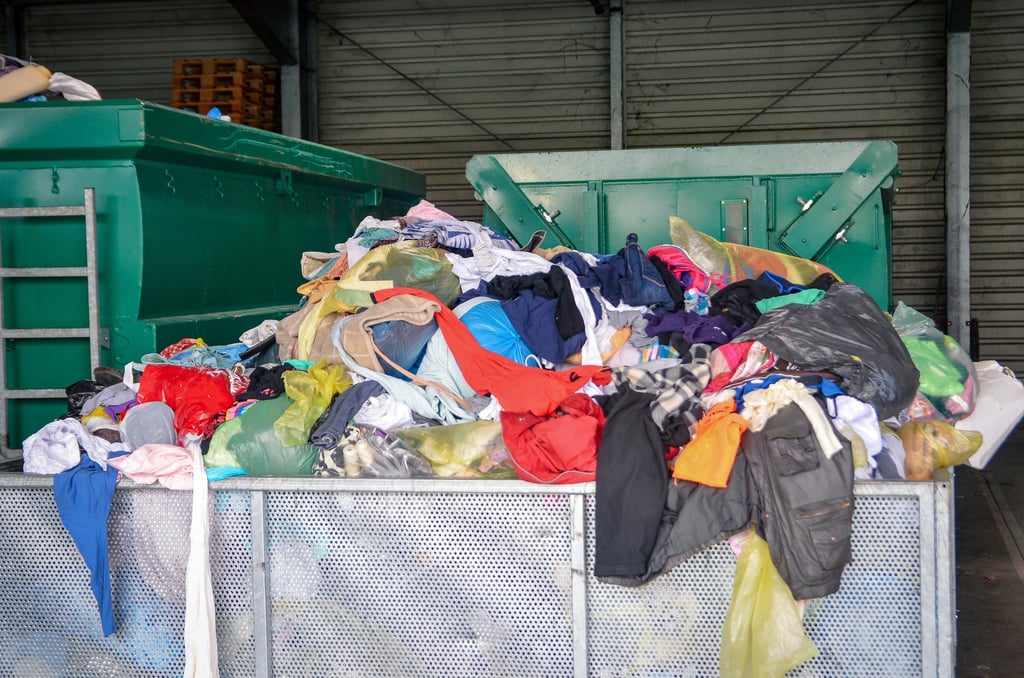
Australians discard nearly 23 kilograms of clothing per person per year—three times the global average—filling landfills with textiles that could otherwise be recovered—making it a major driver of sustainability challenges within the fashion industry.
While synthetic fibres shed microplastics and create long-term pollution, natural fibres such as cotton can be composted when designed and processed well. Yet cotton, a highly valuable fibre, is underutilised at its end of life, with much of its potential value going unrealised.
So, how might we transform cotton fibre waste into a resource that reduces emissions, supports soil health, and creates new economic opportunities?
Project overview
This project is rethinking cotton waste management and focuses on developing practical pathways for transforming cotton waste into valuable environmental and economic resources.
While cotton growers have long sought sustainable solutions, practical and commercially viable options have been limited.
This research investigates how design decisions, recycling processes and composting systems can be optimised to maximise the benefits of cotton fibre at end-of-life.
Drawing on a broad range of methods and disciplinary perspectives, the team is combining experiential and laboratory experiments that measure GHG emissions from different recycling and composting processes, field trials that assess soil-health benefits and feasibility, and economic and life-cycle analysis to evaluate cost and environmental impact.
Co-designed with industry partners across the fashion and cotton sectors, this project will deliver evidenced-based solutions that are practical, cost-effective and that are aligned with the realities of growers’ and industry—accelerating adoption and enabling genuine circularity.
By connecting design, agriculture and industry, this project is looking to unlock new ways to turn cotton waste into environmental and economic value".
Our impact
This transdisciplinary research will generate the evidence, tools and pathways needed to shift cotton waste from a costly challenge to a valuable resource—rethinking how cotton waste is managed at every stage, and it’s not just about recycling. By delivering clear guidance for low-emission processing, improved composting outcomes and economically viable reuse models, growers and industry will be equipped with practical options they can act on now, helping create real-world impact.
Integrating environmental science, agricultural innovation, and economic analysis, this research is examining design choices—including how dyes and other additives influence composting potential—to maximise environmental benefit and avoid unintended impacts.
Through analysis of alternative processing methods and business models, the project is laying the groundwork for new regional industries by pinpointing commercially scalable opportunities that support jobs and strengthen local economies.
Together, this work aims to accelerate Australia’s transition to a genuinely circular cotton sector and position Australian cotton as a global leader in sustainable fibre innovation.

TD Research and the Transdisciplinary school acknowledge the financial assistance of the Cotton Research and Development Corporation in order to undertake this research project.
Work with us
We deliver a wide range of research projects for public and private sector partners seeking research expertise and support in overcoming their complex challenges using our unique transdisciplinary (TD) methodology.
To get involved in this research project or to find out how TD Research can help you and your organisation, please email TDResearch@uts.edu.au.
Explore
Research project team

Associate Professor, Faculty of Law

Professor, Business School
Other researchers working on this project are:
- Yujie Liang, UTS Transdisciplinary School, PHD Candidate
- Hannah Pham, University of Technology, Business School
- Timo Rissanen, University of Technology, Centre of Excellence in Sustainable Fashion and Textiles
- Lisa Lake, University of Technology, Centre of Excellence in Sustainable Fashion and Textiles
- Oliver Knox
Salmon farming disclosures
We examined climate-related disclosures for Tassal, Huon and Petuna and identified four key gaps between disclosures and existing climate science and other...

Building a research legacy inside elite sport
Since 2017, the University of Technology Sydney (UTS) and the Oklahoma City Thunder, of the NBA, have worked together to better understand what drives...

MekongELEVATE Research Partnership
MekongElevate is a four-year, multi-country initiative under the Mekong–Australia Partnership that seeks to strengthen the climate resilience of marginalised...

Bioengineering Protein Nanocages into Multi-target Vaccines for Alzheimer’s Disease
Alzheimer's disease (AD) is characterised by the clumping of abnormal proteins in the brain, which increases over time and leads to worsening cognitive...
Salmon farming disclosures
We examined climate-related disclosures for Tassal, Huon and Petuna and identified four key gaps between disclosures and existing climate science and other...
Building a research legacy inside elite sport
Since 2017, the University of Technology Sydney (UTS) and the Oklahoma City Thunder, of the NBA, have worked together to better understand what drives...
MekongELEVATE Research Partnership
MekongElevate is a four-year, multi-country initiative under the Mekong–Australia Partnership that seeks to strengthen the climate resilience of marginalised...
Bioengineering Protein Nanocages into Multi-target Vaccines for Alzheimer’s Disease
Alzheimer's disease (AD) is characterised by the clumping of abnormal proteins in the brain, which increases over time and leads to worsening cognitive...