


- Posted on 19 Feb 2025
About SDG 5: Achieve gender equality and empower all women and girls
Around the world and in Australia women and girls face discrimination, violence and forced marriages. Women are denied recognition and leadership roles and many face barriers to autonomy and financial independence. Empowering women and girls benefits everyone - individuals, families, communities, and the broader society.
Affirmative employment policies and programs such as the Research Equity Initiative and Multicultural Women’s Network have helped women occupy 44.9% of academic, 63.4% of professional, and 51.2% of senior staff roles at UTS. Programs supporting female students access university and support them during their studies include the Athena Swan program, Girls in STEM and ‘Respect. Now. Always’.
Here are some examples of our work at UTS contributing towards SDG 5.
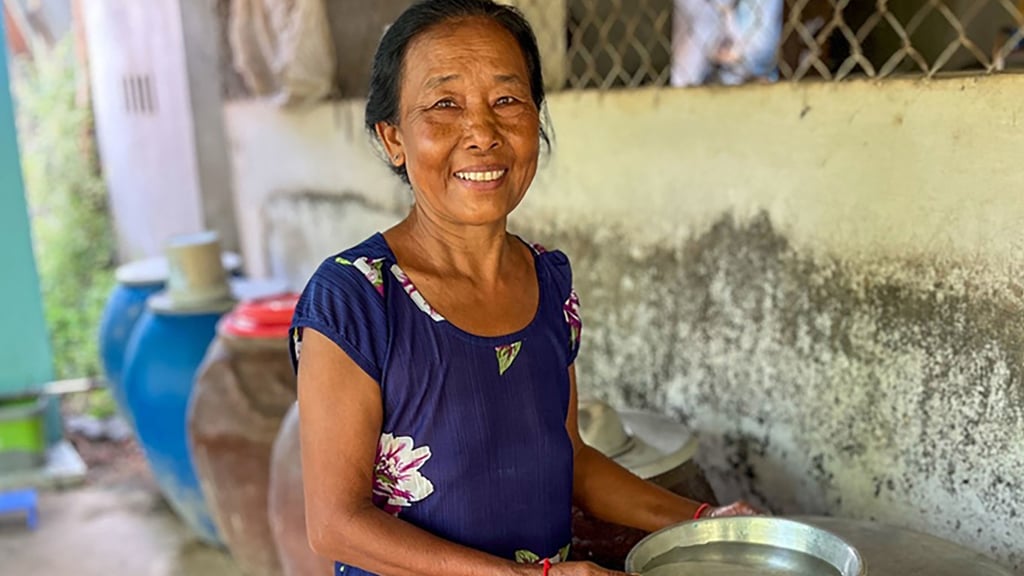
Advancing Gender Equality and Inclusion in Climate-Resilient Water and Sanitation
Transformative research partnerships driving gender equality and social inclusion in water, sanitation, and hygiene across the Asia-Pacific region.

Promoting Gender Equality in Climate Action in the Pacific
UTS researchers explored the connections between gender equality and climate action in the Pacific and identified four pathways to support ongoing progress for women and girls’ participation and leadership in climate action.

Women in Engineering and IT
Our vision is that engineering and IT study and career journeys are not limited by gender.

Forced Marriage in Australia
Forced marriage is Australia’s most reported form of modern slavery.
Our impact
Find out how UTS staff and students are contributing to the UN’s Sustainable Development Goals.
Trailblazers for the Goals
UTS has experts working towards the SDGs all over campus. The Trailblazers for the Goals are a campus-wide network of researchers and experts advancing the UN Sustainable Development Goals.
You can contact a trailblazer to discuss their work for the SDGs, or they can connect you with other experts in the space.

Prof. Angela Dawson
Faculty of Health
Angela is a leading public health social scientist specialising in maternal and reproductive health. Her work advancing SDG 5 includes delivering reproductive health services in humanitarian emergencies and developing NSW Health’s first clinical practice guidelines on obstetric care for women with female genital mutilation.