


- Posted on 5 Nov 2025
A UTS-led initiative is paving the way for a community-led literacy qualification that empowers First Nations educators and promotes self-determination.
In communities across Australia, literacy is more than a skill – it’s a gateway to self-determination, wellbeing and opportunity. Yet for many First Nations adults, that gateway remains closed. In some remote communities, up to 70% of adults have limited English literacy. Despite growing recognition of this issue, there are few pathways for First Nations people to become qualified adult literacy, numeracy and digital skills (LND) educators in their own communities.
Dr Keiko Yasukawa and Professor Gregory Martin from the University of Technology Sydney (UTS), in partnership with the Literacy for Life Foundation (LFLF), an Aboriginal controlled literacy charity led by Professor Jack Beetson, and Dr Bob Boughton, set out to change that. Supported by a UTS Social Impact Grant, the team set out to explore what a community-led LND qualification could look like – one that recognises the expertise of First Nations educators and builds a workforce for long-term change.
A missing pathway
For First Nations community members who aspire to teach LND skills, there is currently no suitable qualification pathway. Existing options – such as the Certificate IV in Training and Assessment – are not designed for community-based learning or First Nations contexts. University-level qualifications are often inaccessible, with entry requirements and teaching models that don’t reflect the lived experiences of First Nations learners.
This gap has real consequences. Without a qualified local workforce, communities must rely on external educators, often non-Indigenous, to deliver programs. This undermines the principles of self-determination and community control – principles that are central to successful adult education in First Nations communities.
‘Literacy is political,’ says Dr Yasukawa. ‘It’s not just about reading and writing – it’s about who gets to decide what knowledge matters, and who gets to teach it.’
Co-designing with community
Rather than designing a solution from the top down, the project team took a participatory action research approach. They formed a Community Reference Group (CRG) with experienced First Nations community educators, including Alera Foster and others, who had participated in LFLF’s Yes I Can! literacy campaigns. These campaigns, which have run in over 16 communities across NSW, Queensland and the Northern Territory, are built on an Aboriginal-led model that fosters trust, respect and engagement.
CRG members shared their insights, experiences and aspirations during 5 online workshops. They spoke about the skills they had developed through the campaigns – from classroom management and curriculum adaptation to community engagement and digital literacy. They also spoke about the barriers they faced: low confidence, limited access to technology, and the alienating nature of mainstream education.
‘It’s about recognising the knowledge and expertise that already exists in our communities.
‘We’ve seen incredible work from facilitators in the campaign. This project is about creating a pathway that honours that work and builds on it.’
– Dr Frances Merity, Director of Campaign Design and Development at LFLF.
What the research found
The project confirmed a strong and urgent need for a qualification that enables First Nations people to become adult LND educators in their communities. It also identified key design and pedagogical principles that should underpin such a qualification:
- Community-led and place-based: The course must reflect the needs, histories and relationships of local communities. Learning should be connected to Country and community, not delivered in isolation.
- Strengths-based: Students bring cultural capital, lived experience and practical skills. These must be recognised and embedded in the curriculum.
- Culturally safe and flexible: Support systems – including childcare, mentoring and digital literacy training – are essential. Delivery should be flexible, with part-time options and recognition of prior learning.
- Accessible and scaffolded: Clear, structured learning materials and targeted support for students with lower literacy and numeracy levels are critical to success.
The research also explored possible delivery models. While online-only delivery was seen as impractical, a block-release model – where students travel to a university or regional hub for intensive sessions – was considered feasible, provided there is funding support.
The voices behind the vision
Throughout the project, the voices of First Nations educators and campaign facilitators were central. Their reflections highlighted the transformative power of community-led education – not just for learners, but for educators themselves.
‘There’s not a lot of places where adults can come together and learn in a way that’s meaningful,’ said one CRG member. ‘Having a qualification that recognises the hard work we’ve done – that’s powerful.’
Another stakeholder, a First Nations academic, emphasised the importance of language and cultural knowledge: ‘It’s about empowering our people. Speaking your own language, knowing your students, making meaning in a meaningful way.’
Partnerships that matter
The Literacy for Life Foundation played a key role in the project, contributing deep expertise and trusted relationships with communities. Ashley Emmerton, Grants and Policy Officer at LFLF, was involved throughout the project, alongside Dr Merity and Dr Boughton.
‘This has been something we’ve wanted to do for a long time,’ said Dr Merity. ‘To take action in this space, to find a pathway that recognises the knowledge built up through the campaign – it’s exciting to see it taking shape.’
Looking ahead
While the project focused on scoping a qualification, its impact goes beyond research. It has sparked interest from government agencies, including the NSW Department of Education and the Reading Writing Hotline, and laid the groundwork for future collaboration between UTS and LFLF.
If developed, the qualification could support a new generation of First Nations educators – not only in literacy and numeracy, but across sectors like health, housing, justice and community advocacy.
Most importantly, it could help shift the narrative. From deficit to strength. From exclusion to empowerment. From education delivered to communities, to education led by them.
As one stakeholder put it: ‘It’s a wonderful proposition. It’s fundamental to Aboriginal self-determination – and to every other measurable outcome that matters.’
The problem
Many First Nations adults in remote communities face significant barriers to English literacy, with up to 70% having limited literacy skills. Despite the critical role literacy plays in self-determination and wellbeing, there are few accessible pathways for First Nations people to become qualified adult educators in literacy, numeracy, and digital skills (LND). Existing qualifications are often unsuitable or inaccessible, undermining community control and perpetuating reliance on external, often non-Indigenous, educators.
The response
Dr Keiko Yasukawa and Professor Gregory Martin from UTS, in partnership with the Literacy for Life Foundation (LFLF), initiated a participatory action research project to co-design a community-led LND qualification. They formed a Community Reference Group (CRG) of experienced First Nations educators who had worked on LFLF’s Yes I Can! campaigns. Through a series of workshops, CRG members shared their experiences, challenges, and aspirations, helping shape the vision for a culturally safe, strengths-based, and accessible qualification.
What helped accomplish this?
- Community-led co-design: The participatory approach ensured the qualification reflected lived experiences and local needs.
- Trusted partnerships: Collaboration with LFLF brought deep community relationships and campaign expertise.
- Support from UTS: A Social Impact Grant enabled the research and engagement process.
- Valuing existing knowledge: The project recognised and built upon the skills already developed by First Nations educators.
- Flexible and culturally safe design principles: These included mentoring, childcare, digital literacy support, and recognition of prior learning.
What has changed as a result?
The project has laid the foundation for a new qualification pathway and sparked interest from key stakeholders, including government agencies. It has strengthened collaboration between UTS and LFLF and highlighted the transformative potential of community-led education. If implemented, the qualification could empower First Nations educators across multiple sectors and shift the narrative from deficit to strength, exclusion to empowerment, and externally delivered education to community-led learning.
Project lead

Casual Academic, Faculty of Design and Society
This project was supported by a 2024 UTS Social Impact Grant.
Webpage
Building a research legacy inside elite sport
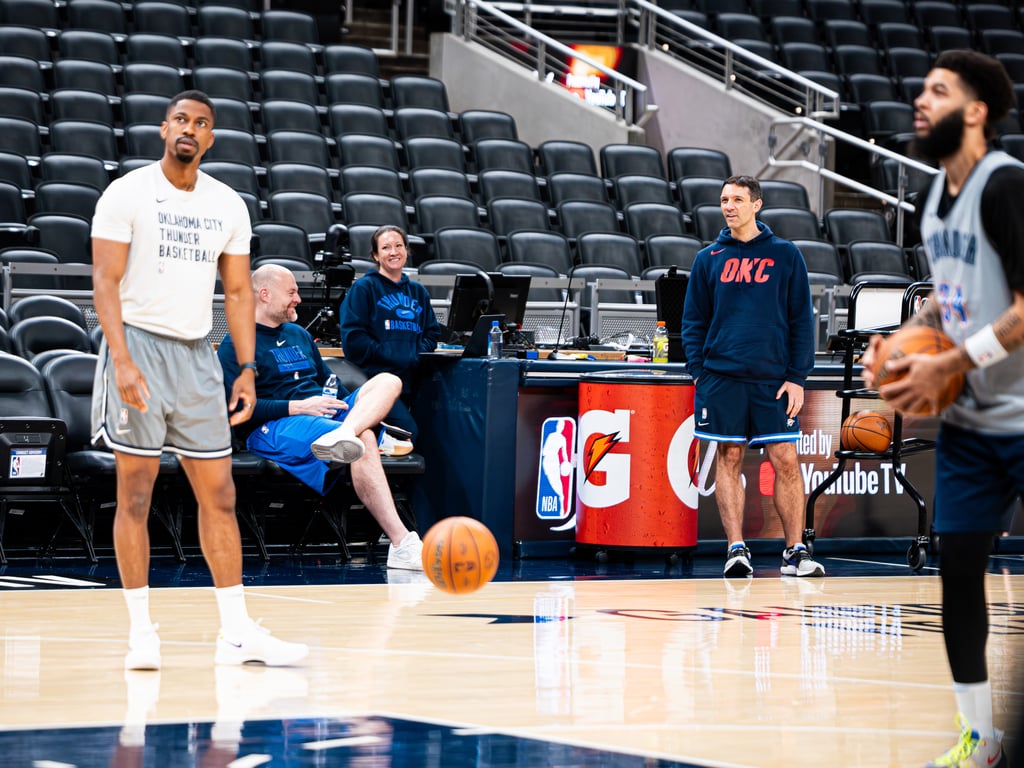
Since 2017, the University of Technology Sydney (UTS) and the Oklahoma City Thunder have worked together to better understand what drives performance,...

Webpage
What is it like to be an industry partner in a BCII School?
The program coordinator from Heart on My Sleeve gives her perspective on what it's like to be an industry partner.

Webpage
Measuring human value in the workplace with Future Friendly
Products and services impact people's wellbeing, regardless if they’re designed to or not. Future Friendly tasked a small team of Bachelor of Creative...

Webpage
How might Google shape technology for older people
Our Bachelor of Creative Intelligence and Innovation (BCII) fourth year students recently embarked on their final year 'Industry Innovation Project', with...
Webpage
Building a research legacy inside elite sport
Since 2017, the University of Technology Sydney (UTS) and the Oklahoma City Thunder have worked together to better understand what drives performance,...
Webpage
What is it like to be an industry partner in a BCII School?
The program coordinator from Heart on My Sleeve gives her perspective on what it's like to be an industry partner.
Webpage
Measuring human value in the workplace with Future Friendly
Products and services impact people's wellbeing, regardless if they’re designed to or not. Future Friendly tasked a small team of Bachelor of Creative...
Webpage
How might Google shape technology for older people
Our Bachelor of Creative Intelligence and Innovation (BCII) fourth year students recently embarked on their final year 'Industry Innovation Project', with...