

Our target
The UTS Climate Positive Plan outlines targets and initiatives to help the university reach net zero for scope 1 and 2 emissions by 2025 and become carbon neutral by 2029. This will be achieved through sourcing 100% renewable electricity, transitioning away from fossil fuel use on campus and reducing energy wastage.
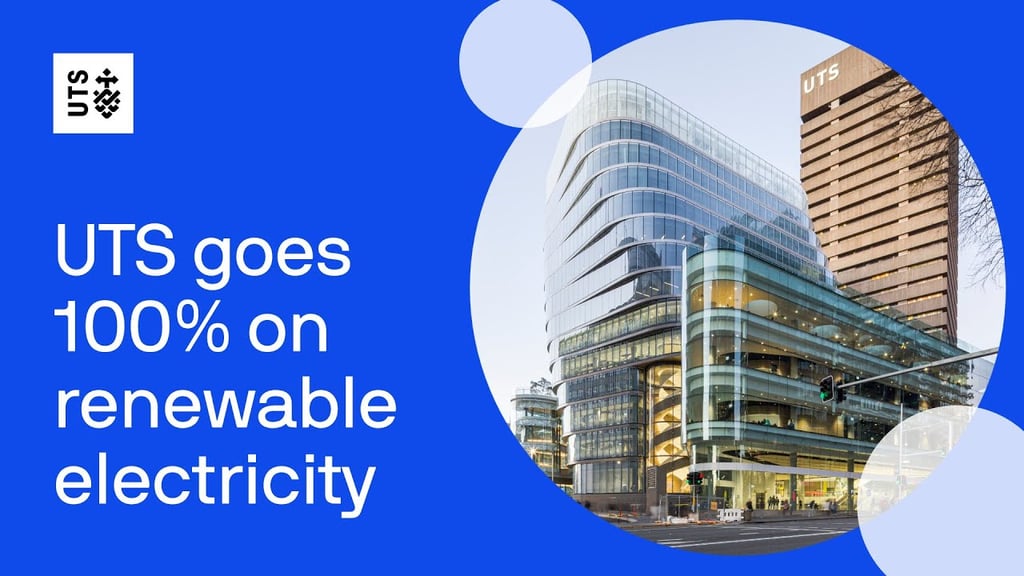
100% renewable electricity
UTS is now sourcing all of its electricity from renewable energy through onsite roof top solar panels and by entering into long term renewable electricity agreements to ensure that all of our electricity consumption is matched by equivalent renewable generation from wind and solar farms.
This means that by the end of 2025, all of UTS’s electricity will be matched to renewable sources. UTS is also investing in battery technology to even out our demand on the grid with the first of these batteries being installed in building 10. Find out more.
In 2024, 33% of our energy came from renewable sources, equating to 14,836 MWh (53,409 GJ).
Solar panels
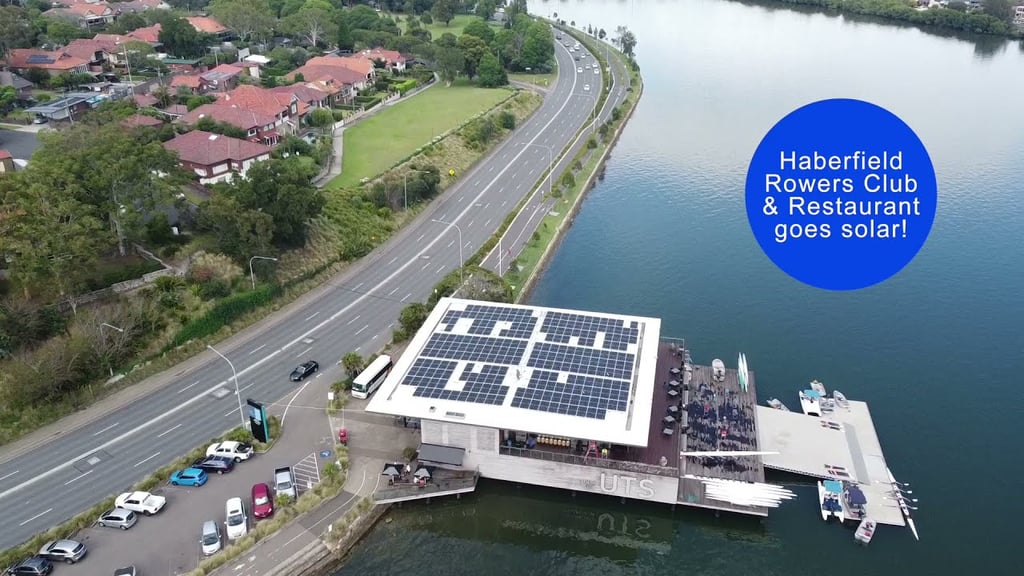
In 2014, UTS installed our first onsite solar panels. Since then, we have added more and more panels to the buildings on our main city campus, as well as off campus locations including the Haberfield Rowing Club. In 2020, UTS signed an innovative roof license agreement with the landlord of our Botany Tech Labs and we have now installed 1970 panels on this site.
So far our solar projects include:
| INSTALLATION | NUMBER OF PANELS | CAPACITY | DATE |
|---|---|---|---|
| Building 11 roof top | 72 panels | 21.6 kW | 2014 |
| Orange solar farm | 242 panels | 60 kW | Contract with Pentagon Generation, 2017 |
| Yura Mudang student housing, Building 6 | 86 panels | 28 kW | 2017 |
| Building 4 | 224 panels | 73 kW | 2017 |
| Aerial Function Centre, Building 10 | 426 panels | 127 kW | 2017 |
| UTS Rugby Australia | 240 panels | 64 kW | 2017 |
| Haberfield Rowing Club | 223 panels | 99 kW | 2020 |
| Botany Engineering Facility | 1970 panels | 782 kW | 2020-23 |
| Total capacity | 3483 panels | 1254.6 kW | 2025 |
Electrification
UTS also needs to transition away from the use of fossil fuels on campus. To achieve this, no new buildings will be connected to gas and UTS has begun electrifying space and water heating on campus to reduce our reliance on gas.
Energy efficiency
UTS monitors our energy usage with a network of meters across individual floors in all buildings to identify faults and energy leakage in real time. We conduct quarterly reviews to continually improve energy efficiency.
In addition, UTS conducts fortnightly building optimisation meetings between the Facilities Management, Engineering and Sustainability teams to coordinate energy efficiency projects. Some of the key projects currently being undertaken to identify and reduce energy wastage include:
- We are working with our internal AI team and external building analytics platforms to predict when a building's peak electricity demand is likely to occur. Preventative actions are then undertaken such as pre-cooling buildings during periods of low demand, reducing UTS's peak demand and energy spend. This also reduces the strain on the electricity grid shifting demand to periods to when the grid is being predominantly supplied by renewables;
- Multiple Building Management System (BMS) optimisation projects are currently underway such as using BMS analytics to suggest corrective actions that can reduce energy wastage.
- A master plan has been commissioned to electrify all fossil fuels used for domestic hot water and space heating on campus. This will eliminate the use of fossil fuels being burnt and heat water much more efficiently.
- Building audits have been conducted to identify opportunities for LED upgrades. These upgrades as well as optimising lighting control strategies are currently being rolled out across campus. UTS has a plan to improve energy efficiency and reduce consumption.
The comprehensive UTS Design Guidelines help ensure all renovations and new buildings continually improve energy efficiency standards across the campus.
In 2021 we achieved our target to reduce green house gas emissions by 30% based on 2007 levels. See more details here.
What you can do
- Turn off computers and monitors at the end of the day or when not in use
- Choose natural light as much as possible, only turn on lights when necessary
- Switch off lights as you leave empty rooms
- Take the stairs instead of the lift
- Choose CFL and LED bulbs for desk lamps
- Turn off all machinery and lab or kitchen equipment when not in use
- Don’t boil an entire kettle for one cup
- Report faulty lighting and equipment by emailing maintenance.request@uts.edu.au
- Spread the word to friends and colleagues about not wasting energy.
More energy saving tips
Refer to the following useful links for more advice and information on energy savings.
Your Home
Your Home is an award guide, published by ISF in collaboration with the Commonwealth Government and provides lots of great advice on sustainable housing to householders and building professionals including energy use
Department of Climate Change, Energy, the Environment and Water
Provides information about climate change initiatives in Australia and actions you can take to reduce your greenhouse gas emissions
Energy advice for households
Provides information on how to save energy, reduce your energy bills and make your home more comfortable