

  • University of Technology Sydney home
  • Home

    Home
  • For students

  • For industry

  • Research

Explore

  • Courses
  • Events
  • News
  • Stories
  • People

For you

  • Libraryarrow_right_alt
  • Staffarrow_right_alt
  • Alumniarrow_right_alt
  • Current studentsarrow_right_alt
  • Study at UTS

    • arrow_right_alt Find a course
    • arrow_right_alt Course areas
    • arrow_right_alt Undergraduate students
    • arrow_right_alt Postgraduate students
    • arrow_right_alt Research Masters and PhD
    • arrow_right_alt Online study and short courses
  • Student information

    • arrow_right_alt Current students
    • arrow_right_alt New UTS students
    • arrow_right_alt Graduates (Alumni)
    • arrow_right_alt High school students
    • arrow_right_alt Indigenous students
    • arrow_right_alt International students
  • Admissions

    • arrow_right_alt How to apply
    • arrow_right_alt Entry pathways
    • arrow_right_alt Eligibility
arrow_right_altVisit our hub for students

For you

  • Libraryarrow_right_alt
  • Staffarrow_right_alt
  • Alumniarrow_right_alt
  • Current studentsarrow_right_alt

POPULAR LINKS

  • Apply for a coursearrow_right_alt
  • Current studentsarrow_right_alt
  • Scholarshipsarrow_right_alt
  • Featured industries

    • arrow_right_alt Agriculture and food
    • arrow_right_alt Defence and space
    • arrow_right_alt Energy and transport
    • arrow_right_alt Government and policy
    • arrow_right_alt Health and medical
    • arrow_right_alt Corporate training
  • Explore

    • arrow_right_alt Tech Central
    • arrow_right_alt Case studies
    • arrow_right_alt Research
arrow_right_altVisit our hub for industry

For you

  • Libraryarrow_right_alt
  • Staffarrow_right_alt
  • Alumniarrow_right_alt
  • Current studentsarrow_right_alt

POPULAR LINKS

  • Find a UTS expertarrow_right_alt
  • Partner with usarrow_right_alt
  • Explore

    • arrow_right_alt Explore our research
    • arrow_right_alt Research centres and institutes
    • arrow_right_alt Graduate research
    • arrow_right_alt Research partnerships
arrow_right_altVisit our hub for research

For you

  • Libraryarrow_right_alt
  • Staffarrow_right_alt
  • Alumniarrow_right_alt
  • Current studentsarrow_right_alt

POPULAR LINKS

  • Find a UTS expertarrow_right_alt
  • Research centres and institutesarrow_right_alt
  • University of Technology Sydney home
University of Technology Sydney home University of Technology Sydney home
  1. ... About UTS
  2. ... Information on Faculties...
  3. ... Graduate School of Healt...
  4. Genetic Counselling
  5. Genetic Counselling research

Genetic Counselling research

explore
  • Genetic Counselling research
    • arrow_forward Current projects

Research areas in the UTS Graduate School of Health Genetic Counselling team

Get in touch
+61-2-9514-1448
FOH.HDR.Enquiry@uts.edu.au
or see all contact details

Health research is an area of strength in UTS’s research strategy. The strategy is underpinned by a significant five-year investment and has a focus on collaborative and interdisciplinary research; innovative technological approaches; commitment to researcher development and strengthening the relationship between research and teaching and learning.

Our aim at UTS Genetic Counselling is to build on the evidence base of our young profession through conducting high quality research relevant to all those involved with, or affected by, issues concerning genetics and genomics.  Our research includes clients, families, communities, the public, health professionals from all disciplines, industry and policy makers. 

Our genetic counselling research is characterised by expertise in diverse methodologies (e.g. qualitative research, survey/scale development, systematic and scoping reviews), conceptual and theoretical research. We use rigorous research designs and gold-standard methods to generate evidence that informs practice and policy. 

Through our research, we recognise the importance of our evolving professional identity. Our research focuses on understanding the role of genetic counsellors and practice of genetic counselling in different healthcare settings and the impact of new technologies. Additionally, our genetic counselling research places a strong emphasis on diversity, inclusivity, and access, whilst understanding and addressing access disparities for underrepresented populations. 

Our genetic counselling research also informs teaching, with the latest research findings being integrated into genetic counselling curricula. Across all areas, we are passionate about translating research findings into practice and inspiring students to be future leaders in the clinic and in research.

Research degrees

Interested in undertaking a Master of Genetic Counselling (Research) or a PhD?

Find out about higher degree research training in the area of genetic counselling:

Master of Genetic Counselling (Research)

Doctor of Philosophy (Genetic Counselling)

Supervisors

The following supervisors are open to receiving expressions of interest:

Erin TurbittDecision making, child health, neurodevelopmental conditions, qualitative and quantitative research methods, co-design
Alison McEwenEducation, training and certification of genetic counsellors, diversity and inclusion, co-design and participatory methodologies
Lisa DiveBioethics, reproductive genetic testing, population genetic screening, public health ethics.
Lucinda FreemanEthical and social dimensions of reproductive genetic carrier screening, genetic counselling models of care, integration of genetic counselling into healthcare systems
Stephanie WhiteMainstreaming genomics, implementation science, family communication, palliative care, mixed methods

Recently completed student research projects

Genetic information for families of the terminally ill: Developing evidence for a palliative care intervention using mixed-methods (The GIFT project)

Stephanie White’s PhD project aimed to describe the barriers and facilitators to, and propose actions to optimise, integration of genetics and genomics into the routine care of palliative care recipients and their families. A systematic review of the barriers and facilitators faced by nurses and physicians across a variety of specialties was followed by a program of qualitative and quantitative studies. Stephanie was supervised by Professor Jane Phillips, Director of IMPACCT, and Dr Chris Jacobs, senior lecturer in genetic counselling.

This project was funded by a Translational Cancer Research Network PhD Scholarship Top-up award, supported by the Cancer Institute NSW. Further information about the project can be found at the TCRN website.

Genetic counselling for inherited MND and FTD

Ashley Crook aimed to identify and explore the barriers and facilitators to genetic counselling for motor neurone disease (MND) and frontotemporal dementia (FTD) from a patient and provider perspective. From this, she proposed a new model of genetic counselling service delivery that facilitates informed decision-making, promotes adjustment to a diagnosis of familial MND and FTD and, provides patients and families with consistent, evidence-based care. 

The Core Outcome DEvelopment for Carrier Screening (CODECS) Study

The CODECS study, led by Ebony Richardson, aimed to improve our understanding of patient outcomes following genetic testing. Reproductive carrier screening was used as a paradigm to develop the first example of a core outcome set (COS) for evaluation of the effectiveness of a genetic test. A COS represents the minimum set of outcomes that should be measured and reported in all studies on a particular topic, and the development process entails a rigorous approach to ensuring that outcomes of research are relevant to all key stakeholders, including patients. The goal of a COS is to facilitate high quality, reproducible research in its target field that ultimately can be used to inform practice guidelines and policy.

More information can be found at COMET Initiative. 

Current higher degree research student projects

The Philosophy of Genetic Counselling

Chinmayee B Nagaraj is planning to explore and describe the philosophy of the genetic counselling profession. Genetic counselling is a relatively young and rapidly growing profession with an evolving niche within healthcare. A deliberate and robust interrogation of its philosophical foundations will help the profession with its identity and advance the profession globally with better clarity. To begin with, Chinmayee is working on a scoping review to assess the values of the profession and the purpose of the practice. Her next studies will be shaped based on her findings from the review. 

Implementation of Non-Invasive Prenatal Testing (NIPT) for prenatal aneuploidy screening in Thailand

Rapphon Sawaddisan's PhD project aims to investigate the implementation of non-invasive prenatal testing (NIPT) in Thailand. The thesis begins with an examination of the overall situation, including the enablers and barriers to the implementation of prenatal aneuploidy screening in South-East Asian countries. It will then delve into the current situation, as well as the knowledge and attitudes of both Thai healthcare providers and parents towards prenatal aneuploidy screening and NIPT. Finally, the project will propose interventions to facilitate the implementation of NIPT and address the associated challenges. 

Adolescents and young adults with genetic neurodevelopmental conditions: Strengths-based discussions and transition from paediatric to adult care

Yasmin Cathcart-King’s project aims to understand how positive psychology can be implemented to support young people with genetic neurodevelopmental conditions like Down syndrome, Austism Spectrum Disorder, and intellectual disability, transition from child to adult healthcare services. This project is starting with a systematic review of current knowledge on communicating and information sharing between healthcare professionals which is used to prepare for the transition. After which, the views and experiences of young people within the Australian context will be explored through interviews to identify common themes associated with this cohort. Finally, the results of the previous studies will be used to scaffold journal entry prompts for a two-year longitudinal study following young people through the transition. The depth of understanding gained from these studies is expected to guide us in the appropriate implementation of positive psychology while developing resources for young people with genetic neurodevelopmental conditions to support their transition from child to adult healthcare services.

Prospective student research projects

We invite expressions of interest for Master of Genetic Counselling (Research) or PhD students in the following topic areas:

  • Parent decision making for inherited conditions: investigating how parents make decisions on behalf of their child in families living with genetic conditions
  • Improving diversity in genomics research: investigating how individuals from diverse backgrounds and those living with disabilities can be better supported to participate in genomics research
  • Neurodevelopmental conditions and genomics: investigating how genomics can impact diagnosis, care and treatment for individuals with neurodevelopmental conditions

Students will have the opportunity to work across disciplines and learn a range of methods including:

  • Mixed methods
  • Qualitative interviews and focus groups
  • Quantitative survey design and analysis
  • Scale development
  • Best-worst scaling
  • Dyadic analysis
  • Moderation analysis

Make an online enquiry

For research or supervision enquiries
Email FOH.HDR.Enquiry@uts.edu.au

For research scholarship enquiries
Graduate School of Research Student Support Office 
Phone: +61 2 9514 1336

Scholarships

The Graduate School of Health offers a range of competitive scholarships to support outstanding research students who are seeking to undertake a PhD.

Scholarship info

Work with us
We welcome expressions of interest from enthusiastic researchers at all career stages.
Email FOH.HDR.Enquiry@uts.edu.au to make a confidential enquiry.

Meet some of our researchers

  • Decision-making matters

    Lecturer Erin Turbitt aims to understand how parents make challenging decisions about their child's health.
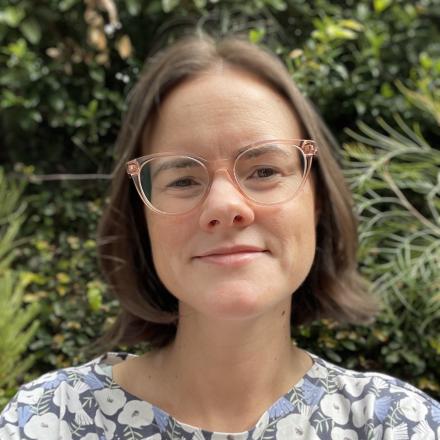
    Photo of Dr Turbitt
  • Navigating ethics in Genetic Counselling

    Analytic philosopher Dr Lisa Dive delves into the ethical minefield of Genetic Counselling.

    Photo of Dr Dive

Acknowledgement of Country

UTS acknowledges the Gadigal people of the Eora Nation, the Boorooberongal people of the Dharug Nation, the Bidiagal people and the Gamaygal people upon whose ancestral lands our university stands. We would also like to pay respect to the Elders both past and present, acknowledging them as the traditional custodians of knowledge for these lands.

University of Technology Sydney

City Campus

15 Broadway, Ultimo, NSW 2007

Get in touch with UTS

Follow us

  • Instagram
  • LinkedIn
  • YouTube
  • TikTok
  • Facebook
  • WeChat

A member of

  • Australian Technology Network
Use arrow keys to navigate within each column of links. Press Tab to move between columns.

Study

  • Find a course
  • Undergraduate
  • Postgraduate
  • How to apply
  • Scholarships and prizes
  • International students
  • Campus maps
  • Accommodation

Engage

  • Find an expert
  • Industry
  • News
  • Events
  • Experience UTS
  • Research
  • Stories
  • Alumni

About

  • Who we are
  • Faculties
  • Learning and teaching
  • Sustainability
  • Initiatives
  • Equity, diversity and inclusion
  • Campus and locations
  • Awards and rankings
  • Leadership and governance

Staff and students

  • Current students
  • Help and support
  • Library
  • Policies
  • StaffConnect
  • Working at UTS
  • UTS Handbook
  • Contact us
  • Copyright © 2025
  • ABN: 77 257 686 961
  • CRICOS provider number: 00099F
  • TEQSA provider number: PRV12060
  • TEQSA category: Australian University
  • Privacy
  • Copyright
  • Disclaimer
  • Accessibility