

  • University of Technology Sydney home
  • Home

    Home
  • For students

  • For industry

  • Research

Explore

  • Courses
  • Events
  • News
  • Stories
  • People

For you

  • Libraryarrow_right_alt
  • Staffarrow_right_alt
  • Alumniarrow_right_alt
  • Current studentsarrow_right_alt
  • Study at UTS

    • arrow_right_alt Find a course
    • arrow_right_alt Course areas
    • arrow_right_alt Undergraduate students
    • arrow_right_alt Postgraduate students
    • arrow_right_alt Research Masters and PhD
    • arrow_right_alt Online study and short courses
  • Student information

    • arrow_right_alt Current students
    • arrow_right_alt New UTS students
    • arrow_right_alt Graduates (Alumni)
    • arrow_right_alt High school students
    • arrow_right_alt Indigenous students
    • arrow_right_alt International students
  • Admissions

    • arrow_right_alt How to apply
    • arrow_right_alt Entry pathways
    • arrow_right_alt Eligibility
arrow_right_altVisit our hub for students

For you

  • Libraryarrow_right_alt
  • Staffarrow_right_alt
  • Alumniarrow_right_alt
  • Current studentsarrow_right_alt

POPULAR LINKS

  • Apply for a coursearrow_right_alt
  • Current studentsarrow_right_alt
  • Scholarshipsarrow_right_alt
  • Featured industries

    • arrow_right_alt Agriculture and food
    • arrow_right_alt Defence and space
    • arrow_right_alt Energy and transport
    • arrow_right_alt Government and policy
    • arrow_right_alt Health and medical
    • arrow_right_alt Corporate training
  • Explore

    • arrow_right_alt Tech Central
    • arrow_right_alt Case studies
    • arrow_right_alt Research
arrow_right_altVisit our hub for industry

For you

  • Libraryarrow_right_alt
  • Staffarrow_right_alt
  • Alumniarrow_right_alt
  • Current studentsarrow_right_alt

POPULAR LINKS

  • Find a UTS expertarrow_right_alt
  • Partner with usarrow_right_alt
  • Explore

    • arrow_right_alt Explore our research
    • arrow_right_alt Research centres and institutes
    • arrow_right_alt Graduate research
    • arrow_right_alt Research partnerships
arrow_right_altVisit our hub for research

For you

  • Libraryarrow_right_alt
  • Staffarrow_right_alt
  • Alumniarrow_right_alt
  • Current studentsarrow_right_alt

POPULAR LINKS

  • Find a UTS expertarrow_right_alt
  • Research centres and institutesarrow_right_alt
  • University of Technology Sydney home
University of Technology Sydney home University of Technology Sydney home
  1. ... About UTS
  2. ... Information on Faculties...
  3. ... Faculty of Health
  4. ... School of Public Health
  5. Indigenous health resour...
  6. Faculty of Health’s graduate attribute

Faculty of Health’s graduate attribute

explore
  • Indigenous health resources
    • arrow_forward Art Gallery
    • Essential understandings
      • arrow_forward Colonisation, racism and chronic disease
      • arrow_forward Health, social and emotional wellbeing
      • arrow_forward Heterogeneity of Indigenous Australians
      • arrow_forward Indigenous ways of knowing, being and doing
      • arrow_forward Resilience, survival and thriving
      • arrow_forward Social justice
      • arrow_forward Spirituality
      • arrow_forward Transgenerational trauma
    • arrow_forward Faculty of Health’s graduate attribute
    • Resources
      • arrow_forward Colonisation, racism and chronic disease
      • arrow_forward Health, social and emotional wellbeing
      • arrow_forward Heterogeneity of Indigenous Australians
      • arrow_forward Indigenous ways of knowing, being and doing
      • arrow_forward Resilience, survival and thriving
      • arrow_forward Social justice
      • arrow_forward Spirituality
      • arrow_forward Transgenerational trauma
    • arrow_forward Teaching and learning strategies
    • arrow_forward UTS Policy Framework

Supporting all staff and students to develop important Indigenous cultural understanding.
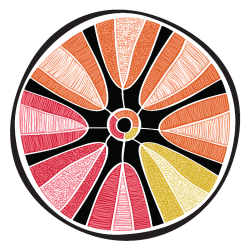
Indigenous artwork by Lucy Simpson

Artwork by Lucy Simpson, Gaawaa Miyay Designs, gaawaamiyay.co.

The Faculty of Health considers Aboriginal and Torres Strait Islander Peoples’ health to be everybody’s business, and acknowledges that ongoing colonisation and racism are vital determinants impacting on the health of Indigenous peoples.

We are therefore committed to supporting all staff and students to develop new knowledge and skills that will enable meaningful engagement with Indigenous peoples, communities and their organisations.

Indigenous Cultural Respect

Graduates have professional cultural capability which contributes to the health and wellbeing of Indigenous Australians, inclusive of physical, social, emotional and spiritual wellness.

Course Intended Learning Outcomes

On completion of their courses graduates will be able to:

  1. Demonstrate respect and value for world view differences and in particular Australian Indigenous ways of knowing, being and doing
  2. Critically reflect upon the impact of ongoing colonisation and its perverse discourse on Indigenous Australians and their health and wellbeing
  3. Recognise the diversity of Indigenous Australians and integrate this knowledge into practice

Process for developing the Faculty’s Indigenous Graduate Attribute

Initially, targeted invitations were sent to key stakeholders across both the Faculty and university to form a working party. This group consisted of Indigenous academic staff members; language, learning and curriculum development academics and other interested personnel.

The initial step was to focus on developing a meaningful collaborative process for progression of work. This was realised through the building of a safe environment for exploring intercultural and cross-cultural information. In order to achieve this safe environment, a number of processes were used. At the first meeting a focus on key areas of work for progression was discussed and outlined. Four areas of priority were identified (with ongoing reflection and adaptation over time); these were the development of:

  1. a graduate attribute focusing on professional cultural capability to enable health graduates to work respectfully with Aboriginal and Torres Strait Islander people
  2. a context statement to articulate the importance of this work for the faculty
  3. a core set of course learning outcomes to assist program staff with their curricula alignment
  4. key resources and processes to support non-Indigenous staff to teach Indigenous content in a safe way, to transform thinking and enable students to develop the articulated graduate attribute.

The initial meeting revealed a common goal, which was to acknowledge, confront and make a difference to the significant inequities that sustain the unacceptable health status of Indigenous Australians. A frank and informed approach was undertaken with discussions and dialogue shared by experts in the field, with specific reference to the ongoing effects of colonisation and racism. At all times, a strong focus on the need to provide education focusing on the strengths of Indigenous Australians and hopes for a shared future was held.

UTS Research on embedding the Indigenous Graduate Attribute

The REM Collaborative’s paper on work to embed the attribute in the Faculty of Health was recently published in the Journal of Transcultural Nursing. 

To cite this work: Power, T., Virdun, C. Parker, N. Van Balen, J. Sherwood, J. Gray, J. & Jackson, D. In Press, ‘REM: A collaborative framework for building Indigenous cultural competence’, Journal of Transcultural Nursing.

Abstract

The well-documented health disparities between the Australian Indigenous and non-Indigenous population mandates a comprehensive response from health professionals. This article outlines the approach taken by one faculty of health in a large urban Australian university to enhance cultural competence in students from a variety of fields. Here we outline a collaborative and deeply respectful process of Indigenous and non-Indigenous university staff collectively developing a model that has framed the embedding of a common faculty Indigenous graduate attribute across the curriculum. Through collaborative committee processes, the development of the principles of “Respect; Engagement and sharing; Moving forward” (REM) has provided both a framework and way of “being and doing” our work. By drawing together the recurring principles and qualities that characterize Indigenous cultural competence the result will be students and staff learning and bringing into their lives and practice, important Indigenous cultural understanding.

© The Author(s) 2015.

Related: Read Professor Juanita Sherwood’s paper on a decolonising methodology to improve health outcomes.


Acknowledgement of Country

UTS acknowledges the Gadigal people of the Eora Nation, the Boorooberongal people of the Dharug Nation, the Bidiagal people and the Gamaygal people upon whose ancestral lands our university stands. We would also like to pay respect to the Elders both past and present, acknowledging them as the traditional custodians of knowledge for these lands.

University of Technology Sydney

City Campus

15 Broadway, Ultimo, NSW 2007

Get in touch with UTS

Follow us

  • Instagram
  • LinkedIn
  • YouTube
  • TikTok
  • Facebook
  • WeChat

A member of

  • Australian Technology Network
Use arrow keys to navigate within each column of links. Press Tab to move between columns.

Study

  • Find a course
  • Undergraduate
  • Postgraduate
  • How to apply
  • Scholarships and prizes
  • International students
  • Campus maps
  • Accommodation

Engage

  • Find an expert
  • Industry
  • News
  • Events
  • Experience UTS
  • Research
  • Stories
  • Alumni

About

  • Who we are
  • Faculties
  • Learning and teaching
  • Sustainability
  • Initiatives
  • Equity, diversity and inclusion
  • Campus and locations
  • Awards and rankings
  • Leadership and governance

Staff and students

  • Current students
  • Help and support
  • Library
  • Policies
  • StaffConnect
  • Working at UTS
  • UTS Handbook
  • Contact us
  • Copyright © 2025
  • ABN: 77 257 686 961
  • CRICOS provider number: 00099F
  • TEQSA provider number: PRV12060
  • TEQSA category: Australian University
  • Privacy
  • Copyright
  • Disclaimer
  • Accessibility