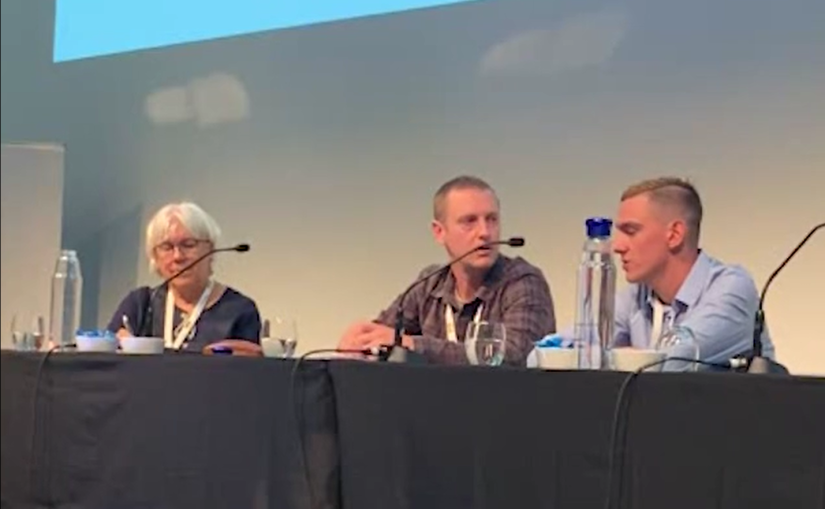
2022 - Karrinjarla Muwajarri Forum

​Public forum held at UTS on the Friday 10th of June 2022
Welcome to Country given by Nadeen Dixon
Speakers: Paddy Gibson, Mr Ned Hargraves, Liz Jarrett, Latoya Rule

Public Forum at UTS regarding Karrinjarla Muwajarri on Friday 10th June 2022

Karrinjarla Muwajarri Justice for Walker

Visit the website: Karrinjarla Muwajarri / Justice for Walker 

2019 - Clarence Correctional Centre Forum

Facilitator: Pauline Clague

Speakers: Deb Kilroy, CEO of SistersInside has accepted our invitation to be a member of the panel as have Emeritus Professor Judith Atkinson and her daughter Carlie Anderson Patron and CEO respectively of We Al-li.

2018 - Nation Building forum
YXi2rUAh9ds

Transcript

Hi everyone. My name is Alison Vivian. I'm from Jumbunna, one of the researchers there.

I just wanted to say thank you so much for coming along today. I don't know whether the right expression is that I've drunk the Kool-Aid, because the Kool-Aid didn't work out terribly well for the people who drank it—the wrong Kool-Aid. But I'm definitely an Indigenous nation building convert. I think that it has the potential to impact in many areas of research and, much more importantly, has the potential to impact on the wellbeing of, I think, all Australians, but in particular Aboriginal and Torres Strait Islander Australians.

I'd like, on that note, to acknowledge that wherever we meet in Australia, we meet on Indigenous country, regardless of whether there are buildings or developments or other kinds of infrastructures. I want to pay my respects to the Gadigal people of the Eora Nation who have responsibility for this country, and to pay my respects to Aboriginal and Torres Strait Islander people here, and also acknowledge the challenges in a particularly hostile environment of exercising sovereign rights to self-determination.

We thought we'd start off today by just having you introduce yourselves and explain the work that you're doing, because we thought—we didn't kind of do this as you can see, it's not like a big fancy research forum, we didn't even give you any lunch. We just said, "Come along and hear these guys," because, as I said, we really have drunk the Kool-Aid. We really do think that this work, particularly the 30 years' work that Steve and Miriam have been involved in in the United States, has something to say in Australia. And so what we're hoping for is a conversation here about how this work might impact on your own work.

So we thought we'd ask you to introduce yourselves, talk about the kind of work and your own interests. Then these guys are just going to give a very short presentation, each kind of 10 or 15 minutes, about different aspects of the work. And then let's have a conversation afterwards about how we might ultimately work together. So thanks again for coming.

So how long are you looking for each person to tell what they're up to? Are you looking for five minutes, three minutes? Oh, let's see how it goes. Yes.

My name is Ros Sotel. I actually don't know my mob, but I've been very lucky to be taken under the wing of the community on the Gold Coast. I'm in their language group up there called the Mered Peoples. And I'm lucky enough to be with them. The aunties and uncles there have pushed me over the last couple of years to do a bit more.

So I have decided to do my Masters of Research at the moment. I'm looking to find out why our older urban community members are not going online or taking up the opportunities in the libraries—free access and the training that's there, which is what the government's basically saying is the only reason why we're not learning those skills. But there's obviously a reason other than that, because there's a lot in our community that is still not going online, even though government's forcing them by making all the services available that way.

So that's what I'm doing—I'm just first year, so I've only just started, but I am thoroughly enjoying it and meeting some people that I've held in high esteem. I've been lucky enough to do that in the last couple of months because I'm actually from the Gold Coast, as I said, but I'm down here for this year.

And because I only actually applied to do it with Jumbunna, I learned a little research when I was doing my undergrad and I just wanted to be part of that. Well, that's great. So that's me. Great. Thank you so much.

My name's Matt Walsh. I'm an Anaiwan man, so up in the hills, halfway between Sydney and Brisbane. I have always—what drew me to nation building, I guess, is not while I worked at UTS, and to hear Alison say nation building, she really is a convert.

For me, number one, what I found interesting was that it just seemed like common sense, because my mob have been doing it for a long time, using any tool that was available to survive or to flourish or to express their sovereignty. So when I came to UTS, I worked in the employment area for a long time. I feel like we used concepts of nation building to actually progress that as well—the idea of growing our cohorts here to be able to express who we are within the framework that is the university.

Thank you, Matt. Thank you very much for being here.

Before I speak, I'd like to acknowledge that we're on the unceded land of the Gadigal people. That's a phrase that's now coming into where we acknowledge people's country, where we're meeting. My name is Peter Pennington. I'm Ngarrindjeri from South Australia, mouth of the Murray, Lake Alexandrina and the Coorong. But I grew up in Adelaide.

There I worked as a social worker in 1978, and I thought about the health of young Aboriginal men then. I'm now doing research in relation to how they use social media for their health and wellbeing as well, and to look at maybe best practice programs to do with them as well.

There's a book called Holding Men, which is Kenyunimpa, by Brian McCoy. He's a Jesuit priest who's worked in the Kimberley for a long time and written a book about that health practice, Kenyunimpa. I think the principles in that program and that practice still exist here on the East Coast, but are espoused in different ways.

So that's what I hope to do in the next three years. Thank you, Peter.

I'm Dean Jarrett. I've been at UTS since about 2010, I think, in different roles, in teaching and whatnot, did my Masters and stuff. Most of my thesis now is out at the editor, and my date that I hand it in—EWS, what's that? What's the Australian word? Submission. It's the middle of December. So hopefully that'll be all bedded down and tucked away.

My mob's a Gumbaynggirr mob, from the Nambucca area on Dad's side, and other mobs from Queensland, from Woorabinda.

My study, I think, has probably a direct alignment with what Native Nations is all about—rebuilding and nation rebuilding. So in terms of economic development, what I did was a comparison between Native American-owned companies that were off the reservations, not on the reservations, but in regional centres in the southwest corner, and our Indigenous businesses here in Australia on the East Coast, in Sydney, Brisbane, and Melbourne.

So just a small study. Yeah, just a small study. It's only been four and a half years. This afternoon I'm presenting with Chris. I don't know if anyone's coming along to that, but that's on this afternoon.

So, yeah, I think there's a clear-cut relationship there between what my study is, and as I presented at the early sort of preliminary findings, I suppose, at Native Nations over at U of A when I was there. Thanks.

Next. I'm Alison. I'm a Gomeroi woman. I grew up in Dunedoo and Tamworth, which are kind of in the northwest of New South Wales, up near Anaiwan mob. I just came back from the US probably two or three months ago, and while I was there I was studying, one, kind of nation-building, and two, I was researching how Australian justice systems respond to police violence in Australia. My secondary area of research is Indigenous peoples and poetry and literature. I'm trying to find a way to merge the two. So far, have not been very successful, but I'm giving it a red-hot go.

Nathan West. Biripi man from the mid-north coast, but I grew up in Newcastle. I have a background in development, I guess the nuts and bolts of it, but since working in the field for a while, I did my Master's in Economic Development, Anthropology of Development, and now I'm technically second year PhD here at UTS, engaging quite heavily with nation-building work, looking at pervasive approaches to economic development. My Master's was looking at economic development in Indigenous communities in the Peruvian Amazon, specifically around the employment of extractive projects, gas mines. I'm currently at a bit of a crossroads and hope to unpack that a little bit today after hearing you talk.

No pressure. Yeah, thanks very much.

I'm Eva Cox. I'm attached to Jumbunna. I used to teach here and taught research methods and advocacy and policy and feminism and various other things and some change things, but about a decade ago I resigned my teaching thing and came over to Jumbunna because I thought I wanted to learn something—different views of the world. My background is as a refugee child. I was born in Vienna two weeks before Hitler marched in, so I actually started life as a refugee in England, so I've sort of come from the other end of having no sense of those sort of country ties and things, which is one of the reasons I think I'm very interested in where one goes across those sort of various spectrums. I taught research methods. I've done some evaluation, which has just been sort of blamed for somebody's arrival here, of things like the cashless debit card and the intervention and the various other things, and I'm really interested in how one sets up structures that don't demolish people and, in particular, how we move out of the assumption of the materialist economic sort of thing being the only thing that counts. I'm trying to run a campaign at the moment which is based on the idea that we are citizens, not customers, and we live in a society, not an economy, which I think works very well within both my conception of feminism and my conception of Indigenous things, because we've got to get away from the idea. It only occurred to me a few weeks ago, if you think about it, that citizenship involves a set of obligations and responsibilities and rights. Customer, if you think about it really, is a distrust relationship. We're constantly told, don't accept it, don't be loyal to your bank, don't be loyal to what's provided. So in a sense, it's not too surprising we have a massive amount of distrust of government coming up, because the government keeps telling us to be customers. It's also individuated, not collective. So I'm interested in trying to—and that's the reason I've come along today—to run something about how do we get back to putting the social policy on the agenda. Partly those people doing stuff on economics, it's stuffed us up better than more or less any other framework, because it's materialist. There's no way of coping with things like ethics, relationships, emotions, feelings, unless you shove some psychology in, and that doesn't work at all. It's a different currency. So it's interesting that this work started with an economic bent, isn't it? And it sort of changes. So at the moment, and I've got a card here, we're trying to put up a Good Society website so that we can actually collect things, and I'd love to have some of this stuff up there to get people to actually put up proposals about what we want. I think we've become very good at telling people what we don't want, but I think we need to actually put down what we want. I think that's a difference, because I'm a veteran of the 70s social movements, 70s type stuff. Then we optimistically believed we could change things. I think at the moment there's much more pessimism around. All people are trying to do is stop things, but you don't change—you don't stop things unless you put up alternatives. So protests are fine, but at some point you've got to say, but do exits then, because otherwise they go and stuff it up again. I think that's why research is interesting, because it doesn't think about alternatives. So anyhow, I've come along to sort of see how some of the stuff that I can see spreading over of trying to put society back on the agenda is a really thing. Oh, I also did the 1995 Boyer Lectures, which was called Truly Civil Society, which is still online. There's a pirate copy online, if you put it in. Which is quite interesting, because I predicted then that moving down the economic pathway was going to undermine the social, and this is what's happening, and that's why I'm interested, because I think it's much more about the social. It's a social nation you're trying to put together. It's not an economic one.

Thanks. I'm Lyndon Coombs. I'm a Wiradjuri man from north-west New South Wales. I've been in Aboriginal affairs for just over 20 years. I'm not an academic, but I'm pretending to be. We're easy to imitate. I started out in government, ran a couple of not-for-profit Aboriginal organisations, and went over to the dark side with PwC—four years before I came here—with their Indigenous consulting group, being a political advisor and different other things. But, yeah, got the opportunity to come on here February this year with the recent Jumbunna to sort of try and mash all of that stuff and learn across sort of different sectors. And similar to Eva, while I was trying to sort of think about research and all this type of stuff, I had a penny-drop moment when I heard—I think Hitchens was talking about slavery—he had this phrase called, "How do we make good?" And I just had a penny-drop moment. It's like, how do we make good? How do we? So we're always talking, describing the problem really well. And then, you know, something happens, there's an apology, and, you know, the population's like, well, we're done now. That'll go away. If you want us to go away, here's the things we want to do. And that's sort of the type of stuff I'd like to really zero in on. But still figuring it out, really.

Great. Are you two ready? We? Sure. We should probably just start by introducing ourselves. Sure. We'll do it.

Hi. It's great to meet all of you and some I've met before many times and some just a few times, and some for the first time. I'm going to see if I can use Peter's language that he just taught me. It's great to be here on the unceded land of the Gadigal people, and I want to acknowledge their country and their elders and respected persons, and acknowledge all the Indigenous people in the room who are emerging scholars and established scholars and leaders in their communities.

My name's Miriam Jorgensen, and I work primarily for Native Nations Institute at the University of Arizona. I'm also on staff here at Jumbunna, working closely with Alison. I was originally trained and still hold a title with the Harvard Project on American Indian Economic Development. My background was originally in pure economics and maths. I did a second undergraduate degree at Oxford where I did all the ologies and graphies and a degree that was called human sciences, which really was a great counterweight to neoclassical economics. Then I did political economy in my graduate studies and international development, which continued to do that broadening out. You kind of go narrow and deep with the neoclassical economics and the breadth of all the ways to think about how societies operate. So that's been kind of the overarching academic frame that I come to my work from. We'll talk more about what that is.

Let me say one more thing, which is also my home is in South Dakota. My original home was in South Dakota, the United States. I work for the University of Arizona in Tucson, Arizona, and for Harvard University in Cambridge, Massachusetts, and for Jumbunna in Sydney. But I live in St. Louis, Missouri with my husband and my two children. She's one fragmented person.

Thanks, Al.

My name's Stephen Cornell from the United States. Like Miriam, I just want to acknowledge the privilege of being in this country, the country of the Gadigal people. And I'm sorry, Peter, but the unceded? Yes. Thank you for clarifying. There's been no decision made. King George gave explicit instructions to Governor Arthur who came here to treat us as subjects. Right. That's an important word, and I very much appreciate it. But it's a privilege for me. I'm not an Indigenous person. I'm a pretty standard-issue white fellow. But I've had the privilege, with Miriam and other colleagues, of spending the last three decades-plus working with a lot of Indigenous nations, particularly in North America and the US and Canada, but also in Aotearoa, New Zealand, and here in Australia. That's been an extraordinary personal experience for me and intellectual experience, and I'm very grateful for that. It's a pleasure to be here in your country and your territory.

I'm a sociologist. That is what you do if you don't really know what you want to do. They tell you, well, if you don't know what you're doing, go do sociology because you can do anything under that. So I'm sort of the opposite of Miriam. She's the specialist, and I'm the person who just, you know—I'm a sociologist too. Oh, you are? Well, there we are. Did most of my work at the University of Chicago and then at Harvard University, where I met Miriam and Joseph Kalt and where we started the Harvard Project on American Indian Economic Development 31 years ago.

I thought I would just give you a very quick background on that and then tell you something about some current thinking, and maybe it will resonate, maybe not. What we found in the late 1980s in the United States was some data which showed that some American Indian nations were actually doing rather well at accomplishing their own objectives—whether those were economic objectives or social objectives, land consolidation—and others were just spinning their wheels and having a great deal of difficulty getting any traction in pursuing their own agendas.

We thought this was potentially an important difference and that it would be worth finding out why. What's the difference between the nations that are making progress against their objectives and the ones that aren't? That was the origin of the Harvard Project on American Indian Economic Development. We were fortunate to get some Ford Foundation funding to do that research. We were fortunate to find Miriam, and she came on board and has been central to that research over the last three decades. Some intriguing results came out of that research, and I'll just—some of you are probably very familiar with this—but I think there were three key points that came out of it.

The first was: if Indigenous nations are going to be successful at pursuing their own objectives, they have to be the ones making the decisions. As long as Washington or some other state or national government is deciding for Indigenous people, don't expect much to change. The second finding was: they've got to back up decision-making power with capable decision-making—capable of what we called capable governance. You've got to be able to govern well. You've got to be able to mobilise a community on behalf of your objectives. You've got to be able to make decisions and stick to them. You've got to be able to get things done.

That wasn't a particularly exciting finding—it came out of some of the development research of the 1970s and 80s: governance matters. But a lot of that research said, yes, governance matters, and what you need is good old neoliberal governing systems of the sort that the United States has. So my country went around the world telling people, "You need better governance. In fact, you need our governance, so here it is." That was well-received, of course, and has a terrible track record.

What our research showed was: yes, you do need capable governance, but it also has to be a governance that resonates with the people who are being governed, who feel it's their governance, that reflects their ideas about how authority should be organised and exercised. I think that was actually the key finding in the Harvard Project research, because what it really said was: if a central government—the United States, Canada, Australia, Aotearoa—if they're interested in resolving Indigenous problems, the first thing they need to start doing is listening to Indigenous people about how those problems might be solved and respecting the right of those people to govern themselves in ways of their own choosing, not in ways of Washington, D.C.'s choosing or something like that.

Over the last 30 years, we've taken those findings and done a lot more research, and it's led us beyond the United States—first into Canada, then at the start of the 2000s here to Australia, back in 2001, at an Indigenous governance conference in Canberra, where we did some presentations on some of the US findings. It was a mostly Indigenous audience, and basically they said, "Gee, this is interesting. Maybe there's some resonance here."

I think a lot of what we've been engaged in over the last 15, 18 years now is actually learning more as we've changed context. We find that some of the principles of that Harvard Project research have been strengthened, have been repeated, have come out of work in other countries, but we've also seen intriguing ways that Native nations, once turned loose, start to solve some of their problems. One of the things that's emerged over the last 15 years is what I think of as an international network of Indigenous innovation, where we find nations talking to each other across these international boundaries.

Someone like Dean comes to the US and talks about what his interest is here, and you find Indigenous people in the US saying, "We've got that problem. Here's how we're dealing with it. How are you dealing with it? Maybe we can learn something from what your mob has done, and maybe we can tell you a bit about what we're doing." I think that kind of communication is becoming increasingly important as a way of shortening the learning curve. Gee, if some Māori have solved the language revitalisation problem in New Zealand, let's grab some of their learnings and put them to work. So that's part of what we're doing.

The only other thing I wanted to talk about is—and then I'll turn it over to Miriam—one of the things that I think we've really seen over the last 30-plus years is a change in Indigenous politics in all four of these countries. When I was in graduate school, starting to do work on American Indian political activism in the United States, the politics was all about rights and recognition. It was Indigenous nations going after the US government, saying, "You need to abandon these assimilationist policies, you need to recognise us, you need to affirm our rights." That was a very productive politics. It had some momentous occasions in it that many of you know, just as there were here in that kind of politics.

I think in all four of the countries that I've worked in—Canada, US, Australia, New Zealand—we saw that kind of politics. But over the last 30 years, we've seen a shift from a politics about rights and recognition to a politics about governance. At the heart of that shift—and I think a young Indigenous Australian man captured it for me about 10 years ago here—when he said to me, "If we wait for Canberra to recognise our rights, we're going to die waiting. So why don't we just get on with doing what we think we need to do?" I think part of what has happened is not abandoning the rights struggle, but saying, "Let's just do it. Let's act like nations. Let's figure out how to exercise the rights we believe we have, whether Ottawa, Washington, Wellington, Canberra recognises those rights or not. Let's behave that way." It reminds me of the Czechoslovak president, Václav Havel, who led much of the fight against communist occupation in Czechoslovakia. He wrote a wonderful essay in which he says, "The key in life under communism is to live as if you were a free man. Just live as if you were a free man." I think for a lot of Indigenous nations, what's happening is they've decided, "We're going to act like nations, whether that government recognises us as nations or not. We're going to live as if we were free nations, doing the things we need to do."

When you make that transition from a rights and recognition struggle to a "let's do it" struggle, a couple of things happen. You stop centring government on what it does, and you worry about what are we going to do. I think we're seeing a new generation of younger leaders who honour what happened in the rights struggle and realise they're products of it, but are now saying, "We're less interested in what Washington, D.C. decides and more interested in what we decide. We're not actually going to worry about them. We're going to get on with our agenda." I think part of what we find our work has evolved into over these years is a look at, okay, what do these governance movements by Indigenous nations look like in these four countries and in others? We're starting to do some work in Latin America and beginning to see evidence for nations who live under even more hostile environments than what you have here. So we're starting to kind of do that comparative work that says, what does the assertion of self-governing power look like under these different rights regimes, with these different legal frameworks in these different places, and what can Indigenous nations learn from each other as they push that and struggle to assert those self-governing powers? So that's a lot of what I think our work has now kind of evolved into. I'm going to see what Miriam wants to add to that.

So a lot of the work that I've been engaged in in Australia over the last few years—the work that I was first brought here on an ARC that Libby Rysell was the lead on, but that was really written by a former Jumbunna researcher, Mark McMillan, and also Alison together wrote a discovery project and asked me to join that. That work turned into some other grant-based work with Melbourne University and another ARC linkage. A lot of that's been focused on asking some really simple questions. Steve's kind of given you some very big-picture information about the findings from North America, kind of boiled down to the Indigenous control matters. We talk about Indigenous nation self-determination, so that's the first finding—that Indigenous nations are in the driver's seat, that they back that up with institutions of governance that work for them and that those have to be effective and legitimate, that cultural legitimacy.

We add on other pieces to them that seem to have come from less quantitative research. Those pieces can have some pretty strong quantitative econometric-style research behind them, backed up with a lot of in-depth community-based case studies, too, to really flesh out where those findings come from. But other pieces that really seem to matter are when a nation and an Indigenous political collective has the capacity to do some really long-term strategic thinking and planning. When it adopts a really long-term rather than a short-term view, we talk about that shift from being reactive to being proactive, from thinking about somebody else's agenda to working on your own agenda. Then also it seems to really matter to have people in place—we call them nation-building leaders—but they don't have to be an organisational leader or an elected leader. They really come from any place within the community. They're the kinds of people who can enunciate that sort of vision, who can help hold those hard conversations about who are we as a people, things like that.

So we have tended in much of our work in the last, particularly in the last decade—but it's emerged from this 30 years of work—to talk about self-determination, effective institutions, culturally legitimate institutions, having a strategic vision, and nation-building leadership. Those principles really are the underlying nation-building principles emergent from research, but that also have, we think, usefulness to Native nations and have proven useful to Native nations in North America as they're trying to shift toward a nation-building framework. They can sort of say, "We're going to start to work according to those principles, and that's going to help us achieve our goals." So you can feel that they're both research evidence when we ask the question of, well, when Native nations seem to be doing well, what are they doing? What has led that? And it's these principles. Then you can shift that around and say, well, does applying those then help people get on with what they're doing?

There had been a lot of conversation in Australia, particularly during the noughts of the 2000 to 2010 range, and this is kind of where the original ARC came from. There had been a lot of people both in the academy and in the policy sectors where academics and policymakers were saying, "This evidence doesn't apply here. These findings don't apply here because we have a very different history." While they're both British settler states—the United States and Canada and Australia—that British settler history is somewhat different. There's a completely different legal framework within which Indigenous peoples operate between the US and Canada and Australia, and there's different ways that Indigenous peoples have organised themselves. There might be similar issues around Close the Gap or kinds of social concerns, but those are being addressed in very different social organisation ways.

So we really just asked the question really simply of, so does the North American evidence apply? I mean, in a sense, people have kind of jumped to the conclusion of things are too different here, it doesn't apply. So we just asked the question, does it? I think we really boiled it down to two ways of asking that question. The first was looking out across Australia and saying, are there self-constituted political collectives? You can tell I'm kind of using that sort of sociology, political science-y sort of language, but what I'm talking about is a people. Is there an Indigenous people that has identified themselves as an Indigenous people, that has achieved self-identified goals? They've set goals for themselves and they've gotten there. If we really do a deep dive into the history of how they got to that place, of how they achieved those goals, do we see that these nation-building principles were how they did it?

So it wasn't trying to do some big, large-sample piece of research. It was to say, is there a self-identified Indigenous political collective that has achieved success, and how did it achieve that success? That was the crux, really, of the work that we did in our first ARC, working with the Ngarrindjeri nation—so with Peter's nation—and also with the Gunditjmara people of southwest Victoria, one of the Gunditjmara peoples that are in that coastal region. It was pretty clear from a lot of desktop research that those two peoples, amongst others that we had identified, but those were the two that really seemed to rise above the rest of having self-constituted as a people and that were really making tremendous strides. Alison, in particular, was instrumental in reaching out to leadership and cultural authorities and policy-making authorities within those communities, and we gained the opportunity to do this kind of deep-dive research. Our research points to the fact that the nation-building principles really do apply, that they were a tremendously important part of the way that those nations achieved their goals. So rather than looking at the superficial differences between the United States and Australia, we said, can we look at what Native nations actually did? And the principles really seemed to apply.

The other way we asked the question has been much more part of the linkage project that we'll close out in probably 12 to 18 months. That project has asked the question of, again, looking for these self-identified Indigenous political collectives—and I'm going to get back to that, I keep saying that, and I'm going to get back to that, because I think that's an important question—are there self-identified Indigenous political collectives that have set goals for themselves, and do they find the nation-building principles useful in moving toward those goals? So again, there's the how did people get to where they are, and are these principles useful as sort of standards for moving toward success? In conversations and research with organisations and individuals within the Ngarrindjeri nation, individuals and organisations within the Yawuru nation, and basically the leadership group within the Gugu Badhun nation—so we're really geographically looking at a lot of different areas, too—and evidence emerging from others who we have more one-off relationships with, it does seem to be th

2018 - JUSTICE HEALTH Forum

2018 JUSTICE HEALTH Forum Speakers: Paddy Gibson and Dylan

Watch the forum video here Justice Health Forum 2018  Speakers: Paddy Gibson and Dylan

Aboriginal Women Deaths in Custody Forum
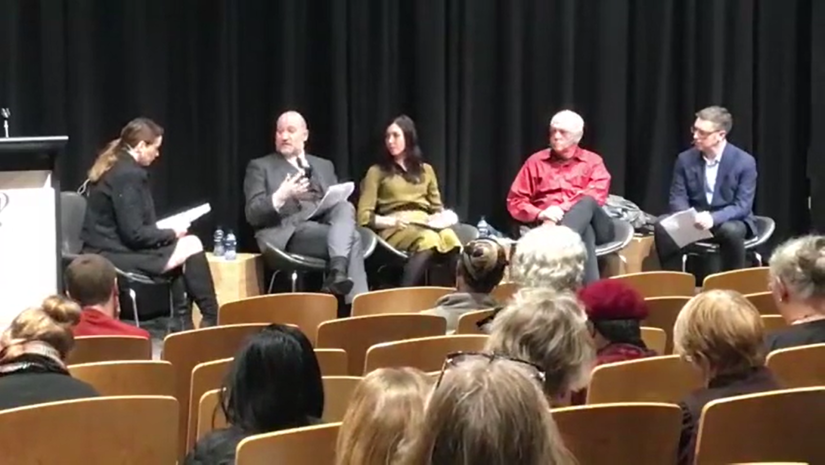
Aboriginal Women Deaths in Custody Forum

Facilitator, Prof. Larissa Behrendt. Speakers George Newhouse, Chris Cunneen

Watch the forum here: Aboriginal Women Deaths in Custody Forum 

Alanis Obomsawin Masterclass