

Working with partners to mitigate global phosphorus vulnerabilities and adapt for a more secure food future.
A handful of countries control 85 per cent of the world’s finite phosphate rock – an essential element in growing our food. We work with partners to identify specific opportunities to alleviate this vulnerability by co-identifying context-specific opportunities to adapt for a more secure future.
The nature of phosphorus vulnerability is understudied, and ISF is a world leader in this area of enquiry. Our holistic long-term approach means that we consider the problem from multiple perspectives, taking in the potential social, economic, scientific and sustainability impacts of phosphorus scarcity.
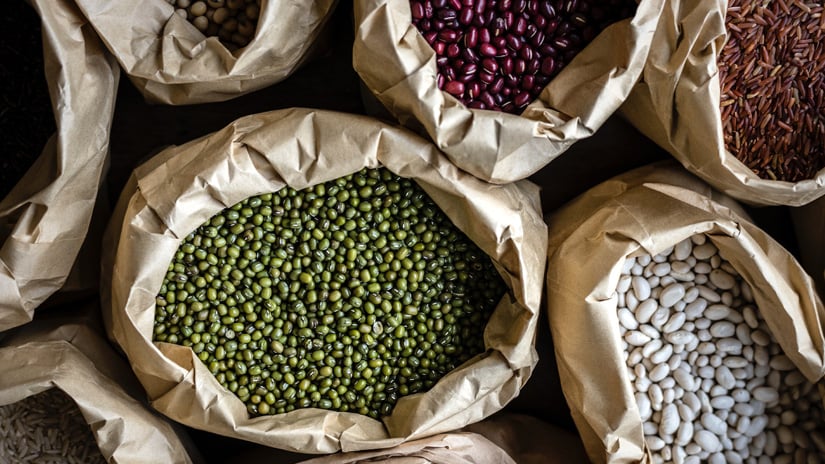
In Sri Lanka, we analysed the links between climate change and phosphorus vulnerability to develop farm and policy interventions. This work enabled us to work with smallholder farmers and envision future pathways for their food systems.
Our global Phosphorus Futures project explored the links between clean waterways through improved phosphorus management in Australia, United States, Malawi, and Vietnam. We identified the major risks and intervention points to improve water systems and phosphorus recycling.
As part of a collaborative project for CSIRO’s National Research Flagships Program’s Flagship Collaboration Fund, ISF examined the implications of global phosphorus scarcity for the Australian food system.
A policy analysis and flows analysis of the Australian food production and consumption system through to food consumption and excretion identified opportunities for achieving phosphorus security in Australia.
In Malawi, Zambia, and Ethiopia we conducted a visioning workshop to identify barriers and enablers of organics value chains in rural African contexts. This work was supported by the Australia-Africa Universities Network.

Phosphorus & Climate Smart Agriculture Network (PACSAN)
Funded by the National Foundation for Australia China Relations, an initiative of the Department of Foreign Affairs and Trade, PACSAN is a project that brings...
UK Phosphorus Transformation Strategy
As global phosphate fertiliser prices spiked four-fold in 2022 on pre-pandemic levels, a team of UK and Australian scientists launched the UK’s first coherent...

Our Phosphorus Future
As a natural resource, phosphorus presents a unique challenge. Human intervention – particularly agriculture – has disrupted the natural phosphorus cycle. As a...
From urban waste to sustainable value chains: linking sanitation and agriculture through innovative partnerships in Sri Lanka
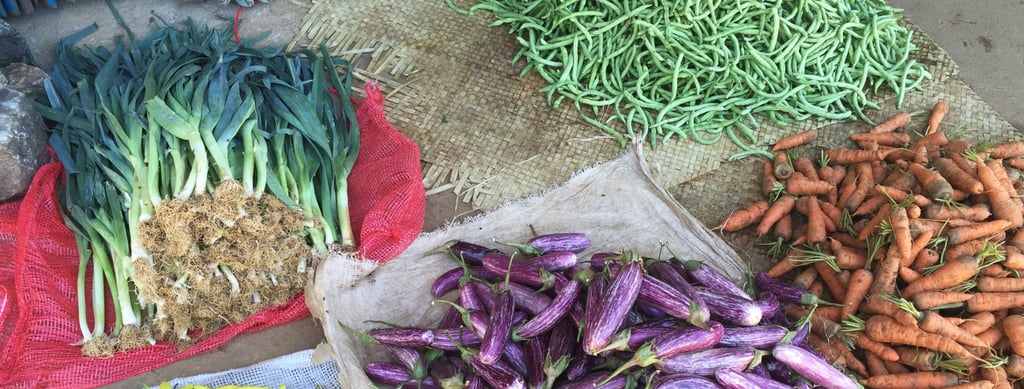
This applied research project in Sri Lanka connects the waste management, sanitation and agriculture sectors through the circular economy, to improve food...
View more projects
Phosphorus: the missing ingredient for food security
PROJECT | 2008-
ISF leads the world in understanding the crucial role of phosphorus in global food security.
P-FUTURES
PROJECT | 2015-
Transforming the way cities secure food and water through innovative phosphorus governance.
Marie Curie Innovative Training Network for PhD students
PROJECT | 2020-2023
Marie Curie Innovative Training Networks drive scientific excellence and innovation. They bring together universities, research institutes and other sectors from across the world to train researchers to doctorate level.
In 2020, ISF established a Marie Curie Innovative Training Network focused on sustainable phosphorus management in a model city, with a consortium of EU academic and non-academic partners. ISF trained and co-supervised a number of transdisciplinary and social-science phosphorus PhD research projects.
This addressed the strong need for social, economic and political science research addressing phosphorus sustainability, to complement the engineering, ecological and agronomic knowledge and expertise.
Client: EU Marie Curie ITN
Researchers: Dana Cordell, Brent Jacobs
Enhancing food resilience in the UK
PROJECT | 2017-2021
This project sought to enhance the resilience of the UK food system by accounting for catchment and socio-ecological heterogeneity in the sustainable management of phosphorus.
Client: University of Leeds
Researchers: Dana Cordell, Brent Jacobs, Laure-Elise Ruoso, Federico Davila
Food security, phosphorus scarcity and climate change in Sri Lanka
PROJECT | 2016-2017
Two of the biggest global challenges for food security – phosphorus scarcity and climate change – are threatening farmers’ livelihoods, agricultural productivity and environmental integrity.
Client: University of Technology Sydney
Researchers: Dana Cordell, Brent Jacobs, Jerastin Dubash
Research outputs
Towards phosphorus and climate smart agriculture (PACSA) in Sri Lanka (News article)
Towards urban food and water security: integrating sustainable phosphorus management in urban decision-making and planning
PROJECT | 2014
Global phosphorus scarcity and its implications for food security is emerging as one of the biggest global sustainability challenges this century.
Client: International Social Science Council, Future Earth
Researchers: Stuart White, Dana Cordell, Juliet Willetts
Irish P-Change workshop
PROJECT
This workshop engaged stakeholders in Ireland to develop a 'Change Model' for Ireland's phosphorus value chain, based on the processes used for North America in 2015.
Clients: Queens University of Belfast, Irish EPA
Researchers: Dana Cordell, Brent Jacobs