

At the Australian Artificial Intelligence Institute (AAII), we undertake highly innovative and challenging research to achieve international standing and to lead advancements in knowledge in the field of artificial intelligence.

Computational Intelligence and Brain-Computer Interface (CIBCI) Lab
AAII's CIBCI Lab is developing mobile sensing technology to measure brain activity using non-invasive methods.

Representation Learning for Machine Intelligence (ReLMI) Lab
A cutting-edge research centre dedicated to advancing artificial intelligence and machine learning, focusing on representation

Biomedical Data Science (BDS) Lab
The BDS Lab uses knowledge as the infrastructure to support decision-making in cancer diagnosis and treatment.

Decision Systems and e-Service Intelligence (DeSI) Lab
The DeSI Lab develops theories, methods and software systems to support data-driven decision making in organisations.

Large-scale Network Analytics (LNA) Lab
The LSNA Lab tackles challenging problems in network analytics for future processing and analysis of large-scale networks.

Intelligent Drone Lab (iDL)
iDL partners with industry to develop drone autonomy using computer vision and machine learning techniques.
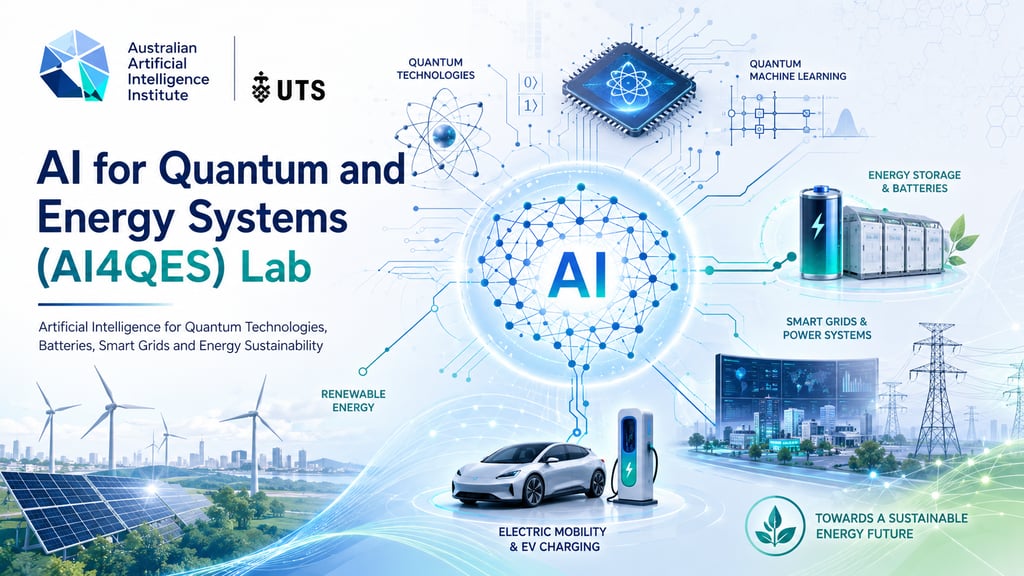
AI for Quantum and Energy Systems (AI4QES) Lab
The AI for Quantum and Energy Systems (AI4QES) Lab focuses on developing AI foundations and applications to address complex scientific and engineering challenges in quantum technologies and energy systems.
Research objectives
Objective 1: Undertake highly innovative and challenging research to achieve international standing and lead advancements in knowledge in the field of artificial intelligence.
Objective 2: Develop new and maintain existing networks with major national and international AI centres to achieve global competitiveness and gain high recognition.
Objective 3: Build AAII's capacity in all key AI areas by attracting and retaining researchers of high international standing, as well as the most promising research students.
Objective 4: Provide high-quality HDR and ECR training environments for the next generation of researchers in AI.
Objective 5: Improve AAII's impact on the wider community through interaction with institutes, governments, industry, both locally and internationally.