


- Posted on 1 Oct 2026
By Elena Collinson
The Australia-China Weekly Brief by the Australia-China Relations Institute at the University of Technology Sydney (UTS:ACRI) tracks key developments in Australia-China relations over each week.
September 24 - October 1 2026
1. Expanded US access puts Australia more explicitly inside China deterrence planning
The Pentagon this week gave an explicit account of Australia's role in US Indo-Pacific strategy. US Under Secretary of Defense Elbridge Colby said a newly signed Agreed Facilities and Access MoU ‘significantly increases US access’ to Australia, including for force posture during ‘peacetime, crisis and conflict’, as part of ‘deterrence by denial’ against the PRC.
Submarine Rotational Force-West is due to begin next year, backed by more than $5 billion in Australian infrastructure. Meanwhile, US Virginia-class production remains at 1.1–1.2 boats annually, against 2.33 needed to meet US and AUKUS needs, with production of two boats a year not expected until 2032.
The takeaway: The Pentagon makes explicit what Canberra generally leaves implicit: Australian territory is an operational component of US deterrence of the PRC.
While greater US presence may provide capability insurance against delays to Australia's own submarines, adding undersea capability in the interim, it is capability insurance, not sovereignty insurance. The slower Australia's submarine pathway progresses, the more valuable US force posture becomes in filling the gap, but also the longer Australia may depend on an ally for a capability AUKUS is ultimately intended to make sovereign.
2. Old trade friction meets a new industrial agenda
On September 24, the Australian Trade Remedies Commission concluded an investigation into flat-rolled steel from the PRC and South Korea, finding dumping and, for the PRC, subsidisation, resulting in dumping and countervailing measures. It also opened a continuation inquiry into existing measures on PVC cables, while a welded-steel-mesh investigation involving the PRC advanced later in the week.
The same day, PRC Ambassador to Australia Liu Jinsong called for an upgrade of ChAFTA and deeper cooperation in AI, clean energy, green minerals, digital industries and infrastructure during a National Day reception.
The takeaway: There is nothing new about Australian trade remedies against Chinese industrial goods but the economic context around those measures is shifting. Many sectors Beijing identifies for greater cooperation are also those in which Canberra is pursuing supply chain resilience and sovereign capability.
Longstanding trade friction could therefore become more consequential as Beijing seeks deeper cooperation in sectors where Australia's industrial policy objectives increasingly intersect with Chinese competitive strengths.
3. Foreign interference charge withdrawn in Canberra case
A charge of reckless foreign interference against a 26-year-old Chinese national was withdrawn this week. The man, arrested in February, had been accused of covertly collecting information about the Canberra branch of Guan Yin Citta, a Buddhist organisation banned in the PRC, allegedly on behalf of an official from a PRC Public Security Bureau. Two women, also Chinese nationals (with one a permanent resident), remain before the courts in connection with the case, including a new intentional foreign interference charge against one defendant.
The takeaway: The withdrawal qualifies a case presented as a significant counter-foreign interference operation, although it remains unclear whether this reflects the evidence in this particular case or a broader issue with Australia’s foreign interference laws.
The case gives practical relevance to the Senate's new inquiry into transnational repression, including whether Australia's existing laws adequately protect targeted communities. It also highlights a further complication in that those communities can simultaneously be targets of foreign state coercion and subject to heightened scrutiny through Australia's counter interference framework, with implications for social cohesion.
4. China plans sixth Antarctic station as Australia monitors expansion
The PRC is preparing to build a sixth Antarctic research station in Marie Byrd Land in West Antarctica, with construction planned for 2027. Beijing says the proposed summer-only facility will support research into climate change, ice sheets and marine systems.
The takeaway: The PRC's Antarctic footprint has grown from one station in 1985 to five today. A sixth would further increase its independent operating capacity on a continent of growing scientific and strategic importance, where research infrastructure can also have dual use applications.
For Australia, which claims 42% of Antarctica, the PRC's expanding footprint matters beyond the number of stations. It builds scientific and logistical capability, potential strategic utility and negotiating weight at the same time. In a consensus-based system, that strengthens Beijing's capacity both to pursue its interests on the continent and to shape, or resist, its future governance.
5. Other developments: Australian businessman prosecuted in China; Chinese investment in Tasmania
Australian businessman faces possible jail term in China
Nick Wilshire, a 24-year China resident and deputy chairman of the China-Australia Chamber of Commerce in southern China, faces prosecution for allegedly assaulting a police officer following an altercation with court officials. Wilshire disputes the charge, saying he was assaulted in custody and is reportedly restricted from travelling to Beijing. Beyond the personal consequences for Wilshire and his family, the case is a reminder of the legal risks Australians can face in China even after decades living and working there.
Chinese firm acquires Tasmanian medicinal cannabis producer
Chinese-owned Yongji Health has acquired the remaining Australian-held shares in the company that owns more than 95 per cent of Tasmanian Botanics, one of Australia's largest medicinal cannabis producers, in a $31 million deal. The transaction is a small example of Chinese investment continuing outside the sectors dominating bilateral economic security debate.
Past issues
AUTHOR

Manager, Research Analysis, Australia-China Relations Institute, University of Technology Sydney

News
The US and China cannot slow the AI race, but they can make It safer
The United States does not need to trust China, share frontier models with China, or slow its own AI development to have a national security interest in AI...
News
Australia-China Weekly Brief: October 2026 issues
The Australia-China Weekly Brief by the Australia-China Relations Institute at the University of Technology Sydney (UTS:ACRI) tracks key developments in...
News
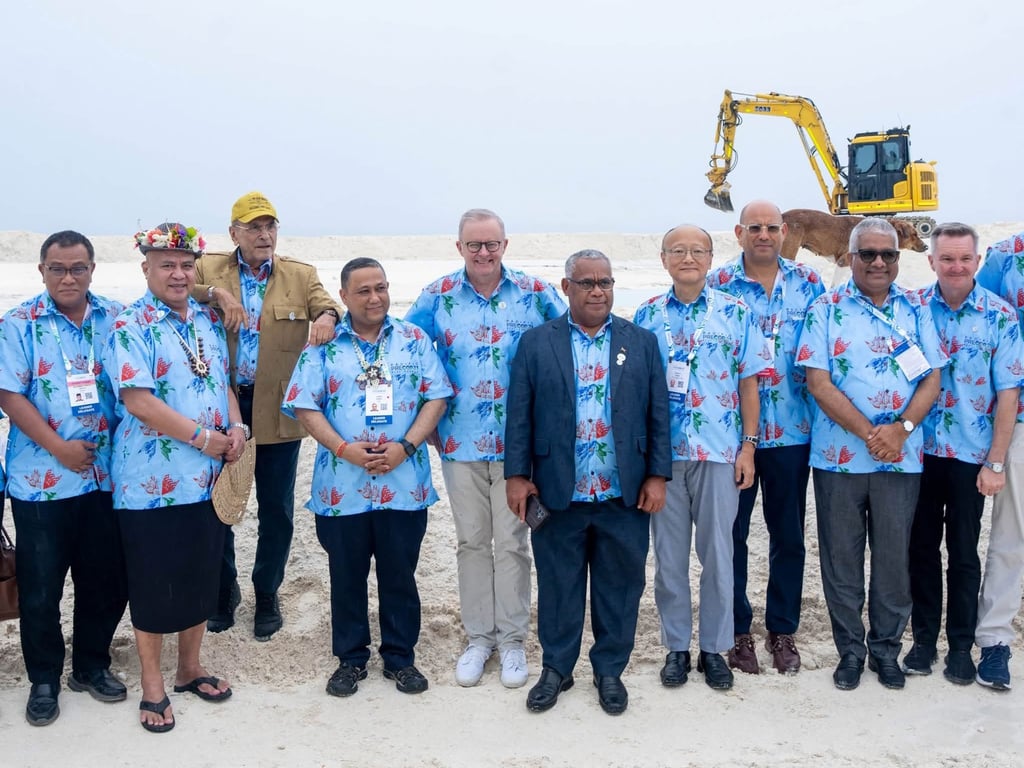
Whose security counts in the Pacific?
While climate-related spending gets criticised, billions forked out for security and strategic engagement gets framed as for the “national interest”.
News
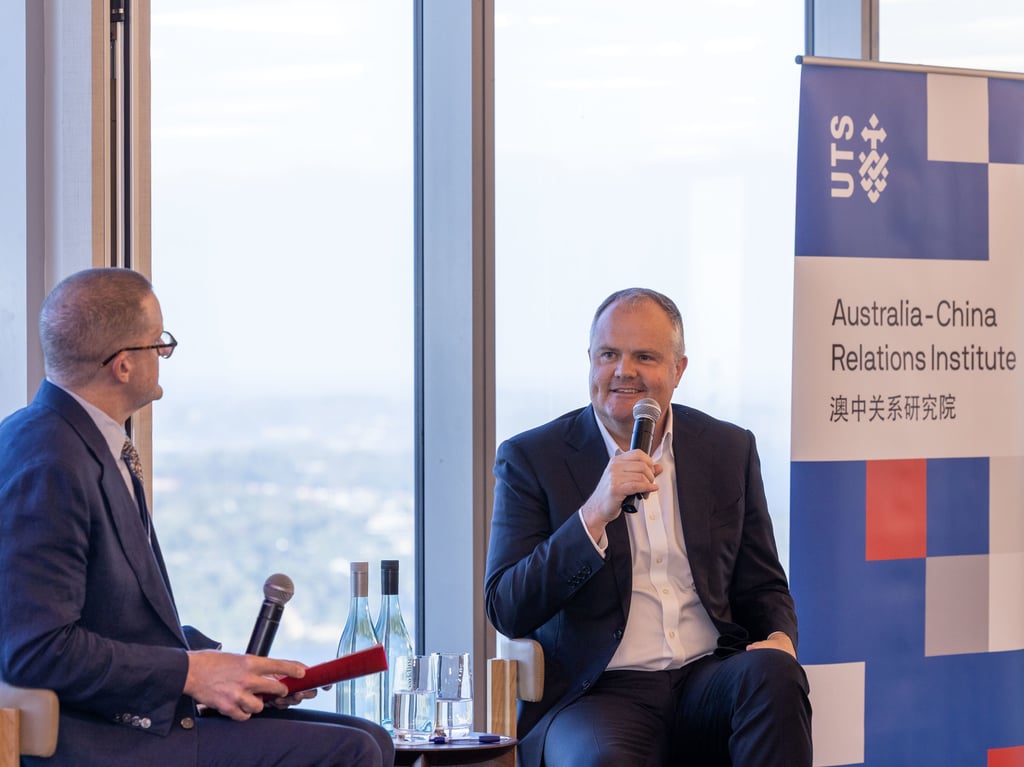
In conversation with Mr Ted O'Brien MP
On October 7 2026, the Australia-China Relations Institute at the University of Technology Sydney (UTS:ACRI) welcomed Mr Ted O'Brien MP, Australia’s Shadow...
News
The US and China cannot slow the AI race, but they can make It safer
The United States does not need to trust China, share frontier models with China, or slow its own AI development to have a national security interest in AI...
News
Australia-China Weekly Brief: October 2026 issues
The Australia-China Weekly Brief by the Australia-China Relations Institute at the University of Technology Sydney (UTS:ACRI) tracks key developments in...
News
Whose security counts in the Pacific?
While climate-related spending gets criticised, billions forked out for security and strategic engagement gets framed as for the “national interest”.
News
In conversation with Mr Ted O'Brien MP
On October 7 2026, the Australia-China Relations Institute at the University of Technology Sydney (UTS:ACRI) welcomed Mr Ted O'Brien MP, Australia’s Shadow...