


- Posted on 7 Aug 2026
- 2-minute read
A world-leading artificial intelligence researcher advancing technology to better connect the human mind to computers has been honoured with a major international award.
Distinguished Professor CT Lin presented with the Lofti A. Zadeh Award for Emerging Technologies from the IEEE, the world’s largest technology professional body.
Elon Musk’s Neuralink often grabs the headlines when it comes to brain-computer interfaces, a rapidly emerging technology that translates brainwaves into commands and language for a machine.
Academic researchers around the world are quietly advancing the revolutionary technology with potential uses that include helping people with disability communicate or control mobility devices.
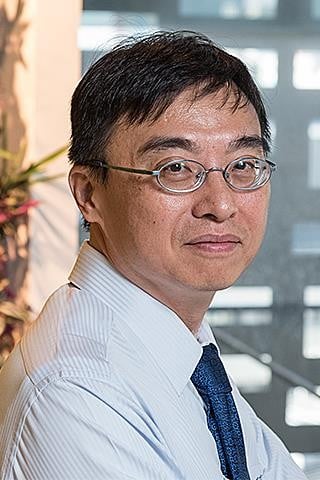
One of the leading academic figures in this revolution is Distinguished Professor CT Lin, Co-Director of the UTS Australian Artificial Intelligence Institute.
Professor Lin has spent the past 30 years creating new forms of artificial intelligence, first inventing the concept of fuzzy neural networks that incorporate human-like thinking into machine learning, and more lately exploring brain-computer interfaces.
“My research integrates artificial intelligence, neuroscience and wearable sensors into practical brain-computer interface systems by linking up both sides of the equation,” said Professor Lin.
“On the human side, I have pioneered wireless electroencephalogram (EEG) wearable technologies that use dry sensors to measure brain activity without gels or extensive preparation and under natural movements of the body.”
“On the machine side, I developed computational-intelligence methods that can extract meaningful cognitive information from noisy EEG signals including indicators of fatigue, stress, attention, workload and intention.”
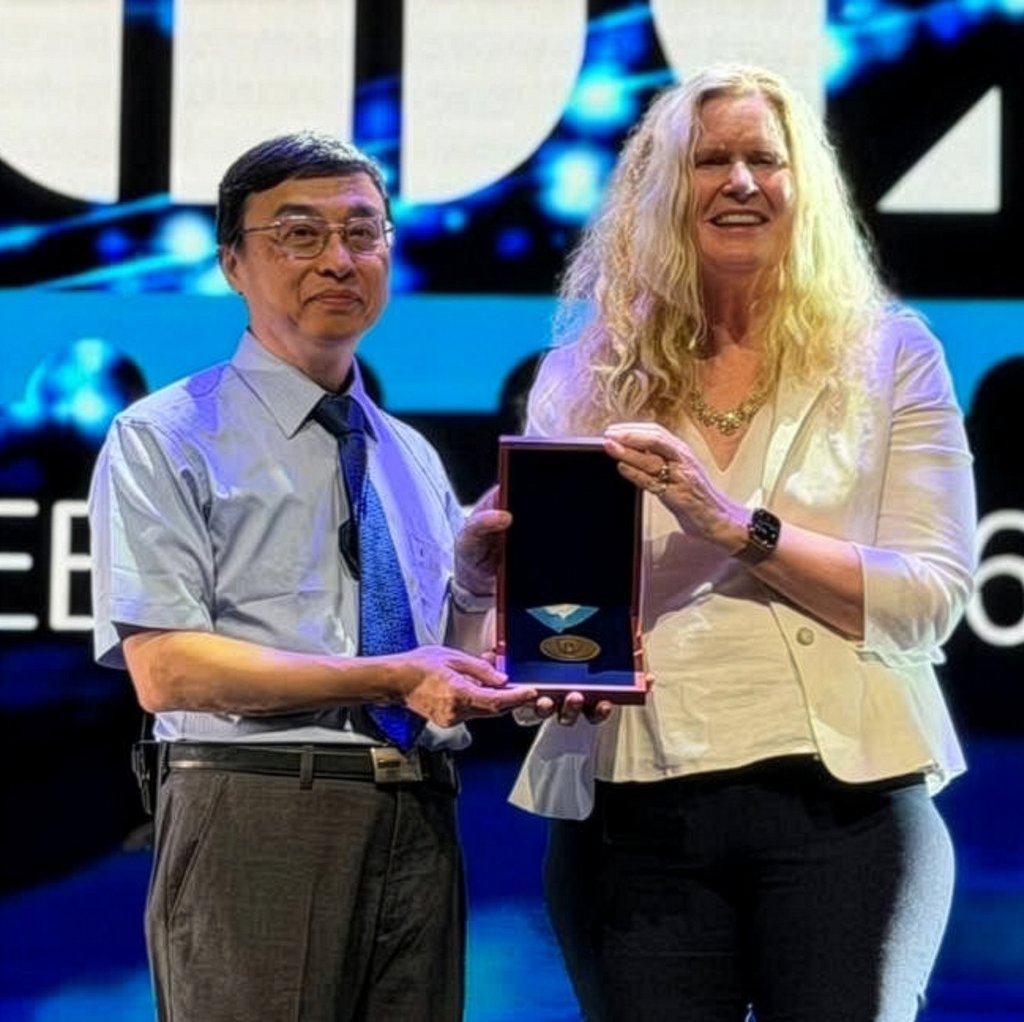
Together, these advances have helped transform brain-computer interfaces from a laboratory technology into a platform for real-world human–machine interaction.
Professor Lin’s DeWave system demonstrated that brain signals could be translated directly into words on a screen, representing an important step towards more natural communication between humans and machines.
This research has been recognised by the world’s foremost technology professional body, the IEEE, with their annual award for outstanding contribution to emerging technologies the Lofi A. Zadeh Award.
“This award is deeply meaningful because it recognises not only an individual achievement but also decades of collaborative research across artificial intelligence, neuroscience, engineering and healthcare,” Professor Lin said.
"The recognition also belong to the students, researchers, clinical collaborators and industry partners in UTS and Australia who helped develop and evaluate these systems
“The award also recognises the social impacts of this research including fatigue and stress detection, elderly care, assistive robotics and direct brain-to-text communication.”
“We’re exploring making more accurate and personalised systems to assist people with speech or movement impairments. Ultimately, my goal is to create wearable brain interfaces that improve the lives of people around the world.”
Researcher
Distinguished Professor, Faculty of Engineering & Information Technology
News by topic
News
Professor Catherine Kelly appointed Dean of Law
UTS is delighted to welcome Professor Catherine Kelly as our new Dean of the Faculty of Law.

News
AI improves long-term flood forecasting
Through the power of advanced artificial intelligence, UTS research could help communities get warnings weeks ahead of floods.

News
What can free‑living Indian street dogs teach us about how to care for pet dogs?
A study of how Indian street dogs live raises questions about what it means to care for pet dogs.
News
La Bola Negra is about the Spanish Civil War – but is unmistakably about our present moment
Set across 1932, 1937 and 2017, new Spanish film La Bola Negra follows three gay men whose lives become connected across generations.
News
Professor Catherine Kelly appointed Dean of Law
UTS is delighted to welcome Professor Catherine Kelly as our new Dean of the Faculty of Law.
News
AI improves long-term flood forecasting
Through the power of advanced artificial intelligence, UTS research could help communities get warnings weeks ahead of floods.
News
What can free‑living Indian street dogs teach us about how to care for pet dogs?
A study of how Indian street dogs live raises questions about what it means to care for pet dogs.
News
La Bola Negra is about the Spanish Civil War – but is unmistakably about our present moment
Set across 1932, 1937 and 2017, new Spanish film La Bola Negra follows three gay men whose lives become connected across generations.