


- Posted on 24 Jul 2026
- 20-minute read
By Mark Beeson
share_windows This policy brief appeared in the Toda Peace Institute's Policy Briefs and Reports series on July 24 2026.
This policy brief details APEC’s evolution, paying particular attention to the pivotal roles of Australia and Japan. From its inception, APEC’s primary focus on trade liberalisation always looked like a hard sell in East Asia, where state intervention and the preservation of sovereignty remain important. However, the forthcoming APEC Summit in Shenzhen offers an opportunity to rethink and expand APEC’s role. When the Trump administration is increasingly seen as a source of chaos rather than stability, China has a chance to model responsible and creative state behaviour and even leadership. If China can convince Australia, Japan and other middle powers that it can work constructively to tackle common economic, security and environmental problems, it could make APEC a focus of cooperation and policy coordination into the future.
AUTHOR

Mark Beeson
Adjunct Professor, Australia-China Relations Institute, University of Technology Sydney

News
The US and China cannot slow the AI race, but they can make It safer
The United States does not need to trust China, share frontier models with China, or slow its own AI development to have a national security interest in AI...
News
Australia-China Weekly Brief: October 2026 issues
The Australia-China Weekly Brief by the Australia-China Relations Institute at the University of Technology Sydney (UTS:ACRI) tracks key developments in...
News
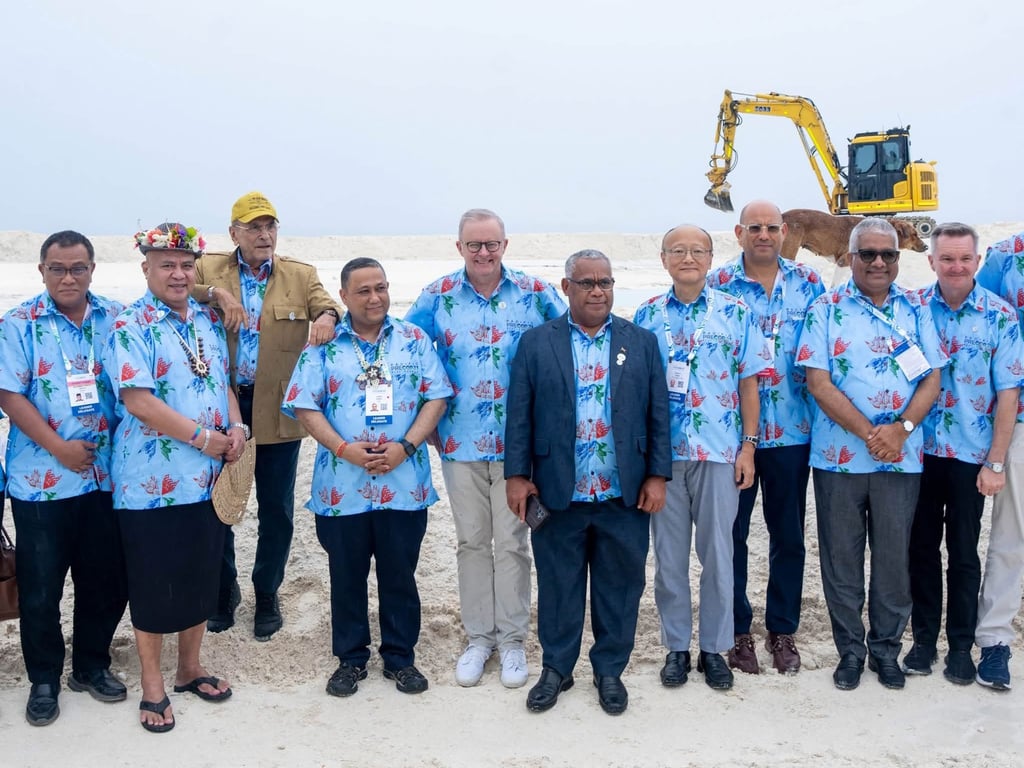
Whose security counts in the Pacific?
While climate-related spending gets criticised, billions forked out for security and strategic engagement gets framed as for the “national interest”.

News
In conversation with Mr Ted O'Brien MP
On October 7 2026, the Australia-China Relations Institute at the University of Technology Sydney (UTS:ACRI) welcomed Mr Ted O'Brien MP, Australia’s Shadow...
News
The US and China cannot slow the AI race, but they can make It safer
The United States does not need to trust China, share frontier models with China, or slow its own AI development to have a national security interest in AI...
News
Australia-China Weekly Brief: October 2026 issues
The Australia-China Weekly Brief by the Australia-China Relations Institute at the University of Technology Sydney (UTS:ACRI) tracks key developments in...
News
Whose security counts in the Pacific?
While climate-related spending gets criticised, billions forked out for security and strategic engagement gets framed as for the “national interest”.
News
In conversation with Mr Ted O'Brien MP
On October 7 2026, the Australia-China Relations Institute at the University of Technology Sydney (UTS:ACRI) welcomed Mr Ted O'Brien MP, Australia’s Shadow...