


- Posted on 30 Jul 2026
By Elena Collinson
The Australia-China Weekly Brief by the Australia-China Relations Institute at the University of Technology Sydney (UTS:ACRI) tracks key developments in Australia-China relations over each week.
July 23 - July 30 2026
1. China policy at the 2026 Labor National Conference
Labor’s triennial National Conference, held in Adelaide from July 23-25, considered a draft platform that retained its formula of cooperating with the PRC where possible and disagreeing where necessary, but replaced the 2023 description of the PRC as being of ‘great importance’ with more clinical language about its ‘size and weight’.
It also explicitly linked sovereignty to more frequent PRC power projection and committed Labor to peace and stability in the Taiwan Strait. Defence Minister Richard Marles reinforced the framing by again describing the PRC as Australia’s ‘largest security anxiety’.
However, the draft 2026 platform omitted 2023’s detailed criticism of human rights abuses in Xinjiang, Tibet and Hong Kong, replacing it with a general reference to human rights.
The takeaway: The draft platform preserves Labor’s stabilisation policy but removes some of the more favourable framing used in 2023, presenting the PRC as a variable to be managed.
If the omission of detailed human rights language survives the final process, it would suggest a more explicitly state interest-driven PRC policy, with political capital concentrated on issues framed as having the most immediate implications for Australian security and policy autonomy, while human rights concerns receive less public prominence in the core bilateral framework.
2. Chinese EV manufacturers shift from challenger status towards market leadership
On July 29, the Australian Automotive Dealer Association projected Chinese-made vehicles will account for 58% of Australian vehicle imports by 2035, up from about 36% today and well above a 43% forecast made in 2025.
In June, BYD finished within 243 sales behind Toyota, Australia’s bestselling automotive brand, while EVs reached 23.3% of total sales, with ~80% sourced from the PRC.
First-half sales rose sharply for BYD (↑124%), Chery (↑77%) and Geely (↑495%), albeit off smaller bases. Chinese manufacturers are also moving upmarket, with Hongqi, which supplies limousines to President Xi Jinping and other senior PRC officials, confirming plans to launch in Australia in late 2026.
The takeaway: Australia is emerging as a de facto test market for Chinese automotive expansion, accelerating its exposure to connected consumer platforms. A 58% import share would entrench that position and amplify existing gaps in vehicle cybersecurity and data governance.
Canberra therefore has a narrowing window to establish technology standards before a large installed base and consumer dependence on lower-cost vehicles raise the economic and political cost of intervention.
3. China’s iron ore buyer increases pressure on Fortescue
Fortescue founder and executive chairman Andrew Forrest used the Boao Forum in Perth on July 27 to call for the PRC and Australia to ‘always negotiate fairly’, as the miner continued annual supply negotiations with the state-owned China Mineral Resources Group. Although Forrest did not name CMRG, his remarks followed reports that it had instructed some Chinese mills not to take delivery of portside cargoes of Fortescue’s Super Special Fines from July 15.
Established in 2022 to centralise the PRC’s iron ore procurement and secure better terms from major suppliers, CMRG has increasingly restricted purchases of individual products during negotiations. Forrest had already accused the organisation in March of attempting to form a ‘cartel’.
‘We’ve never been a fair-weather friend to China,’ Forrest told the forum. ‘We stood through the hard times. We stood through the dark winters.’
The takeaway: The dispute shows the declining value of relationship capital as the PRC institutionalises its buyer power. By targeting specific portside products, CMRG can pressure Fortescue’s inventories and negotiating position without disrupting the PRC’s broader supply. Forrest’s public appeal appears intended to raise the reputational and political cost of that strategy.
4. Other developments – China’s diplomatic signalling and Australia’s 6G alignment
Taiwan protest and Xiao Qian’s final address
PRC diplomats left Labor’s National Conference after the party refused to remove Taiwanese observers. Days later, outgoing Ambassador Xiao Qian in his farewell speech described the relationship as stable and Australia as ‘a friend, not an adversary, and a partner, not a rival’, weeks after accusing ASIO and others of promoting ‘China threat paranoia’. The episodes show Beijing seeking to define the terms of stabilisation, acting as complementary attempts to make a stable relationship conditional on Australian restraint.
Australia joins US-led effort to shape 6G
On July 27, Australia joined 24 governments in a US-led initiative to coordinate secure, interoperable 6G networks. Although the PRC is not named, the initiative seeks to shape the 6G ecosystem before vendors and technologies become entrenched. Australia is acting earlier than it did on 5G but the test is whether the initiative delivers funding and viable supplier alternatives, rather than simply expanding diplomatic coordination.
Past issues
AUTHOR

Manager, Research Analysis, Australia-China Relations Institute, University of Technology Sydney

News
The US and China cannot slow the AI race, but they can make It safer
The United States does not need to trust China, share frontier models with China, or slow its own AI development to have a national security interest in AI...
News
Australia-China Weekly Brief: October 2026 issues
The Australia-China Weekly Brief by the Australia-China Relations Institute at the University of Technology Sydney (UTS:ACRI) tracks key developments in...
News
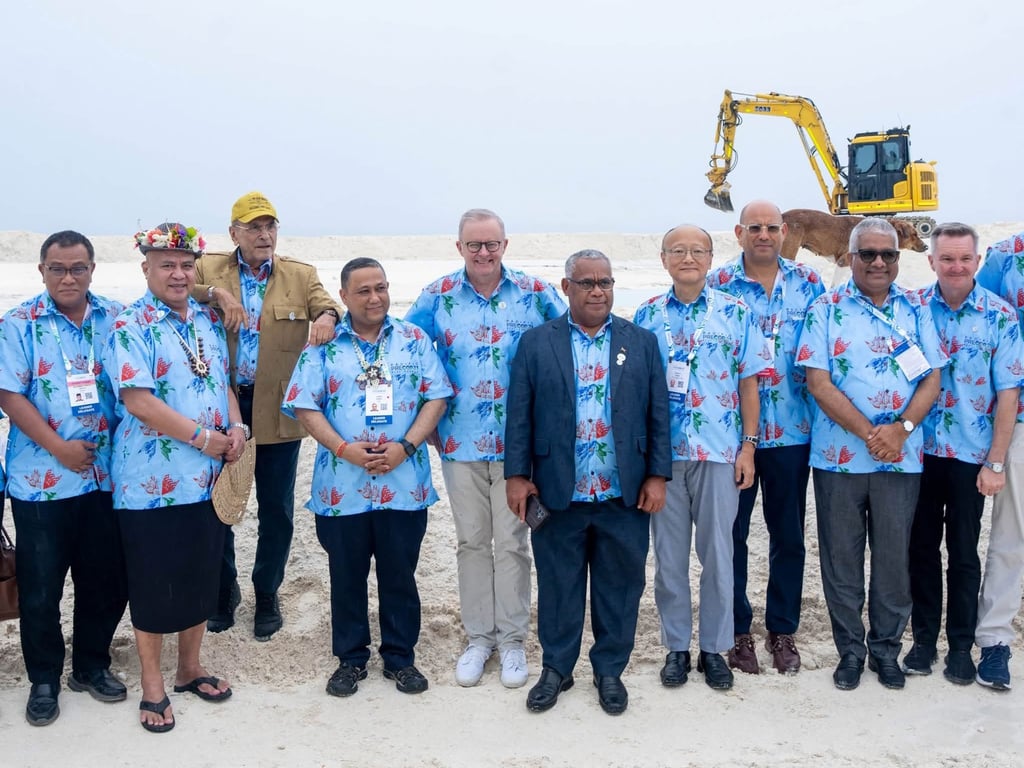
Whose security counts in the Pacific?
While climate-related spending gets criticised, billions forked out for security and strategic engagement gets framed as for the “national interest”.
News
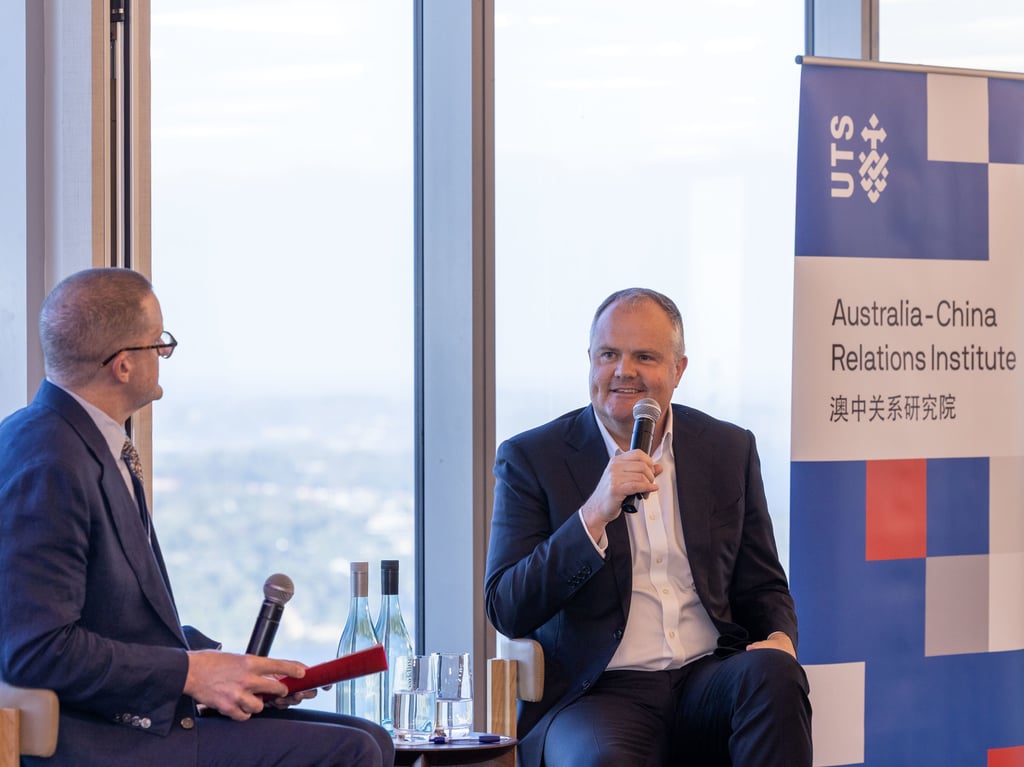
In conversation with Mr Ted O'Brien MP
On October 7 2026, the Australia-China Relations Institute at the University of Technology Sydney (UTS:ACRI) welcomed Mr Ted O'Brien MP, Australia’s Shadow...
News
The US and China cannot slow the AI race, but they can make It safer
The United States does not need to trust China, share frontier models with China, or slow its own AI development to have a national security interest in AI...
News
Australia-China Weekly Brief: October 2026 issues
The Australia-China Weekly Brief by the Australia-China Relations Institute at the University of Technology Sydney (UTS:ACRI) tracks key developments in...
News
Whose security counts in the Pacific?
While climate-related spending gets criticised, billions forked out for security and strategic engagement gets framed as for the “national interest”.
News
In conversation with Mr Ted O'Brien MP
On October 7 2026, the Australia-China Relations Institute at the University of Technology Sydney (UTS:ACRI) welcomed Mr Ted O'Brien MP, Australia’s Shadow...