


- Posted on 15 Jun 2026
By James Laurenceson
This book chapter, 'Australia-China research collaboration: a critical evaluation of security risks and responses', appeared in Brendan Walker-Munro and Tommy Shih (eds.), The Routledge International Handbook of Research Security. Routledge, London, 2026. https://doi.org/10.4324/9781003583431
ABSTRACT
Anxieties that interconnectedness with China might threaten Australian interests and values have long been prominent in Australia’s public discourse, leading to policy advocacy favouring the curtailment of these links. Since 2017, this has extended to Australia’s research endeavour.
Through their engagement with Chinese institutions and researchers, Australian universities and entities like the Commonwealth Scientific and Industrial Research Organisation have been accused of eroding the military advantage of the United States, the country’s most important security ally, and enabling human rights abuses and intellectual property theft.
The chapter begins by documenting the development of Australia’s research connections with China. Among other findings, this reveals that China is now on par with the United States as Australia’s most important research collaboration partner.
Claims of risk stemming from research connections with China are then reviewed and subjected to critical analysis. This does not contest that such connections can come with genuine risks. However, drawing on statements from official sources with access to classified materials, as well as other hard facts and evidence in the public realm, an assessment is delivered that the level of risk implied in much media reporting and commentary has been exaggerated. In part this reflects that Australia’s research endeavour is not defenceless. The Universities Foreign Interference Taskforce, a joint initiative involving government agencies and Australian research organisations, established in 2019, is one example. It also reflects that frequently missing in the public debate is essential context, such as the reality that China’s knowledge creation enterprise is now vastly more capable than Australia’s. That research collaboration with China brings benefits for Australia demands recognition too and should factor into government and research institution policy settings. There is some evidence, albeit mostly anecdotal, to indicate that Australia’s responses to research security risks have begun tilting excessively towards mitigating risks rather than seizing opportunities.
The Australian experience serves as a rich case study for other advanced liberal democracies seeking to navigate their own course in managing research security risks stemming from their connections with China.
share_windows Access the book chapter here. (Purchase or subscription required).
AUTHOR

Director, Australia-China Relations Institute And Professor, DVC (International & Development)

News
The US and China cannot slow the AI race, but they can make It safer
The United States does not need to trust China, share frontier models with China, or slow its own AI development to have a national security interest in AI...
News
Australia-China Weekly Brief: October 2026 issues
The Australia-China Weekly Brief by the Australia-China Relations Institute at the University of Technology Sydney (UTS:ACRI) tracks key developments in...
News
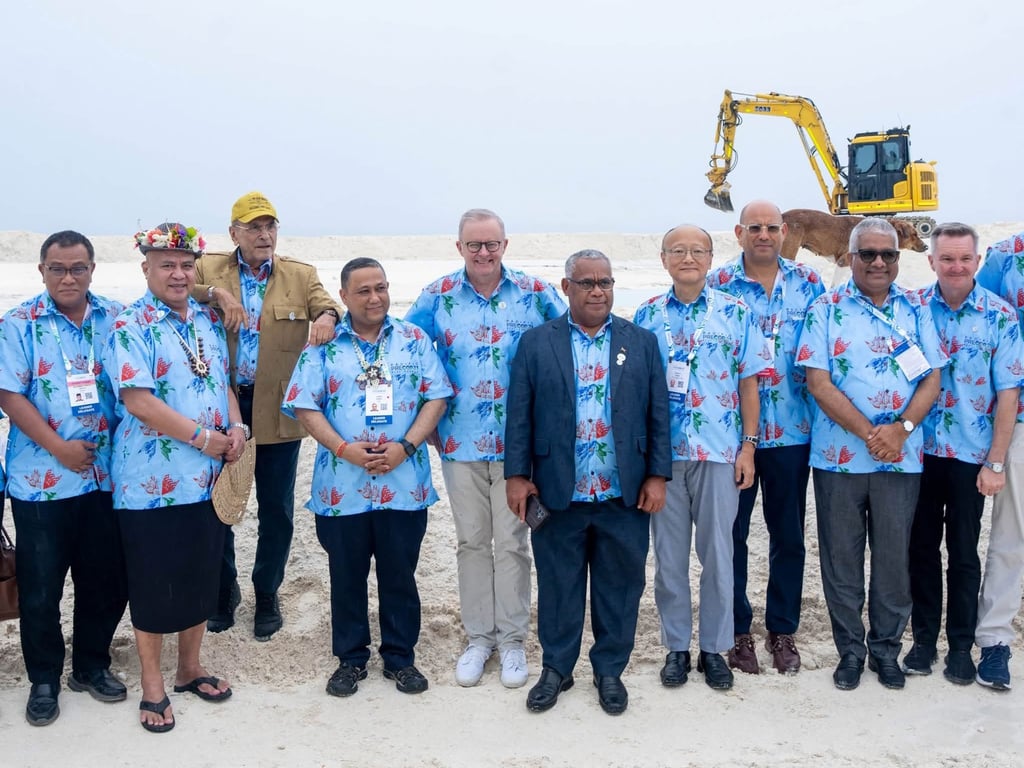
Whose security counts in the Pacific?
While climate-related spending gets criticised, billions forked out for security and strategic engagement gets framed as for the “national interest”.
News
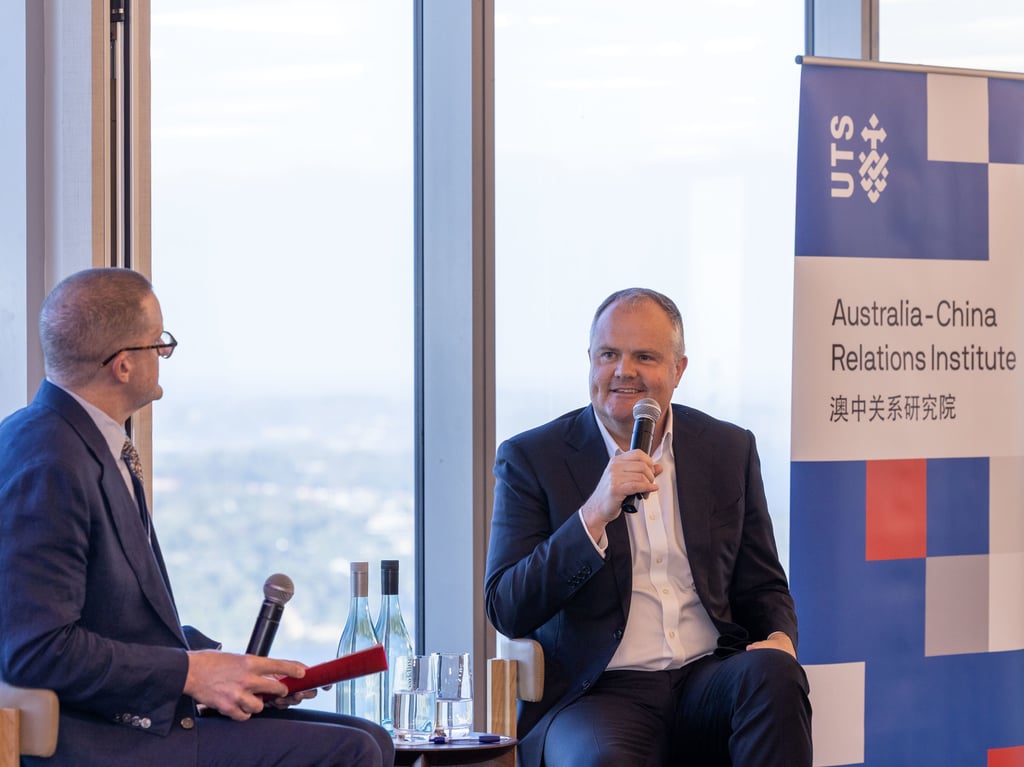
In conversation with Mr Ted O'Brien MP
On October 7 2026, the Australia-China Relations Institute at the University of Technology Sydney (UTS:ACRI) welcomed Mr Ted O'Brien MP, Australia’s Shadow...
News
The US and China cannot slow the AI race, but they can make It safer
The United States does not need to trust China, share frontier models with China, or slow its own AI development to have a national security interest in AI...
News
Australia-China Weekly Brief: October 2026 issues
The Australia-China Weekly Brief by the Australia-China Relations Institute at the University of Technology Sydney (UTS:ACRI) tracks key developments in...
News
Whose security counts in the Pacific?
While climate-related spending gets criticised, billions forked out for security and strategic engagement gets framed as for the “national interest”.
News
In conversation with Mr Ted O'Brien MP
On October 7 2026, the Australia-China Relations Institute at the University of Technology Sydney (UTS:ACRI) welcomed Mr Ted O'Brien MP, Australia’s Shadow...