


- Posted on 17 Sep 2025
By James Laurenceson and Xi Chen
This article appeared in Asia & the Pacific Policy Studies, vol. 12, issue 3. https://doi.org/10.1002/app5.70047.
Abstract
The China-Australia Free Trade Agreement (ChAFTA) was signed in June 2015. Unlike other deals that Australia struck with Japan and Korea around the same time, ChAFTAʼs passage through the Australian parliament was vigorously contested. This Policy Forum begins by recounting the claims of ChAFTAʼs Australian proponents and critics. It then uses these to structure an assessment of outcomes a decade on. The weight of evidence favours ChAFTAʼs proponents. A review of Chinese perspectives on the other hand points to different metrics and a more ambiguous assessment. Nonetheless, ChAFTAʼs net benefits have been sufficient to secure ongoing governmental and broader public support.
share_windows Read the book chapter online here. (Access may require purchase or subscription).
AUTHOR

Director, Australia-China Relations Institute And Professor, DVC (International & Development)
Xi Chen

News
The US and China cannot slow the AI race, but they can make It safer
The United States does not need to trust China, share frontier models with China, or slow its own AI development to have a national security interest in AI...
News
Australia-China Weekly Brief: October 2026 issues
The Australia-China Weekly Brief by the Australia-China Relations Institute at the University of Technology Sydney (UTS:ACRI) tracks key developments in...
News
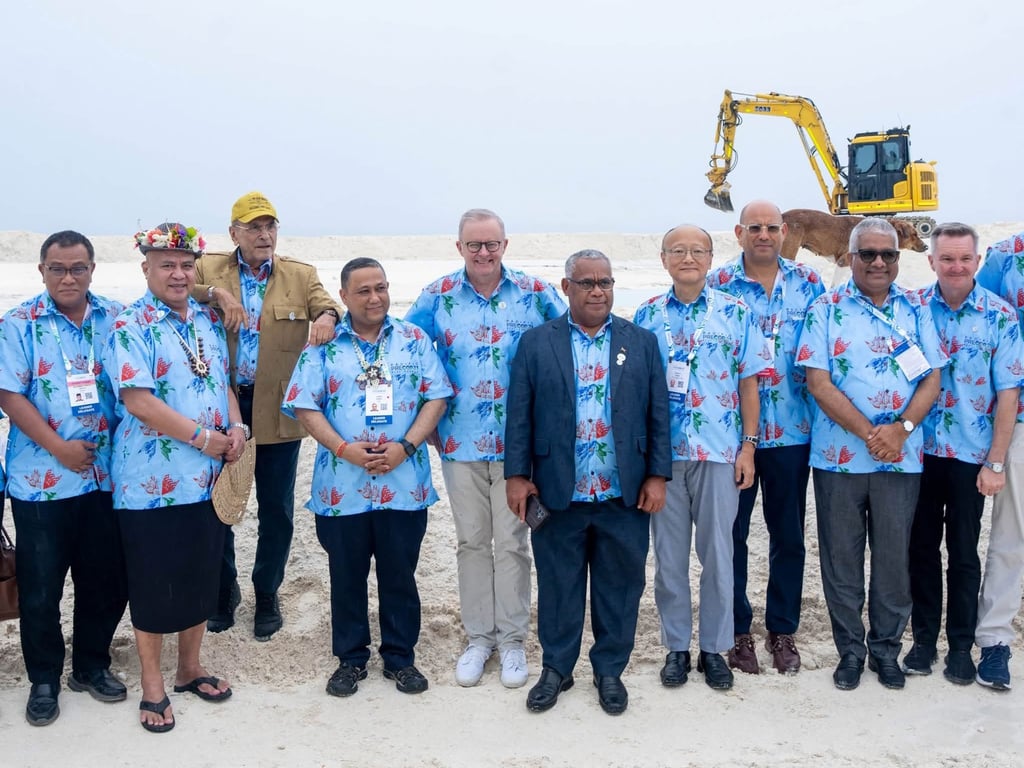
Whose security counts in the Pacific?
While climate-related spending gets criticised, billions forked out for security and strategic engagement gets framed as for the “national interest”.

News
In conversation with Mr Ted O'Brien MP
On October 7 2026, the Australia-China Relations Institute at the University of Technology Sydney (UTS:ACRI) welcomed Mr Ted O'Brien MP, Australia’s Shadow...
News
The US and China cannot slow the AI race, but they can make It safer
The United States does not need to trust China, share frontier models with China, or slow its own AI development to have a national security interest in AI...
News
Australia-China Weekly Brief: October 2026 issues
The Australia-China Weekly Brief by the Australia-China Relations Institute at the University of Technology Sydney (UTS:ACRI) tracks key developments in...
News
Whose security counts in the Pacific?
While climate-related spending gets criticised, billions forked out for security and strategic engagement gets framed as for the “national interest”.
News
In conversation with Mr Ted O'Brien MP
On October 7 2026, the Australia-China Relations Institute at the University of Technology Sydney (UTS:ACRI) welcomed Mr Ted O'Brien MP, Australia’s Shadow...