

The Gordon Young Scholarship has been made possible thanks to the generous bequest of the late Marie Gibson.
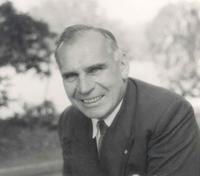
Gordon Young was appointed Director of the National Fitness Council in 1933 and simultaneously took on the role of Director of Physical Education. Young was recruited from Canada and his vision and ‘missionary zeal’ became legendary. In his time he established National Fitness Camps, Vacation Play Centres, After School Play Centres, Leadership Training programs, state-wide Learn to Swim programs and was instrumental in the introduction of tertiary trained Physical Education teachers.
In recalling the work of Gordon Young, particularly in relation to National Fitness camps, Ewens (1994:33) noted that ‘the development of National Fitness Camps was a saga of innovation, improvisation, scheming, contriving and hard work’. Young established the principle of community and state partnerships that were to be the hallmarks of his administration. Rotary clubs, Apex Clubs, Legacy and philanthropic organisations like the Wakehurst Club all made valuable contributions to the development of National Fitness Camps; their volunteers built facilities, raised funds and imbued camps with a degree of social consciousness.
UTS is honoured to receive the bequest and will seek to ensure the work of Gordon Young becomes more widely recognised.
For more information on prizes, visit scholarships.
About the scholarship
The UTS Business School Management Discipline Group and the Faculty of Health are each offering a $12,500 scholarship (or $6,250 if there are two eligible recipients) in memory of Gordon Young, the former NSW Director of Physical Education and President of the Australian Council for Health, Physical Education and Recreation. To be eligible you must be a:
- Full-time student(s) with UTS enrolment in either an Honours degree, a Masters Degree by Research or a PhD degree in the UTS Business School or Faculty of Health.
- The recipient must be studying or researching in the area of physical recreation, human movement or sport.
Applicants must have completed a relevant undergraduate degree and for the duration of the Scholarship the recipient is not permitted to hold other UTS Scholarships, unless and equity-based Scholarship is approved by exception.
The Gordon Young Scholarship aims to support research in the following broad areas:
- Physical Education
- Health and Fitness
- Recreation
- Sport Administration
The application should include your curriculum vitae with at least two referees, academic record and statement of specific research interests in keeping with the vision of the late Gordon Young.
Selection criteria, in priority order:
- Academic merit.
- A statement of specific research in keeping with the vision of the late Gordon Young.
- Motivation to succeed in field of studies as demonstrated in the application.
- Preference will be given to field of studies being related to the donor’s intended wishes: physical recreation, human movement or sport.
Applications close around 10 March each year.
To lodge an application (typically from February each year), please refer to the Scholarships and prizes.
For more information about this scholarship, please contact:
- Dr Rob Bower (School of Sport, Exercise and Rehabilitation), Deputy Head of School - Teaching and Learning Rob.Bower@uts.edu.au.
- Dr Nico Schulenkorf (School of Business), Course Director Sport Management Nico.Schulenkorf@uts.edu.au.
Previous recipients
2017 Gordon Young Memorial Scholarship: Patrick Turner & William Sheehan
The 2017 Gordon Young Memorial Scholarship was awarded to two recipients: Patrick Turner & William Sheehan
The 2017 Gordon Young Memorial Scholarship was awarded to Patrick Turner for his Honours project titled “The Development and Validation of a Novel Decision-Making Assessment for Youth Australian Football”. Patrick’s thesis aimed to address the lack of valid assessments available to measure the decision-making ability of youth Australian Football players for talent identification purposes. In particular, Patrick’s study measured decision-making ability by assessing anticipation time, response time, performance time and skill accuracy within an Australian Football specific task. Patrick’s research was unique in that it was the first study to couple a video-based perceptual-cognitive task with motor skill execution in Australian Football as well as examine the importance of decision-making skill for the career progression of talent-identified youth players.
The 2017 Gordon Young Memorial Scholarship was also awarded to William Sheehan who investigated the relationship between a range of neuromechanical variables in the lower- and upper-body and golf performance. Participants were assessed for individual muscle stiffness, flexibility, power and maximal isometric strength. Furthermore, golf performance was determined by handicap and club head speed.Club head speed demonstrated positive relationships with lower body stiffness measures and power while strength and flexibility measures were not related to performance. Higher levels of lower-body stiffness and power output appear to be beneficial for generating superior club head speed. A stiffer system may reduce the time needed to remove the “slack” from the series elastic component therefore, reducing electromechanical delay and enhancing rate of force development. The large positive association with rate of force development suggests that increasing this component, along with power production may be superior focal components for training in golfers due to the short duration of the downswing.
Findings may aid training implementation and improve ability as has been demonstrated in other contexts. If appropriately applied in a golfing context, this may improve performance leading to an increase in participation, enjoyment and adherence, with a plethora of associated mental and physical health benefits resulting from participation in the game. The current project closely aligns with Gordon Young’s vision as he too was heavily involved in promoting and developing fitness programs in a way that employed innovation, creativity, and hard work. Utilising these principles, he managed to create a positive environment in multiple forms of physical activity which encouraged widespread participation and social interaction. The Gordon Young scholarship allowed me to pursue my study ambitions and consequently contribute knowledge that will hopefully allow fellow golfers to reach heightened levels of satisfaction.
2016 Gordon Young Memorial Scholarship: Greg Joachim
The 2016 Gordon Young Memorial Scholarship was awarded to Greg Joachim for his doctoral research in the area of sport development. Greg’s project aims to adapt a conceptual model of Design Thinking to the sport management context in order to maximize the social outcomes of youth sport programs in Australia. Design Thinking empowers practitioners to develop innovative designs of services and the social spaces in which those services are delivered. In a sport management context, this will result in local stakeholders developing new – or tweaking existing – sport programs within the constraints of local contexts. Developed in this way, these programs will keep the holistic development of each young athlete as the primary focus and end goal.
2015 Gordon Young Memorial Scholarship: Veronica Lo Presti & Judd Kalkhoven
In 2015, the Gordon Young Memorial Scholarship was awarded to two recipients: Veronica Lo Presti & Judd Kalkhoven.
The 2015 Gordon Young Memorial Scholarship was awarded to Veronica Lo Presti for her Doctoral project titled ‘Universal Design in Sport: a catalyst for social inclusion?’. Veronica’s research investigates the dynamics of social inclusion in the planning, organisation and operations of the Rio 2016’s volunteer program. It does this to examine the Universal Design of the Rio2016’s volunteer program through the analysis of the practices performed by those participating to it. The intent is to fill the gap between organizational ‘promises’ and practices of social inclusion. Findings could inform future Games organising committees’ planning and designing of social inclusion practices in future sporting events. Veronica is currently in Rio de Janeiro to collect data at the Olympic and Paralympic Games in which she is volunteering.
The 2015 Gordon Young Memorial Scholarship was awarded Judd Kalkhoven for his Honour’s project titled “The relationship between mechanical stiffness and athletic performance markers in sub-elite soccer players”. Judd’s thesis aimed to clarify the role of the stiffness/elastic properties of the human body in athletic performance. Specifically, Judd’s research assessed both vertical stiffness and the stiffness of individual musculature in relation to a range of athletic performance tests including strength, sprint and jumping assessments. Judd’s study was unique in that it was the first study to assess the stiffness of specific leg musculature located above the knee as it relates to athletic performance.
2014 Gordon Young Memorial Scholarship: Marissa Banu-Lawrence
The 2014 Gordon Young Memorial Scholarship was awarded to Marissa Banu-Lawrence for her Honours thesis titled “Searching for a Voice: Women and Leadership Development in Australian Sport Organisations”. Marissa’s work has sought to address the growing interest in gender diversity and the leadership development of women within Australian sport organisations. The research focused on exploring gendered processes within stakeholders of the Australian sport industry, and to uncover its impact on the leadership development of women. The study has contributed to expanding our knowledge of the current gender strategies and leadership development practices within sport industry stakeholders. The study has implications for current practice, highlighting the potential for cross-organisational knowledge sharing and learning between sport industry stakeholders.
2013 Gordon Young Memorial Scholarship: Val Chan
The 2013 Gordon Young Memorial Scholarship was awarded to Val Chan for her Honours project. Val's project investigated the utilisation of compression garments as a recovery intervention from physical work and exercise. The primary aim of the project was to examine the effectiveness of compression garments as a recovery tool, with a view to improving exercise performance and participatory capacity on subsequent days. A range of physiological and neuromechanical assessments were conducted, including blood markers of inflammation, muscle size, muscle strength, muscle stiffness, cardiovascular fitness and perceptual responses. In addition to this, Val has a personal allegiance to Gordon Young's vision of getting more people, more active, more often and promoting active life learning through her work with NSW Department of Sport and Recreation camps.
2012 Gordon Young Memorial Scholarship: Mitchell Smith
The 2012 Gordon Young Memorial Scholarship was awarded to Mitchell Smith. Mitchell is a Ph.D. student investigating the link between the mood and performance of team sport athletes. His research will focus mental fatigue and the ways it affects an athlete’s ability to perform skilled movements and make fast and accurate decisions. The purpose of Mitchell's research is to enable athletes to prepare and train both their brains and their bodies for optimum performance.
2011 Gordon Young Memorial Scholarship: Melissa Penn
Melissa Penn was awarded the 2011 Gordon Young Scholarship for her Honours thesis titled, “Biomechanical differences in shots for accuracy and power when batting in women’s cricket”. Melissa investigated the technique differences in elite female cricketers when their intention was to hit powerfully compared to accurately. She received first class honours and has since gained employment with the Australian Institute of Sport as a biomechanist.
2010 Gordon Young Memorial Scholarship: Peter Fernley
In 2010 the Gordon Young Memorial Scholarship was awarded to Peter Fernley. Peter is enrolled in a Masters Degree by Research in the School and his thesis will investigate “The relative age effect in junior team sports: implications for talent development programs in Australia”. The purpose of his study is to provide evidence that will inform policy makers of the flaws in the current sporting system and contribute to improved sporting and recreation programs for teenagers. Peter is a teacher by profession and has spent the last two decades working to promote the benefits of a healthy lifestyle, regular exercise and recreation in adolescents.
2009 Gordon Young Memorial Scholarship: Silke Motschiedler
The 2009 Gordon Young Memorial Scholarship was awarded to Silke Motschiedler. Congratulations to Silke on completing her thesis “The influence of exercise program structure on motivation and adherence” and achieving first class honours.