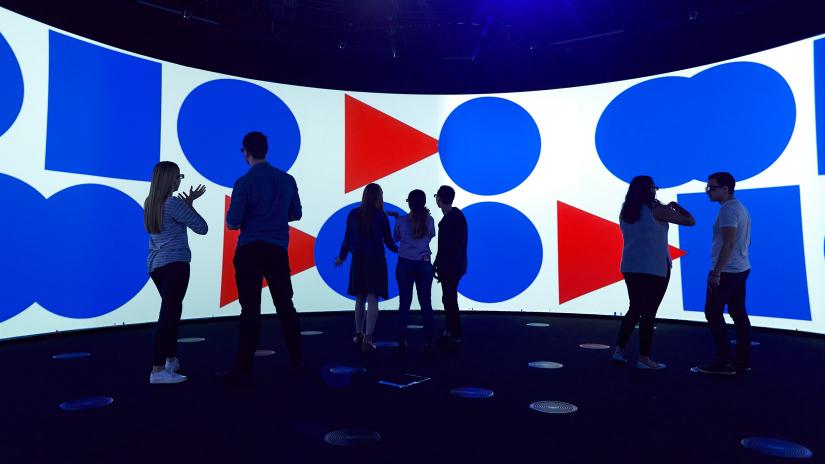
The Mechanical and Mechatronic Design Studio is offered as an undergraduate subject for final year students. It aims to teach students modern design methods by applying engineering knowledge to authentic engineering problems with an emphasis on the design project and realistic team-client-end user interactions.
-0N-rfJLQNU

Transcript

[Text on screen: Mechanical and Mechatronic Showcase]

So all the projects are a bit different. They all come from industry, so it depends on what our client is after. Sometimes that’ll be solving a real-world problem with a mechanical solution, or a mechatronic solution. The client might be after a report, a feasibility analysis, or they might actually want a full, working prototype of some mechatronic system. That’s what’s really great about this subject – every single project is different.

For the subject Mechanical and Mechatronic Design, I’ve been working on a project with my group to design a new transmission system for a trolley that they’re making for UTS CAS.

The impact on students is that they get to apply their engineering skills to real professional projects. They get to solve real-world engineering problems with actual clients. And industry-wise, they get to work with up-and-coming engineers and often get a lot of creative designs from the students.

Probably something I’ve enjoyed most has been being really hands-on and doing lots of prototypes, as well as engaging with the client and constantly updating the design concept.

What I’ve enjoyed the most about the subject is how professional it is. The students get to interact with the client and learn how to communicate with people before they graduate – that’s so important.

I think the fact that it’s real, the fact that you’re dealing with real people, that there’s motivation to get across deliverables because you want them to be happy, obviously. Yeah, that’s quite motivating.

I think the industry should get involved with the subject because there’s a lot to offer. I think industries are often looking for young talent, and this is the place to go. There’s no better place to showcase their talent and hard work in this subject than through an interview or scouting them at a networking event.

It’s led to quite a few interesting outcomes. We’ve had students go on to do internships with companies, to have job opportunities, and we’ve had industry come back again and again, building upon the projects that the students do semester in and semester out.

One brief, 12 weeks, teams of 4–6 students

Working in teams with fellow senior students and under the guidance of industry and faculty mentors and coaches, you’ll deliver solutions for problems posed by industry.

GET INVOLVED

industrystudios@uts.edu.au

Teams are made up of four to six members who are selected based on the individual’s strengths and interests in order to create a cohesive group with a diverse skillset for your project. Students will also have industry mentors who will spend one to two hours weekly, face-to-face collaborating with them on your project.

You will use design methodologies taught in the subject to develop engineering solutions that solve genuine, real-world problems with clients allocated to your team.

Combined with your practical experience working with your client, you will also document your process and present them to a panel of professional industry partners and academics throughout the semester.

What are some of the previous projects?

Teams have worked on industry-engaged projects that include product design for clients, developing and refining automotive systems, manufacturing, as well as research-based deliverables.
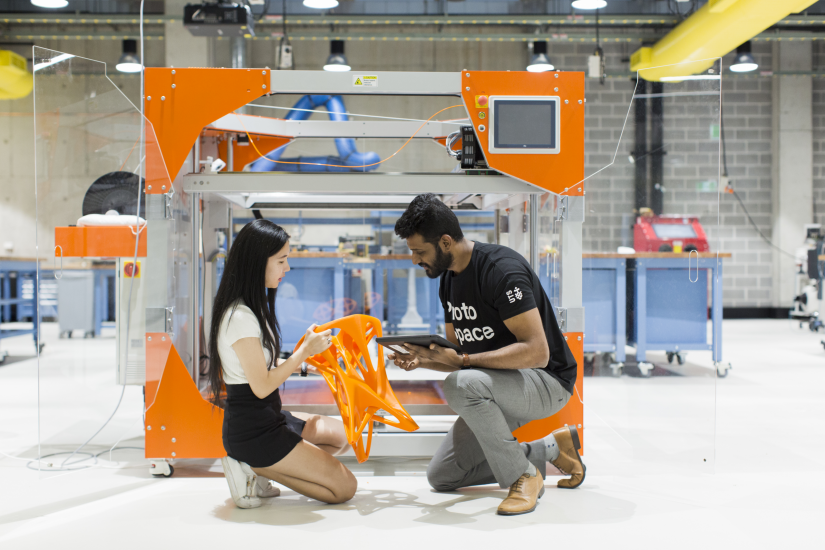
Meet the academic

Image of Marc Carmichael

Dr Marc Carmichael
Senior Lecturer, School of Mechanical and Mechatronic Engineering
Core Member, CAS – Centre for Autonomous Systems

Marc Carmichael received his B.Eng. Mechanical and Mechatronic Engineering (2008) and PhD degree (2013) in the area of robotics from the University of Technology Sydney. He joined the UTS Centre for Autonomous Systems (UTS CAS) as a Lecturer in 2016. Learn more about Marc