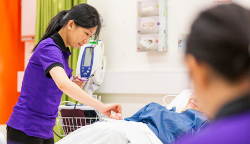
UTS healthcare simulation provides an immersive, innovative, and rigorous learning journey for our nursing and midwifery students. This authentic experience encourages critical thinking, hones clinical skills, and fosters a commitment to patient safety and the best patient outcomes.
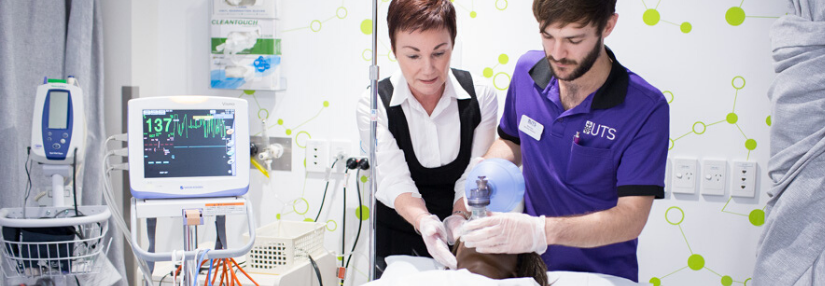
UTS Nursing student and academic in clinical lab

Nursing and midwifery students learn in technology-rich environments with access to some of the best simulation facilities in Australia.

Clinical placements are undertaken across a wide range of metropolitan, regional, rural and international settings.

  • Nursing students participate in clinical learning experiences in acute, mental health, aged care and primary health settings, caring for people across the life span and practising both their technical and non-technical skills.
  • Midwifery students attend placements in some of the best maternity services in NSW supported by skilled midwives and doctors and learning about the care of women during pregnancy, labour and up to six weeks post-partum.

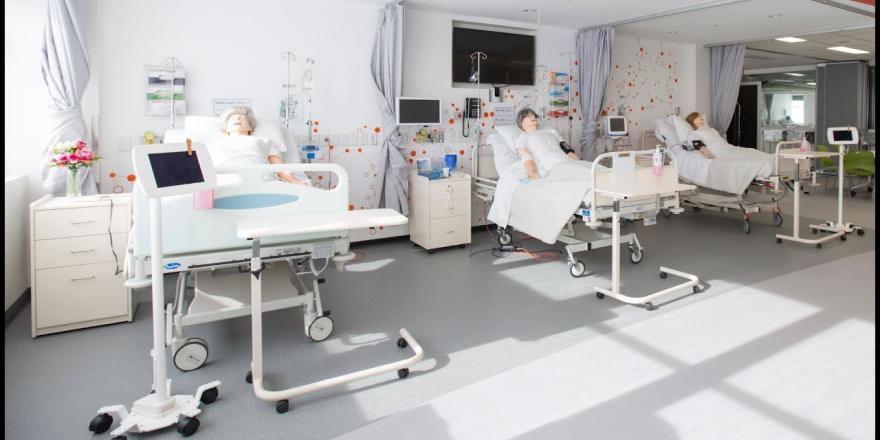
Nursing simulation facilities virtual tour:
GZUcE6_xHaA

Transcript

Hi, welcome to the UTS Faculty of Health. Thank you so much for joining our nursing lab tour. On this level, there are 16 clinical labs and eight simulation bays for our nursing and midwifery students.

And here we're standing outside our clinical administration unit, who organise students' clinical placements in healthcare settings, like hospitals, aged care and community settings.

Let's head over the bridge to have a look at our facilities used for our nursing students.

Here's our first stop, a medical surgical nursing lab.

Our labs are set up to look and feel exactly like hospitals, aged care facilities and primary healthcare services. The setup is flexible and there are generally two areas: the classroom area and the simulation area.

In the simulation area are five to six bed spaces. Between the labs is a preparation and equipment room. During class, we access equipment we need for different nursing procedures.

Back in the lab, we have manikins to simulate patients. Many of them are robotic and have different levels of authenticity or ability to mimic real-life patients. Some can simulate coughing, vomiting, perspiring, fitting and shivering. They can bleed or simulate a cardiac or respiratory arrest. They can speak, cry and groan, so we can tell how they're feeling, just like a real-life patient.

Simulated-based learning also involves role playing, where actors, people with lived experience, students and teachers all engage in clinical scenarios. These experiences help us to develop communication, empathy and teamwork skills, which are critical to good nursing.

Let's go meet one of our patients, SimMan.

When you look around our patient's bed, you'll notice a lot of high-tech equipment. The large LCD screen can show data and scans such as blood results and X-rays. The monitor shows the patient's heart rate, oxygen saturations, temperature and blood pressure. Anything a student does to treat the manikin will be mirrored in their observations. So if they give blood pressure medicine, the manikin's blood pressure will change in response.

On the ceiling are two microphones to capture what people are saying when they're working in this bed space. Three cameras reflect what's happening and can be viewed or saved in the control room for students to reflect on and learn from after the simulation.

We've now entered the control room behind the one-way mirror. It's the working hub for many simulated experiences.

The instructor PC shows the patient monitor screen. It controls the manikin and the responses triggered by students when they provide patient care. The instructor can direct the simulation from here, speaking as a patient through the manikin, or they can talk to the students via the speaker above the bed space.

What happens in the control room is designed to ensure that simulations are realistic clinical scenarios so that students can learn in a really immersive way.

Now let's go have a look at one of our paediatric wards.

This space mimics a children's hospital setting. Nursing students learn about paediatrics throughout their degree, and they can also pick a paediatric elective in their third year. The manikins in here range from newborn to 12 years, but they have the same range of features as adult manikins.

Paediatric processes can be complex, and one of the most important nursing skills is to administer medication correctly. Because children's body weight is variable and much lower than adults', medication calculation is essential.

Hi again. This is the perioperative nursing lab. You'll see that we have an operating theatre set up in here. In third year, nursing students can select perioperative nursing as an elective.

And this particular space is called the community room. It's flexible and can be used to simulate primary healthcare consultations, mental health nursing visits, care of an elderly person in their home and more.

The last lab we'll visit today is this one, the practice lab.

This is where we can book in additional practice of our clinical skills and build our confidence before clinical placements and assessments.

On our way out, we'll take you past the student kitchenette. In the kitchenette, we have a fridge, freezer and microwave to be used by students at any time.

And now we'll see our Health student computer and printing area. There's plenty of desks and bookable meeting rooms on this level, which makes it a popular place for group work and independent study.

Thanks so much for joining our tour. We hope you enjoyed gaining insight into being a nursing student at UTS.

See you at UTS soon!

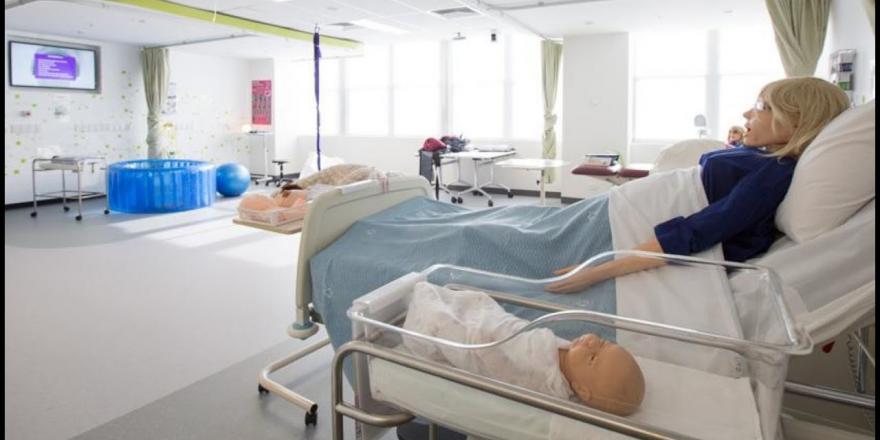
Midwifery simulation facilities virtual tour:
raZGEc96xX4

Transcript

Hi, welcome to the UTS Faculty of Health. Thank you so much for joining our nursing lab tour.

On this level, there are 16 clinical labs and 8 simulation bays for our nursing and midwifery students. Here, we're standing outside our clinical administration unit, who organise students' clinical placements in healthcare settings, like hospitals, aged care and community settings.

Let's head over the bridge to have a look at our facilities used for our nursing students.

Here's our first stop, a medical surgical nursing lab. Our labs are set up to look and feel exactly like hospitals, aged care facilities and primary healthcare services. The setup is flexible and there are generally two areas: the classroom area and the simulation area. In the simulation area are five to six bed spaces. Between the labs is a preparation and equipment room. During class, we access equipment we need for different nursing procedures.

Back in the lab, we have mannequins to simulate patients. Many of them are robotic and have different levels of authenticity or ability to mimic real life patients. Some can simulate coughing, vomiting, perspiring, itching and shivering. They can bleed or simulate a cardiac or respiratory arrest. They can speak, cry and groan, so we can tell how they're feeling, just like a real life patient.

Simulated-based learning also involves role playing, where actors, people with lived experience, students and teachers all engage in clinical scenarios. These experiences help us to develop communication, empathy and teamwork skills, which are critical to good nursing.

Let's go meet one of our patients, Sim Man. When you look around our patient's bed, you'll notice a lot of high-tech equipment. The large LCD screen can show data and scans such as blood results and x-rays. The monitor shows the patient's heart rate, oxygen saturations, temperature and blood pressure. Anything a student does to treat the mannequin will be mirrored in their observations. So if they give blood pressure medicine, the mannequin's blood pressure will change in response.

On the ceiling are two microphones to capture what people are saying when they're working in this bed space. Three cameras reflect what's happening and can be viewed or saved in the control room for students to reflect on and learn from after the simulation.

We've now entered the control room behind the one-way mirror. It's the working hub for many simulated experiences. The instructor PC shows the patient monitor screen. It controls the mannequin and the responses triggered by students when they provide patient care. The instructor can direct the simulation from here, speaking as the patient through the mannequin, or they can talk to the students via the speaker above the bed space. What happens in the control room is designed to ensure that simulations are realistic clinical scenarios so that students can learn in a really immersive way.

Now let's go have a look at one of our paediatric wards. This space mimics a children's hospital setting. Nursing students learn about paediatrics throughout their degree and they can also pick a paediatric elective in their third year. The mannequins in here range from newborn to 12 years but they have the same range of features as adult mannequins. Paediatric processes can be complex and one of the most important nursing skills is to administer medication correctly. Because children's body weight is variable and much lower than adults, medication calculation is essential.

Hi again, this is the perioperative nursing lab. You'll see that we have an operating theatre set up in here. In third year, nursing students can select perioperative nursing as an elective.

And this particular space is called the community room. It's flexible and can be used to simulate primary health care consultations, mental health nursing visits, care of an elderly person in their home and more.

The last lab we'll visit today is this one, the practice lab. This is where we can book in additional practice of our clinical skills and build our confidence before clinical placements and assessments.

On our way out, we'll take you past the student kitchenette. In the kitchenette, we have a fridge, freezer and microwave to be used by students at any time.

And now we'll see our health student computer and printing area. There's plenty of desks and bookable meeting rooms on this level, which makes it a popular place for group work and independent study.

Thanks so much for joining our tour. We hope you enjoyed gaining insight into being a nursing student at UTS. See you at UTS soon!

UTS Nursing student in clinical lab with patient

Clinical placements

Practice-based learning is at the heart of our health education. Because in our industry, we know nothing beats practice.
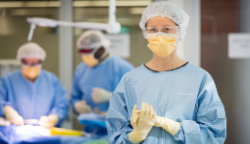
UTS Perioperative nursing lab

Simulation-based learning experiences

UTS nursing and midwifery students participate in authentic clinical scenarios that would normally only be encountered in real clinical settings.
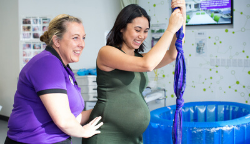
UTS Midwifery student in lab classroom

Simulation facilities

UTS simulation facilities and clinical skills laboratories were purpose-built and designed to create engaging and exciting learning opportunities.