


The Executive MBA Strategic Design Studio (SDS) combines leading research and methods with industry best practice, to provide you with innovative solutions and realistic and achievable implementation plans.
The focus on developing entrepreneurial and innovation strategies, drawing on knowledge of strategy, design thinking, data analytics and start-up methods. SDS is framed as an innovation strategy consultancy where student teams help existing start-ups, corporates as well as not-for-profits or social ventures investigate a strategic challenge and create innovative solutions and strategic recommendations.
"Partnering with UTS gave us an opportunity to engage with some of the most promising entrepreneurship-focused students in the country."
- Alex McCauley, CEO, StartupAUS
Methodologies applied
Our EMBA students engage in rigorous research and analysis to identify problems, deeply understand customer needs, explore company resources, capabilities, processes and revenue streams as well as the competitive environment. The projects generally follow a Design Thinking methodology by first exploring the problem-space before developing and testing solutions.
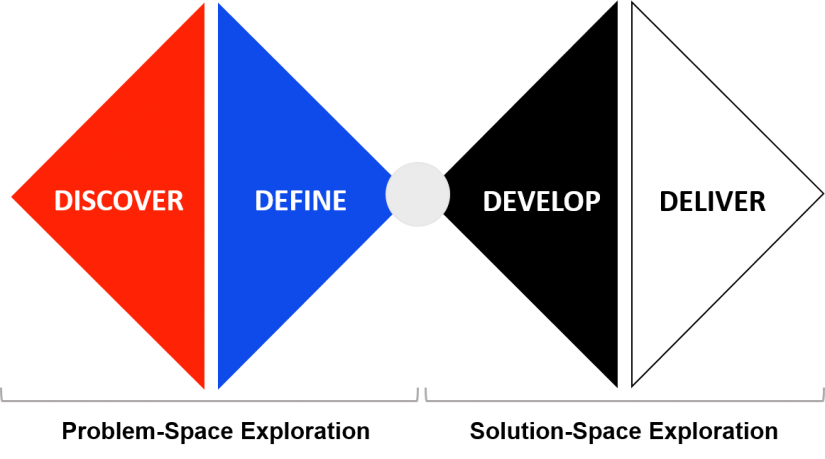
Students apply a mix of problem-solving and framing approaches, consulting tools and methodologies including strategic analysis methods to research markets, trends and emerging technologies, techniques for managing technological disruptions and develop value propositions, business models or business cases in order to deliver actionable outcomes to your organisation. To support implementation, students apply Agile project management methodologies, transformation and change approaches as well as storyboarding and presentation tools and techniques.
Results you can expect
The project teams deliver clients with a recommended solution and strategy in response to the project brief. Recommendations are delivered in form of a presentation and project report including supporting research. Solutions and recommendations are evidence-based, that means students deliver insights based on research and industry best practice, accompanied by realistic and achievable implementation plans. At the end of each project, you retain the IP generated from the project, similarly to a consultancy model.
Ideal project characteristics
Challenges best suited for SDS are complex, customer/user/employee-facing and strategic, which may include new product/service development, strategic change or transition, or challenges associated with new technologies and new ways of working. Projects must have a delivery/implementation component. Over the last ten years, SDS projects have included a range of challenges for start-ups, not-for-profits, large corporate businesses and government agencies. Student teams have developed:
- a market entry strategy for a high growth venture
- business model options for a charity
- market validation for an early-stage AI start-up
- sustainable urban development strategy for a government agency
- business model validation for a scale-up
- service and product development for a range of clients
The outcomes of these projects can uncover new opportunities and recommend new directions for you to explore – as such we recommend approaching this project with an open mind as you may be surprised by what the outcome will offer.
Meet your project team
- The student team carries out the project work and is responsible for the delivery of results to you. It is composed of four to five student entrepreneurs with diverse backgrounds (e.g. airline pilots) and a drive to create value
- The SDS coach guides the team during the project by identifying and addressing students' learning needs and supporting the team in every aspect of project and relationship management. Coaches have years of professional services experience and/or industry background relevant to your project. Coaches are your contact point to discuss project progress
- The SDS lead academic is responsible for subject content, design, coordination and delivery. Together with the practice lead they facilitate the learning experience by introducing relevant concepts and by working with students to ensure both successful learning outcomes and project deliverables
- The SDSadvisory council meets twice to challenge the students’ work. Members of the advisory council are senior leaders and/or entrepreneurs, hand-picked from our networks based on their relevant experience
Project timeline
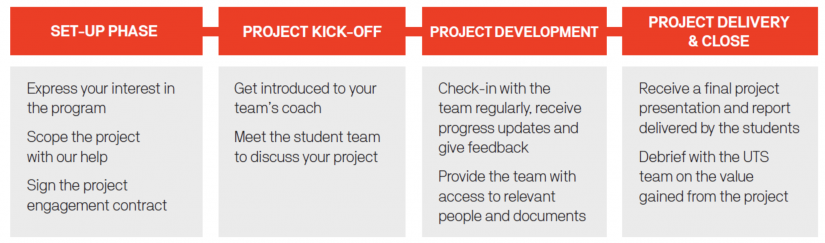
Projects start in March and/or August each year in line with Autumn and Spring session. Please allow 3-5 weeks prior to kick-off for project scoping and contracting.
Your involvement
The more you put into the project, the more you get out of it! At a minimum, you will need to:
- Write a project brief, with our support (one to two pages)
- Provide the students with access to relevant internal documents
- Meet with the students three times (start, middle and end of project)
- Provide the students with access to relevant additional stakeholders
To facilitate the project progress, we recommend you nominate a person in your organisation to facilitate the students’ access to documents and stakeholders.
As with all formalised collaboration, there will also be a bit of paperwork to review and sign—we try to keep this at a minimum while providing you with the assurance of our engagement with you.
Cost
We deliver these projects for $10,000+GST, to be paid after delivery. This cost may be eligible for a 42.5% tax concession under the R&D Incentive scheme, depending on the nature of the project (please seek advice from the ATO or your Tax Advisor).
Interested? Please contact us. A member of our team will get back to you shortly.