


Learn how to navigate the Australian workforce and build experience as an international student.
Finding a job while you study is a great way to fund your lifestyle while making new friends. But how do you find a job? What are your rights at work? What help is available? And can you stay in Australia to work after you graduate?
To help you find the answers to these questions and more, we’ve put together this handy guide to working in Sydney as an international student.
Working in Australia: what you need to know
Working while you study
In most cases, international students holding a Student (subclass 500) visa (external link) can work while studying in Australia. Here are some key facts:
- You can start working once your course has commenced.
- You can work up to 48 hours per fortnight while your course is in session.
- The 48 hour per fortnight limit applies to breaks during the session, known as study vacation or StuVac. The limit also applies during assessment periods at the end of the session.
- If you are studying a master's degree by research or a doctoral degree, you can work more than 48 hours per fortnight.
- You can work unlimited hours during official vacation periods between teaching sessions. If you take a subject, do a clinical placement or participate in other compulsory academic activities during the vacation period, you may not be allowed to work unlimited hours for that period.
- Visa conditions and work rights (external link) may change over time, so check the Department of Home Affairs website for the latest information.
You can find job opportunities through platforms like SEEK or Indeed (external links), employer websites and our own job board, which is available exclusively to UTS students.
You’ll need a Tax File Number (TFN) to work in Australia. A TFN is a unique number issued by the Australian Taxation Office to help manage your tax records. You can apply for a TFN for free (external link) on the Australian Taxation Office website.
Post-study work opportunities in Australia
Interested in continuing your career in Australia after graduation? The Temporary Graduate (subclass 485) visa allows eligible graduates to live and work in Australia after completing their studies. For most graduates, the visa duration ranges from 2 to 3 years, depending on the qualification completed. Students should refer to the Department of Home Affairs website for current eligibility requirements and conditions for the Temporary Graduate (subclass 485) visa (external link).
Your workplace rights
International students in Australia enjoy the same workplace protections as anyone else. Here are some of your rights at work. For more information, check out the Australian Government's guidance for international students (external link).
Fair pay
In Australia, you must be paid at least the national minimum wage (external link). You may also be entitled to a higher rate of pay depending on your industry.
Fair treatment
Your workplace must take steps to ensure your health and safety. You’re also protected from bullying, discrimination and harassment.
Freedom from exploitation
Some employers may try to exploit international student workers. This could look like:
- underpaying you
- pressuring you to sign agreements
- making you pay them back for costs
- asking you to work outside what’s allowed by your visa.
It’s important to know that your employer cannot cancel your visa, even if you have breached your visa conditions. If you run into trouble, you can approach the Fair Work Ombudsman (external link) for advice.

Launch your career with UTS
Our career support is there for you at every stage of your journey. Access the following services:
- Online tools and resources
- Resume rating service
- Practice interviews
- One-on-one career support
- Exclusive job, internship and work experience opportunities
- An international student career hub, which provides curated resources
How to gain work experience
When you're at the start of your career, how can you prove to employers that you're able to do the job? University is a great time to take on interesting, resume-enhancing projects. Here are some of the best ways to get work experience.
-
 1
1Work-integrated learning
At UTS, we build hands-on experience into your degree.
That’s why many of our courses include work-integrated learning. Depending on your course, you might be treating patients in one of our simulated labs, creating a business case for an industry partner or completing a placement in a real working lab.
Work-integrated learning gives you the chance to:
- apply what you’ve learned in the classroom in a real setting
- build valuable workplace skills
- network and build relationships with professionals and industry partners
- enhance your resume with hands-on experience.
With work-integrated learning at UTS, you’ll get the edge you need to launch your future career with confidence.
-
 2
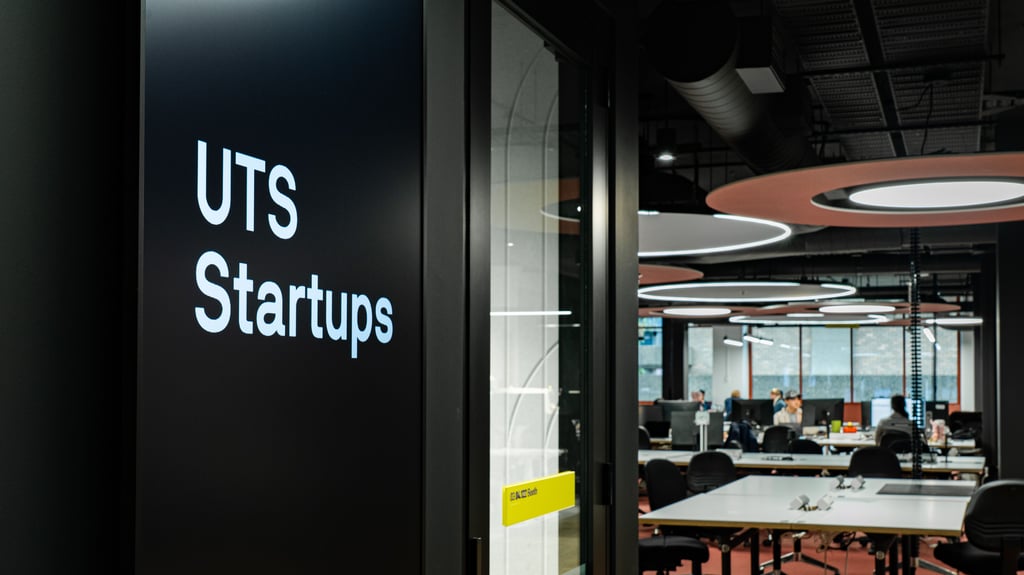
2Entrepreneurship with UTS Startups
UTS Startups is located in the heart of the Tech Central precinct. With 250 desks and a startup event space, this incubator is open to UTS students with big ideas.
Everyone is welcome at UTS Startups' public events and programs (external link), so if you’re an entrepreneurial student, it’s the perfect place to learn and network.
-
 3
3Volunteering
Volunteering as an international student is a great way to build skills, gain experience and make connections while studying at UTS.
Volunteering gives you the opportunity to:
- grow workplace-ready skills, such as communication, problem-solving, teamwork and customer service
- add valuable experience to your resume
- make new friends and expand your professional network.
There is a range of volunteer opportunities available at UTS:
- UTS SOUL Award, a co-curricular social justice action and leadership program.
- Peer Network, a team of students who assist new students as they begin their studies.
- Bluebird Pantry, an initiative that helps reduce food waste and assist students experiencing food insecurity.
Whether you're pursuing a passion or looking to develop important new skills, there's a volunteering opportunity for you at UTS.
-
 4
4Global experiences
Research shows that students with overseas experience enjoy stronger career outcomes. As an international student at UTS, you’re already gaining valuable skills studying in another country, but why stop there?
UTS offers a wide range of global study programs that let you expand your degree and your horizons. For example:- Winter and summer study abroad at partner universities
- Experiential learning programs
- Global internships
- Language immersion programs
Networking tips
Networking is an essential skill that you’ll use throughout your whole career. As an international student, now is the perfect time to start building your network.
Here are some top tips to get you started.



FAQs about working as an international student

Contact us
- Call: +61 2 8806 0230
- Email: international@uts.edu.au
- WhatsApp: +61 489 089 375 (messages only)
- Make an enquiry through our online form
- Find an approved agent in your country
Information on work restrictions, rights and opportunities may change over time. Students should refer to the Department of Home Affairs website for the latest information.