How we work with partners

The UTS Telecom Research Institute (TRI) operates as a neutral, pre-competitive research platform, enabling telecommunications operators, infrastructure owners and government agencies to jointly investigate the system-level challenges they cannot address alone. Our partners co-invest in research programs, contribute operational context and data, and help shape the research questions that matter most to Australia’s telecommunications infrastructure.
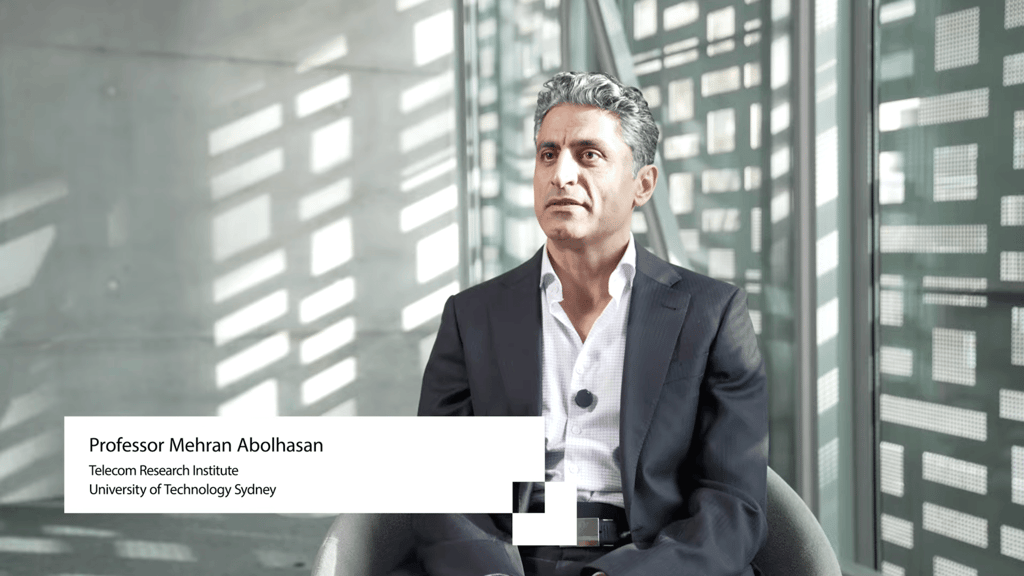
Professor Mehran Abolhasan of the Telecom Research Institute.

UTS Telecom Research Institute: Research that changes networks

UTS Telecom Research Institute: Research that changes networks transcript

At the telecom research institute, we work on real industry challenges that are currently faced by the telecommunication providers. The solutions we develop make direct impact to the operational efficiency of the telecom providers as well as the society as a whole.

From tower degradation modelling to digital twins, from AI-driven inventory to robotics-enabled inspection, our research translates directly into operational outcomes, regulatory insight and international standards.

Our partners don't just fund research, they use it in their networks. They bring the problems, the data and the operational insights, and they deploy the results. These are multi-year programs that accumulate impact over time.

UTS Telecom Research Institute. Real data, real networks, real impact.

Our partners

nbn – ASTRID Program

A multi-year research program investigating system-level network assurance and operational behaviour analysis. 

Amplitel – Project SMaRTER

Applying AI and machine learning to tower infrastructure asset data. Winner, Best Telco AI Initiative, 2026 CommsDay Edison Awards – an Australian university first.

Telstra – Project DART

Advancing digital twin and decision-intelligence research for telecommunications infrastructure, commencing in 2026.

Australian Government – National Telecom Resilience Centre

Established with funding support from the Communications Alliance and DITRDCSA, following the government’s review of the 2023 Optus outage.

GSMA – GSMA × UTS Program

Connecting TRI's applied research with international telecommunications industry challenges and standards development. 

Partner with TRI

TRI works with industry and government partners through a range of engagement models, from multi-year jointly funded research programs to commissioned testing through the National Telecom Resilience Centre (NTRC) and its Controlled Test Facility (CTF). We offer:

  • Multi-year applied research programs with shared IP and co-investment arrangements
  • Independent network and device testing through the Controlled Test Facility
  • Access to UTS research infrastructure, data science capability, and AI expertise
  • Workforce development, with embedded interns and HDR researchers working on your programs
  • Evidence-based policy and regulatory input from a trusted, independent research platform.

We welcome enquiries from telecommunications operators, infrastructure owners, equipment manufacturers, government agencies and regulators. To discuss a potential collaboration, please get in touch.

Explore our testing capability

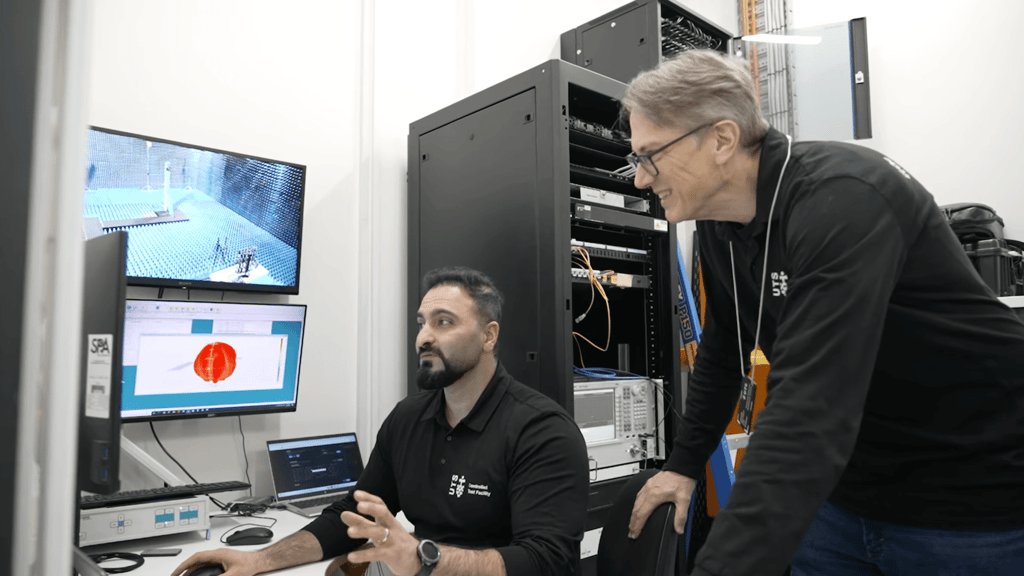
Two staff from the National Telecom Resilience Centre looking at a computer.

UTS National Telecom Resilience Centre: Global leadership in network resilience

UTS National Telecom Resilience Centre: Global leadership in network resilience transcript

When there's a network fault, there are some rare cases where Triple Zero calls can't connect. We test what happens when those failures occur, and we're the only centre in the world doing it at this scale independently, but with the cooperation of the network operators.

The National Telecom Resilience Centre operates at the intersection of real networks, real devices, and real failure conditions. We test emergency calling under normal operation, degraded states, and deep network failure, producing evidence with immediate regulatory and policy relevance.

Our findings don't stay in the lab. They've informed operator practices, shaped regulatory understanding, and led directly to software updates from major handset vendors, improving emergency calling across global device fleets. This capability is backed by Australian regulation and sustained by federal government funding. It's not a project. It's an important national asset.

Part of the UTS Telecom Research Institute. Testing resilience, protecting lives.

Contact us

  • Email: tri@uts.edu.au
  • Room 300, Level 8, Building 11, 81–113 Broadway, Ultimo NSW 2007.


Email us