

CREDITS
CONTRIBUTORS TO THE DISCUSSION ARE: Associate Professor Pauline Clague, Dr. Keith Vincent Smith, Dr. Peter Mitchell, and Professor Kate Fullagar, all people with particular knowledge of Bennelong and his times.MUSIC: Bennelong and Yemmerrawanne 1793; A Song of the Natives of New South Wales performed by Clarence Slockee and Matthew Doyle
2SER RECORDING: Anthony Dockrill
PODCAST PRODUCER: Pauline Clague
PRODUCTION / RESEARCH ASSISTANTS: Paula Maling, Ashley Little
SOUND EDITOR AND ADDITIONAL RECORDING: Missi Pesa
SOUND MIXER: Andrew Belletty
WEB DESIGNER: Limes Digital - Manjula Ravji Kerai
INITIAL CONCEPT TEAM:Fabian Veron and Adam Joseph
ARTWORK: Courtesy of Gwiyaala Arts
PODCAST TEAM
;DR KEITH VINCENT SMITH
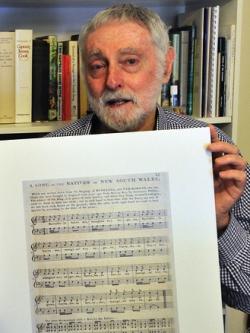
Dr Keith Vincent Smith , Cultural Historian Size
Keith spent his childhood on the northern beaches during WWII and went to boarding school, which he didn’t enjoy, until about 15. He first worked as a copyboy for the Sydney Sun and later reported and edited for the News and Advertiser in Adelaide, South Australia, and the Sydney Morning Herald in Sydney. In 1964 he was on the inaugural staff of The Australian in Canberra and between 1966 and 1971 attached to Australian troops at Nui Dat and Saigon working for Australian Associated Press. His time in Vietnam included a couple of close escapes from death but Keith survived and returned to Australia where he married Irene in 1972. They went to the Nimbin Festival in a campervan and started the ‘back-to-the-earth’ journal Earth Garden which they co-edited for 14 years before selling it on. The journal finally closed in 2022 after 400 editions with Keith still making regular contributions in his last year.
Taking up a challenge presented by his teenage daughter both enrolled at Macquarie University in 1993. Keith continued to a Masters degree and then took his PhD in a study of the Aboriginal people of Sydney, their languages, and the interactions between the first peoples and the officers and convicts of the First Fleet. This interest became his third career and he researched the archives in Sydney and London assiduously, unearthing data that no one else had identified. Finding new material was great, but even better, Keith generously shared it all with a much wider audience and has had a profound effect on other historians.
Keith passed on to a greater bora ground in November 2022, where he may now be comparing notes with Bennelong, that would be a great conversation to overhear.
Vale Keith, and thank you for all your wisdom.
Taking up a challenge presented by his teenage daughter both enrolled at Macquarie University in 1993. Keith continued to a Masters degree and then took his PhD in a study of the Aboriginal people of Sydney, their languages, and the interactions between the first peoples and the officers and convicts of the First Fleet. This interest became his third career and he researched the archives in Sydney and London assiduously, unearthing data that no one else had identified. Finding new material was great, but even better, Keith generously shared it all with a much wider audience and has had a profound effect on other historians.
Keith passed on to a greater bora ground in November 2022, where he may now be comparing notes with Bennelong, that would be a great conversation to overhear.
Vale Keith, and thank you for all your wisdom.
DR PETER MITCHELL
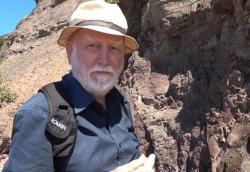
Dr Peter Mitchell , City of Ryde’s Heritage Committee Member
Peter grew up on the margins of Melbourne when the bush was still accessible and spent much of his time fossicking for gold on old fields like Warrandyte. He studied geology at RMIT and then took employment in the Snowy Mountains and Tennant Creek where he first encountered Aboriginal people. Peter gravitated to Macquarie University in its early days (1970) and accidentally became an academic. He did a PhD in geomorphology and taught resources and environmental management.
After several seasons on an archaeological site in southern Italy he became involved with Aboriginal communities in many parts of Australia providing landscape interpretation stories about archaeological sites. As a member of the City of Ryde’s Heritage Committee Peter researched the location of Bennelong’s grave at Kissing Point and spent a dozen years pushing governments and others to have it properly recognised.
After several seasons on an archaeological site in southern Italy he became involved with Aboriginal communities in many parts of Australia providing landscape interpretation stories about archaeological sites. As a member of the City of Ryde’s Heritage Committee Peter researched the location of Bennelong’s grave at Kissing Point and spent a dozen years pushing governments and others to have it properly recognised.
ASSOCIATE PROFESSOR PAULINE CLAGUE
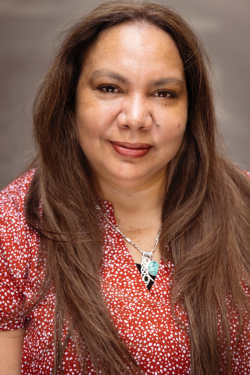
Associate Professor Pauline Clague, Cultural Resilience Hub for Jumbunna Institute for Indigenous Education & Research at the UTS and the First Nations Strategy Executive for SAFC
Pauline Clague is a Yaegl woman from North Coast NSW she has worked as a storyteller and producer in film and TV for over 25 years. She is currently Associate Professor at, The Cultural Resilience Hub for Jumbunna Institute for Indigenous Education & Research at the UTS and the First Nations Strategy Executive for SAFC.
She has been a driving force in the creation and sustainability of the Indigenous voice in Australian screen and television. She is the founder and Artistic Director of Winda Film Festival in Sydney and is co-creator of NativeSLAM a 72-hour Indigenous film challenge held at the Maoriland Film Festival in Otaki and nativeSLAM the feature.
Pauline has been an innovator and engaged to lead communities to strengthen their voice through the medium of screen and story. She was awarded the Stanley Hawes Award in 2015 for her contribution to Australian documentaries and is the 2020 Natalie Miller Fellow.
She has been a driving force in the creation and sustainability of the Indigenous voice in Australian screen and television. She is the founder and Artistic Director of Winda Film Festival in Sydney and is co-creator of NativeSLAM a 72-hour Indigenous film challenge held at the Maoriland Film Festival in Otaki and nativeSLAM the feature.
Pauline has been an innovator and engaged to lead communities to strengthen their voice through the medium of screen and story. She was awarded the Stanley Hawes Award in 2015 for her contribution to Australian documentaries and is the 2020 Natalie Miller Fellow.
PROFESSOR KATE FULLAGAR
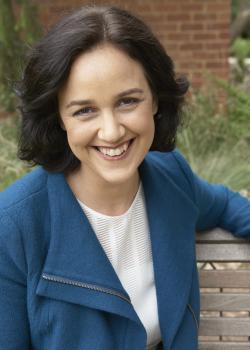
Professor Kate Fullagar, The Institute for Humanities and Social Sciences
Kate Fullagar is professor of history at the Institute for Humanities and Social Sciences, Australian Catholic University. She is also co-editor of the Australian Historical Association’s journal, History Australia. Kate specializes in the history of the eighteenth-century world, particularly the British Empire and the many indigenous societies it encountered.
She is the author of The Warrior, the Voyager, and the Artist: Three Lives in an Age of Empire (New Haven, 2020) and The Savage Visit (Berkeley, 2012); the editor of The Atlantic World in the Antipodes: Effects and Transformations since the Eighteenth Century (Newcastle, 2012); and co-editor with Michael McDonnell of Facing Empire: Indigenous Experiences in a Revolutionary Age (Baltimore, 2018). She is Lead Chief Investigator of an ARC Linkage project with the National Portrait Gallery called Facing New Worlds.
May we all gently sense our footprints within this ancient island continent, we call home……..open to the ancestral whispers singing land and sky into our hearts, regardless of ‘color, creed or ideology’……..Fabian Verón
She is the author of The Warrior, the Voyager, and the Artist: Three Lives in an Age of Empire (New Haven, 2020) and The Savage Visit (Berkeley, 2012); the editor of The Atlantic World in the Antipodes: Effects and Transformations since the Eighteenth Century (Newcastle, 2012); and co-editor with Michael McDonnell of Facing Empire: Indigenous Experiences in a Revolutionary Age (Baltimore, 2018). She is Lead Chief Investigator of an ARC Linkage project with the National Portrait Gallery called Facing New Worlds.
THANK YOU
Thank you Adam Joseph, for revealing to me the Genesis of ‘Terra Australis’ through Bennelong and introducing all those fine individuals involved in the podcast, Bennelong Revealed. I would like to acknowledge 2SER for allowing the podcast to find its voice and Pauline Clague (Yaegl Tribe) for anchoring the project. Keith Vincent-Smith, thank you for unearthing the folklore of (Warrane) Sydney Cove…..Rest In Peace friend.May we all gently sense our footprints within this ancient island continent, we call home……..open to the ancestral whispers singing land and sky into our hearts, regardless of ‘color, creed or ideology’……..Fabian Verón