

Technical Intelligence for Gene Research and Healthcare
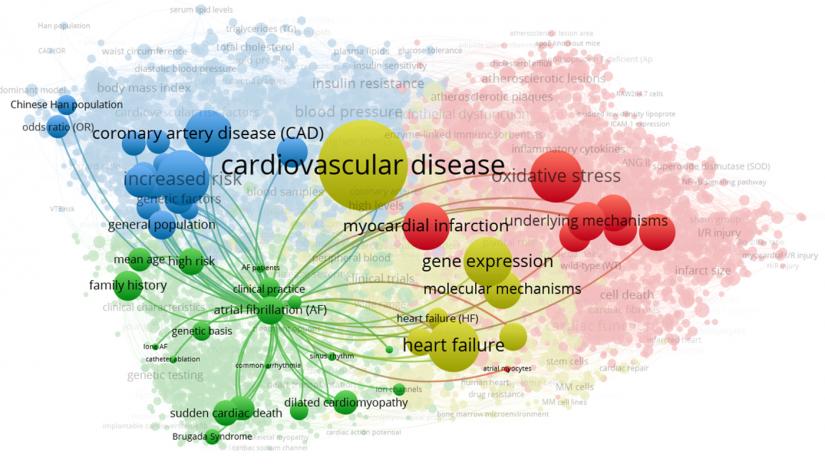
Intelligent bibliometrics for tracking and predicting technological change
Research Leads
Dist. Prof. Jie Lu and Dr. Yi Zhang
Collaborators
23Strands
The rapid development of gene research, together with the significantly increase of related scientific documents, challenges entrepreneurs in systematically capturing knowledge with limited expert support and identifying business opportunities in a short time.
Intelligent bibliometrics provide an express solution of constructing a knowledge base for a given gene-related disease. This project developed a systematic toolkit to analyse large-scale scientific documents for technical intelligence e.g., identifying key players of a given domain, profiling key research areas and their associations, and tracing the evolutionary pathways of research topics over time.
Quescreen - Smart Human Risk Profiling Questionnaire Platform

Health screening for potential employees
Research Lead
A/Professor Farookh Khadeer Hussain
Collaborators
Workforce Health Assessors
The Quescreen (pre-screening questionnaire) platform targets low risk roles in the pre-employment medical and pre-screening market. Quescreen aims to use AI to automate the process of low risk pre-employment medical health assessment. By mapping risk against different occupations and questionnaire components against the human body, Quescreen intelligently provides instant risk profiling of an individual, including their own unique factual positioning.Through Natural Language Processing, data-driven decision making, and other AI technologies, Quescreen will deliver fast, affordable and accurate employee risk assessments to employers and organisations. This will empower stakeholders to make sound, knowledgeable and informed decisions around engaging or underwriting individuals with less risk.
Recommender Systems for Property Service

Recommendations for a new property
Research Leads
Distinguished Professor Jie Lu
Dr. Qian Zhang
Collaborators
Domain Holdings Australia Limited
The abundance of information urgently demands the development of personalized recommender systems for high quality e-service delivery. Our researchers are leading the development of recommender systems in property service, assisting Domain in the early stage of a property sale circle.
We are providing personalized recommendations in the dynamic market to multi-types of users for new properties. With advanced machine learning technology, we are launching a recommender system which adapts to fast-changing and various levels of user demands. The recommender system supplies Domain with solutions for users with different purposes – saving time and effort for home buyers, creating promotion chances for agents, and attracting potential investors.
Intelligent Train-Carriage Load Analysis and Prediction
Research Leads
Dist. Prof. Jie Lu
Dr. Anjin Liu
Collaborators
Sydney Trains
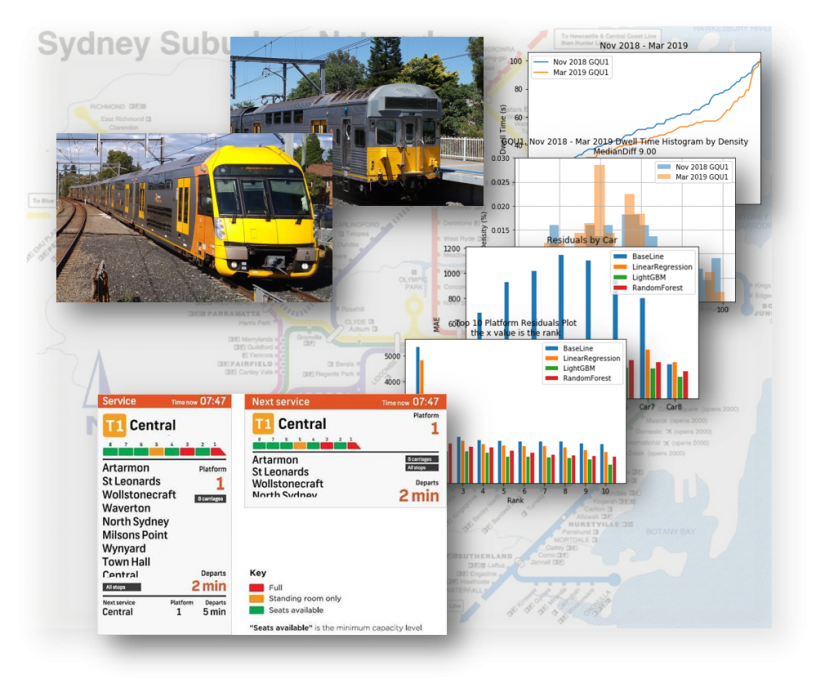
To better spread the customer across the train’s carriages and manage platform crowding, carriage load information is provided on both SPI screens and to the third-party apps feed for the Waratah fleet. The passenger load information to SPI Screens via the On-Board Handler (OBH) displays the train load from the weight captured as the doors closed at the last station.
The intent of this work is to utilize historical and real time Waratah carriage load data to build predictive capability which can provide expected passenger load across the train journey based on time of day. This work also looks for options to provide passenger loads across other sets which don’t have real time carriage load reporting capabilities.