

The Intelligent Drone Lab partners with industry to facilitate research and development into drone autonomy using computer vision and machine learning techniques.
Lab co-directors


Autonomous drones
The Intelligent Drone Lab (iDL) is the nation’s first laboratory of its kind. The lab partners with industry to facilitate research and development into drone autonomy using computer vision and machine learning techniques. Its key objectives will include research into Beyond Visual Line of Sight (BVLOS) flight for remote pilot licences, collaboration with industry on employing drones as practical solutions in multiple application areas (industry verticals), and delivering short courses on flying, maintaining and managing drone operations for the Civil Aviation Safety Authority drone licence training.
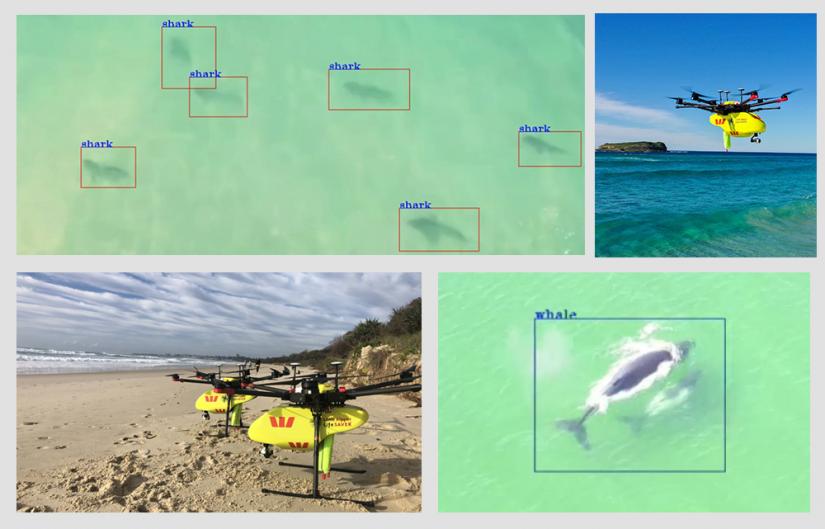
Upper left | Lower right: In collaboration with The Ripper Group, iDL develop autonomous drones equipped with an AI application, SharkSpotter. Using this technology, drones can distinguish and identify sharks and other visible animals in the water, using real-time image processing techniques and state-of-the-art sensors and software. Image: Westpac Little Ripper. Upper right | Lower left: The Little Ripper drones respond to people caught in dangerous surf conditions or floods, by dropping self-inflatable devices to assist troubled swimmers, significantly lowering the total rescue time. Image: Westpac Little Ripper.